What Is a Face Cord of Wood? Size, Cost, and How to Know You’re Getting a Fair Deal
You make a phone call to a supplier, request a face cord and a truck arrives with a stack that appears smaller than anticipated. Sound familiar? It occurs everywhere, and it seldom concerns misfortune. This is because face cord is not used to connote the same thing all over.
This guide describes what a face cord of wood is, what size it really measures, what it ought to cost and how to check your delivery so that you just pay what you were promised.
Quick Answer: What Is a Face Cord of Wood?
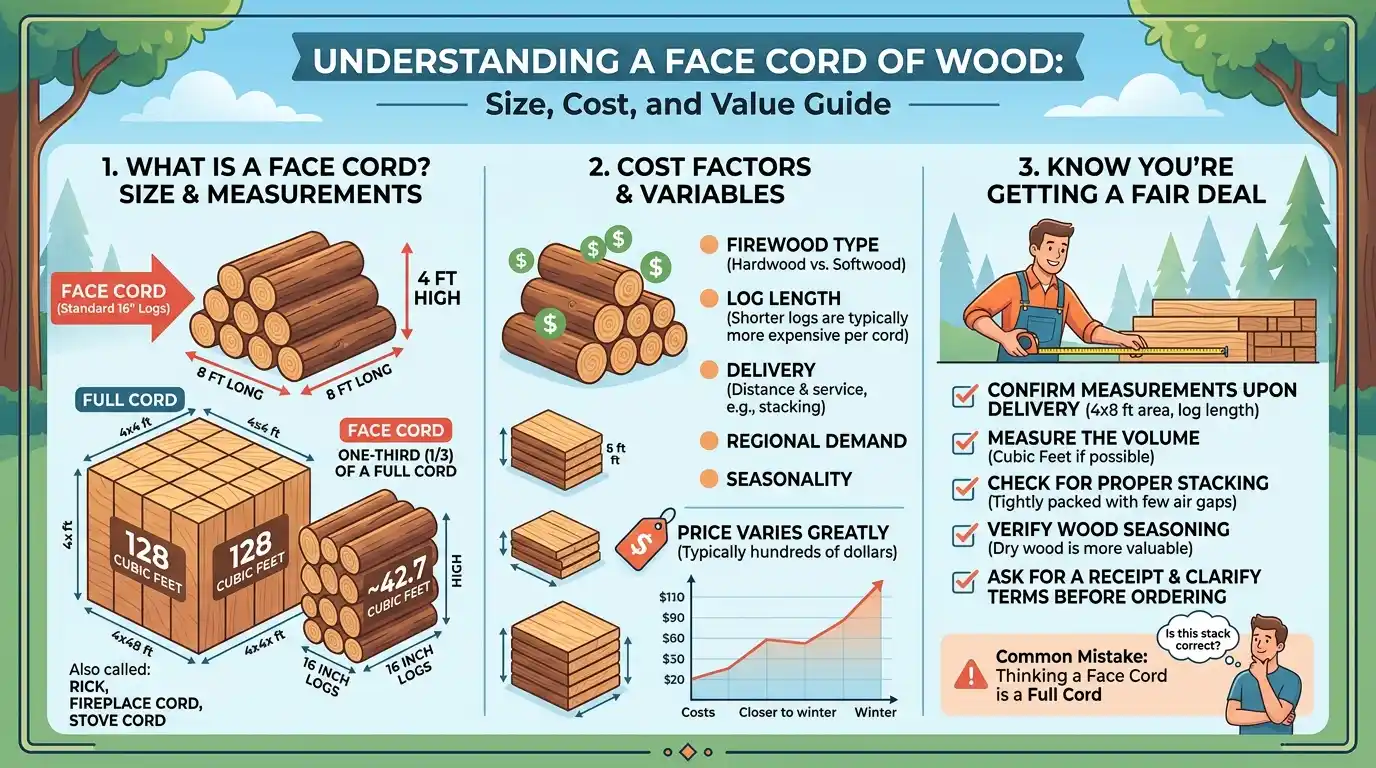
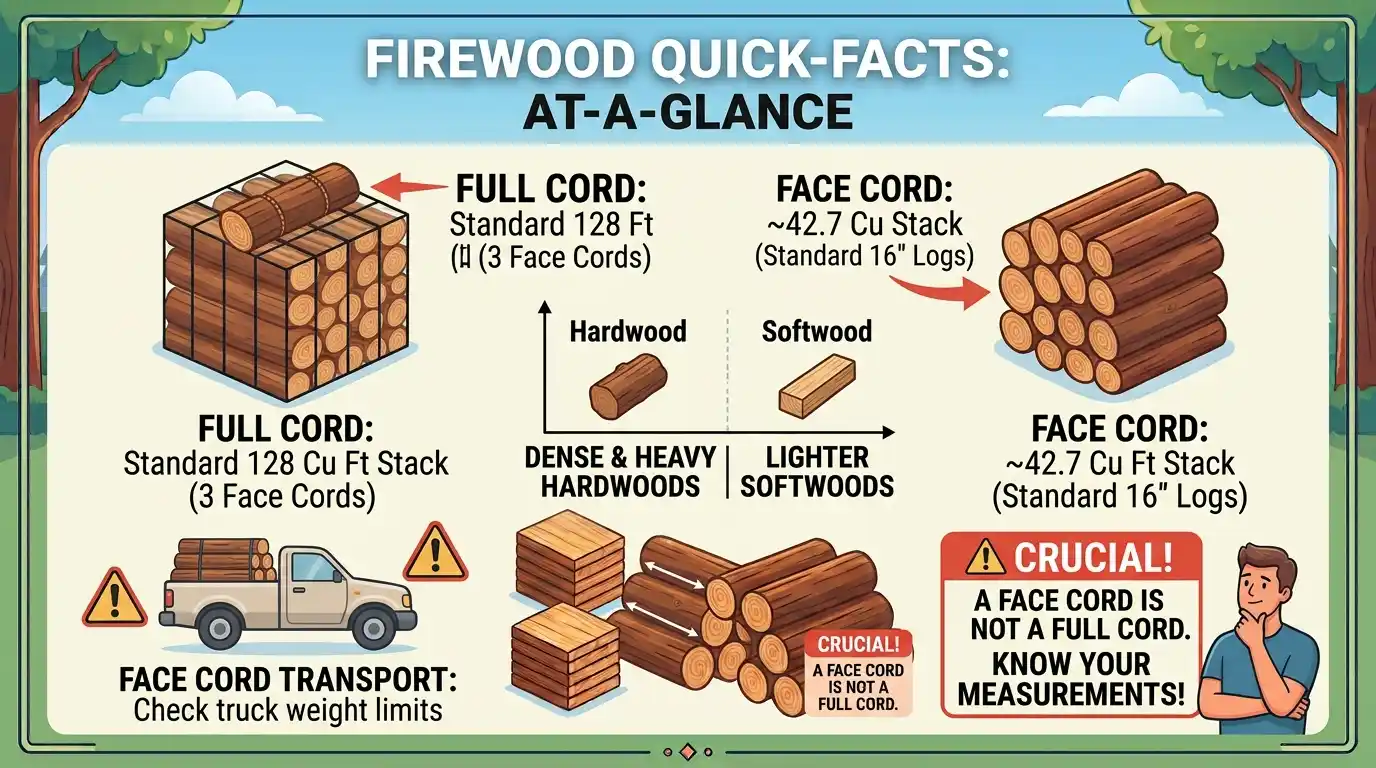
Face cord of wood A pile of wood 4 feet high and 8 feet long, with a depth of the same length as one of the logs, typically 12 to 24 inches. A face cord is less than a whole cord due to the variation in depth. It contains 16 inch logs and is one third of a full cord, or approximately 42.7 cubic feet.
Quick facts
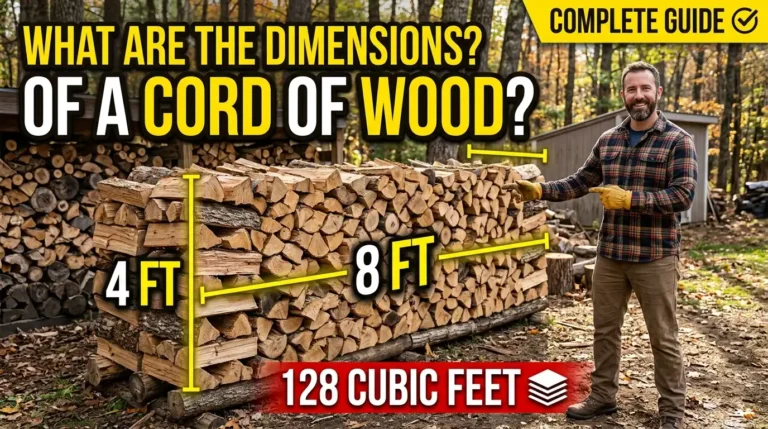
- Full cord: 4 ft x 4 ft x 8 ft, which is 128 cubic feet
- Face cord: 4 ft x 8 ft x length of logs.
- Most popular face cord: 16 inch logs of approximately 42.7 cubic feet.
- Other names: rick, fireplace cord, stove cord, short cord
Face Cord Size and Dimensions
Each face cord is the same face, which is the front of the stack which you see. It is 32 square feet, 4 feet high and 8 feet wide. The only difference is the depth of the stack and that depth is just the length of logs.
The volume can be determined by multiplying the face area by the length of the log in feet.
| Log length | Depth in feet | Volume (cubic feet) | Share of a full cord |
|---|---|---|---|
| 12 inches | 1.0 | 32 | 1/4 |
| 16 inches | 1.33 | 42.7 | 1/3 |
| 18 inches | 1.5 | 48 | 3/8 |
| 20 inches | 1.67 | 53.3 | 5/12 |
| 24 inches | 2.0 | 64 | 1/2 |
The quick formula: 32 x log length in feet = cubic feet in your face cord.
Divide by 128 to find what part of a full cord you have.
If you want to see the full cord numbers in more detail, this breakdown of how big a cord of wood is covers the exact dimensions and what a proper stack looks like.
Face Cord vs Full Cord: What’s the Difference?
A full cord is a standardized unit that is legal. A face cord is not. A full cord is a stack of wood, 128 cubic feet high, and a face cord is merely the slice of that stack on the front side, and is as large as the length of the logs that the seller employs.
| Feature | Face cord | Full cord |
|---|---|---|
| Standard unit | No, informal term | Yes, 128 cubic feet |
| Height | 4 ft | 4 ft |
| Length | 8 ft | 8 ft |
| Depth | One log length, 12 to 24 in | 4 ft |
| Typical volume | 32 to 64 cu ft | 128 cu ft |
| Common use | Retail, small deliveries | Bulk, whole winter supply |
The simple rule: a face cord is never bigger than a full cord, and in most cases it is a third or less. For a deeper side by side, see this guide on face cord vs full cord of wood.
How Many Face Cords Are in a Full Cord?
It is based on the length of logs. Using 16 inch logs, three face cords are required to make one full cord. You require four logs of 12 inch, and two logs of 24 inch.
Most sellers silently take the 16 inch version, and never make an assumption. Request the length of the logs each time. The math behind this is laid out in how many face cords are in a cord of firewood.
Face Cord, Rick, Stove Cord: Are They the Same Thing?
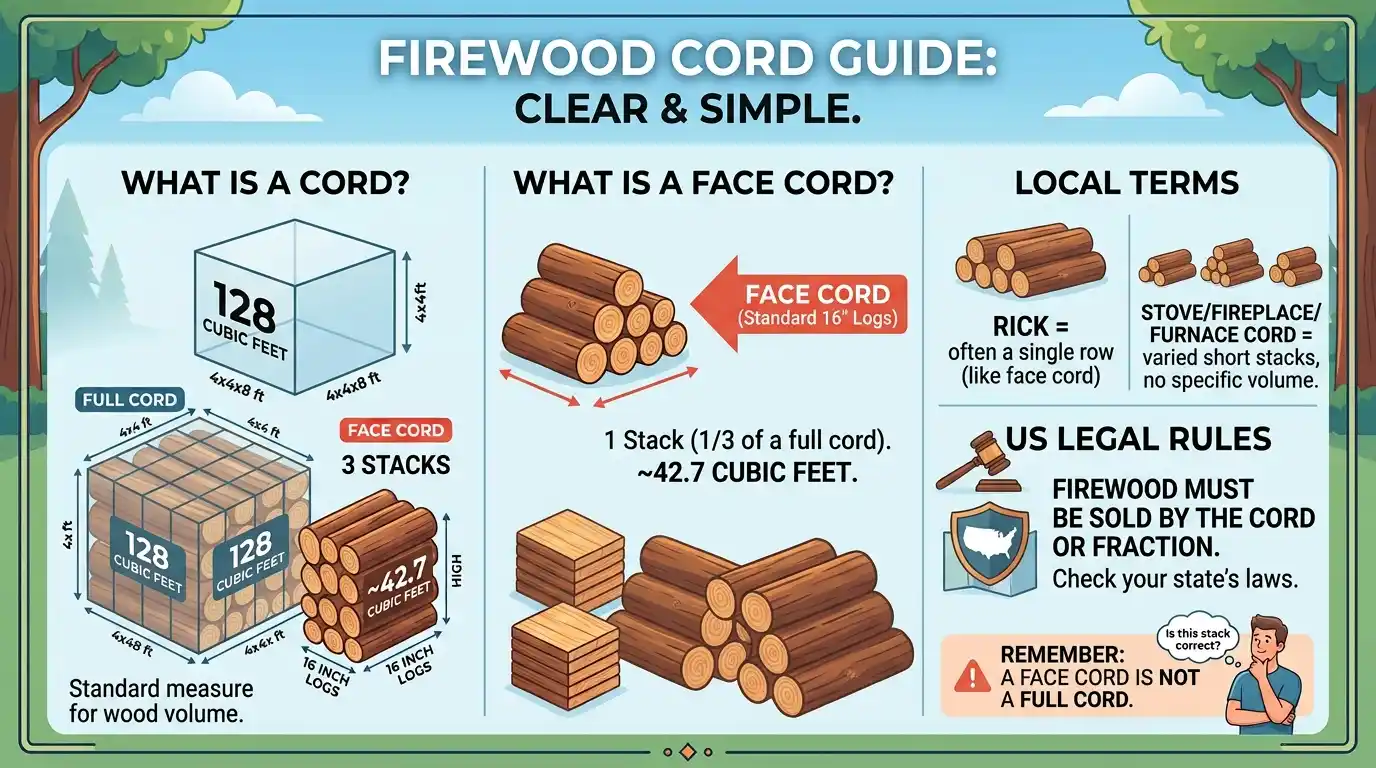
Yes, often, but not always. These are local customs, not official standards. A rick typically refers to one row of logs 4 feet by 8 feet, which corresponds to the face cord concept. Stove cord, fireplace cord, and furnace cord are imprecise terms used to describe a short stack, and do not imply a specific volume.
In the US, most states have laws that mandate firewood to be sold by the cord or fraction of a cord, and some states discourage or limit the use of terms such as face cord in sales. Rules vary by state, and you may wish to be sure by checking the weights and measures office of your state. This is modeled guidance that is published by the National Institute of Standards and Technology in its Handbook 130. For a closer look at the term, read about the rick of firewood.
How Much Does a Face Cord of Wood Cost?
No national price. The price varies based on your area, the type of wood, whether seasoned or green, and the distance of delivery and whether the seller will stack it up. There is no reliable national average, and any article that quotes a single figure as the average is speculating.
The thing you can do is to compute the fair price.
Price per cubic foot = price paid divided by cubic feet received
Illustration by imaginary numbers: when a seller sells a 16 inch face cord (42.7 cubic feet) at a price of 100, it is approximately 2.34 per cubic foot or 300 per full cord equivalent. Compare that to quoted full cord price and you can immediately see which is a better deal.
What varies the price
- Species: oak and hickory are more expensive than pine or poplar.
- Experienced vs inexperienced: dry wood is more expensive but burns well.
- Delivery and stacking: charges can accumulate.
- Season: the prices tend to be higher in the fall and winter.
- Quantity: a full cord of purchase is normally less expensive per cubic foot.
For a fuller price discussion, see this guide to the cost of a cord of firewood and this one on how much a full cord of wood costs.
How Much Does a Face Cord Weigh?
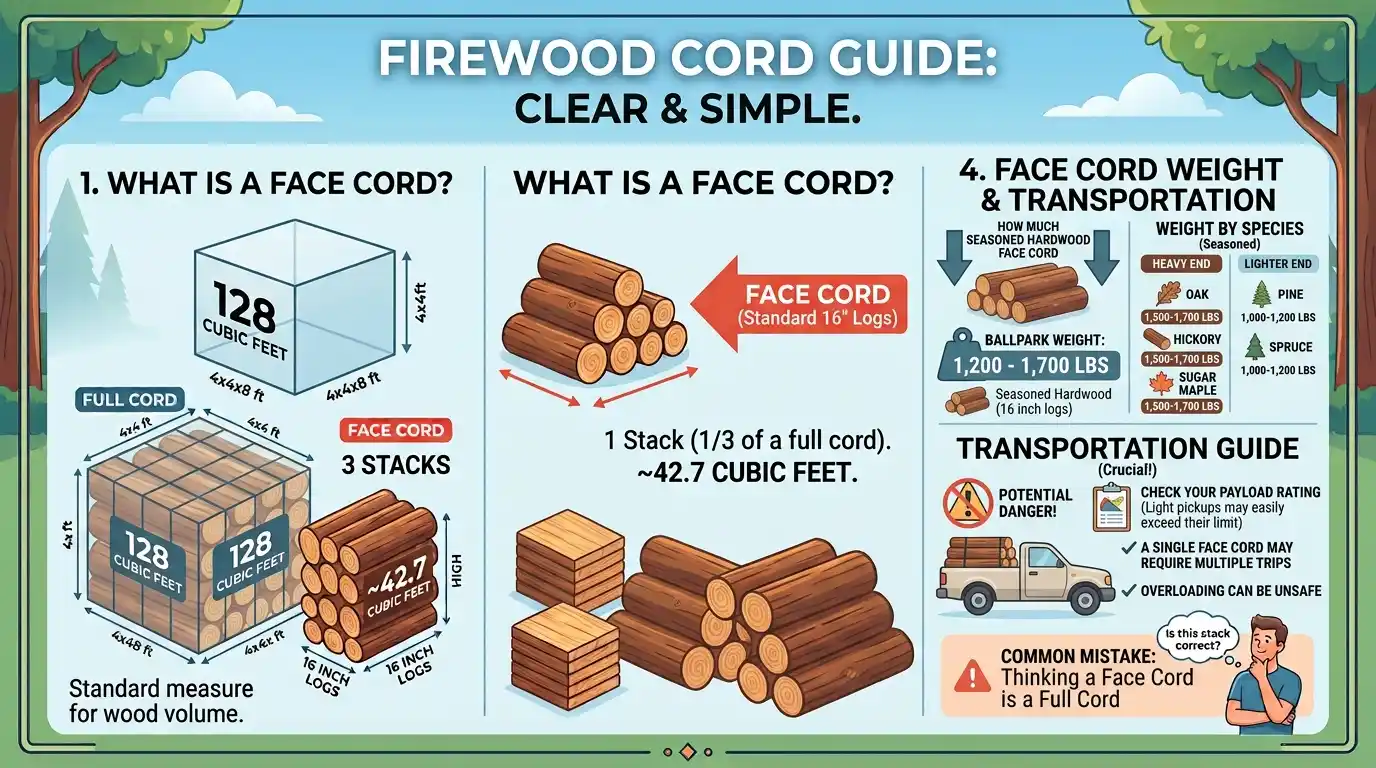
Weight is not only a matter of size but also species and moisture. The weight of a full cord of seasoned hardwood usually ranges between 3,500 and 5,000 pounds and green wood may be much heavier. A face cord 16 inch is a third of it, or about 1,200 to 1,700 pounds of hardwood, seasoned.
Take these as ball park figures. Oak, hickory, and sugar maple are dense species that occur at the heavy end. Softwoods such as pine are at the lighter end. See the species by species weight guide for more precise numbers.
Why this is important: when you are transporting wood in your own truck, a face cord of wood can easily exceed the weight that a light pickup ought to be able to carry on a single trip. Check your payload rating.
How Much Wood Is Actually in a Face Cord?
A stack is not hard wood. Log breaks imply that a stacked cord contains less real wood than its 128 cubic feet implies. Straight, uniform split logs are stacked tighter, and knotty or crooked pieces allow more air.
That is why when you are measuring it is important to stack neatly. A stack of loose, loose, messy stuff can appear to be a full face cord and contain significantly less wood.
How Long Does a Face Cord Last?
It is based on your heating system, weather and the wood. A face cord may be a few weeks of intensive daily heating, or a whole season of evening fires. A weekend fireplace that will be used will be a small fireplace that will be stretched a long way as compared to a wood stove that serves as the main source of heat.
For a realistic estimate by heating type, read how long a cord of wood lasts in stoves, inserts, and fireplaces.
How to Measure a Face Cord in 4 Steps
- Measure the height of the stack. It ought to be 4 feet.
- Measure the length. It ought to be 8 feet.
- Measure the length of the log (the depth). Check a few logs, as mixed lengths make you short.
- Divide height x length x depth (ft) by 128 to determine the portion of a full cord.
When the stack is closely stacked and the numbers are what you ordered, you received a fair delivery. When you are short, negotiate with the seller first and pay later preferably with a photo and your measurements.
Common Mistakes When Buying a Face Cord
- The length of the log is not requested. This is the cause of surprise number one.
- By the stack. A stacked pile appears smaller than a tossed pile.
- Ignoring moisture. Green wood is inexpensive but difficult to burn and smokes. Wood that is old is normally less than 20 percent moisture.
- Leaving out a written receipt. Record the number, length of log, and species.
- Comparison of prices without conversion. A face cord is cheap and may cost more per cubic foot than a full cord.
Which Wood Is Worth Buying?
Oaks, ash, hickory, and maples are the hardwoods, which burn longer and hotter, so a face cord of hardwood tends to burn longer than a face cord of softwood. Works in kindling or mild weather, fast, softwood lights.
If you are choosing a species, these guides help: best firewood to burn, red oak firewood, and is maple good firewood.
Face Cord Buying Checklist
- Request the length of the log in inches.
- Request the species and its seasoned or not.
- Ensure the price is inclusive of delivery and stacking.
- Ask to have a written receipt with quantity and length of logs.
- Stack on arrival measurement.
- Compare price per cubic foot, not price per “cord”
Should You Buy a Face Cord or a Full Cord?
Purchase a face cord when you burn occasionally, have limited storage, or when you wish to put a seller to the test. Purchase a full cord when you heat frequently, when you have a dry covered space (a full cord requires about 4 x 4 x 8 feet of space), and when you desire the lower price per cubic foot.
Most people begin with a face cord and go up after they realize how quickly they pass through it.If you are weighing a middle option, see this guide to a half cord of wood.
FAQs
In simple terms, what is a face cord of wood?
It is a pile of firewood 4 feet high and 8 feet long with one log deep. The depth is the length of the log and thus the amount is variable.
How big is a face cord of wood?
The face is 32 square feet. The volume of the 16 inch logs is approximately 42.7 cubic feet.
Does a face cord mean a rick?
Usually, yes. Both refer to a 4 by 8 foot pile of one log deep, but local usage differs.
How many face cords are in a full cord?
Three if logs are 16 inches long, four if logs are 12 inches long, and two if logs are 24 inches long.
How much is a face cord of wood?
Prices differ according to area, species, and season. Divide the price by cubic feet to make fair comparisons between deals.
Is a face cord less expensive than a full cord?
It costs less overall, but the cost per cubic foot is frequently higher.
What is the weight of a face cord of wood?
Seasoned hardwood in a 16 inch face cord weighs approximately 1,200 to 1,700 pounds. Green wood weighs more.
How long will a face cord last?
Depending on how you use it, a face cord can last a few weeks of heavy use or a complete season of occasional fires.
Is a face cord a legal measure?
No. Many locations require firewood to be sold by the full cord or a portion of it, and regulations differ by state.
How do I know I have a full face cord?
Measure the stack. It should be 4 feet high, 8 feet long, and as deep as the promised log length.
Is it possible to have a face cord of a different size?
Yes. The depth may vary between 12 and 24 inches, so always check the length of the logs.
What is a stove cord or fireplace cord?
These are informal terms used to describe a smaller pile of firewood. They do not guarantee a fixed amount of wood.
Is a face cord enough for a winter?
It is usually not enough for primary heating throughout a winter. It can be useful for occasional fireplace fires.
Which wood should I purchase, seasoned or green?
Seasoned wood is generally better for immediate burning. Green wood contains more moisture and requires months to dry properly.
Final Thoughts
A face cord of wood is no mystery, but neither is it a fixed unit. The face size is 4 x 8 feet, and the length of the log determines all the rest. One thing you must remember is to ask the length of the log, do the simple arithmetic, and compare the price per cubic foot.
When you receive your stack, measure it and retain the receipt and store the wood dry and off the ground. Do this and you will hardly pay too much, and you will be able to tell just how much heat you purchased.