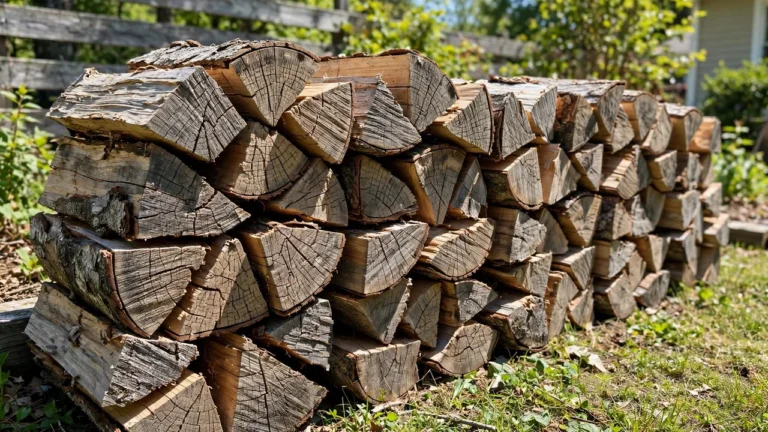
Best Firewood to Burn: Top Choices for Heat, Long Fires, and Safe Burning
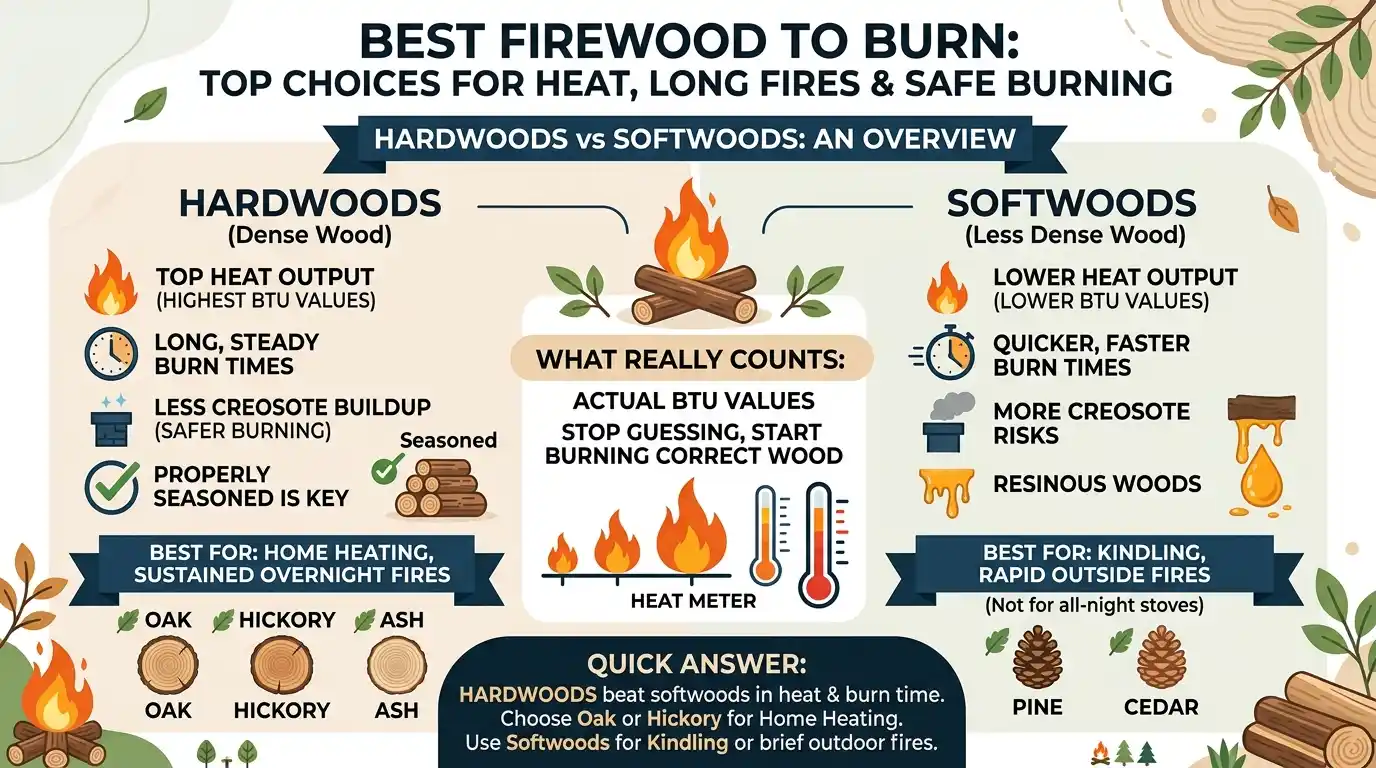
Dense hardwood such as oak, hickory, or ash are the best firewood to burn and are properly seasoned. These woods yield more heat per log, burn longer and leave less creosote as compared to softwoods such as pine or cedar. However, the best wood also varies depending on your purpose: a longer fire in a wood stove will require different wood than a short fire in a backyard fire pit.
This is what really counts, supported by actual BTU values, so you can quit guessing and begin burning the correct wood to the task.
Quick answer: Hardwoods beat softwoods in all aspects of heat and burn time. The best options of home heating are oak and hickory. Kindling and rapid outside fires are better with softwoods such as pine and cedar, not to maintain a stove all night.
What Makes One Firewood Better Than Another
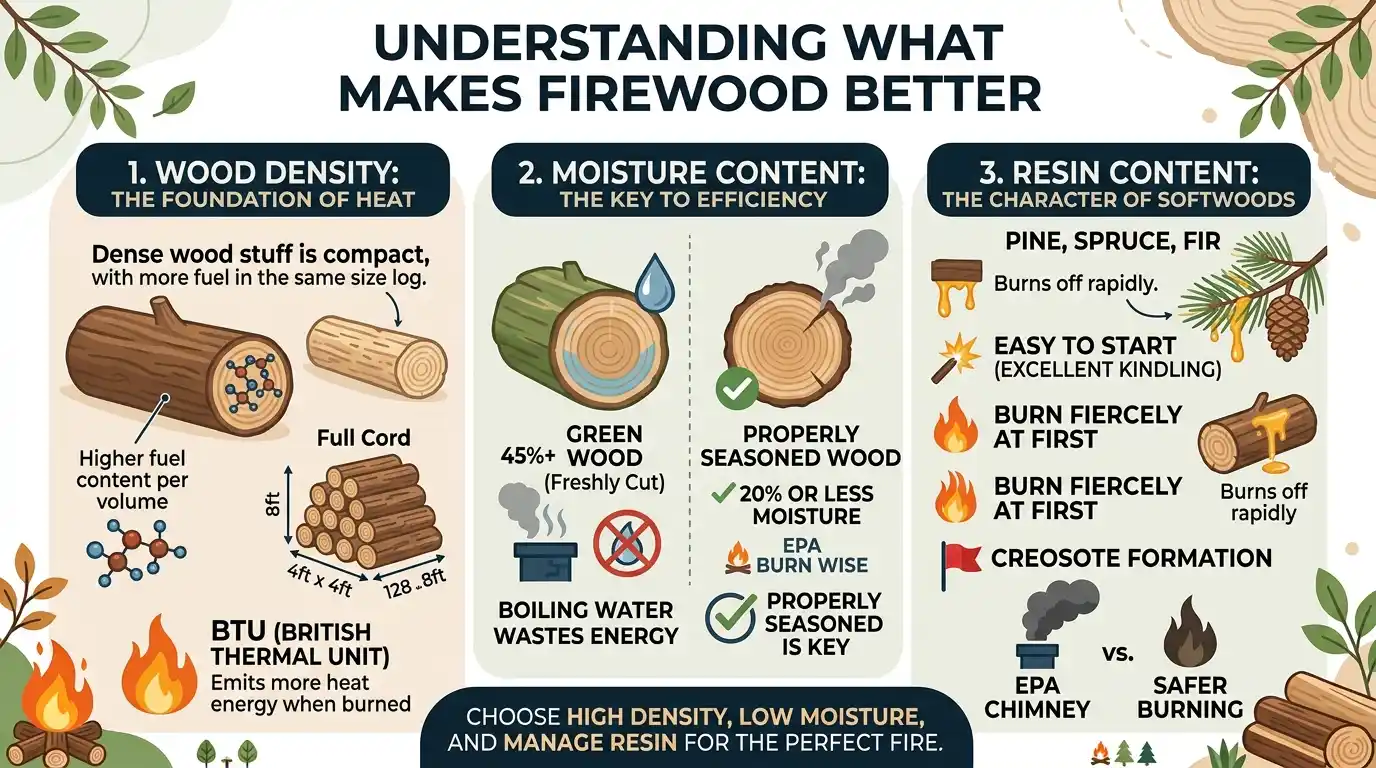
Density, moisture content and resin content are three factors that determine how well a piece of firewood burns.
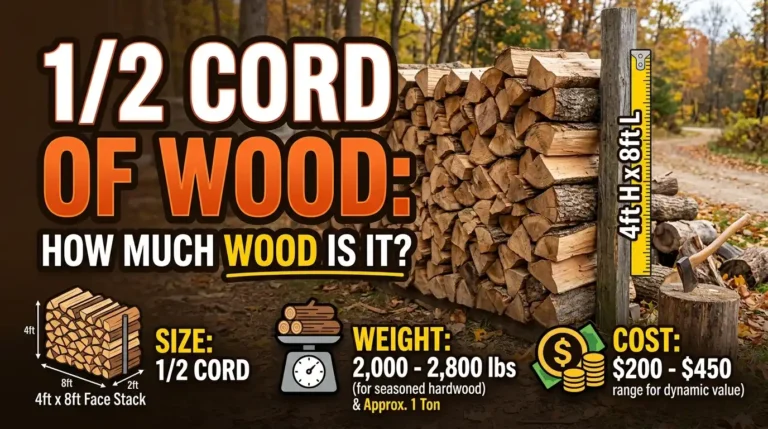
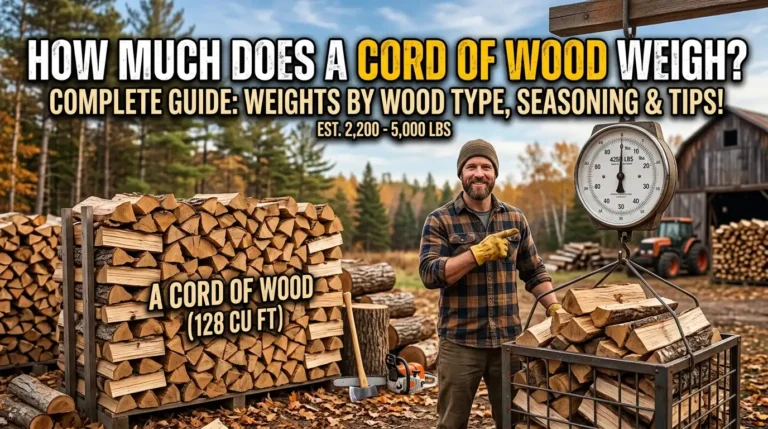
The largest factor in heat output is density. Dense wood stuff is more compact and has more fuel in the same size log and thus burns longer and produces more heat per piece. This is in British thermal units or BTUs, which informs you of the amount of heat energy a full cord of wood emits when burned. A cord consists of a pile of wood, 4 feet square by 4 feet square by 8 feet square, or 128 cubic feet.
The amount of moisture defines the efficiency with which the heat is transferred. Freshly cut, or “green,” wood can be 45 percent water or more. It is also a waste of energy to boil that water rather than warm your house, and it has a lot more smoke. The EPA, in its Burn Wise program, suggests that firewood should be burned with a moisture level of 20 percent or less in order to burn efficiently.
Softwoods such as pine, spruce and fir are largely influenced by the content of resin and pitch. These woods are easy to start and burn fiercely at first, and this makes them excellent kindling, but the resin burns off rapidly too, and can form creosote in a chimney when used as a primary fuel in the house.
Hardwood vs Softwood: Which Actually Burns Better
Neither type is “better” across the board. They just do different jobs well.
| Factor | Hardwood (oak, hickory, ash, maple) | Softwood (pine, cedar, spruce, fir) |
|---|---|---|
| Density | High | Low to moderate |
| Heat output | High, long burn time | Lower, shorter burn time |
| Seasoning time | 12 months or more | 6 to 12 months |
| Ease of lighting | Slower to catch | Lights quickly |
| Smoke and creosote | Minimal when seasoned | Higher, especially if used as primary fuel |
| Cost | Usually higher | Usually lower |
| Best use | Overnight heating, wood stoves, fireplaces | Kindling, quick fires, shoulder-season heat |
An ingenious method adopted by many a veteran burner is to have a combination of the two: to start the fire with softwood, or kindling, to get it going quickly, and to add hardwood, which is dense, when the fire is already started, to carry the heat through the night.
The Best Firewood to Burn, Ranked
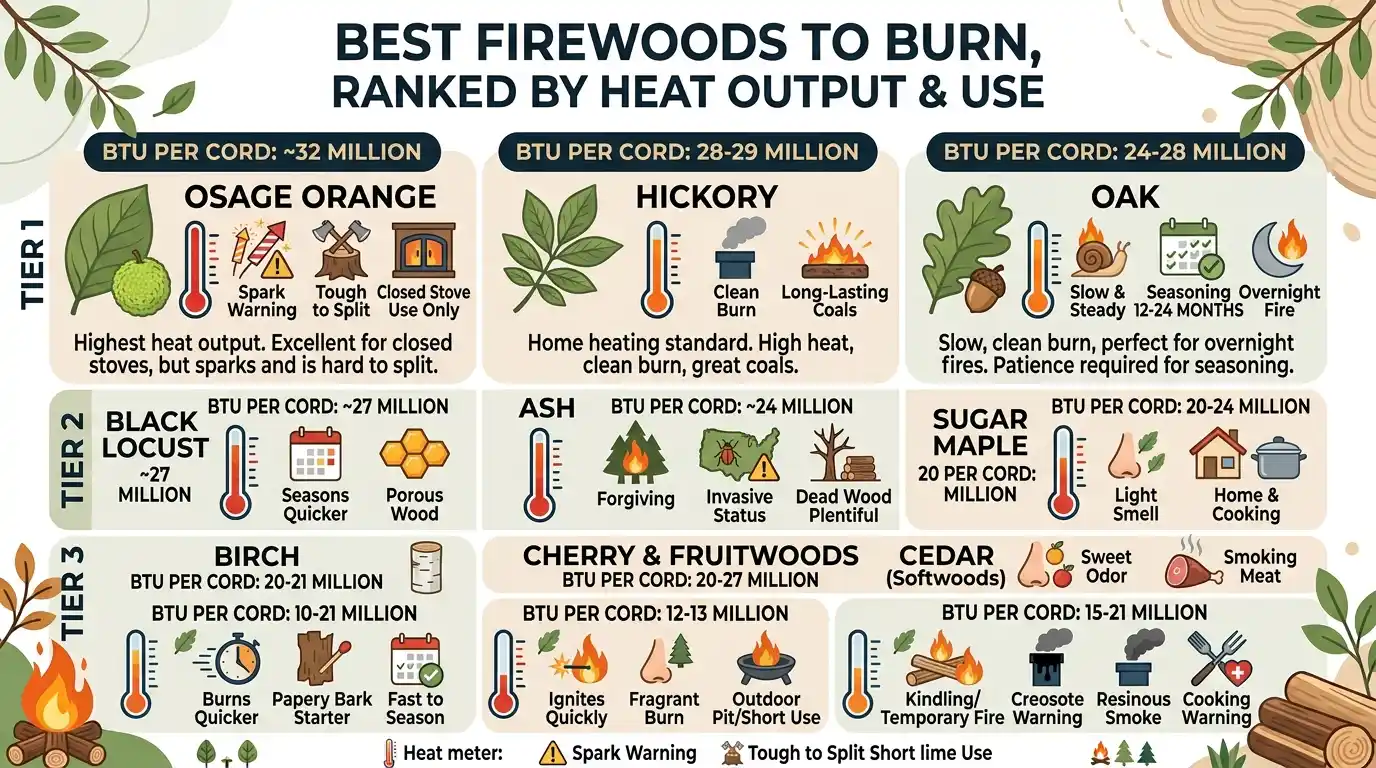
This is ranked according to the amount of heat produced per cord, the quality of the burn, and the ease with which the wood can be located and seasoned. Smaller numbers are based on forestry and firewood industry heat-value data and are typical seasoned wood; actual production depends on the age of the tree, the region, and the true dryness of the wood.
Osage Orange
Osage tops the heat charts, with a BTU rating of about 32 million per cord, the highest of any readily available firewood in North America. It is very hot, and emits sparks, so it should be used in a closed wood stove or fireplace with a good screen rather than an open fire pit. And it is also one of the more difficult woods to divide.
Hickory
The standard of heating in the home is hickory. A cord generates approximately 28 to 29 million BTUs, it burns without a lot of smoke, and it leaves a rich bed of coals that continue to radiate even after the flames have gone out. When you can get it seasoned, it is difficult to beat as a wood stove.
Oak
In the United States, the most common high grade firewood is oak, which yields between 24 and 28 million BTUs per cord, depending on the species. The only drawback is that it needs patience: oak needs at least 12-24 months to dry out due to its density.
It burns slowly, steadily and clean when dry, hence most frequently suggested as a firewood to use overnight. For a closer look at heat output and seasoning time across oak varieties, including how red oak compares to white oak, see our dedicated red oak burning guide.
Black Locust
Black locust burns nearly as hot as oak, averaging 27 million BTUs per cord, and seasons quicker than oak, as the wood is more porous by nature. It is a low profile option when you can get it locally.
Ash
Ash burns approximately 24 million BTUs per cord and is known among the more experienced burners to be forgiving: it burns fairly well even when not well seasoned, unlike most hardwoods. In North America, invasive emerald ash borer has severely impacted ash trees, so dead ash is generally plentiful and inexpensive in infested areas, but you must verify local laws before moving ash wood across county or state boundaries.
Our full breakdown of why this wood is so forgiving to burn covers seasoning time and heat output in more detail.
Sugar Maple
At the center of the pack is Maple with 20 to 24 million BTUs per cord. It burns well and has a nice, light smell and is a favorite in both home heating and cooking fires. If you’re deciding between species, this guide walks through where maple lands compared to top-tier hardwoods.
Birch
Birch burns quickly at approximately 20 to 21 million BTUs per cord yet burns through more quickly than oak or hickory, thus it is not your best choice as a secondary fuel source to have a single overnight fire. Its papery bark makes great natural fire starter and it is also one of the quickest hardwoods to season. Curious whether it truly qualifies as a hardwood? We break down the classification and burn quality here.
Cherry and Other Fruitwoods
Cherry, apple, and pear woods are solid heat producers, averaging 20 to 27 million BTUs per cord, and are well-liked due to the sweet odor they emit, which makes them also attractive in smoking meat. They make a good compromise option when there is hardwood.
Cedar
Cedar yields only 12-13 million BTUs per cord, far less than the hardwoods, but it ignites quickly and burns well, so it is popular in making fires and in outdoor fire pits where a shorter, fragrance burn is the order of the day.
Pine and Other Softwoods
Pine yields about 15 to 21 million BTUs per cord, depending on the species. It is cheap, readily available, and good kindling or temporary outdoor fire, but the resin content is so great that it smokes and creosotes more when it is burned as a primary indoor fuel.
Cooking pine smoke directly is not recommended, as the resin not only imparts a flavor but also may pose health hazards when consumed in concentrated form.
Firewood BTU Chart: Heat Output by Species
| Firewood | Type | Heat Output (million BTUs/cord) | Smoke Level | Best For |
|---|---|---|---|---|
| Osage Orange | Hardwood | ~32 | High | Wood stoves, closed inserts |
| Hickory | Hardwood | ~28-29 | Low | Overnight burns, wood stoves |
| Oak | Hardwood | ~24-28 | Low | Overnight burns, fireplaces |
| Black Locust | Hardwood | ~27 | Low | Home heating |
| Ash | Hardwood | ~24 | Low | General heating |
| Sugar Maple | Hardwood | ~20-24 | Low | Heating and cooking fires |
| Birch | Hardwood | ~20-21 | Moderate | Secondary wood, fire starting |
| Cherry/Apple | Hardwood | ~20-27 | Low | Cooking, aromatic fires |
| Douglas Fir | Softwood | ~21 | High | Kindling, shoulder-season heat |
| Pine | Softwood | ~15-21 | High | Kindling, campfires |
| Cedar | Softwood | ~12-13 | Moderate | Fire starting, outdoor pits |
Figures are average values of well-seasoned wood and will change depending on the specific species, the age of the tree and the area.
Firewood to Avoid Burning
Not all wood is to be placed in your fireplace or fire pit. Skip these:
- Wet or green wood. Any moisture above 20 percent burns too slow, gives off too much smoke and accelerates the accumulation of creosote in your chimney.
- Stained, painted or treated wood. The treatment of wood causes harmful chemicals to escape into the air during burning, such as arsenic compounds in older pressure-treated wood.
- Driftwood. Salt is possible in ocean driftwood and emits toxic fumes when it burns.
- Wood of poison ivy, oak, or sumac. The urushiol is an irritant oil that is carried into the air by the smoke and may lead to serious respiratory illnesses.
- Rotting or mouldy wood. It smoulders and may spread mold spores in your house.
- Firewood outside the region under quarantine. Invasive pests like the emerald ash borer and Asian longhorned beetle spread through transported firewood. Most states limit the transportation of firewood over a distance of 50 miles since the time of cutting. Before carrying wood, check with your state agriculture department.
Best Firewood by Use Case
| Use Case | Recommended Firewood | Why |
|---|---|---|
| Overnight wood stove burn | Oak, hickory, black locust | Dense, long-lasting coal bed |
| Standard fireplace | Oak, ash, maple | Reliable heat, manageable smoke |
| Fire pit or backyard fire | Cedar, birch, mixed hardwood | Pleasant smell, moderate burn time |
| Camping or backpacking fires | Whatever’s locally available and dead-dry | Availability matters more than species |
| Cooking or pizza ovens | Oak, hickory, fruitwoods | Clean burn, good flavor, steady heat |
| Kindling and fire starting | Pine, cedar, birch bark | Lights fast, high resin or oil content |
Denser hardwoods generally cost more per cord than softwoods, so if budget matters as much as heat output, here’s what you should realistically expect to pay before you buy.
How to Season Firewood the Right Way
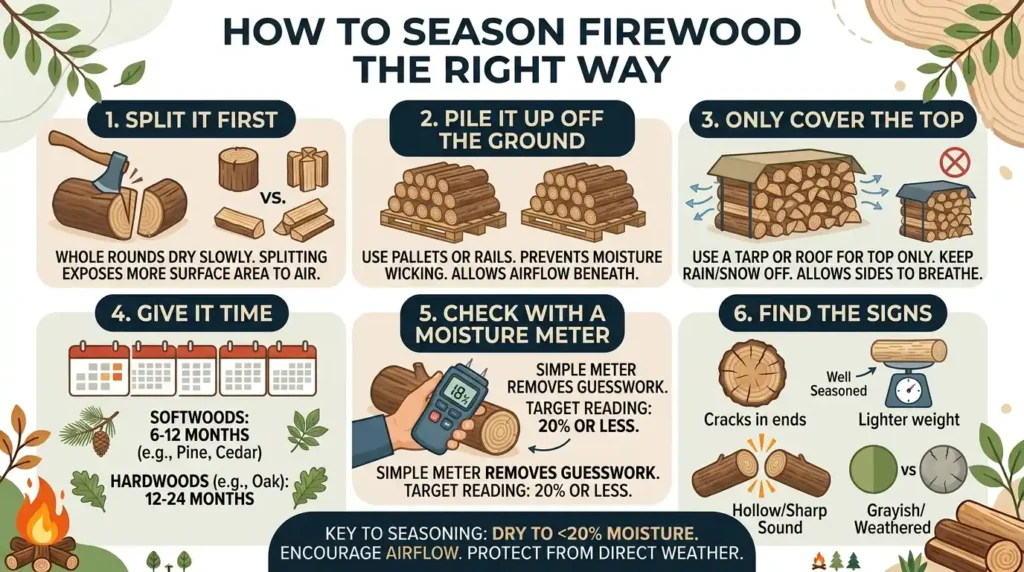
Seasoning merely involves drying wood to a safe level of moisture and then burning it. It is done like this:
- Split it first. Whole rounds are much slower to dry than split wood since a larger portion of the wood is exposed to the air.
- Pile it up off the ground. Place pallets or rails to allow air to pass through the bottom and the wood not to wick up ground moisture.
- Only cover the top. The top of the stack is covered with a tarp or roof to keep the rain and snow off but allow the sides to breathe. Completely covering the pile prevents moisture.
- Give it time. The softwoods normally require 6-12 months to season. Thick hardwood such as oak may require 12-24 months.
- Check with a moisture meter. The simplest meter is approximately 20 dollars and removes the guesswork. Find a reading of 20 percent or less and then burn.
- Find the signs. A well-seasoned wood is quite lighter than green wood, will be grayish or darker weathered, will have cracks radiating out of the centre of the cut ends, and will give a hollow and sharp beat when two pieces are beaten together, not a dull thud.
Common Firewood Mistakes to Avoid
- Premature burning of wood. The most common mistake is cutting and burning during the same season. It causes smoky, inefficient fires and accelerated creosote formation.
- Placing wood on the ground. This draws the moisture back into the wood and welcomes rot and insects.
- Coating the whole woodpile with a tarp. This entraps humidity and retards seasoning rather than accelerates it.
- Heating entirely with softwood. At first it burns quickly and fiercely, but you will consume much more of it, and you will handle a lot more creosote in a season.
- Violation of local firewood transportation laws. One of the primary methods of transmission of tree-killing pests to new locations is moving infested wood.
- Skipping chimney maintenance. Even good wood, an appliance should be inspected and cleaned on a regular basis to prevent the accumulation of creosote to be a fire hazard.
FAQs
Which is the most efficient firewood to use?
Hardwoods such as hickory and oak are the best wood to burn, and they generate approximately 24 to 29 million BTUs per cord, which is much higher than most softwoods.
Which firewood burns the longest?
Hickory and oak are the longest-lasting of common firewoods since their density forms a deep long-lasting bed of coal once the fires are extinguished.
Which is the hottest burning firewood?
The hottest burning common firewood is the osage orange, which yields about 32 million BTUs per cord, but also throws a lot of sparks and should be placed in an enclosed stove.
Which firewood is never to be burned?
Do not burn painted or treated wood, driftwood, moldy wood, or wood of poison ivy, oak or sumac. Both of them emit toxic substances into the smoke.
How can you tell if firewood is seasoned?
Experienced firewood is lighter than green wood, is grayish weathered, cracks in the cut ends, and sounds hollow when struck together. The moisture meter should be 20 percent or less, which indicates that it is ready.
What is the length of time required to season firewood?
The average time required by softwoods is 6 to 12 months and hardwoods require 12 to 24 months, depending on the climate and storage conditions of the wood.
Which is better pine or oak in a fireplace?
Oak can be used in prolonged heat and over night burns. Pine can be used to fire up fast or when fire time is not the issue.
Is it possible to burn wet firewood?
You can, but it burns inefficiently and it leaves a lot of smoke and creosote in your chimney, and this increases the risk of fire.
Why does my firewood smoke so much?
Too much smoke is almost always an indication of excessive moisture. It may also occur with softwoods that are resinous or a fire that is not receiving sufficient air supply.
Which type of firewood should be used in a fire pit?
Cedar and birch are used in outdoor fire pits due to their pleasant scent and average burning duration, although any well-seasoned hardwood can be used.
Is there any influence of type of firewood on creosote accumulation?
Yes. Wood burned when too wet (resinous softwoods) or burned in other ways (creosote) gives more creosote than hardwoods that are dry and dense.
Can firewood be carried across state borders?
Frequently not limited. In numerous states, the distance of the movement of firewood is restricted compared to the place of its cutting to prevent the invasion of tree pests. Before transporting wood, check with your state department of agriculture.
What is a cord of firewood?
A cord is a pile of wood 4 feet by 4 feet by 8 feet, or 128 cubic feet, but the solid wood is a little less when air spaces between the logs are taken into consideration.
Final Thoughts
One thing you should remember about this guide is this: dry beats species. The finest hardwood on this list will smoke and perform poorly without being seasoned, and an average wood at 15 percent moisture will always outburn the finest hardwood at 40 percent moisture.
When your wood is thoroughly dry, use oak or hickory to heat overnight, have some pine or cedar to start kindling quickly, and do not use any treated, wet or mouldy wood. It is that mixture, more than any one best species, that really makes a home warm and a chimney safe all winter.