How to Season and Burn Birch Firewood for Bright, Warm Fires
You have probably seen it — a stack of pale, papery-barked logs that look almost too pretty to burn. Maybe a neighbor dropped off a load, or you spotted “mixed hardwood” for sale and wondered what those white logs actually are. That is birch firewood, and it has a reputation problem: some people swear by it, others say it burns up too fast to bother with. Both are half right.
Birch is one of the quickest woods to light — the bark holds natural oils that catch even when the surface feels cool and damp. It throws a bright, lively flame that makes a fireplace look alive. The honest trade-off is burn time: lower-density birch species burn faster than oak or hickory, so you will reload more often. But “birch” is not one wood. Black birch burns nearly as hot as oak, while paper birch is a quick-flame wood best saved for mild evenings and fast morning fires.
This guide walks you through the whole thing: how to tell which birch you have, how to season it before it rots (it rots fast if you wait), how to build fires that actually heat, and where birch fits next to oak, maple, and pine. By the end you will know exactly when to reach for birch — and when to grab something denser instead.
Safety note: burn only seasoned firewood with moisture below 20 percent. Have your chimney inspected and swept every year by a certified chimney sweep, keep working carbon monoxide detectors on every floor, and never burn treated, painted, or stained wood — the fumes are toxic. Check your local burn bans and firewood transport rules before you buy or move wood.
- Seasoned birch logs
- Birch bark strips for tinder
- Pin-type moisture meter
- Splitting maul or axe
- Firewood rack or pallets
- Top cover or tarp
- Fireplace poker and ash bucket
- Working CO detector
Know Which Birch You Have Before You Burn It
Not every pale log is the same wood, and with birch the species changes the heat by a lot. Paper birch — the classic white, peeling-bark tree — runs about 20.3 million BTUs per cord. It lights fast and burns fast. Yellow birch has golden-bronze bark that peels in thin curls, and at roughly 23.6 million BTUs it gives noticeably more heat per load. Black birch, also called sweet birch, has dark, almost cherry-like bark; scratch a twig and you will smell wintergreen. At about 26.8 million BTUs per cord it burns nearly as hot as oak. Those heat figures come from Penn State Extension comparisons of air-dried wood at around 20 percent moisture. Before you judge a stack of birch, figure out which one you are holding — it decides whether you are looking at a quick evening fire or serious heating wood. If you are curious about the technical side, our guide on whether birch counts as a hardwood sorts out the botany.
What a Birch Fire Actually Burns Like
Birch gives you the prettiest fire of any common firewood. The flame is tall, bright, and active, and it catches with very little coaxing — those natural oils in the bark do the work. Sparks are few, smoke stays moderate when the wood is dry, and the smell is mild, with black and yellow birch adding a faint sweetness. Coals are decent but not long-lived. The honest catch: lower-density birch burns through a load faster than oak or hickory. Plan on feeding the stove more often, and you will never be disappointed. It is the wood you reach for when you want heat in twenty minutes, not heat at 3 a.m.
Split Birch Firewood Rounds Within Days of Cutting
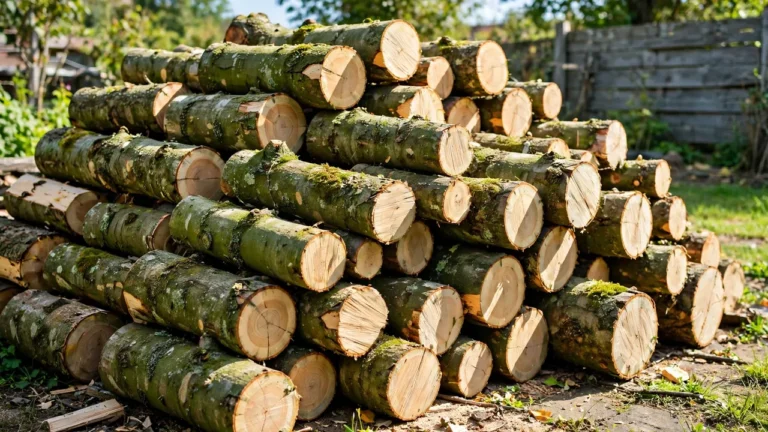
Here is where beginners lose good wood. Birch bark is waterproof — wonderful for starting fires, terrible for drying. Left in rounds, the bark traps moisture inside and the log starts rotting from the center out, sometimes within a single season. Split every round to 4–6 inch widths within days of cutting, sooner if the weather is warm. You expose the wet interior to air, and the pieces start shedding moisture right away. If you split a round and find dark, punky centers, you waited too long — burn those pieces first in an outdoor fire pit and move on.
Stack It So Air Moves Through Every Layer
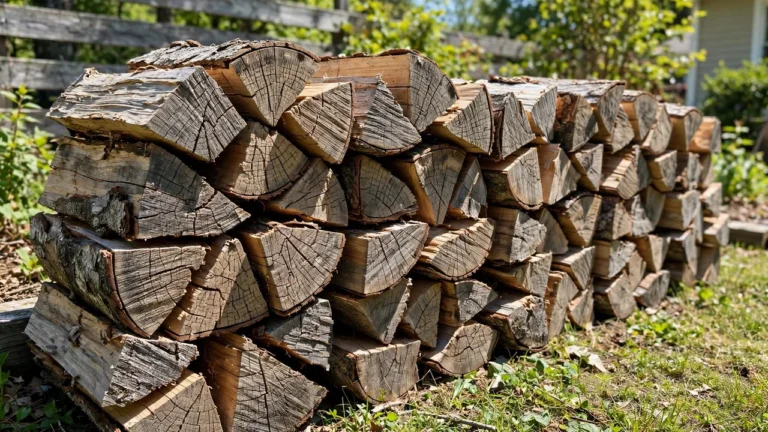
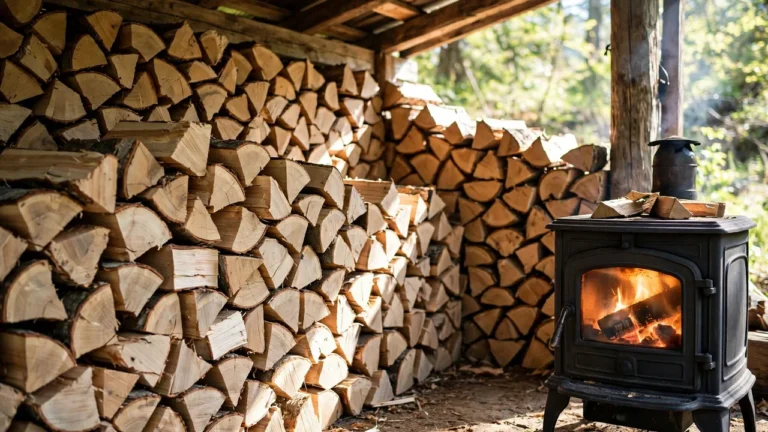
Air dries firewood, not sunshine alone. Set pallets or a rack to keep the stack off the ground, then build single rows where wind can reach both sides. Lay the top row bark-side up so rain sheets off, and cover only the top with a tarp or a sheet of metal roofing — open sides are non-negotiable. Tucked against a wall with no airflow, birch will mold before it dries. In a breezy, sunny spot, birch usually reaches burnable moisture in 6–12 months.
Test Moisture Before a Single Log Goes Indoors
Guessing is how wet wood ends up in the stove. Press a pin-type moisture meter into a freshly split face — not the weathered ends — and read the number. Anything under 20 percent is ready to burn. Test five or six pieces from different parts of the stack; the middle of a tight stack always dries last. Our ranked list of the best firewood to burn holds every species to this same dryness standard, because moisture matters more than species for clean heat.
Light the Fire With Birch Bark, Not Lighter Fluid
Peel thin curls of bark from your splits and keep a bundle by the fireplace — birch bark catches from a single match, even when it feels damp to the touch. Build a small teepee of kindling over the bark, lean two splits against it, and light the bark at several points. Skip lighter fluid and chemical starters entirely; the bark does their job without the smell, and no chemical odor lingers in the room.
Pair Birch With Slower Woods for Long Burns
Birch shines brightest as part of a team. Use it to get the fire roaring — two or three splits bring a cold stove up to temperature fast — then add oak, maple, or hickory for the long, steady coals that carry you through the night. On mild shoulder-season days, birch alone is plenty; when the temperature drops hard, let the denser woods do the heavy lifting. If you are buying rather than cutting, check what a cord of firewood costs in your area before committing to a full load of a single species — a mixed load is often the smartest buy.
Birch vs. Oak, Maple, and Pine at a Glance
Numbers make the trade-offs concrete. Heat figures below are approximate BTUs per cord of seasoned wood; actual results vary with species, moisture, and your stove.
| Wood | Heat (BTU/cord) | Burn Time | Lighting | Seasoning |
|---|---|---|---|---|
| Birch | 20.3–26.8M (by species) | Moderate | Very easy | 6–12 months |
| Oak | 24–30M | Long | Harder | 12–24 months |
| Maple | 18–26M | Medium-long | Medium | 6–12 months |
| Pine | 12–17M | Fast | Easy | 6–9 months |
The pattern is clear: birch trades burn time for convenience. It will not outlast oak overnight, but it lights faster than anything on this list except pine, seasons in half the time of oak, and burns far hotter than pine. That is why so many wood burners keep birch as their “quick fire” wood even when oak does the overnight work.
The Creosote Question, Answered Honestly
Birch gets blamed for creosote more than it deserves, and the full story matters. The bark holds natural oils, and like any wood burned wet, unseasoned birch smolders at low temperatures — and smoldering is what lays creosote down inside a chimney. Well-seasoned birch burned in a hot, well-vented fire is a different story: it burns clean, with moderate smoke and no unusual buildup. The rule is the same for every species — dry wood, hot fires, and a chimney that gets inspected and swept once a year by a certified sweep. Watch for warning signs between cleanings: shiny black flakes falling into the firebox, a strong acrid smell on mild-burn days, or smoke that hangs instead of rising.
Mistakes Beginners Make With Birch
Leaving rounds unsplit. The bark seals moisture in. A round left whole through summer can rot from the inside while looking fine on the outside. Split first, ask questions later.
Burning it green. Fresh birch hisses, smokes, and gives off a fraction of its heat. If your fire glass is blackening fast, the wood — not the stove — is usually the problem.
Expecting overnight burns from paper birch alone. Lower-density birch is a sprinter. For all-night heat, mix in oak or another dense hardwood, or accept a 4 a.m. reload.
Stacking it tight against the house. No airflow means mold, and mold means ruined wood plus uninvited insects near your foundation. Keep stacks a few inches off walls with air on all sides.
Birch Firewood Questions, Answered
Steps: 1) Split rounds within days. 2) Stack off ground, single rows, top covered. 3) Season 6–12 months. 4) Test — burn only under 20% moisture. 5) Light with bark, skip lighter fluid. 6) Mix with dense woods for long burns.
Remember: dry wood, hot fires, swept chimney every year.
Birch firewood rewards the burner who respects its nature: split it fast, dry it well, and burn it hot. Do that, and those pale logs will give you some of the brightest, most cheerful fires of the season — the kind that make a cold evening feel like an occasion. Keep a dense hardwood on hand for the deep-cold nights, and let birch do what it does best: light fast, burn bright, and get the house warm in a hurry.