Beech Firewood Burning Guide: How to Split, Season, and Burn Beech for Hot, Long-Lasting Heat
So you have a pile of beech firewood — maybe a tree crew left rounds behind, or a storm dropped the big beech in the yard. Word is it burns hot. Word is also that it is stubborn to split and slow to dry. Both are true, and that is exactly why this guide exists.
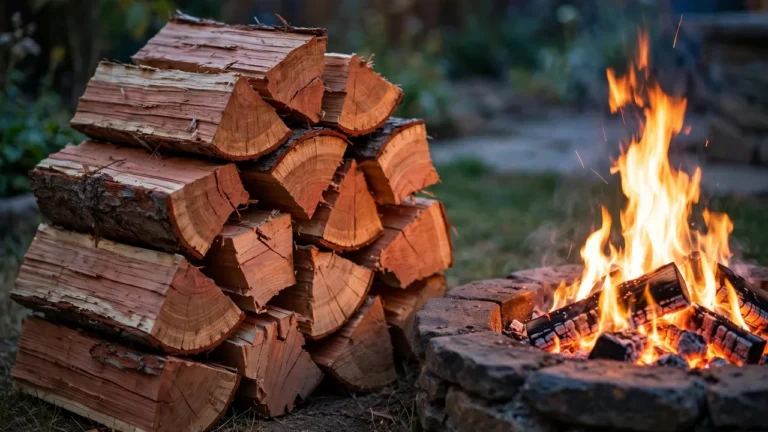
Beech is dense, heavy wood that burns long and hot and settles into deep, glowing coals — the kind that keep a stove warm for hours after the flames die down. Published heat figures vary by source, from about 24 to 27.5 million BTUs per cord, which puts beech in the same league as oak. The price of that heat is patience: beech holds water deep in its fibers and needs a full year of seasoning, longer for the best results.
Follow the seven steps below and you will take that pile from raw rounds to ready fuel: spotting good beech, splitting it green, stacking it so it dries instead of rots, testing it, and burning it for steady, clean heat. The active work takes an afternoon or two. The waiting takes a year. Both pay off the first cold night you load the stove.
Safety note: burn wood only in a vented fireplace or stove. Keep a working carbon monoxide detector on every floor of your home, and have the chimney inspected and swept once a year by a certified sweep. Wet wood increases creosote buildup and chimney-fire risk.
- Splitting maul or hydraulic log splitter
- Chainsaw (only if cutting your own rounds)
- Pin-type moisture meter
- Pallets, rails, or cinder blocks
- Tarp or firewood cover
- Work gloves, safety glasses, steel-toe boots
- Dry kindling and fire starters
- Vented fireplace or wood stove
- Spot real beech and reject rotted rounds
- Split beech green before it hardens
- Stack beech bark-side up off the ground
- Give beech a full year — two is better
- Test beech firewood with a moisture meter before burning
- Light easy starters first, then feed in beech
- Dial the air back and let the coals work
Spot real beech and reject rotted rounds
Beech bark is smooth and gray, often compared to elephant skin, with none of the deep furrows you see on oak. The wood inside is pale cream and the rounds feel heavy — green beech carries a lot of water. Toss any piece that feels soft, crumbly, or shows shelf mushrooms: beech rots fast once cut, and punky wood burns poorly and smokes. Keep only solid, heavy rounds for the pile.
Split beech green before it hardens
This is the step people skip and later regret. Beech grows tougher as it dries — firewood references rate it difficult to split once seasoned — so work the rounds soon after cutting, while the fibers are still wet and forgiving. Aim for splits 4 to 6 inches across at the widest point; smaller pieces dry faster. Set each round on a solid block, strike near the edge instead of dead center, and keep children and pets well clear of the swing zone. For rounds wider than 18 inches, a hydraulic splitter saves real strain. Wear safety glasses and gloves.
Stack beech bark-side up off the ground
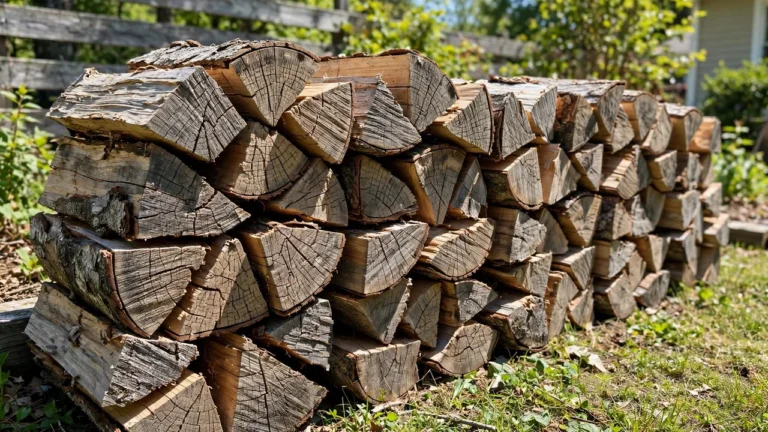
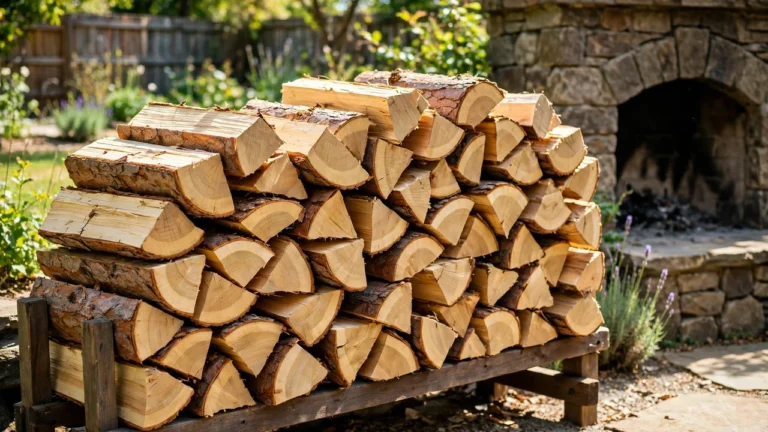
Rain is beech’s enemy, and its bark is the umbrella — but only when it faces the sky. Build the stack right:
- Set pallets or rails first. Wood on bare soil wicks moisture and rots.
- Stack single rows with a few inches of air between them for wind flow.
- Turn bark side up on every split.
- Cover the top only. Leave the sides open so damp air escapes.
For site and cover details, see our guide to seasoning firewood the right way.
Give beech a full year — two is better
Density is beech’s gift and its tax. Water hides deep inside those tight fibers, and the bark that sheds rain also slows drying. Plan on 12 months minimum between splitting and burning, and 18 to 24 months for the hottest, cleanest fires. Wood split this spring becomes next winter’s fuel at the earliest — the winter after that burns even better. Write the split date on a few end grains with a marker so you always burn the oldest stack first.
Test beech firewood with a moisture meter before burning
Guessing wastes good fires. Split a test piece in half and press the meter pins into the fresh face, not the weathered ends. You want 20% moisture or less — the level university extension guides cite for properly seasoned wood (University of Arkansas Extension). Check two or three splits from different parts of the stack. No meter? Bang two splits together: dry wood rings sharp, wet wood thuds.
Light easy starters first, then feed in beech
Dense beech resists catching — references rate it difficult to start. Lay a base of newspaper, dry kindling, or small softwood splits and let it burn down to strong flames first. Then add beech with air gaps: lean splits teepee-style or crisscross them so flames lick every face. Once the bark edges glow and the splits catch fully, load larger pieces. Birch firewood lights faster and burns quicker, so a few birch splits make handy bridge fuel on cold starts.
Dial the air back and let the coals work
Beech shines once it is going. When the splits are fully involved, close the air control partway for a long, steady burn — those dense coals throw heat for hours. For overnight heat, load the box full on a deep coal bed and cut the air low. Always reload onto glowing coals, never into a cold stove.
- Keep solid, heavy beech rounds; toss rotted pieces.
- Split green to 4–6 in.; use a splitter past 18 in.
- Stack bark-up off the ground; cover top only.
- Season 12 months minimum; 24 is better.
- Test: 20% moisture or less before burning.
- Start with kindling; add beech once flames are strong.
- Cut air back; reload on glowing coals.
You did the patient work — split green, stacked high, waited the year. Now the payoff: beech firewood throwing steady heat deep into the night. Keep stacks dated, burn the oldest first, and keep the chimney swept. Next fall, make the moisture-meter check a yearly habit.