How to Dry Firewood Fast: 7 Steps to Seasoned, Ready-to-Burn Wood
You cut the tree in spring, and now the nights are turning cold. The stove is ready, but your woodpile is still green. Wet wood hisses, smokes, and coats your chimney in creosote — and it spends most of its energy boiling off its own water instead of heating your house. Learning how to dry firewood fast is the difference between a warm winter and a frustrating one.
Here is the honest truth first: no safe method turns green wood into burn-ready fuel overnight. What you can do is cut the normal wait roughly in half. Basic air-drying takes around 9 months for softwoods and 18 months for hardwoods. With the steps below — small splits, full sun, steady wind, and a simple solar kiln — many people get usable wood in about 3 months of good weather.
This guide walks you through every move in order. One afternoon of work sets it all up. The sun and wind do the rest.
Safety note: firewood work means sharp tools and, later, real fire. Never rush drying with a kitchen oven, a microwave, or any accelerant — each of those has caused house fires. Everything in this guide is proven, legal, and safe.
Split every round to six inches or less
Bark is a raincoat. A whole, unsplit round holds its moisture for months because water can barely escape through the bark — one forestry trial found split wood lost moisture roughly three times faster than unsplit rounds. Splitting cracks that shell open and exposes the wet interior to air.
Break every piece down so no split measures more than 6 inches across. Knock off any loose bark while you work; extension foresters list bark removal as one of the simplest ways to speed drying. Smaller pieces also light faster later, which is a bonus you will feel in November.
On knotty rounds, aim your maul near the edge instead of dead center. The wood gives way along the grain from the outside in, and you will waste far fewer swings fighting a knot head-on.
Cut all pieces to sixteen inches
Sixteen inches is the sweet spot. It fits nearly every firebox and wood stove, it stacks into stable rows, and shorter pieces dry noticeably quicker than long ones because moisture has less distance to travel to reach a cut end.
Measure the first few cuts with a tape, then mark your saw bar or use a stick cut to length as a gauge. Close enough counts — being within an inch either way changes nothing.
Stack in a single row facing the sun and wind
Wind and sun beat shade and shelter, even when the sheltered spot looks tidier. In a multi-year seasoning trial, wood left in an exposed sunny, windy spot dried faster than wood kept under cover — and split wood in the open reached roughly 20% moisture months ahead of shaded stacks.
Build your stack in single rows, not deep piles. The middle of a wide pile barely sees moving air. Point the cut ends toward your prevailing wind and leave a few inches between rows so breezes pass straight through the stack.
Raise the stack off the ground
Soil is wet, even when it looks dry. Wood sitting directly on dirt wicks moisture upward all season, undoing your work from below.
Two old pallets or a pair of 2×4 rails solve it completely. The gap underneath lets air circulate under the stack, which dries the bottom row as fast as the top.
Cover the top and leave the sides open
Rain is the enemy; trapped humidity is worse. Drape a tarp or sheet of plastic over only the top of the stack, weighed down so wind cannot peel it off. Leave every side fully open.
Wrapping the whole pile like a burrito is the classic beginner mistake. Sealed sides trap ground moisture and block airflow, and the stack comes out moldy instead of dry. Cover from above, breathe from the sides.
Build a simple solar kiln to dry firewood fast
When you need wood sooner than one season allows, a solar kiln is the fastest safe method available. The design comes from extension forestry work: set split wood on a pallet base, frame low walls from 1×4s or 2×4s, and cover the top with clear plastic or greenhouse panels. Wrap the sides in 4-mil plastic sheeting, but leave a gap at the top and keep the pallet sides exposed so hot air flows up through the stack.
It works like a greenhouse. One builder measured about 115°F inside on a sunny winter day and cut his drying time from roughly six months to three. When a moisture meter reads below 20%, move the wood to your regular woodshed. A kiln sized for a face cord handles most households’ urgent needs without much lumber or cost.
Test every batch with a moisture meter
Guessing is how wet wood ends up in the stove. A pin-type moisture meter costs less than a tank of gas and removes all doubt: split a test piece open and press the pins into the freshly exposed face, not the bark side or the old ends.
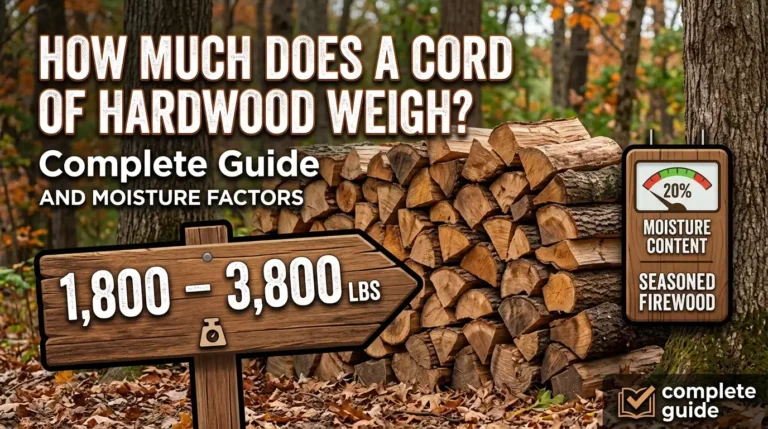
Burn-ready means 20% moisture or below. Test three or four pieces from different spots in the stack — the middle of the pile always lags behind the sunny ends.
Cracks on the ends look promising but lie. Surface checking shows up long before the center is dry — trust the meter reading, not the wrinkles.
Skip the shortcuts that start fires
Search this topic online and you will find people suggesting kitchen ovens, microwaves, and accelerants. Every one of them is dangerous. Ovens are not built to handle wood: heat plus wood vapors in an enclosed box is a fire waiting for a moment. Microwaves are worse — fire authorities warn that once material dries out inside a microwave it can overheat and ignite. And accelerants turn a slow drying problem into an emergency-room problem.
Drying wood indoors near heaters or furnaces causes its own trouble: mold colonies and insects move in, and a stack leaning against a heat source is a genuine ignition risk. There is no instant method. The steps above are the fast lane, and they are all safe.
- Kitchen oven: fire and fume risk — never dry wood in an oven.
- Microwave: dried material can overheat and ignite.
- Accelerants (gasoline, kerosene): never use them to “help” wood dry or light.
- Drying against heaters or furnaces: mold, pests, and ignition risk.
| If this happens | Try this |
|---|---|
| Meter still reads 25%+ after months | Split smaller, move the stack into full sun and wind, and check the top cover isn’t sagging onto the wood. |
| White or green mold on the stack | Pull the cover back from the sides and open up airflow. Let affected pieces dry fully in sun before burning; discard any that stay punky. |
| Rain soaked the uncovered stack | Don’t panic — surface water leaves fast in sun and wind. Cover the top and give it a few dry days, then re-test. |
| Kiln is dripping with condensation | Add vents at the top. Trapped humid air stalls drying; a vent lets it escape and keeps the cycle moving. |
| Wood burns but the glass blackens fast | It’s still too wet. Pull it from the stove, restack it in the sun, and wait for that 20% reading. |
Common questions
With basic stacking, plan on about 9 months for softwoods and 18 months for hardwoods. Using every step in this guide — small splits, sun, wind, and a solar kiln — you can get burn-ready wood in roughly 3 months of good weather. Species and climate move those numbers around.
You can, but you shouldn’t make a habit of it. Above 20% you get smoky fires, weak heat, and faster creosote buildup in the chimney. Wait for 20% or below.
Softwoods season quickest. Among hardwoods, ash has a reputation for drying faster than most and is sometimes burnable the same season it’s cut. For a full ranking, see our guide to the best firewood to burn.
Yes. Cold air holds very little moisture, so winter wind still pulls water out of wood. A solar kiln keeps working too — builders have measured around 115°F inside on sunny winter days.
If winter is weeks away and your stack is green, yes — it buys you a season while next year’s wood seasons properly. Check what a cord of firewood costs near you first so you can spot a fair price.
- Maul or axe, pallets, tarp
- Pin moisture meter
- Clear plastic (kiln)
- Gloves + eye protection
- Split to ≤ 6 inches
- Cut to 16 inches
- Single sunny, windy row
- Off the ground on pallets
- Cover top only
- Solar kiln for urgent wood
- Meter-test: ≤ 20% to burn
- No ovens, microwaves, accelerants
The bottom line
You now know how to dry firewood fast: split small, cut uniform, stack single rows in sun and wind, lift the pile off the dirt, cover only the top, and let a simple solar kiln handle the wood you need soonest. Test with a meter, trust the 20% number, and skip every shortcut that involves an appliance or a fuel can.
Your next move: pick wood worth the effort. Our guide to the best firewood to burn ranks the species so the stack you built heats like it should.