Cherry Firewood Burning Guide: Sweet Aroma, Moderate Heat, and How to Burn It Right
A neighbor offered you a truckload of cherry firewood, or a seller quoted a price on a cord, and you are wondering whether to take it. I have stood in front of a pile of reddish logs doing that same mental math. Here is the honest answer up front: cherry firewood is a pleasure to burn, but it is not the heat monster some sellers claim.
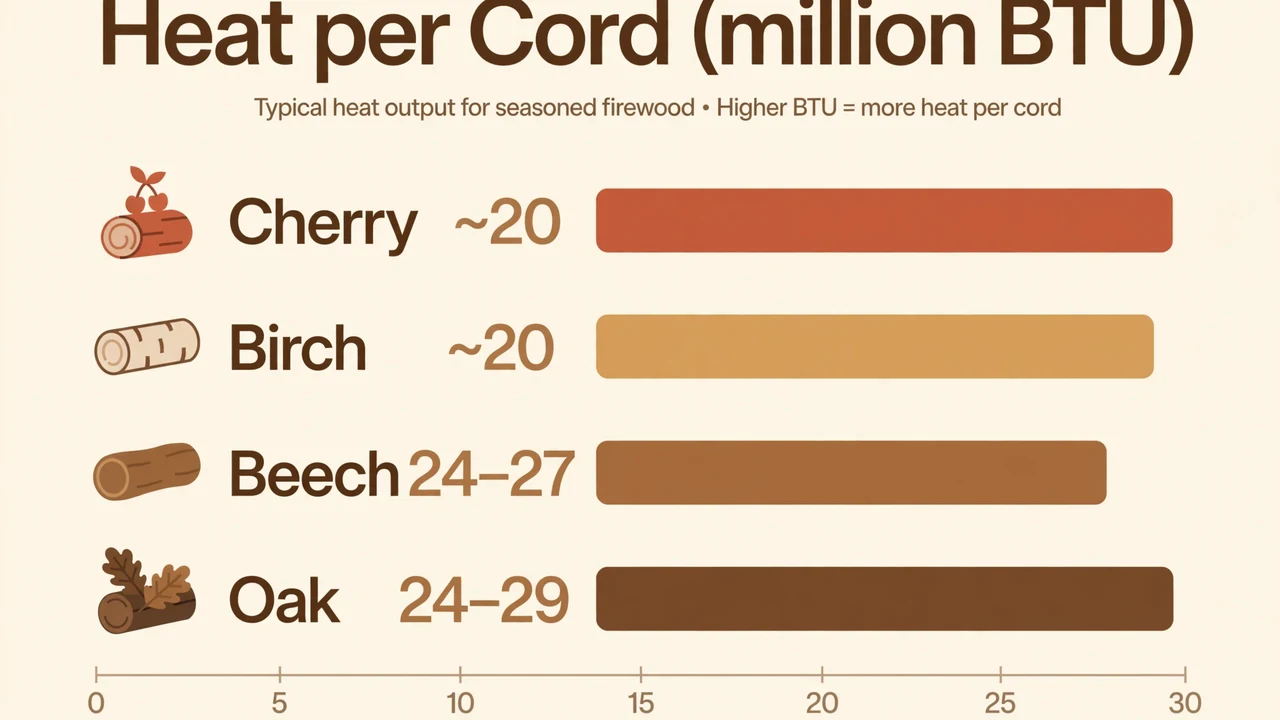
Most firewood sold as cherry is black cherry, a medium-density hardwood. Published firewood charts list it at about 20 million BTUs per cord — respectable, but well below oak or beech. What cherry lacks in raw heat it makes up for with a sweet, fruity smell, a clean flame with little smoke, few sparks, and a bed of coals that holds warmth after the flames die down. It also splits readily, which your back will thank you for.
By the end of this guide you will know how to spot real cherry, how to dry it, and how to burn it for the best fire it can give — plus when to pair it with a denser wood for real winter heat. The drying takes months, but the active work takes one afternoon.
Safety note: burn cherry only in a vented fireplace or wood stove — never in an unvented indoor heater. Fit a working carbon monoxide detector on every floor of your home, and have your chimney inspected and swept once a year by a certified sweep. Wet wood raises creosote buildup and chimney-fire risk.
Should cherry be your main firewood?
Cherry works best as a fireplace and shoulder-season wood, not as your only deep-winter heat. At about 20 million BTUs per cord it burns milder and shorter than oak or beech, so heating a whole house on cherry alone means more trips to the woodpile. It shines mixed with denser wood or burned alone for evening fires, where its sweet smell and steady coals earn their keep.
How to spot real cherry firewood
Real cherry bark is reddish-brown: smooth with horizontal marks on younger wood, turning scaly with age. Split it open and the heartwood glows pinkish-red while the sapwood stays pale. A fresh-split face smells faintly sweet — no other common firewood smells quite like it.
Watch out for sellers who call any reddish wood “cherry.” Check the bark and the color of the split face, and pick up a log. Cherry is medium-heavy: noticeably heavier than pine, lighter than a block of oak. If the price seems high for what you are getting, read our seasoning guide first — wet wood of any species is a bad deal.
Split cherry green while it is still soft
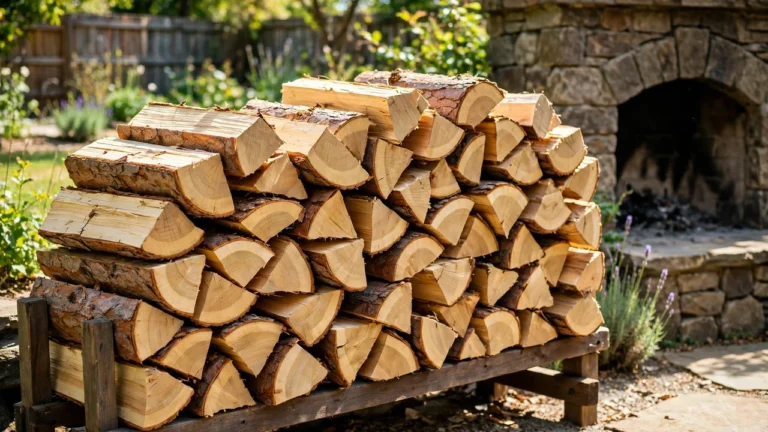
Green cherry splits with far less fight than dry cherry, so do not wait. A maul and wedge handle most rounds; a hydraulic splitter earns its keep on knotty pieces. Aim for splits 4 to 6 inches wide at the thick end — fireplace-size pieces catch fire faster and dry sooner. Split logs expose fresh surface on every face, which is exactly what seasoning needs.
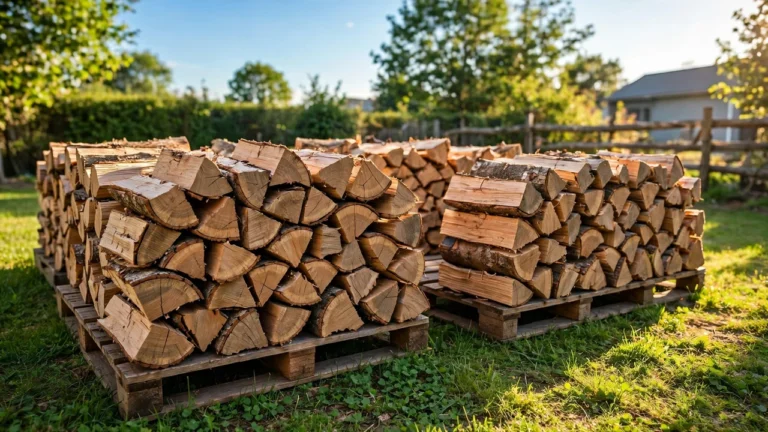
Stack cherry firewood off the ground for airflow
Build your stack where sun and wind reach it: single rows with small gaps between pieces, sitting on pallets or rails so air moves underneath. Cover only the top against rain; wrapping the sides traps moisture. Split cherry dries in roughly 6 to 12 months this way, depending on your climate. Full stacking technique lives in our firewood seasoning guide, and if you are in a hurry, our guide on how to dry firewood faster covers the tricks that actually work.
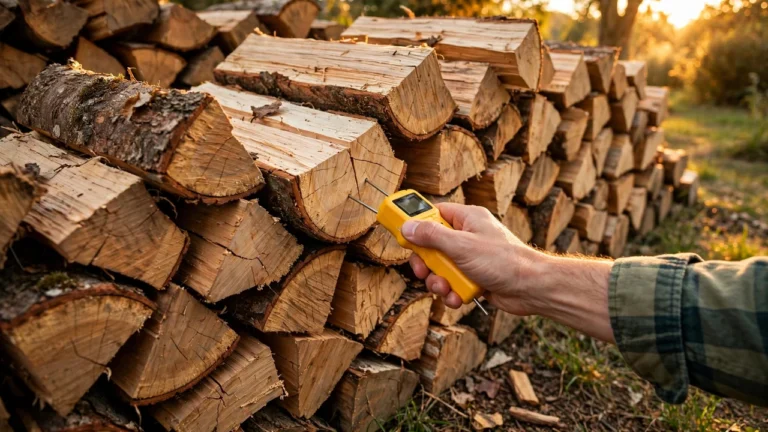
Test a fresh-split face with a moisture meter
Looks lie; the meter does not. Split one test piece open and press the meter pins into the fresh face. Burn only when it reads under 20% moisture. Darkened ends, cracked faces, and light weight are hopeful hints, but the meter makes the call.

Lay kindling under small splits first
Cherry catches fire readily, so you rarely need much coaxing. Set tinder or a fire starter on the grate, crisscross dry kindling over it, then lay two or three small cherry splits across the top with finger-width air gaps. Light the tinder and leave the air fully open. When the kindling is well lit, add full-size splits one or two at a time.
Reload on the glowing coal bed before it fades
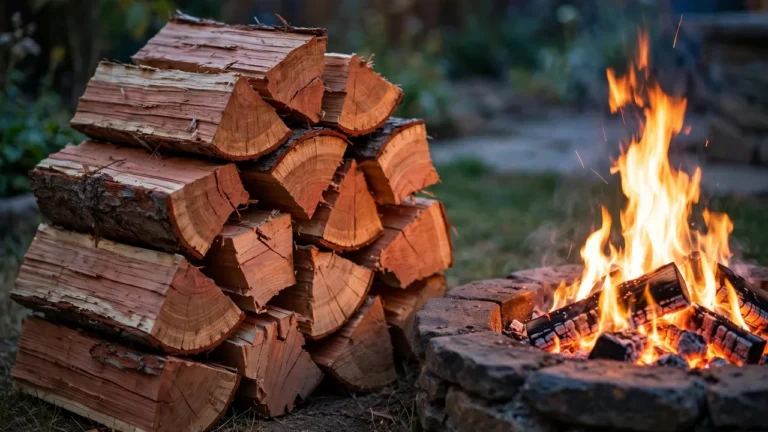
Here is where cherry quietly beats flashier woods: it settles into an excellent bed of coals that holds warmth after the flames drop. When the flames shrink and the logs glow orange underneath, that is your reload window — gray coals mean starting over. For overnight heat, mix in denser wood: cherry plus a couple of oak or beech firewood splits gives you cherry’s aroma with slow, lasting heat. On mild nights, birch firewood mixed in lights fast too.
- Add splits on glowing coals.
- Full air for five minutes.
- Then return air to your usual setting.
Cherry Firewood FAQs
Is cherry good firewood?
Yes, with a trade-off. Cherry delivers about 20 million BTUs per cord — moderate heat — but it splits readily, burns with little smoke and few sparks when dry, forms excellent coals, and smells sweet. It suits fireplaces, shoulder seasons, and mixed loads better than whole-house winter heating.
How long does cherry firewood take to season?
Roughly 6 to 12 months, split and stacked in sun and wind. Split it first, keep it off the ground, cover only the top, and burn it only when a moisture meter reads under 20%.
Does cherry firewood spark a lot?
Not when properly seasoned — cherry is known for few sparks and low smoke. Any wood can pop now and then, so keep a spark screen on an open fireplace.
Can you burn cherry in a wood stove?
Yes. Seasoned cherry burns cleanly in stoves and forms a fine coal bed. For overnight heat, pair it with denser wood, and have the chimney inspected and swept once a year.
Is cherry wood good for cooking or smoking?
Yes. Cherry gives a mild, sweet smoke that many grillers like on pork and poultry. Burn only untreated, seasoned cherry, and follow your smoker’s manual.
Does cherry burn hotter than oak?
No. Published charts list cherry around 20 million BTUs per cord versus roughly 24 to 29 million for oak, so cherry burns milder and finishes sooner.
- Split cherry green, 4–6 inch splits.
- Stack off the ground in sun and wind, 6–12 months.
- Test a fresh-split face: burn only under 20% moisture.
- Lay kindling under small splits, air fully open.
- Reload on the glowing coal bed; mix with denser wood for long burns.
The bottom line on cherry
You now know what cherry firewood does well: a sweet-smelling, clean-burning fire with a coal bed that keeps giving. You know its limit too — moderate heat, so it is a team player rather than a solo act in deep winter.
Take the load if the price is fair and the wood is dry. If you want a denser partner for mixed loads, read our beech firewood burning guide next. Your fireplace will thank you.