How to Tell If Firewood Is Seasoned: 6 Hands-On Tests Anyone Can Do
Your stove is clean, the evening is cold, and the woodpile is full — but is that wood actually ready to burn? It is a fair question, because burning wood that is still green is one of the most common ways beginners waste heat, smoke out the neighborhood, and coat their chimneys in creosote. The phrase you will hear everywhere is seasoned firewood, and it has a precise meaning: wood whose moisture content has dropped to 20% or less, the threshold West Virginia University Extension gives for wood that is ready to burn.
This guide shows you how to tell if firewood is seasoned using six hands-on tests, from a moisture meter reading to the old knock test. You will need about 15 minutes, and by the end you will know exactly which pieces can go in the fire and which need more time in the stack.
Safety note: burn wood only in a vented fireplace or wood stove. Fit working carbon monoxide detectors on every floor of your home, and have the chimney inspected and swept every year by a certified chimney sweep. Wet wood burns cool and smoky, which builds creosote — the main cause of chimney fires.
- A pin-type moisture meter (the single most reliable test)
- An axe or maul to split a test piece open
- Work gloves and eye protection for splitting
- Three sample splits from your woodpile
- A marker or chalk to label tested pieces (optional)
- Pull three sample splits from different parts of the stack
- Split one sample open to expose fresh wood
- Press a moisture meter into the fresh face
- Knock two splits together and listen
- Check the ends, bark, and color
- Decide whether the firewood is seasoned or still green
Pull Three Sample Splits From Different Parts of the Stack
One log tells you nothing about the whole pile. Wood on the sunny top row can be bone dry while pieces buried in the middle still hold moisture, so grab three samples: one from the top, one from the middle, and one from the bottom or back of the stack. Choose average-looking pieces, not the driest ones you can find.
- Pick pieces roughly the same size as what you normally burn
- Include at least one thicker split — big pieces dry slowest
- Note where each piece came from with chalk if you want to track problem spots
If all three pass, the pile is almost certainly ready. If one fails, you have a spot that needs better airflow or more time.
Split One Sample Open to Expose Fresh Wood
Put on your gloves and eye protection, then split one sample in half along the grain with your axe or maul. The surface of a log dries far faster than its core, so testing the outside of an unsplit piece gives a reading that flatters the wood. The fresh face you just exposed shows what the fire will actually have to boil off. Split pieces dry faster than whole rounds, so if you bought unsplit rounds, test a piece after splitting — that is the form you will burn.
Press a Moisture Meter Into the Fresh Face
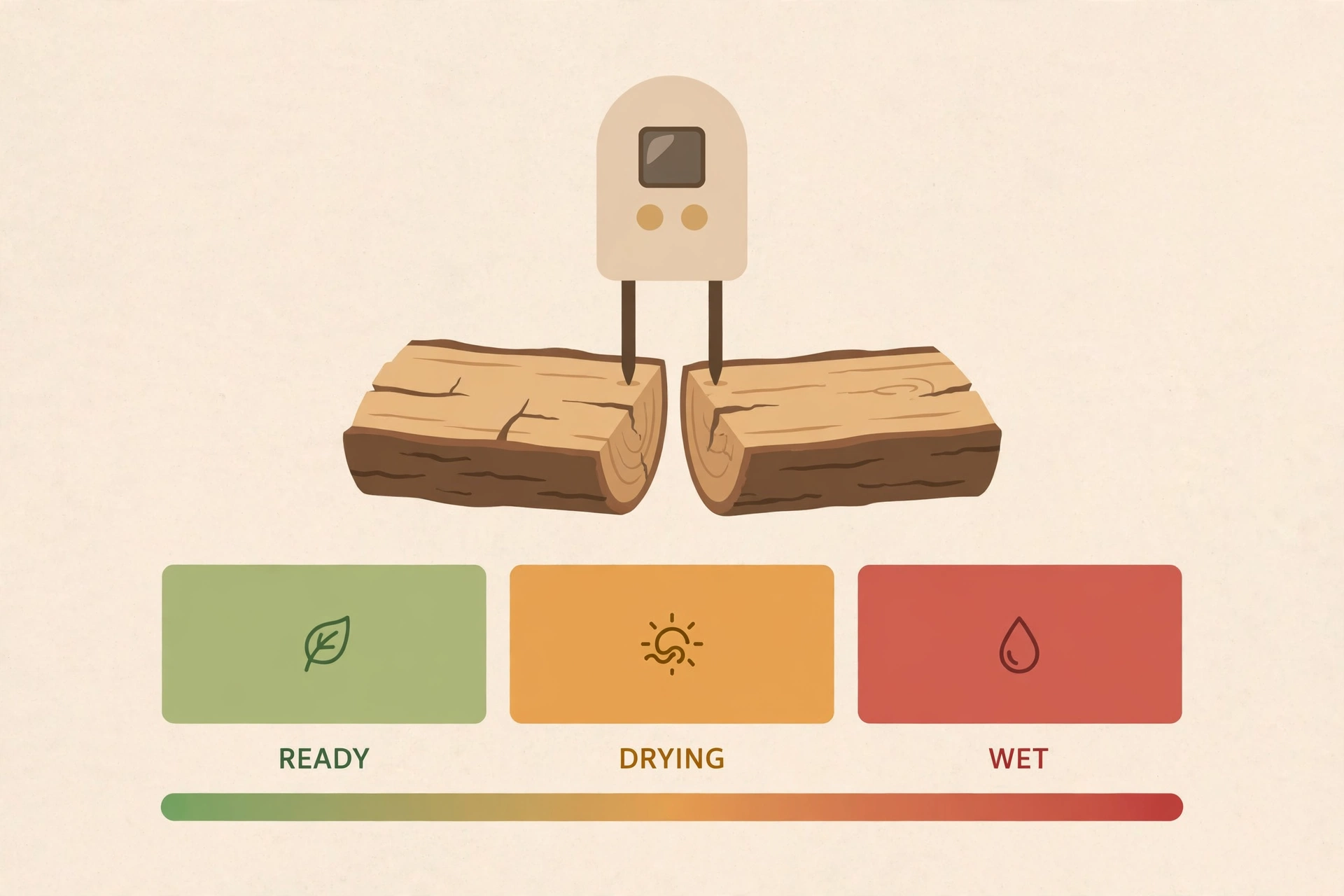
Push the meter’s two pins firmly into the freshly split surface, about a third of the way in from the bark, and wait for the number to settle. Most pin meters are accurate to within a couple of percentage points, which is plenty for this job. Repeat the test on the other two samples the same way — split, press, read — and write down all three numbers.
The number you want is 20% or less. That is the seasoned threshold used by university extension services: Cornell Cooperative Extension advises burning only wood with moisture content below 20%, and West Virginia University Extension likewise calls wood ready when it is down to less than 20 percent. A reading of 16–20% is ideal; anything over 22% needs more drying time.
Knock Two Splits Together and Listen
No meter on hand? Hold a split in each hand and knock them together sharply, like clapping two wooden blocks. Seasoned wood rings out with a high, hollow crack — almost musical. Green wood answers with a dull, flat thud, the sound of water still trapped in the fibers absorbing the impact.
This old woodsman’s test works because dry fibers vibrate freely while wet fibers do not. It is not as precise as a meter, but it is honest: if every pair in your pile thuds, none of it is ready. Pair it with the other tests rather than trusting it alone, since a dry surface can ring while the core is still wet.
Check the Ends, Bark, and Color
Seasoned splits look tired. The cut ends show radial cracks (checks) fanning out from the center, the color has faded from bright cream to a dull gray or tan, and the bark hangs loose or peels off in your hand. Pick a piece up: seasoned wood feels noticeably lighter than a green split of the same size, because the water weight is gone.
Green wood tells the opposite story: vivid color, bark glued on tight, no end cracks, and a heft that surprises you. None of these signs is proof on its own — end cracks can appear while the core stays wet — but together with the meter and the knock test they build a verdict you can trust.
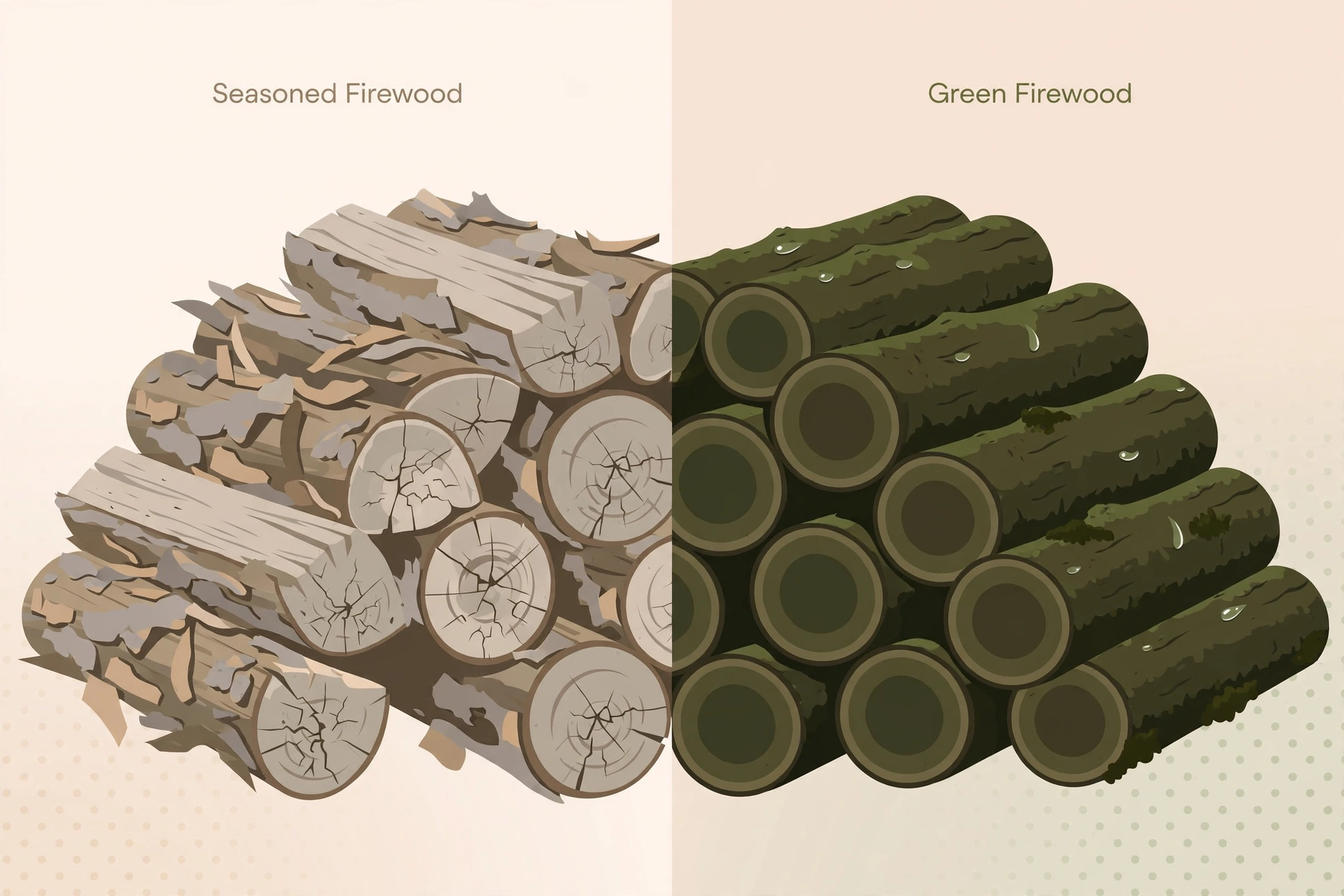
Decide Whether the Firewood Is Seasoned or Still Green
Now put the evidence together. If all three meter readings are 20% or below, the knocks ring, and the ends are checked and gray, burn with confidence. If readings run 22–25%, the wood is close — restack those pieces in a sunny, breezy spot and retest in a few weeks. Readings above 25% mean the wood is still green; it needs months, not days, so plan your fires around the dry pieces instead.
While you sort the pile, keep seasoning in mind: to season firewood properly, stack it off the ground with air space between rows and cover only the top. If you are in a hurry, see how to dry firewood faster without cutting corners that matter.
- Lights quickly and burns hot
- Bright flames, little smoke
- Less creosote in the chimney
- More of each log becomes heat
- Hisses and sizzles as water boils off
- Smolders with heavy smoke
- Coats the flue in creosote
- Much of the heat is wasted drying the wood
- Testing the outside of an unsplit log. The surface dries first and lies to the meter. Always split, then test the fresh face.
- Testing one piece and calling the pile done. Moisture varies across a stack. Test three pieces from different spots — top, middle, and bottom.
- Trusting end cracks alone. Checks show the ends have dried, but thick pieces can hold a wet core for months after the ends crack. Confirm with a meter.
- Assuming a year on the calendar means seasoned. Wood stacked in shade, packed tight, or left uncovered may still read over 25% after twelve months. The meter has the final word, not the date.
- Pull 3 samples: top, middle, bottom of the stack
- Split one open; test the fresh face, not the bark or ends
- Press meter pins in; 20% or less = seasoned
- Knock two splits: ring = dry, thud = wet
- Check ends for cracks, bark loose, color faded, weight light
- Meter under 20%? Burn it. Over 25%? Restack and retest later.
You now know exactly where your woodpile stands — which pieces are ready and which need more time. Next, pick your fuel wisely: our guide to the best firewood to burn ranks the species that give the hottest, cleanest heat once they are properly seasoned.