Gas vs Electric Fireplace: Which One Is Better for Your Home?
You want flames without hauling wood, and the choice keeps coming down to gas vs electric fireplace. Both promise a warm glow at the push of a button. They differ a great deal in heat, cost, and installation.
This guide lays out real numbers and plain facts: what each type costs to buy and run, how much heat each puts out, what safety rules apply, and who each type suits best. By the end, you will know which one fits your home.
The short answer
🔥 Pick gas if…
You want real heat for a large room, you have a gas line (or can add one), and you want warmth during power outages.
⚡ Pick electric if…
You rent, you want a plug-and-go install with no venting, or you want the lowest upfront cost.
Neither is better in the abstract. The winner depends on your home, your wiring, and what you want the heat for.
Safety first: gas work always needs a licensed professional — never touch a gas line yourself. Gas fireplaces make carbon monoxide, so you need working CO detectors and proper venting. Electric units need a sound outlet and clear space around them. Details on both are below.
Installation Cost and Effort
This is where the two types split hardest. An electric fireplace can be a same-day purchase. A gas fireplace is a construction project.
Freestanding electric units plug into a standard outlet and cost a few hundred dollars. A built-in electric insert runs about $850–$3,800 for the full project, including electrical work and finish trim. The only upgrade some homes need is a dedicated circuit that meets electrical code requirements.
Gas costs far more up front. A gas insert into an existing fireplace typically runs $2,300–$8,000 installed, with a national average near $3,700 (Angi, 2026). A direct-vent insert averages $4,300–$11,200. Building a brand-new direct-vent gas fireplace from scratch can reach $6,300–$15,200 once venting, gas piping, framing, and finishing are counted.
The price gap comes from labor. Gas needs a gas-line run, venting through a wall or roof, permits, and a licensed technician. Plan for days or weeks of work, not hours.
Running Costs: What Each Hour Really Costs
Installation is a one-time bill. Running cost is the bill you pay every month, so do this math before you choose.
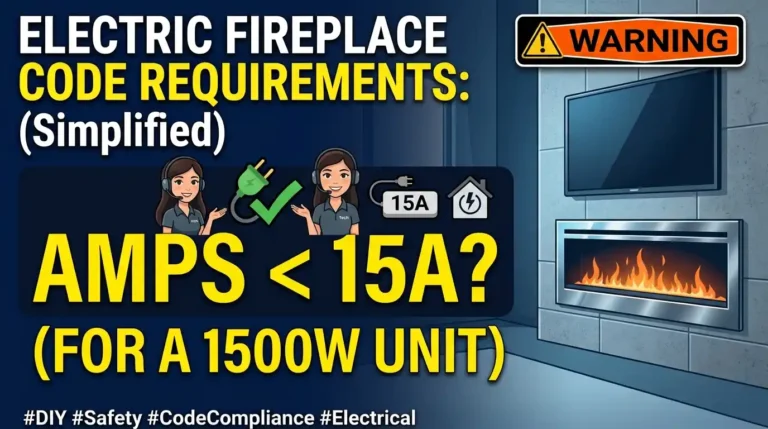
A standard 1,500-watt electric fireplace draws 1.5 kWh per hour and puts out about 5,100 BTU. At typical US electricity rates of $0.16–$0.19 per kWh, that is roughly $0.24–$0.29 per hour. Run it three hours a day and you add about $22–$26 to your monthly bill.
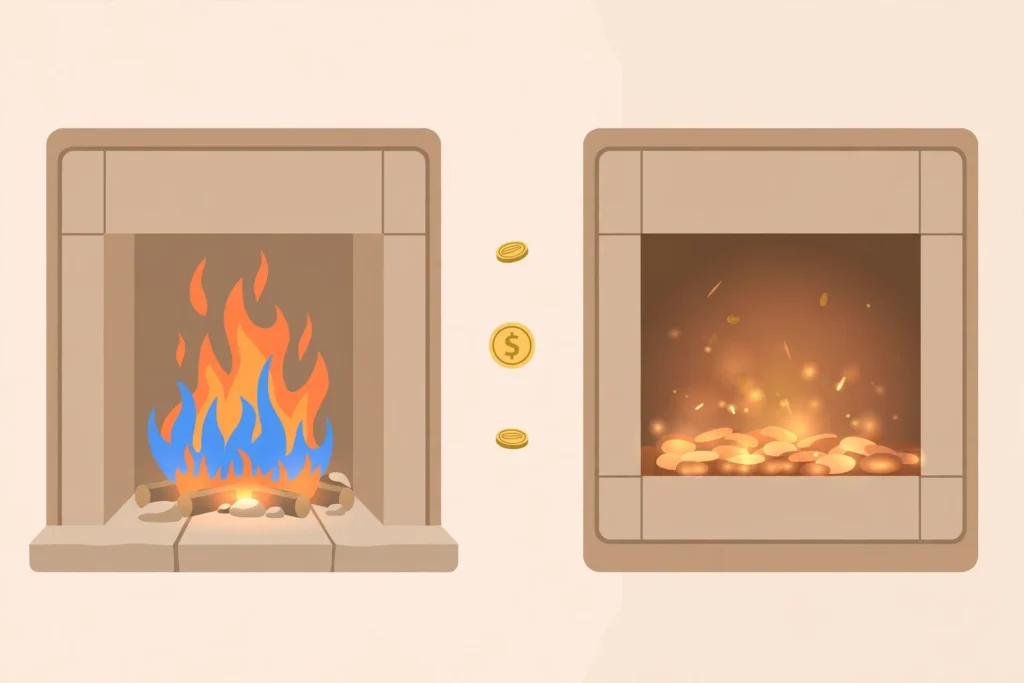
Gas wins this round. Natural gas is usually cheaper per unit of heat than electricity. Using the standard formula — BTU output × price per therm ÷ 100,000 — a 30,000-BTU gas fireplace at $1.50 per therm costs about $0.45 per hour while making six times the heat of the electric unit above. At the same 5,100-BTU output, gas costs only a few cents per hour. That is why heavy daily users tend to favor gas.
Your rates decide the real winner. Check your electricity bill for your per-kWh price and your gas bill for your per-therm price before you trust any national average. If you want to dig deeper into the electric side, see are electric fireplaces energy efficient and will an electric fireplace save you money.
ELECTRIC — 1,500 W
$0.24–$0.29
per hour · 5,100 BTU of heat
GAS — 30,000 BTU
~$0.45
per hour · about 6× the heat
SAME HEAT — 5,100 BTU
Gas is cheaper
only a few cents of gas vs ~$0.25 of electricity
Heat Output: BTUs That Matter
Here gas pulls far ahead. A typical direct-vent gas fireplace puts out 20,000–40,000 BTU, and large models reach about 60,000 BTU. That is enough to zone-heat a big living area and let you turn down the furnace.
A typical electric fireplace makes 4,000–5,100 BTU — the limit of what a standard 120-volt outlet can deliver. High-output 240-volt models reach roughly 10,000 BTU. That warms one room of a few hundred square feet, not a house.
On paper, electric is more efficient: nearly 100% of the electricity becomes heat, since nothing is vented away. Gas direct-vent units convert about 70–90% of their fuel into room heat, with the rest going out the vent. But efficiency is not the same as heating power. A 100%-efficient trickle of heat still cannot match a 70%-efficient blast of it.
Flame Look and Realism
Gas gives you a real flame. It moves, flickers, and varies with flame-height controls. Ceramic logs and ember beds sell the look. If a convincing fire is the goal, gas is the clear winner.
Electric flames have improved a lot — LED effects, 3D layering, and water-vapor flames look far better than the flat orange glow of old models. They still read as a simulation up close, though. Electric has one party trick gas cannot match: flame-only mode. You can run the glow with the heater off, so you get ambience on a warm evening without cooking the room.
Venting and Where You Can Put One
A direct-vent gas fireplace is a sealed glass box that pulls in outside air and pushes exhaust out through a dedicated vent — either through an exterior wall or up through the roof. That vent has to go somewhere, so placement is limited by where a vent run works. Some areas restrict vent-free (unvented) gas units, so check local codes before shopping.
An electric fireplace needs zero venting. Wall-mount it, slide it into an old wood fireplace, or set a freestanding unit in any room with an outlet. That flexibility is why renters and condo owners almost always land on electric — there is usually no landlord approval or construction needed. Learn the basics of how a gas heater works if you want to see what the combustion side requires.
Maintenance: Yearly Chores
Gas asks for a little routine care. Energy advisors like the Energy Trust of Oregon recommend annual professional servicing: cleaning the burner and pilot, checking the glass seal, and inspecting the vent. Skip it and you risk sooting, poor performance, or a pilot that will not stay lit.
Electric asks for almost nothing. Dust the vents, keep the cord in good shape, and wipe the glass now and then. There is no combustion, no chimney, and nothing to sweep.
Safety: Carbon Monoxide vs Electrical Risk
Neither type is dangerous when installed and used correctly. The risks differ in kind, and each one deserves respect.
⚠️ Heads Up: gas means carbon monoxide
Gas fireplaces produce carbon monoxide. Direct-vent units seal it out of the room, but only when the venting and glass are intact and the install was done right. Keep a working CO detector on every level of the home, know the signs of CO poisoning (headache, dizziness, nausea), and get out and call emergency services if they appear.
Never do gas work yourself. Running or changing a gas line needs a licensed professional. The glass front also gets hot enough to burn — keep kids and pets back and use the safety screen or barrier the manufacturer provides.
⚠️ Heads Up: electric means electrical rules
A heating electric fireplace pulls a lot of current. Plug it straight into the wall outlet — never into an extension cord or power strip, which can overheat. Give it at least three feet of clearance from curtains, furniture, and bedding, and never leave it heating a room unattended.
If the cord, plug, or outlet ever feels hot, or the breaker trips, stop using the unit and have an electrician look at the circuit. Our electric fireplace safety tips cover the full checklist.
Lifespan and Home Value
Electric fireplaces typically last in the range of 10–20 years, depending on build quality and how hard the heater runs. (Our guide on how long electric fireplaces last breaks down what wears out first.) With annual servicing, a gas unit usually keeps going well into its teens and often longer.
On resale, real-estate agents tend to rate gas fireplaces as the stronger feature. Buyers see real heat and lower running costs. A built-in electric fireplace still dresses up a room nicely, but a portable plug-in unit adds little to a home’s value.
Which Should You Pick?
Forget the specs for a minute and look at your situation. These two checklists settle it for most people.
Choose GAS if…
- You want to heat a large room — or zone-heat the house
- You already have a natural gas line (or propane service)
- Outages are common where you live
- You run the fireplace daily and want low fuel cost
- You are staying put and can fund the bigger install
Choose ELECTRIC if…
- You rent, or the HOA or condo board says no to gas
- You only need to warm one room
- You want it installed today with no construction
- Your budget is a few hundred dollars, not a few thousand
- You want flames without heat in summer
Frequently Asked Questions
Is it cheaper to run a gas fireplace or an electric fireplace?
Gas is cheaper per unit of heat. A 1,500-watt electric fireplace costs about $0.24–$0.29 per hour at typical US electricity rates, while a gas unit making the same 5,100 BTUs costs only a few cents per hour in fuel. Gas costs far more to install, though.
Will my gas fireplace work in a power outage? What about electric?
Many gas fireplaces keep burning without power if they have a standing pilot light or a battery-backup ignition system — check your manual. The blower fan and remote will not work, but the burner will. An electric fireplace stops completely when the power goes out.
Does a gas fireplace need a chimney or vent?
A direct-vent gas fireplace needs a sealed vent through an exterior wall or the roof — it does not need an old masonry chimney. An electric fireplace needs no venting of any kind.
Which is safer, gas or electric?
Electric has no combustion, so there is no carbon monoxide risk. Gas is safe when professionally installed and vented, with working CO detectors in the home — never do gas work yourself. Both get hot on the surface, so keep clearances and supervise children around either type.
Can an electric fireplace heat a room as well as a gas fireplace?
No. Typical electric models make 4,000–5,100 BTU, which suits one room. Gas direct-vent units make 20,000–40,000 BTU and can zone-heat a home.
📋 Quick Reference: Gas vs Electric Fireplace
- Biggest gas win: 20,000–40,000 BTU of real heat, cheaper fuel, works in outages
- Biggest electric win: plug-and-go install, no venting, low upfront cost
- Install: gas $2,300–$8,000+ (pro required) vs electric $850–$3,800 or plug-in
- Per hour: gas cheaper per BTU — electric ~$0.24–$0.29/hr for 5,100 BTU
- Safety: gas needs CO detectors + licensed pro — electric needs proper outlet + clearance
- Verdict: need heat = gas, need convenience = electric
There is no universal winner in the gas vs electric fireplace debate — only the right pick for your home. Want serious heat and low fuel bills, and can fund the install? Go gas. Want a warm glow this weekend with no construction? Go electric.
If you are still on the fence, price both installs and check your utility rates. Those two numbers usually make the decision for you.