Are Electric Fireplaces Energy Efficient? The Honest, No-Hype Answer
If you have ever asked, “Are electric fireplaces energy efficient?” — you are asking the right question, and you are asking it at the right time: before the first winter bill lands. The short version is encouraging. An electric fireplace turns nearly all the electricity it draws into heat. Nothing escapes up a chimney, because there is no chimney.
Yet many owners still notice a jump in their bill. That is the part most articles skip. An efficient machine can run on an expensive fuel. Electricity often costs more per unit of heat than natural gas or wood, so the same cozy evening can cost more — or less — depending on how you use it.
In this guide, you will get the real numbers: how many watts an electric fireplace draws, what it costs per hour, when it saves money, and when it does not. You will also learn one strategy — zone heating — that turns an electric fireplace from a bill-raiser into a bill-cutter. No hype, no invented stats, and one clear formula you can use with your own electric bill.
Find it on your latest electric bill — rates differ a lot by area.
Printed on the label or in the manual. Most plug-ins run 1,500W on high, 750W on low.
Count only the hours the heat runs, not flame-only mood time.
Your phone works. The formula takes under a minute.
The Short Answer First
Yes — an electric fireplace converts nearly 100% of the electricity it uses into heat. Nothing escapes up a chimney because there is no chimney and no vent. A typical plug-in model draws about 1,500 watts on its high setting. The catch is cost: electricity is often a pricey fuel compared with gas or wood, so the bill can still surprise you. Used for zone heating — warming the room you are in while the central thermostat sits lower — an electric fireplace often cuts the overall heating bill.
Efficiency Has Three Meanings — And They Tell Different Stories
Most confusion about this question comes from mixing up three different kinds of “efficient.” Once you separate them, the honest answer gets easy.
1. Point-of-use efficiency. This asks: of the energy the appliance takes in, how much becomes heat in the room? Electric resistance heating answers with nearly 100%. A glowing heating element turns electrical energy into heat with nothing lost to venting, smoke, or a flue. If you wonder how much electricity an electric fireplace uses, this is the part that works in its favor.
2. Generation efficiency. This asks: how much of the original fuel became electricity before it reached your outlet? A lot of electricity comes from plants that convert roughly a third of a fuel’s energy into power, and more is lost along the wires. That is why electric heat can feel “efficient” at home while still drawing on a long, lossy supply chain.
3. Cost efficiency. This is the one that hits your wallet. Electricity often costs more per kilowatt-hour than natural gas does. So even though your fireplace wastes almost no energy, the energy it uses can be pricey. Efficient machine, expensive fuel — that is the full story in one line.
Do the Math: What Your Electric Fireplace Costs to Run
You do not need anyone else’s numbers. One formula gives you your exact answer:
Watts ÷ 1,000 × Hours × Your $/kWh rate = Cost
Here is a worked example so the steps are clear. (The rate below is only an example — pull your own rate from your bill.) A fireplace on high draws 1,500 watts, which is 1.5 kW. Run it for 4 hours each evening at an example rate of $0.15 per kWh:
Prefer the flame look without the heat? Flame-only mode runs LEDs and a small motor, and costs only a few cents per hour — a pleasant surprise for anyone who loves the glow all evening.
Where Electric Fireplaces Win: Zone Heating
Here is the strategy that makes an electric fireplace pay for itself. Heat the room you are in, and turn down the heat everywhere else.
Picture a typical winter evening. The family gathers in the living room, and the rest of the house sits empty for hours. Running a central furnace to warm every bedroom and hallway for that one occupied room wastes fuel. An electric fireplace warms the occupied room directly, while the central thermostat rests lower. That is zone heating, and it is the single best way to use an electric fireplace efficiently. Many homeowners drop their central thermostat several degrees during the hours they spend in one room and see real savings over a winter.
If your goal is whether an electric fireplace can save you money, this is the approach to test first — run it for a month, compare the bill, and let your own numbers decide.
Where They Fall Short: Heating a Whole House
Now the honest limit. A 1,500-watt heater warms one room well, not a whole house. Asking an electric fireplace to act as your primary heat in a large home means running it at full power for long hours, and the bill will show it.
Two alternatives handle whole-house heating more efficiently. Heat pumps move heat instead of making it, delivering more heat than the electricity they draw on — a higher efficiency ratio than any resistance heater can reach. And where natural gas is available, it typically costs less per unit of energy, which can make gas the cheaper choice for all-day, whole-home heating. If you want to compare against space heaters that use the least electricity, an electric fireplace sits in the same resistance-heating family: fine for a room, costly as a furnace replacement.
How Electric Compares to Gas and Wood Fireplaces
Put the three side by side and the trade-off becomes clear. Electric fireplaces waste almost no heat at the point of use — close to 100% of the electricity becomes warmth in the room. Gas fireplaces typically land in the mid-70s to low-80s percent range, and wood-burning equipment in the low-to-upper 70s, because both lose heat through venting or the chimney.
| Feature | Electric Fireplace | Gas Fireplace | Wood Fireplace |
|---|---|---|---|
| Point-of-use efficiency | Nearly 100% — no vent losses | Mid-70s to low-80s% — venting losses | Low-to-upper 70s% — chimney losses |
| Fuel cost trend | Electricity often pricier per unit of energy | Natural gas often cheaper per unit of energy | Varies widely by region and wood prices |
| Best role | Zone heating one room | Longer room heating sessions | Ambiance and high heat output |
| Installation hassle | Plug in — no vent or gas line | Needs gas line and venting or pro install | Needs chimney, hearth, and firewood supply |
Electric wins on efficiency at the point of use and on ease of installation. Gas often wins on the cost of sustained, all-evening room heating because the fuel is cheaper per unit of energy. Your own rate for electricity decides which one wins in your home — run the formula above for both and compare.
Four Ways to Keep Running Costs Down
You do not have to give up the warmth to keep the bill in check. These four habits lower the cost of nearly every electric fireplace.
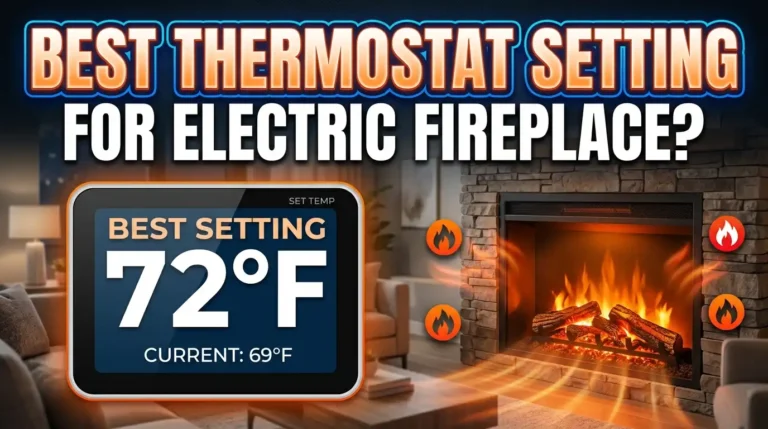
1. Let the thermostat do the work. Full-blast mode costs the most per hour. Dial in the best thermostat setting for your electric fireplace and let the heater cycle on and off to hold the room temperature. Cycling uses far less energy than running the element nonstop.
2. Use flame-only mode for mood. Love the look but not the heat? Switch the heater off and run the flame effect alone. The LEDs draw almost nothing, so the evening glow costs pennies.
3. Keep the heat in the room. Close doors and windows in the room you are heating. A 1,500-watt heater can hold a closed room at a comfortable temperature but struggles against a cold draft from the hallway.
4. Heat rooms on a schedule. Many units include a timer or programmable controls. Set the fireplace to warm the living room before you get home from work rather than running it all afternoon. Heating an empty room is the fastest way to waste the savings.
- Plug the unit directly into a wall outlet. Avoid extension cords and power strips, which can overheat under a sustained 1,500W load.
- Ask your manual whether a dedicated circuit is recommended — older wiring can struggle on a shared circuit.
- Keep curtains, furniture, and bedding at least 3 feet from the front and vents.
- Never leave the heater running in an empty room, and unplug it for long stretches when it is not in use.
- If the cord, plug, or outlet feels hot, stop using it and call a licensed electrician.
Disclaimer: This article is for general information only and is not professional electrical or HVAC advice. Costs and safety guidance depend on your home, your wiring, and your local rates. When in doubt, check with a licensed electrician or heating professional. For more on staying safe, see our guide to electric fireplace safety.
Example: 1,500W × 4h × $0.15 = $0.90/evening
The Bottom Line
So, are electric fireplaces energy efficient? Yes — at the point of use, nearly every watt becomes heat. The real question is cost, and that answer belongs to your electric bill. Used as a zone heater with a lower central thermostat, an electric fireplace is one of the smartest ways to stay warm for less.
Run the formula with your own rate. Keep the thermostat in charge, not full blast. And if you are still shopping, read our tips on choosing the right electric fireplace so your first unit is the right one.
Warm rooms, honest numbers, no surprises. That is efficiency you can actually feel.