Can You Use a Patio Heater Indoors? The Honest Safety Answer
It is freezing outside, the party moved into the garage, and that tall patio heater is sitting right there, still warm from earlier. Bringing it inside feels like the obvious move. Here is the direct answer to can you use a patio heater indoors: no. Not in the garage, not in a tent, not on an enclosed porch, not “for a few minutes.” A standard propane patio heater belongs outdoors, full stop.
This guide explains exactly why — in plain terms, with the science from the CDC — plus the edge cases people always ask about, how to tell if a heater is actually rated for indoor use, and the safer options that will heat your space without putting anyone at risk. Reading time is about six minutes. What you get is a clear answer you can act on tonight.
Never run a standard propane patio heater indoors, in a garage, tent, camper, or any enclosed space. It can produce lethal carbon monoxide with no smell and no warning. This article is safety information, not a substitute for your heater’s manual or local fire code. When in doubt, keep the heater outside and call your local fire department’s non-emergency line with questions.
No. Standard propane patio heaters are built for open air. Indoors they create three dangers at once: carbon monoxide poisoning, oxygen depletion, and fire. No amount of “cracking a window” makes them safe inside.
The exception: a heater whose label and manual specifically state it is rated for indoor use, with an oxygen depletion sensor. That describes a different product — not your typical tower or mushroom patio heater.
- Learn the three dangers of indoor use
- Know the warning signs of CO poisoning
- Forget the cracked-window fix
- Rule out the garage, tent, and porch
- Read what “indoor-safe” really means
- Check whether your heater is indoor-rated
- Choose a safer indoor option
- Act fast if it’s already too late
Learn the Three Dangers of Bringing It Inside
A patio heater is a high-output gas burner designed with one big assumption: endless fresh air. Take that away and three separate dangers appear.
Carbon monoxide. Propane contains carbon. When it burns with limited oxygen — exactly what happens in a closed room — it produces carbon monoxide instead of carbon dioxide. CO is colorless and odorless, and your blood grabs it about 300 times more readily than oxygen, according to CDC workplace safety data. The result is oxygen starvation from the inside: headache, dizziness, confusion, then unconsciousness. The CDC estimates unintentional, non-fire carbon monoxide poisoning causes roughly 450 deaths and 21,000 emergency department visits in the United States each year.
Oxygen depletion. The flame eats the room’s oxygen as it burns. A patio heater built to warm a wide-open deck drinks air far faster than a small indoor heater would. In a closed room, oxygen levels fall while CO rises — a double hit.
Fire. That glowing emitter runs extremely hot, and the tall tower shape tips more easily than people expect. Indoors, curtains, furniture, boxes, and low ceilings sit far closer than the open sky. The National Fire Protection Association lists heating equipment among the leading causes of home fires in winter.
Put a CO detector on every floor of your home and one outside each sleeping area — that is the CDC-aligned guidance. Test them monthly. A detector is the only reliable early warning, because you cannot see or smell CO.
Know the Warning Signs of Carbon Monoxide Poisoning
CO poisoning looks like the flu, which is why it fools people. The CDC lists the most common symptoms as headache, dizziness, weakness, nausea, vomiting, chest pain, and confusion. Watch for the pattern: more than one person (or a pet) feeling ill at the same time, with symptoms easing after leaving the building. Severe exposure brings loss of consciousness, and it can kill.
| Symptom group | What to watch for |
|---|---|
| Early | Dull headache, dizziness, weakness, nausea |
| Worsening | Vomiting, chest pain, confusion, blurred vision |
| Severe | Loss of consciousness, seizures — call 911 immediately |
| The tell | Several people or pets sick at once; feeling better outdoors |
Source: CDC clinical guidance on carbon monoxide poisoning. This is general information, not medical advice.
Forget the Cracked-Window Fix
The most common rationalization goes like this: “I’ll crack the garage door” or “I’ll leave a window open.” It does not work, and understanding why keeps you from gambling on it.
A standard mushroom-style patio heater puts out around 40,000 to 48,000 BTU — several times the output of a small indoor space heater. That much flame consumes oxygen and produces combustion gases at a rate a cracked window cannot offset. Safety agencies are blunt about this: an open window or door does not provide anything close to the ventilation these units need, because they were engineered around the unlimited air supply of the outdoors. Worse, a cracked opening can create a false sense of security while CO keeps accumulating at ceiling level, far from where anyone would notice.
The same logic kills the “only for a few minutes” argument. CO builds fast in a closed space, and symptoms creep up gradually — people have described feeling “off” for a while before realizing anything was wrong. There is no safe short version of this.
Rule Out the Garage, Tent, and Screened Porch
Every semi-enclosed space people suggest has the same problem: walls and a roof trap the gases.
The garage. Even with the big door open, a garage holds CO in corners and near the ceiling, and wind can push exhaust right back inside. The CDC explicitly lists garages among the places you must never run fuel-burning devices. Parking the heater “near the open door” still counts as indoors for safety purposes.
The tent or canopy. A four-wall tent is an enclosed space, full stop — and fabric walls hold heat and gases while sitting dangerously close to an open flame. Patio heater manuals themselves warn never to use the appliance in an enclosed space such as a tent, camper, car, or home, calling out the carbon monoxide hazard in capital letters.
The screened porch or enclosed patio. Screens slow airflow far more than people assume, and a roof traps rising heat and CO. If the space has walls on more than one side plus a roof, treat it as indoors.
The rule of thumb safety agencies teach: if you are asking whether a space counts as “enclosed enough” to be a problem, it does.
If a heater has a tip-over switch or an oxygen depletion sensor, that device is the only thing standing between a malfunction and a tragedy. Never tape it down, bypass it, or remove it — and never buy a used heater with safety features disabled. A “fix” that silences a safety shutoff is not a repair.
Read What “Indoor-Safe” Really Means on a Label
Here is where the confusion starts: some heaters genuinely are rated for indoor use, and they look similar on a store shelf. The difference is entirely in the engineering and the listing.
An indoor-rated fuel heater has an oxygen depletion sensor (ODS) that cuts the gas supply when room oxygen drops below a safe threshold, plus a tip-over shutoff. It carries a certification for indoor use that you can read on the rating plate — not a vague “UL listed” sticker, but a standard covering unvented room heaters. Certain portable propane models, such as some in the Mr. Heater Buddy line, are specifically designed and listed for indoor use with these protections.
Your typical patio heater has none of that. Its manual says “for outdoor use only” — and that line is the manufacturer telling you the unit will produce unsafe CO levels when boxed in. It is not a suggestion.
For the full breakdown of which gas heater types belong indoors, see our guide on what gas heaters you can use indoors — this article stays focused on patio heaters specifically.
Check Whether Your Heater Is Indoor-Rated
Do not guess from the shape or the marketing photos. Run this check before any fuel heater comes inside:
Read the label, not the box art. Marketing images sometimes show heaters in living rooms. The fine print on the rating plate and in the manual is what counts. If it says “outdoor use only,” believe it.
Look for an oxygen depletion sensor. The manual must state it plainly — ODS or oxygen depletion sensor by name. An implied or missing mention means it is not there.
Find the indoor certification. Indoor fuel heaters carry a listing for unvented room heater use. No certification number for indoor use means no indoor use.
Match the heater to the room. Even an indoor-rated heater has a minimum room size. An oversized unit in a small room can overwhelm its own safety margins.
If your heater fails any one of these checks, it stays outside.
Choose a Safer Indoor Option Instead
You still need heat — so here is what actually works indoors without the CO gamble:
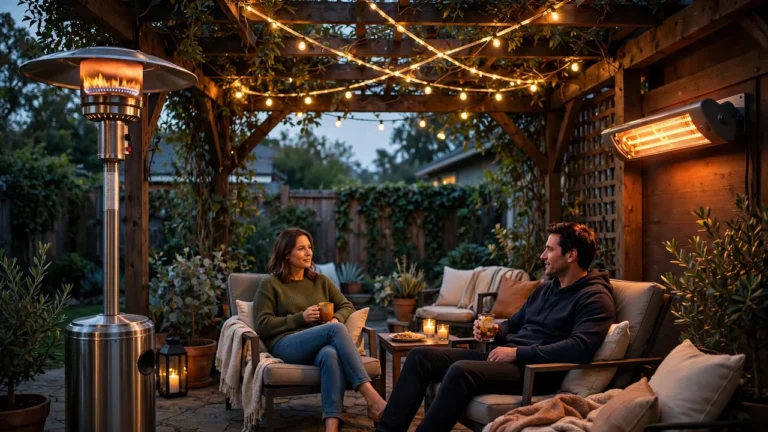
Electric heaters. Electric models produce no combustion gases at all, which removes the carbon monoxide risk entirely. A portable electric space heater with tip-over protection and overheat shutoff is the simplest swap for a garage or workshop. Electric infrared patio heaters are also an option for covered outdoor spots — they warm people, not air, and emit no fumes.
Indoor-rated propane heaters. If you want to stay with propane, buy a model specifically designed and listed for indoor use, with an ODS and tip-over switch — and follow its room-size and ventilation requirements to the letter. Learn how to use a propane heater safely before you light it.
Oil-filled radiators. Slow, steady, silent heat with no flame and no fumes. They take a while to warm up, but they are among the most forgiving indoor options, especially around kids and pets.
Whatever you choose, keep the CO detector habit. Detectors are cheap, and they are the one device that watches the air while you sleep.
Act Fast If a Patio Heater Already Ran Indoors
If you are reading this after the fact — someone ran a patio heater in a garage or enclosed space — treat it as urgent until proven otherwise:
Turn the heater off if you can do so without breathing more fumes. Get every person and pet into fresh air immediately — outside the building, not merely another room. Call 911 and say you suspect carbon monoxide exposure. Do not go back inside until emergency responders say the air is clear. At the hospital, mention the heater so they test for CO — standard pulse oximeters cannot detect it, and CO poisoning is famously misdiagnosed as flu.
Fact: A 40,000+ BTU burner overwhelms a cracked opening. CO still accumulates, and the open door creates a false sense of security.
Fact: Four fabric walls and a roof trap gases and sit close to open flame. Manufacturers list tents as enclosed spaces where these heaters must never run.
Fact: CO is odorless and symptoms creep up slowly. Feeling “a little off” can be the only warning before things turn serious. Trust the detector, not your senses.
Fact: An indoor-rated heater with an oxygen depletion sensor is a different product from an outdoor patio heater. The label and the manual decide — not the fuel.
Common questions
No. An open garage door does not ventilate a 40,000+ BTU burner safely, and CO collects in corners and near the ceiling. The CDC lists garages among the places fuel-burning devices must never run. Use an electric heater rated for indoor use instead.
Only if the patio is genuinely open — no walls, high clearance above the heater, and strong airflow. A roof with walls on any side, screens, or curtains turns it into an enclosed space. Check your manual’s clearance requirements and keep the heater well away from the ceiling.
Electric heaters produce no carbon monoxide, so the CO risk disappears. They still need proper clearances from anything flammable and should never be left running unattended. They are the simplest safe swap for indoor or semi-enclosed spaces.
Oxygen depletion sensor. It shuts off the gas supply when room oxygen falls below a safe threshold, before CO can reach lethal levels. It is the key feature that separates indoor-rated fuel heaters from outdoor-only ones.
No. Tents are enclosed spaces, and heater manuals specifically prohibit use in tents, campers, and cars. For tent heat, use a heater specifically rated for enclosed or tent use, keep vents open, and run a battery CO detector.
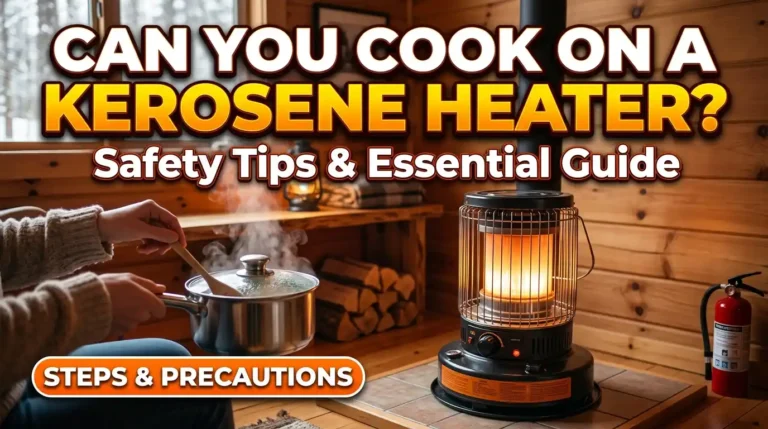
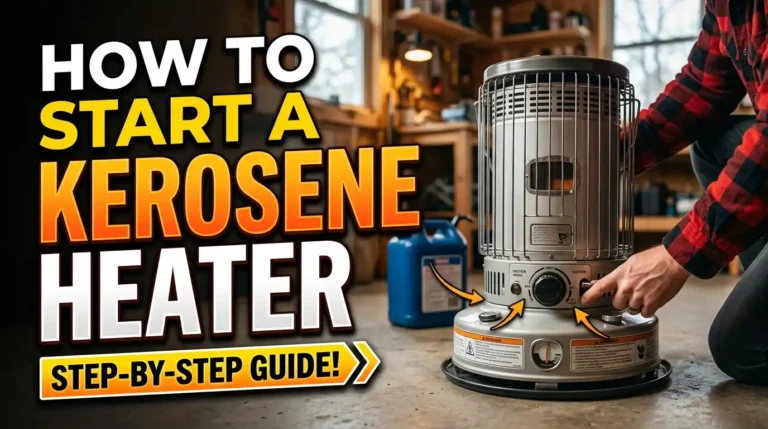
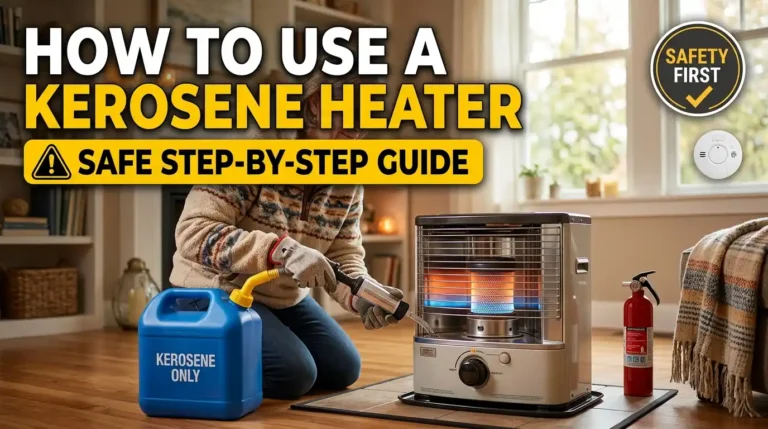
Kerosene heaters carry the same carbon monoxide risks as propane. Some models are designed for indoor use with strict ventilation rules. Our guide on whether kerosene heaters are safe indoors walks through the details.
- Run a patio heater indoors
- Use it in a garage, tent, or camper
- Trust a cracked window for ventilation
- Bypass tip-over or ODS safety devices
- Keep patio heaters fully outdoors
- Install a CO detector on each floor
- Buy indoor-rated heaters for inside
- Use electric heat where unsure
The bottom line
You now know the honest answer to can you use a patio heater indoors: no — not in the house, garage, tent, or enclosed porch. Carbon monoxide gives no warning, a cracked window is not ventilation, and the label on your heater means what it says. Keep the patio heater outside where it belongs, put a CO detector on every floor, and choose heaters actually rated for indoor use when the cold follows you inside.
Your next step: if you heat with propane at all, read how to use a propane heater safely so every burner in your life — indoors or out — runs the way its maker intended.