Electric vs Propane Patio Heater: Which Is Better for Your Backyard?
You’re staring at two patio heaters — one electric, one propane — and you want the honest answer: in the electric vs propane patio heater debate, which is better? Both promise warm evenings outside, but they warm you in completely different ways. Pick the wrong one and you end up with a chilly gathering, or money burned for heat you never feel.
This comparison puts both types side by side on the things that actually matter: heat output and coverage, real running costs, setup and convenience, safety, and how they behave in wind. By the end, you won’t need a coin flip — you’ll know which type fits your space, your habits, and your budget.
A quick safety note before we start: propane heaters burn fuel, so they produce carbon monoxide and need open ventilation — never run one in an enclosed space. Electric heaters produce no fumes, but they draw serious power, so use outdoor-rated outlets and cords and keep all connections dry.
Propane at a glance
Best for: open decks and big gatherings
Heat output: 40,000–48,000 BTU
Running cost: about $1.50–$3.00/hour
Electric at a glance
Best for: covered patios and balconies
Heat output: 1,500–6,000 watts
Running cost: about $0.20–$0.60/hour
The tiebreaker: propane brings raw heat for big open spaces; electric brings cheap, silent, fume-free warmth for smaller or covered spots.
What to compare before you choose
- Heat output — BTU for propane vs. watts for electric, matched to your square footage.
- Fuel access — a nearby outdoor outlet, or easy propane refills and tank storage?
- Coverage area — a wide-open deck vs. two chairs under a pergola.
- Climate — mild evenings only, or real cold with wind?
- Running cost — your electricity rate and local propane price decide the math.
- Safety rules — covered space, kids, pets, and any HOA or lease restrictions.
Heat Output and Coverage: Propane Has the Muscle
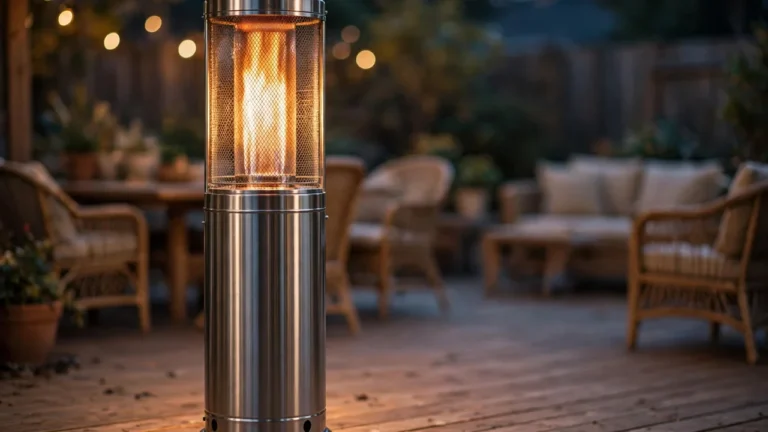
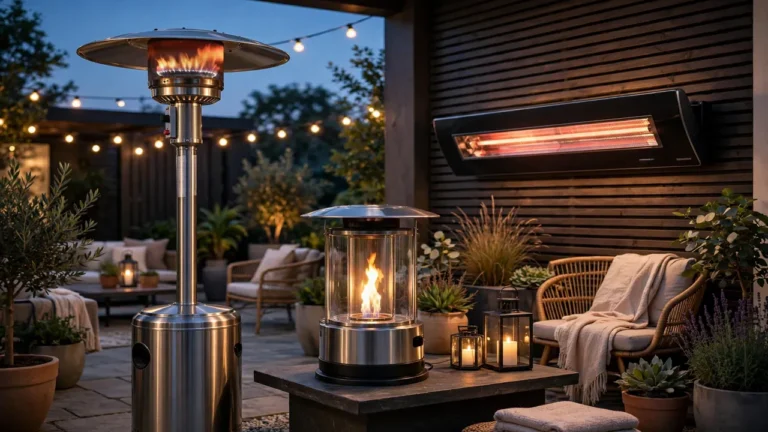
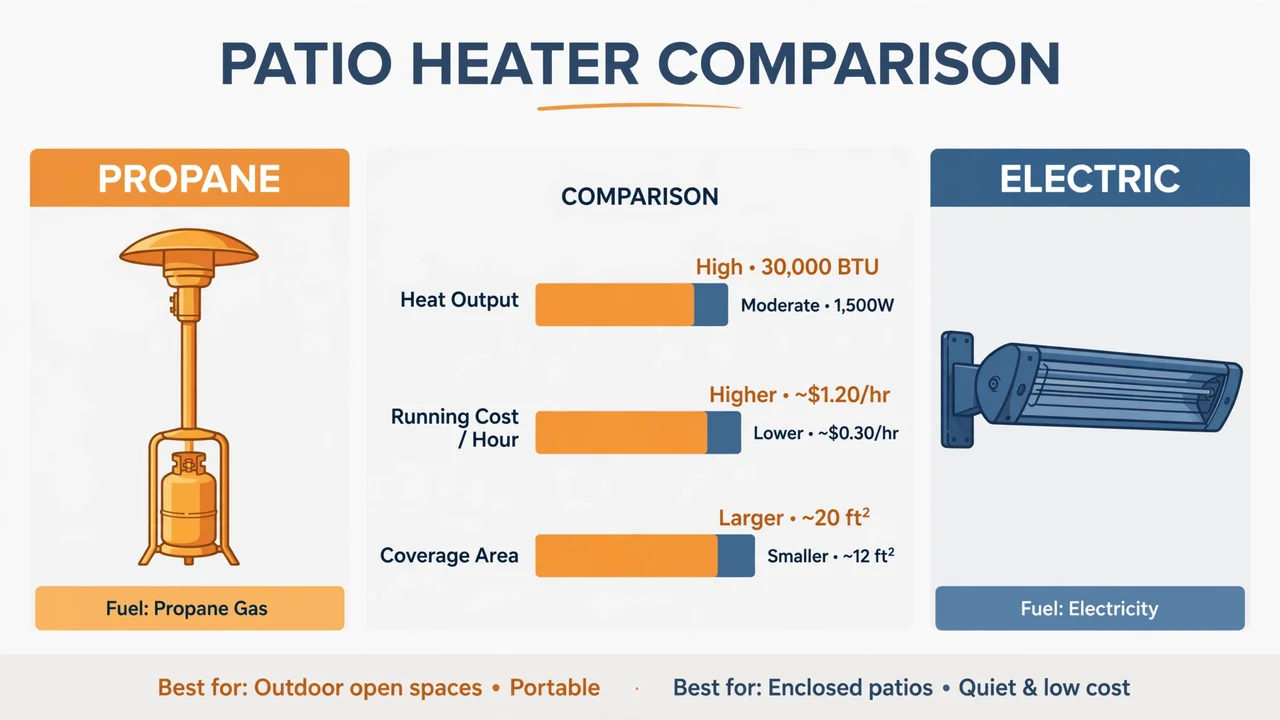
Freestanding propane patio heaters typically produce 40,000 to 48,000 BTU per hour — that is restaurant-patio levels of heat. Electric infrared patio heaters usually run 1,500 to 6,000 watts, and a common 1,500-watt model makes about 5,100 BTU.
In practice, propane throws warmth across a wide circle, so a group of six or eight can all feel it. Electric infrared works differently: its rays travel in straight lines and warm people and objects directly, so you feel it most when you sit in its path, inside a smaller zone.
Neither type heats the air much — outdoors, warm air rises and drifts away. That is why coverage depends on radiant reach, not room size. If your space is big and open, measure it first — our guide on how to choose a patio heater walks through matching heater size to square footage.
Electric vs Propane Patio Heater: What It Costs to Run
Here is the honest math. A 1,500-watt electric heater at typical US electricity rates costs roughly $0.20 to $0.60 per hour to run. A 40,000 BTU propane heater costs roughly $1.50 to $3.00 per hour, depending on local propane prices. Your rates will move these numbers, so treat them as ballpark figures.
Propane looks pricey per hour — until you remember it delivers roughly eight times the heat. On a cost-per-unit-of-warmth basis, the two are closer than the hourly numbers suggest. You are paying for output, not waste.
On fuel logistics: a 20-pound propane tank holds about 4.6 gallons, and a full-power heater burns roughly 0.4 gallons per hour — so expect around 10 to 12 hours of heat per tank on high. When the tank runs dry mid-evening, the party pauses for a tank swap. See our breakdown of how long a propane tank lasts on a patio heater for the full math.
Up front, both types usually land in the same ballpark — roughly $100 to $400 — with electric models tending to cost a bit less on average.
Pro tip: Run your own numbers before you buy. Check your electricity bill for the price per kWh, then call one local propane refill station for its price. Those two numbers decide which type is cheaper for you.
Convenience and Setup
Electric wins on day-to-day ease. You mount it or set it down, plug it in, and flip a switch — silent, instant, and nothing to refill. Wall and ceiling mounts also keep it out of the way on small patios.
Propane wins on placement freedom. It rolls anywhere with no outlet in sight, which makes it the pick for open lawns, poolside setups, and rented event spaces. The tradeoff is tank duty: watching the fuel level, hauling tanks for refills or exchanges, and storing spares.
One caution for electric: heater cords are thick for a reason. If you must cross a distance, use a short, heavy-gauge, outdoor-rated extension cord — and plug the heater in directly whenever you can. For a refresher on safe startup and shutdown, see how to use a patio heater.
Safety: Read This Before You Decide
This is where the two types split hardest. Propane heaters burn fuel, which means an open flame and carbon monoxide. They belong outdoors with open ventilation and proper clearance above and around them — never in a garage, tent, or enclosed porch.
Heads up: Carbon monoxide is invisible and odorless. Never run a propane patio heater in an enclosed or poorly ventilated space, and never use one indoors. If anyone develops a headache, dizziness, or nausea near a burning heater, move everyone to fresh air and call emergency services.
Electric infrared heaters produce no fumes and no flame, which makes them the safer pick under covered patios, on balconies, and around kids and pets. They still get hot enough to burn skin, so keep the clearances your manual requires.
With electrics, water and power do not mix: use only outdoor-rated models outside, keep plugs and connections dry, and unplug before cleaning. Wondering about indoor use at all? Read can you use a patio heater indoors — the short answer is that fuel-burning heaters are a no.
Wind and Cold Weather Performance
Wind is the enemy of every patio heater. Moving air strips radiant warmth away, and no heater type is immune. The difference is headroom: propane’s much larger output still reaches you in a breeze, while a small electric unit can feel weak once the wind picks up.
Electric infrared has one structural quirk: its heat travels in straight lines. If you shift your chair out of the heater’s beam, you lose the warmth. Sitting in the heater’s direct path matters more with electric than with propane.
Cheap fixes help both types: windbreak screens, seating placed close together, and putting the heater on the windward side so warmth drifts toward people. In real cold, propane’s extra BTUs buy you more usable evenings — a 1,500-watt electric unit only warms people sitting close.
Environmental Impact
Propane burns a fossil fuel, so it releases carbon dioxide right where you sit. Electric heaters release nothing on site — but their footprint depends on how your local grid makes electricity.
There is no green hero here. If lower emissions matter to you, the honest lever is using less heat: right-size the heater, add windbreaks, and skip the giant propane mushroom for a two-person evening.
Lifespan and Maintenance
Both types last longest with the same care: a fitted cover, storage out of driving rain in the off-season, and a wipe-down before first use each year. Rust is the main killer of steel heater bodies, electric or propane.
Propane adds burner and pilot maintenance — spiders love pilot tubes, and a yearly cleaning keeps ignition reliable. Electric adds element wear; infrared tubes dim over time and eventually need replacement. Store propane tanks outdoors, upright, and never inside your home.
The Verdict: Which Should You Buy?
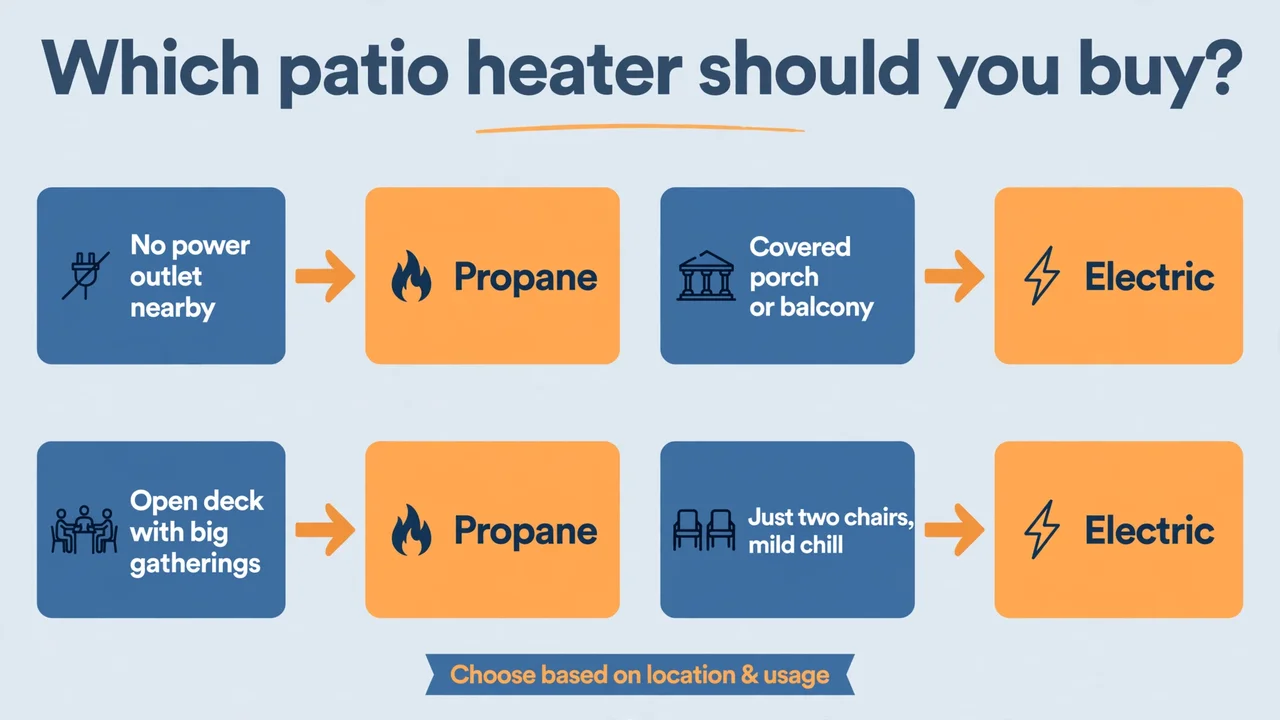
There is no universal winner — there is a winner for your situation. A big open space with no outlet means propane, no contest; a covered porch or balcony means electric, no contest. Match the heater to the space, not the hype.
| Your situation | Pick | Why |
|---|---|---|
| Covered porch, balcony, or gazebo | Electric | No fumes, no flame, safe under a roof |
| Open deck or yard, big gatherings | Propane | 40,000+ BTU covers a wide area |
| No outdoor outlet nearby | Propane | Fuel travels with the heater |
| Two chairs, mild evenings | Electric | Cheap to run, silent, instant |
| Apartment or rental | Electric | Leases and fire codes often ban propane tanks |
| Windy spot, real cold | Propane | Bigger output holds up in a breeze |
Mistakes to Avoid
4 mistakes buyers keep making
- Buying for looks, not for space. A slim electric tower looks tidy on a 400-square-foot deck — and heats about four square feet of it. Match output to area.
- Ignoring the outlet situation. That perfect wall-mount spot means nothing without a nearby outdoor-rated outlet on a circuit that can handle the load. Check power before you buy.
- Running propane under a low cover. Mushroom heaters need several feet of clearance above the dome. Low pergolas and propane do not mix — measure first.
- Skipping the wind plan. A simple windbreak screen can do more for your comfort than upgrading to a bigger heater. Buy the screen with the heater.
Frequently Asked Questions
Which is cheaper to run: an electric or propane patio heater?
Electric is cheaper per hour – typically $0.20 to $0.60 for a 1,500-watt heater versus $1.50 to $3.00 for a 40,000 BTU propane heater. The catch: propane delivers roughly eight times the heat, so the cost per unit of warmth is closer than the hourly numbers suggest.
Do electric patio heaters put out as much heat as propane?
No. A 1,500-watt electric heater produces about 5,100 BTU, while a freestanding propane heater typically puts out 40,000 to 48,000 BTU. Electric infrared warms people directly in a smaller zone; propane heats a wide area around the unit.
Can I use a propane patio heater under a covered patio?
Only with generous overhead clearance and open ventilation – propane produces carbon monoxide and must never be used in an enclosed space. For covered patios, porches, and balconies, an electric infrared heater is the safer choice.
Which patio heater is better for a balcony?
Electric. It has no open flame, no fuel tank, and no fumes – and many apartment leases and local fire codes ban propane heaters on balconies. Always check your building’s rules before buying.
How long does a 20-pound propane tank last on a patio heater?
Roughly 10 to 12 hours on high for a typical 40,000 BTU heater, since it burns about 0.4 gallons per hour and a full 20-pound tank holds around 4.6 gallons. Running the heater on a lower setting stretches that further.
Your Quick Reference Card
Electric vs Propane Patio Heater – Quick Reference
Propane
- 40,000-48,000 BTU output
- About $1.50-$3.00/hour
- Wide coverage, fully portable
- Needs ventilation, tank refills
Electric
- 1,500-6,000 watts output
- About $0.20-$0.60/hour
- Silent, no fumes, instant
- Needs an outdoor outlet nearby
Pick propane if: open space, no outlet, big groups, real cold.
Pick electric if: covered patio or balcony, mild chill, low running cost.
The Bottom Line
In the electric vs propane patio heater debate, propane brings the muscle and electric brings the manners. Now you know what each one costs, how each one heats, and where each one is safe.
Your next move: measure your space and check your outlets, then buy once and buy right. Warm evenings are waiting.