How to Choose a Patio Heater That Fits Your Space and Budget
You want to keep using the patio after sunset, but the options are a maze: mushroom towers, tabletop minis, glowing pyramids, wall-mounted panels. Pick wrong and you end up with a heater that barely warms two chairs — or one that roasts the table and leaves everyone else cold. Learning how to choose a patio heater comes down to four things: your space, your fuel, your heat needs, and the safety features that keep everyone comfortable.
This guide walks you through each decision in order. By the end you will know exactly which type fits your patio, what size to buy, and which features are worth paying for. No brand hype, no guesswork.
Safety note: propane patio heaters are for outdoor use only — never in a garage, tent, or enclosed porch. Keep clearances, set the unit on a flat stable surface, and never leave a lit heater unattended. This guide covers general buying advice; always follow your heater’s manual.
Measure Your Space Before Anything Else
A heater is only as good as its match to your space. Grab a tape measure and get the length and width of the area where people actually sit — not the whole yard, just the seating zone. A 10 × 10 ft seating area is 100 sq ft; a dining set plus two lounge chairs often runs 150–200 sq ft.
Also check the ceiling situation. Open sky means you can use any type. A covered porch, pergola, or awning rules out open-flame propane towers overhead — that is where wall-mounted or hanging electric infrared units earn their keep, since they produce no open flame and need only about a foot of clearance on each side.
The 5 Types of Patio Heaters, Compared
Every patio heater on the market is a variation of five basic designs. The table below lines them up so you can see the trade-offs at a glance.
| Type | Heat Output | Covers | Best For |
|---|---|---|---|
| Freestanding propane (mushroom) | 40,000–48,000 BTU | 150–200 sq ft | Open patios, big groups |
| Tabletop propane | ~9,500–11,000 BTU | ~95 sq ft | Balconies, small tables |
| Electric infrared (wall/ceiling/freestanding) | 1,500 W plug-in (~5,100 BTU); hardwired up to 6,000 W | Spot to ~300 sq ft | Covered porches, no-flame zones |
| Natural gas (fixed) | Similar to propane models | 150–200 sq ft | Homeowners with a gas line |
| Flame tower / pyramid | 36,000–42,000 BTU | ~10 ft radius | Ambiance + moderate heat |
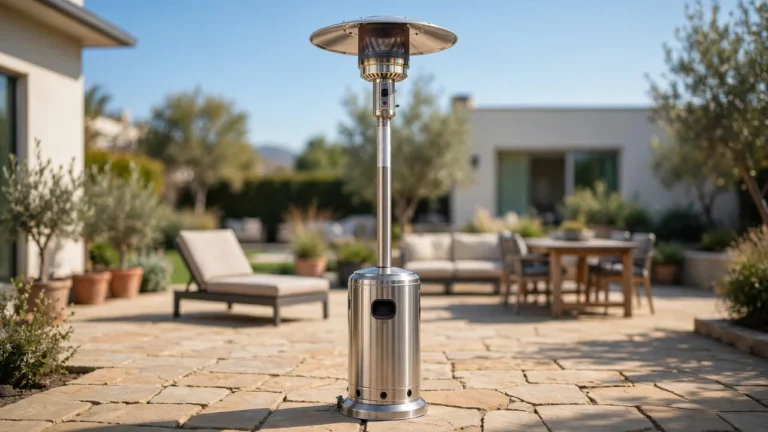
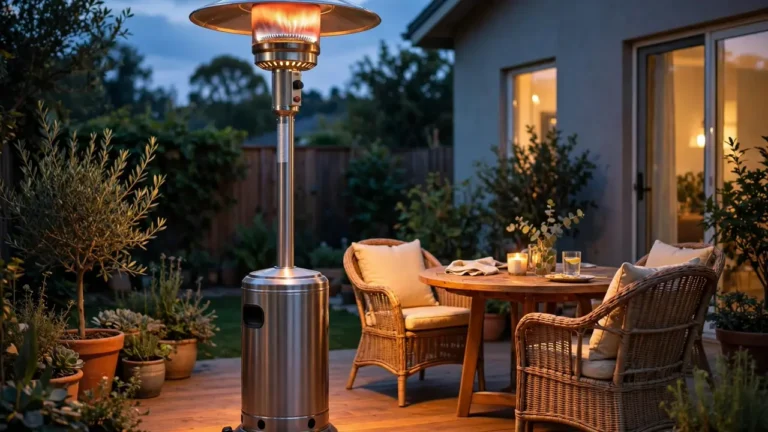
The classic mushroom-style propane tower is the default for a reason: it throws the most heat for the money and moves on wheels. But it needs open sky and a 20 lb propane tank tucked in its base. Tabletop units sip from 1 lb canisters and suit two to four people. Electric infrared heats people and objects directly rather than the air, which is why it works under a roof where propane cannot go.
If your patio is windy, favor infrared or a sheltered spot over a tall mushroom tower. Wind strips heat from convective designs fast, while infrared warms you directly and tall towers can wobble.
Pick Your Fuel: Propane vs Electric vs Natural Gas
Fuel decides your running costs, your setup work, and where the heater can legally and safely sit.
Propane is the most popular for a reason: high heat, no wiring, and the tank lasts 8–10 hours on a full 20 lb fill at typical settings. The trade-off is refills — you will be hauling tanks to the refill station, and propane costs more per hour than natural gas. For current price context, see our guide on how much propane heaters cost to run.
Electric means no fuel runs and no fumes — plug in and go. A standard 1,500 W unit draws about as much as a hair dryer and suits small zones; hardwired 240 V models up to 6,000 W can keep around 300 sq ft comfortable, per Consumer Reports. The catch: you need the right outlet or an electrician, and heating a big open patio with electricity gets expensive.
Natural gas is the cheapest fuel per hour — often well under a dollar — which is why restaurants love it. The catch is installation: a licensed pro must run the gas line, and the heater stays put. Worth it if you heat the patio all season, every season.
Size the Heat: BTU and Coverage Without the Math Headache
BTU (British Thermal Unit) is the standard heat measure: bigger number, more heat. For patio heaters, use these rough rules rather than precise formulas, because wind and temperature swing the real result.
- Under 100 sq ft (balcony, bistro set): a tabletop unit at ~10,000 BTU or a 1,500 W electric is plenty.
- 100–200 sq ft (typical patio seating area): one full-size 40,000+ BTU propane tower.
- Over 200 sq ft or oddly shaped: two smaller units beat one giant one — heat reaches people instead of the empty middle.
One honest caveat: manufacturer coverage numbers assume mild evenings. On a windy 40°F night, expect noticeably less reach. When in doubt, size up one step rather than down.
Features Actually Worth Paying For
Not every bell and whistle matters. These five do.
Tip-over shutoff. Non-negotiable on any freestanding unit. If the heater tips, the gas or power cuts instantly. Check that the model lists an anti-tip or tilt switch — and never bypass safety switches.
Adjustable heat settings. Full blast is rarely right all evening. A control knob or multi-level switch lets you dial back as the night warms up, which also stretches your propane.
Easy ignition. Piezo push-button igniters beat matches and wands. If you have ever fought a finicky pilot light, you know why this matters.
Wheels and weight. A 40,000 BTU tower weighs 35–50 lbs before the tank. Built-in wheels turn “move it to the shade” from a two-person job into a one-hand roll.
Weather resistance. Look for stainless steel or powder-coated bodies and a cover in the box. Electronics and burners last far longer when the unit is not sitting out in rain all winter.
Safety Rules Before the First Burn
Patio heaters are safe when respected and dangerous when not. Run through this list before you light up.
- Outdoors only for propane. Burning propane makes carbon monoxide. Never run a propane patio heater in a garage, tent, enclosed porch, or under a low ceiling.
- Keep clearances. Give gas units about 3 ft of space in every direction from anything that can burn; electric units need roughly a foot. Check your manual — it wins over any article.
- Flat, stable ground. Patios and decks, not slopes or soft lawn. A wobbling tower is a tipping tower.
- Never leave it lit and walk away. Treat it like a campfire: someone responsible stays with it.
- Kids and pets. The emitter head and reflector get hot enough to burn on contact. Set a no-touch zone.
Moving a lit heater (“just sliding it over a foot”) and running propane under a covered roof are the two shortcuts behind most patio heater incidents. Turn it off, let it cool, then move it — and keep open flames out from under ceilings. Our full guide to using a propane heater safely covers the complete checklist.
5 Buying Mistakes to Avoid
Buying BTU you cannot use. A 48,000 BTU tower on a tiny balcony is wasted money and wasted space. Match the heater to the seating zone you measured.
Forgetting the fuel logistics. Propane means tank swaps. If the nearest refill is 20 minutes away, that “cheap” heater gets annoying fast — electric or natural gas may suit you better.
Ignoring the wind. Open, windy patios punish tall convective heaters. A wind screen, a sheltered corner, or an infrared unit solves what raw BTU cannot.
Skipping the cover. Outdoor heaters left uncovered rust, clog, and die young. A $20–$30 cover routinely doubles a unit’s life.
Assuming “portable” means “carry anywhere.” Even tabletop units need their fuel and a stable surface. Plan where each piece lives before you buy.
Common Questions
For a typical 150–200 sq ft seating area, a 40,000+ BTU propane tower is the standard pick. Under 100 sq ft, a ~10,000 BTU tabletop or 1,500 W electric unit is enough. Windy or very cold climates: size up.
Propane wins on raw heat and portability; electric wins on convenience, fumes, and covered-porch use. For general guidance on the trade-offs, our space heater overview explains how each heating style works.
You can, but it will not thank you. Disconnect the propane tank and store it upright outdoors (never indoors), cover the heater, and shelter electronics from freeze-thaw cycles. Stored right, a good unit lasts many seasons.
A standard 20 lb tank typically runs a full-size heater 8–10 hours on high. Dialing down to medium stretches that noticeably — another reason adjustable heat settings pay off.
Poorly, for tall convective models — wind carries the warmed air away. Infrared heaters perform better in breeze because they heat people and surfaces directly. Either way, a windbreak helps more than extra BTUs.
- Measure the seating zone
- Open sky or covered?
- Pick fuel: propane / electric / gas
- Size BTU to the space
- Tip-over shutoff included
- Adjustable heat settings
- Easy push-button ignition
- Wheels + weatherproof body
- 3 ft clearances, flat ground
The Bottom Line
You now know how to choose a patio heater: measure the seating zone, match the type to open sky or covered porch, pick the fuel whose logistics you can live with, size the BTUs honestly, and insist on tip-over protection. Get those five right and the rest is details.
Once it arrives, run through the safety checklist in our propane heater safety guide before the first lighting — then enjoy the extra months of evenings outside.