How a Patio Heater Works: From Propane Tank to Radiant Warmth
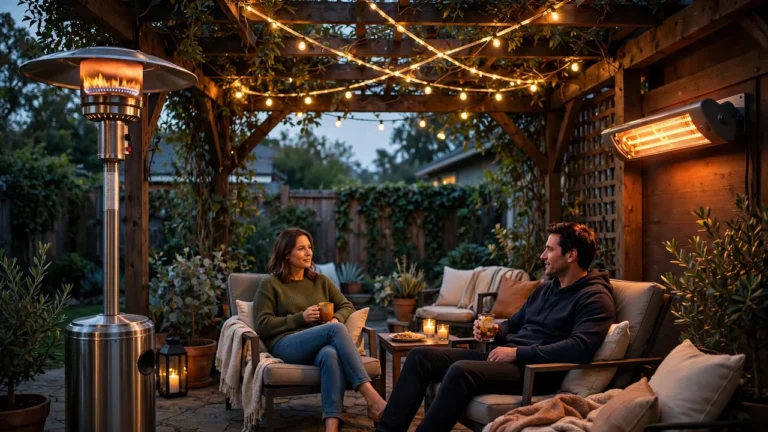
If you have ever stood beside a patio heater and wondered how does a patio heater work, the answer starts with a simple idea: it warms you, not the air. A controlled propane flame heats a metal screen until it glows, and that glow sends out invisible infrared heat. Your skin and clothes absorb that heat directly, the same way sunshine feels warm on your face even on a cool day.
Inside the tall pole, gas travels from the tank up to a small pilot flame. The pilot lights the main burner, the burner heats the mesh emitter screen, and a wide metal reflector pushes the heat downward in a cone. Three safety devices watch the whole process, ready to cut the gas if anything goes wrong.
By the end of this guide you will know what each part does, why the heater glows orange, and why wind steals the warmth. Reading time is about seven minutes, and no tools are needed. Keep your heater’s manual nearby for the safety pages at the front.
⚠️ Safety First: Gas and Carbon Monoxide
Patio heaters burn real fuel and produce carbon monoxide, so they are outdoor-only. Never run one in a garage, tent, or any enclosed space, and keep a working CO alarm near doors that open onto the patio.
If you smell gas, do not try to find the leak. Leave the area, shut off the tank valve only if you can reach it safely, and call your gas utility or emergency services from outside.
Check your local codes for placement and clearance rules before lighting up. Children and pets should stay clear of the hot emitter and reflector at all times.
Reading Time
~7 minutes
Difficulty
Easy read
Practical Use
Understand & troubleshoot
The Parts This Guide Refers To
Propane tank — fuel stored in the base
Regulator — drops tank pressure to a safe level
Control valve — knob that meters gas flow
Igniter — push button that makes a spark
Pilot light — small flame that lights the burner
Thermocouple — rod that shuts gas off if the flame dies
Burner — ring of gas ports near the top
Emitter screen — mesh that glows and radiates heat
Reflector dome — dish that pushes heat downward
Tilt switch — cuts gas if the heater tips over
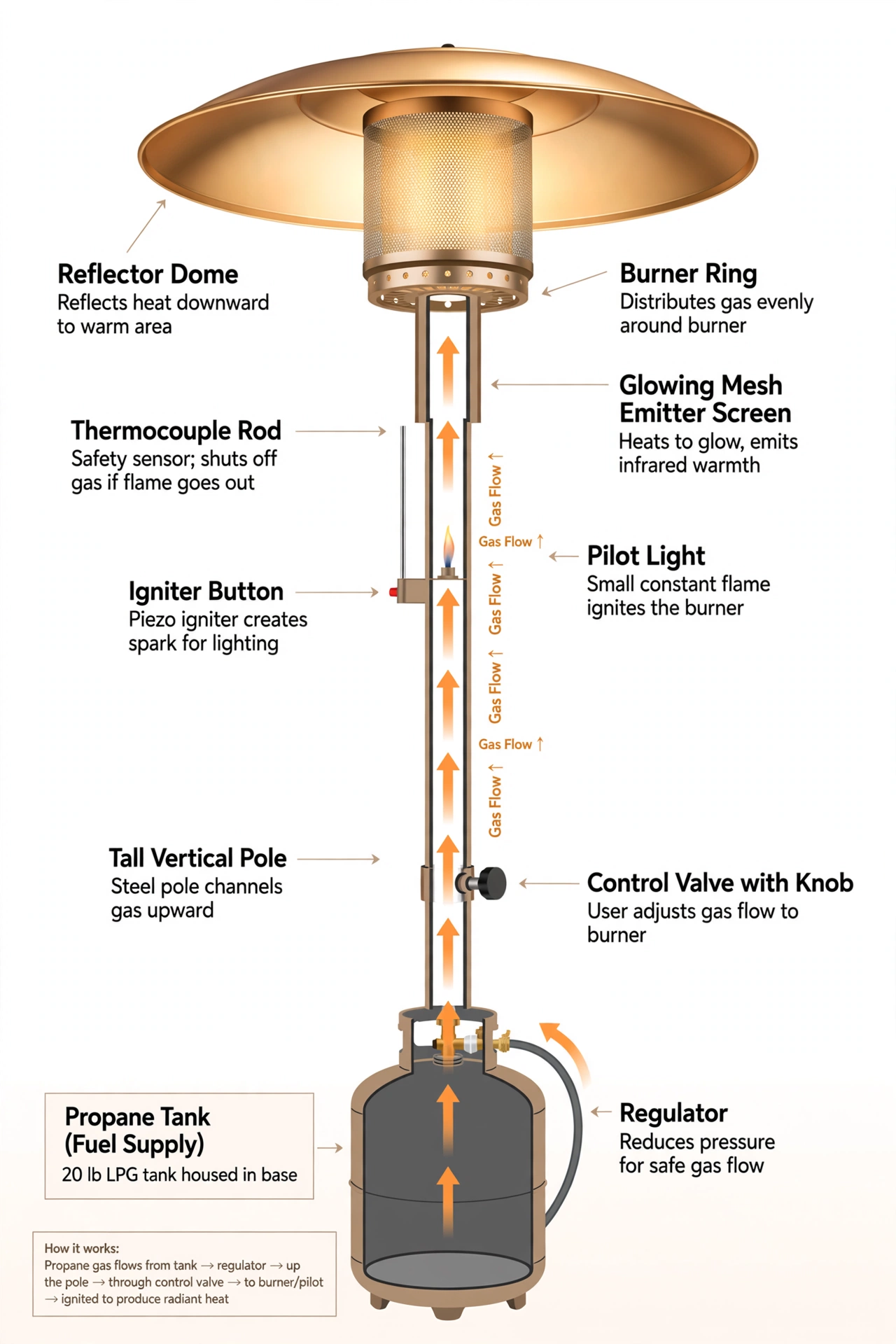
The Heat Path at a Glance
- Fuel supply: propane tank feeds gas through a regulator.
- Pilot: the igniter sparks a small pilot flame.
- Thermocouple: the flame heats a rod that holds the gas valve open.
- Burner: the pilot lights the main burner ring.
- Emitter screen: the burner heats the mesh until it glows infrared.
- Safety watch: the tilt switch and thermocouple guard the flame.
Start With the Fuel Supply
Most freestanding heaters use a standard 20-pound propane tank tucked inside the base. A regulator on the tank drops the high tank pressure down to a low, steady pressure the heater can burn safely. From the regulator, gas flows up a narrow tube hidden inside the pole toward the control box.
Natural gas models skip the tank and connect to a fixed gas line with a hose instead. The rest of the process is nearly identical. If you are weighing fuel options, our guide to how long a propane tank lasts on a patio heater shows what to expect from a full tank.
Light the Pilot on Your Patio Heater
The control knob has a pilot position marked on the dial. Hold the knob in and press the igniter button, and a piezo crystal inside creates a small spark at the pilot tube. A tiny blue flame catches at the pilot.
Keep holding the knob for about 30 seconds after the pilot lights. That waiting time is not wasted — it is the thermocouple warming up, which the next step covers. A full walkthrough of the lighting sequence is in our guide to using a patio heater.
💡 Pro tip: If you hear the click but see no spark, the igniter battery is the usual culprit. Many push-button igniters run on a single AA battery tucked behind the igniter button.
Let the Thermocouple Prove the Flame
A thin metal rod called a thermocouple sits directly in the pilot flame. Heat on the rod creates a tiny electric current, and that current holds the gas valve open. Let go of the knob too soon and the current never builds — the valve snaps shut and the pilot dies.
This is the real reason a pilot “won’t stay lit” after you release the knob. It is also the heater’s first safety device: if wind or a bump blows the flame out, the rod cools, the current stops, and the gas shuts off by itself instead of leaking. Our patio heater won’t stay lit guide walks through thermocouple fixes in detail.
⚠️ Heads up: If you ever smell gas around the heater, do not light it and do not hunt for the leak. Turn the tank valve off only if you can reach it safely, get everyone away, and call your gas utility or emergency services from outside.
Watch the Burner Heat the Emitter Screen
Turn the knob from pilot to full heat, and the pilot flame lights the main burner — a ring of small gas ports near the top of the pole. The burner flame plays directly across a stainless-steel mesh screen called the emitter.
Within a few minutes the mesh heats until it glows orange. That glowing screen is the heart of the heater. The orange glow is infrared radiation leaving the mesh, the same kind of heat you feel rising off campfire embers. A dimmer glow on a low setting means less heat; a bright, even glow means the burner is running at full strength.
Feel the Reflector Push Heat Downward
Heat rises, which would send most of the warmth straight up into the night sky. The wide metal dish above the burner — the reflector dome — bounces the infrared energy downward and outward in a cone around the heater. That is why standing just outside the cone feels chilly while stepping inside it feels warm at once.
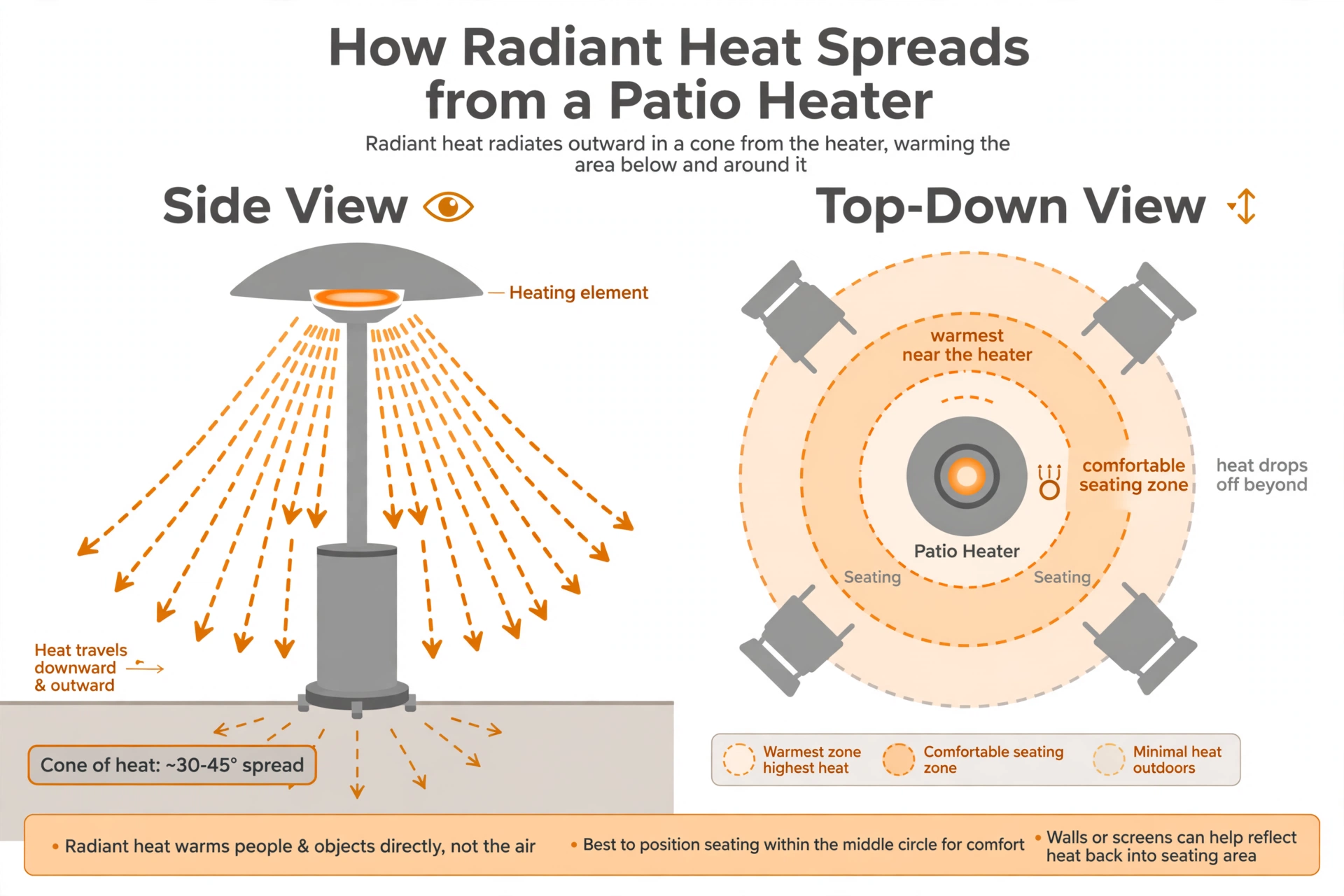
Seating arranged under and near the heater stays in the sweet spot, as the diagram above shows. Wind is the main thief: moving air carries the warmed surfaces’ heat away, which is why a sheltered corner feels much warmer than an open lawn.
Know the Safety Devices That Stand Guard
Two more devices watch over the flame while it burns. A tilt switch near the base cuts the gas supply if the heater tips over, so a fall cannot become a fire. The thermocouple from Step 3 keeps working the entire time the heater runs, ready to shut the gas off if the flame ever fails.
Let the heater cool for about 15 minutes after turning it off before covering or moving it. The emitter screen and reflector stay hot long after the flame is gone, and touching them too soon is the most common burn injury with these heaters.
How Propane, Natural Gas, and Electric Models Differ
The process above describes a propane patio heater, the most common type. The other two fuel types change a few parts of the story. The table below shows what is different.
| Fuel Type | How It Makes Heat | Key Difference |
|---|---|---|
| Propane | Burner flame heats a mesh emitter screen | Portable tank in the base; pilot, thermocouple, and tilt switch included |
| Natural gas | Same burner-and-emitter design as propane | Connects to a fixed gas line; no tank to refill or swap |
| Electric | Electricity heats a quartz or infrared element | No flame, no pilot, no gas — heat starts almost instantly |
Propane and natural gas burners are not interchangeable — a heater must be built (or fitted with a manufacturer-approved conversion kit) for its fuel. For a full side-by-side on the two most popular options, see electric vs. propane patio heaters.
Troubleshooting: When the Heat Path Breaks Down
| If This Happens | Try This |
|---|---|
| Pilot lights but dies when you release the knob | Hold the knob for 30–60 seconds; wipe soot off the thermocouple rod with a dry cloth |
| Igniter clicks but nothing sparks | Replace the igniter’s AA battery; check that the spark wire is seated |
| Weak glow on the full-heat setting | Check the tank level and move the heater out of direct wind |
| Uneven flame or sooty emitter screen | With the heater off and fully cool, clear spider webs and debris from the burner tube per the manual |
For deeper fixes, our patio heater won’t stay lit walkthrough covers each failure point one at a time.
Frequently Asked Questions
Why does my patio heater glow but give off little heat?
Check the control knob first — on a low setting the emitter glows dimmer and puts out less warmth. A nearly empty tank or strong wind can also starve the flame, and a sooty emitter screen radiates less heat, so clean it once it is cool.
Why won’t the pilot stay lit on my patio heater?
The thermocouple needs about 30 seconds of pilot flame to build enough current to hold the gas valve open. Hold the knob in longer, and wipe soot off the thermocouple rod so it can sense the flame properly.
Can a patio heater run on natural gas?
Yes, but it must be a model built for natural gas or fitted with a manufacturer-approved conversion kit. Propane and natural gas burners use different gas pressures and port sizes, so the two are not interchangeable.
Does a patio heater heat the air around it?
Barely. Patio heaters are radiant heaters: the glowing emitter screen sends infrared heat straight to people and objects, much like sunlight. The air itself warms only slightly, which is why wind has such a big effect on how warm you feel.
How long will a propane tank last on a patio heater?
It depends on the heat setting — full blast drains a tank far faster than a low setting. Our guide to how long a propane tank lasts on a patio heater breaks down typical runtimes so you can plan refills.
Can I use a patio heater indoors?
No. Patio heaters produce carbon monoxide and are designed for open-air use only. Using one indoors, in a garage, or under a low enclosed cover can cause CO poisoning. See can you use a patio heater indoors for the full explanation.
📋 Quick Reference: The Heat Path
Fuel: 20-lb propane tank (or fixed natural gas line) → regulator → gas tube in pole
Ignition: hold knob on pilot, press igniter, wait ~30 seconds for the thermocouple
Heat: burner ring → mesh emitter glows orange → reflector dome pushes infrared down in a cone
Safety: thermocouple cuts gas if flame dies; tilt switch cuts gas if unit tips
Remember: outdoor use only — never indoors; cool 15 minutes before covering or moving
Now you know how does a patio heater work from tank to warm glow: gas flows up the pole, a pilot lights the burner, the emitter screen radiates infrared heat, and the reflector aims it where you sit. Understanding the path also makes problems easier to spot — a dead pilot usually means a cold thermocouple, and weak warmth usually means low fuel or wind.
Ready for the next step? Our patio heater size guide helps you match heater output to your space, and the patio heater usage guide covers lighting, adjusting, and shutting down safely.