Can You Burn Green Firewood? What Happens and What to Do Instead
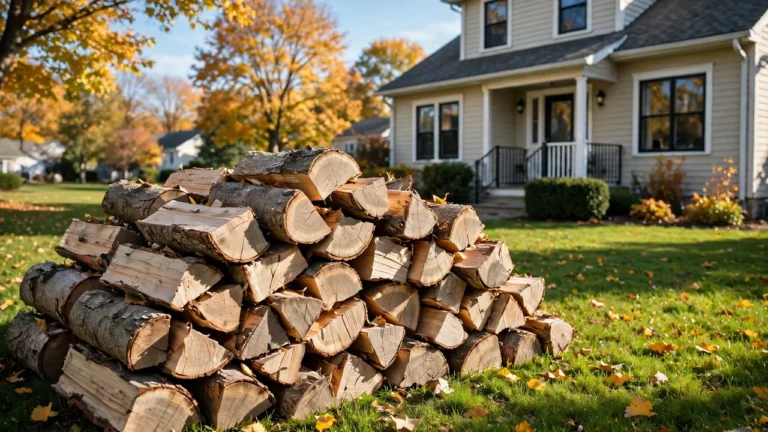
You just got a load of freshly cut logs, and the cold is on its way. The question on your mind is fair: can you burn green firewood? The short answer is that you can try, but you will get very little heat, a lot of smoke, and a real risk of creosote coating your chimney.
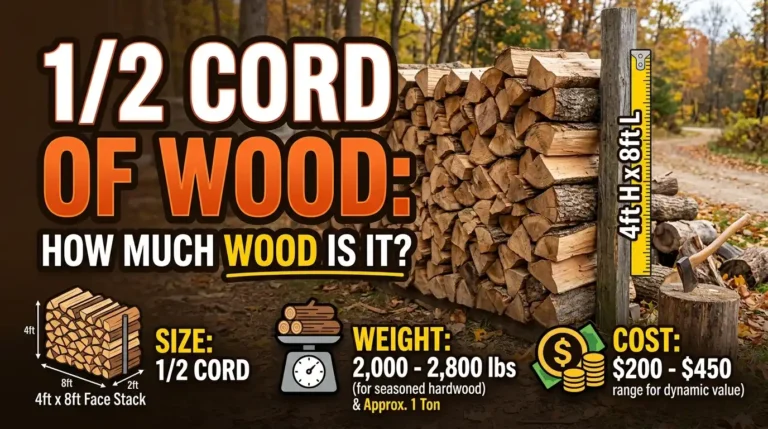
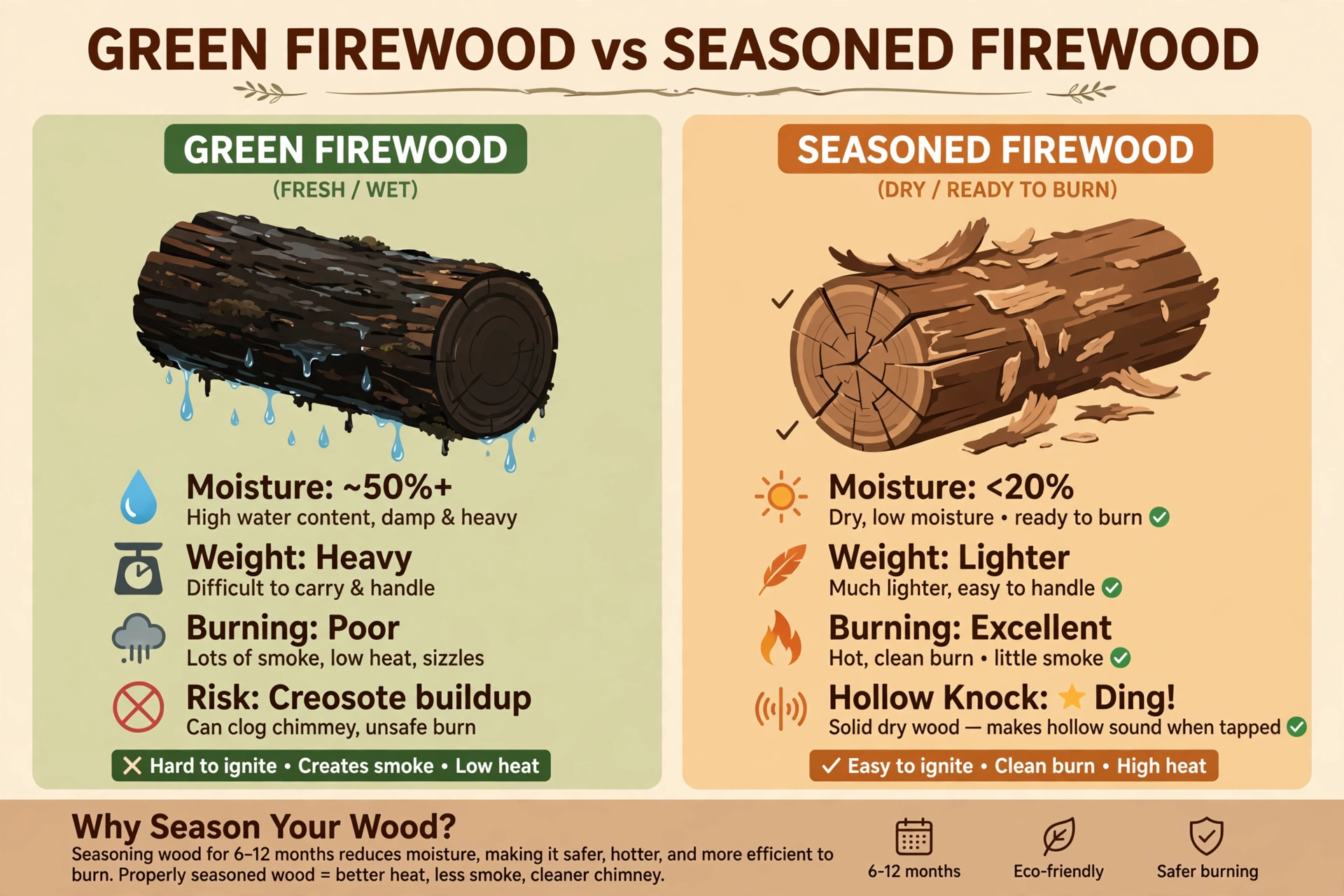
Green firewood is wood that has not had time to dry. It can hold 30 to 60 percent water — and in some cases even more. A fire has to boil off all that water before the wood itself can burn, so green logs hiss, sputter, and smoke instead of giving steady heat.
The good news is that green wood is not a lost cause. With splitting, stacking, and patience, it turns into the seasoned firewood every fireplace and stove loves. This guide shows you why green wood burns badly, what happens if you burn it anyway, and how to dry it the right way so it is ready for your fire.
A quick safety note: wood smoke always carries some risk. Never burn wood — green or dry — in an unvented space, and keep working carbon monoxide detectors on every level of your home. Have your chimney inspected and swept by a certified chimney sweep at least once a year, and check your local burn bans and air-quality rules before you light a fire.
What “Green Firewood” Really Means
Green firewood means freshly cut, not dried yet. It has nothing to do with the color of the bark or leaves. Any species — oak, pine, ash, birch — is green the day it comes off the tree.
Do not confuse green wood with wet wood. Wet wood is seasoned firewood that got rained on or stored badly. Green wood was never dry in the first place. A rained-on stack can dry out in days; a green log needs months.
For the full picture of what dry wood should look and feel like, read our guide on what seasoned firewood is — it covers the signs that tell you wood is finally ready to burn.
Why Green Wood Burns So Badly
A fire spends much of its energy boiling water instead of making heat. Water boils at 212°F, so the fire has to push past that point before the wood fibers can catch. Most of your fuel’s energy goes up the chimney as steam.
All that steam cools the smoke in your flue, and the cooled smoke leaves creosote behind. Green-wood fires often smolder, and smoldering is the worst kind of fire for creosote. Over time the deposits narrow the flue and can ignite.
You will also fight to keep the fire lit. Green logs hiss and steam. Smoke rolls out instead of rising. If you heat with wood, you will burn through far more logs for the same warmth — green wood is an expensive way to stay cold.
Can You Burn Green Firewood in an Emergency?
If green wood is all you have, you can try — but expect a weak, smoky fire. It will be hard to start, hard to keep going, and it will leave extra creosote in your chimney. Around an outdoor fire pit the chimney risk disappears, but the wood still burns poorly.
Indoors, it is not worth the risk. Never try to heat your home with green wood as your main fuel, and never close the stove damper on a green-wood fire — a slow, cool burn is exactly what packs creosote into the flue.
- Splitting maul or a sharp axe
- Saw or chainsaw (wear eye and ear protection, gloves, chaps, and boots — and never work alone)
- Pin-style moisture meter — the most reliable way to check dryness
- Pallet, rails, or a pair of 2x4s to lift the wood off the ground
- Tarp or cover for the top of the stack
- Work gloves and safety glasses
- Split the green logs soon after cutting
- Stack the wood off the ground in sun and wind
- Cover only the top of the stack
- Give the wood the full drying time it needs
- Test a fresh split with a moisture meter
- Burn the driest pieces first on a hot bed of coals
Split the Green Logs Soon After Cutting
Whole logs dry far too slowly, so splitting is the single biggest favor you can do your future fire. Split each green log into pieces 3 to 6 inches across. Splitting exposes the damp inner wood to the air, which is where most of the water sits.
Green wood splits more easily than dry wood, so do not put this job off. Wear gloves and safety glasses, keep kids and pets clear of your work area, and rest often — a maul is heavy work.
Stack the Wood Off the Ground in Sun and Wind
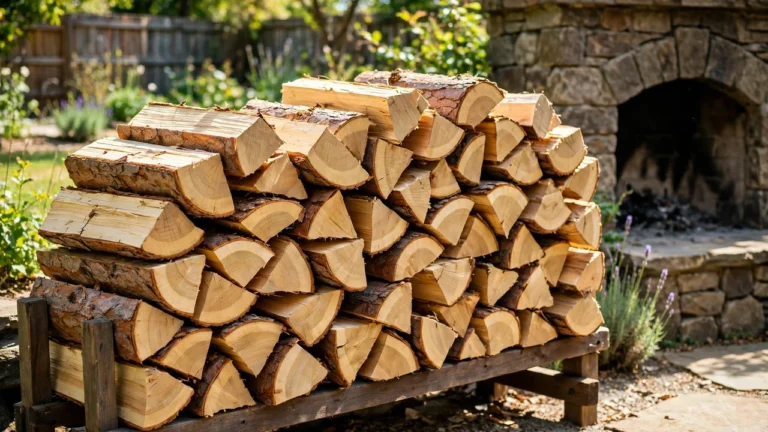
Airflow is what dries wood, not heat alone. Lay down a pallet or a pair of rails first, then stack the splits in a single row with small gaps between pieces. One long, airy row dries far better than a wide, packed pile.
Face the stack toward the sun and the prevailing wind. Keep the pile at least 30 feet from your home — Cornell Cooperative Extension points out that bugs and rodents like to nest in woodpiles, so distance protects your house.
Cover Only the Top of the Stack
Rain slows drying, but a full tarp traps moisture and causes mold. The fix is simple: lay a tarp or sheet of plywood over the top of the stack only, letting it overhang a few inches like a roof. The sides stay open so air keeps moving through.
Check the cover after storms. If wind has blown it off or water is pooling on it, fix it right away. A dry top and open sides are the whole secret.
Give the Wood the Full Drying Time It Needs
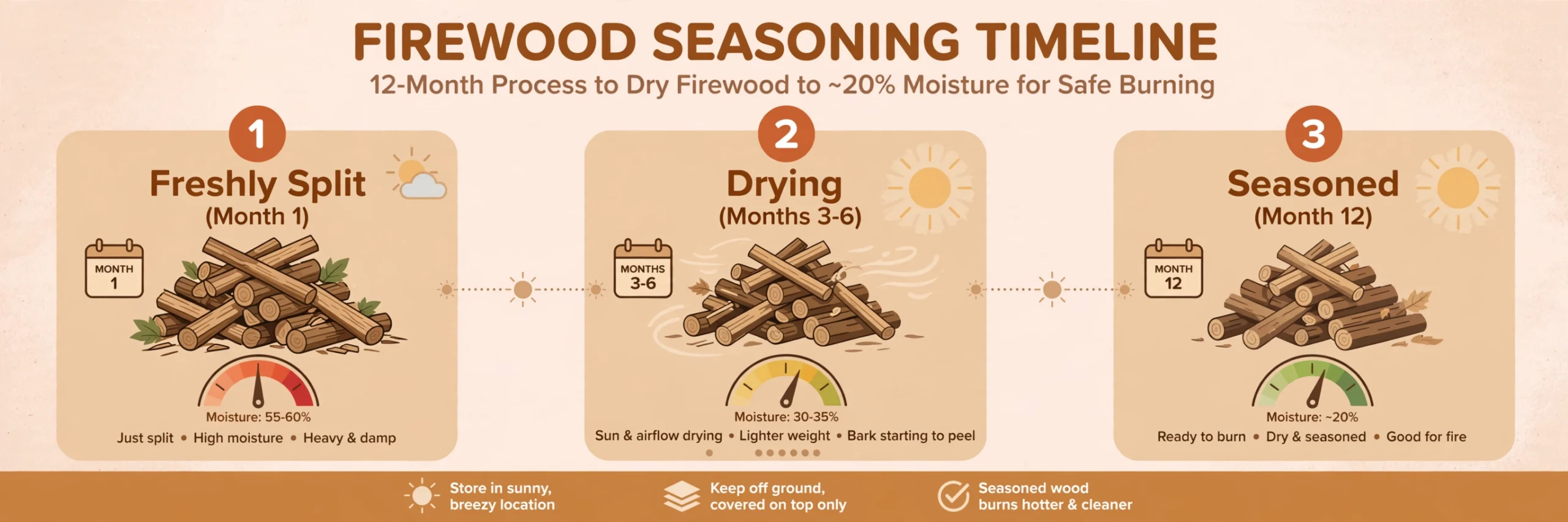
There is no shortcut around time. The University of Illinois Extension says freshly cut wood needs at least six to nine months of drying before it burns well. Softwoods like pine and spruce often reach the target in 6 to 12 months, and most hardwoods land in that range too.
Dense hardwoods are the exception. Oak and hickory can need 12 to 24 months to dry all the way through. The thickest pieces take longest, so if you are in doubt, split them smaller and give them another season.
Cornell Cooperative Extension advises buying your firewood at least a year before you plan to burn it. If you are already behind, our guide on how to season firewood walks through the full method, and these tips on how to dry firewood faster can help when time is short.
Test a Fresh Split With a Moisture Meter
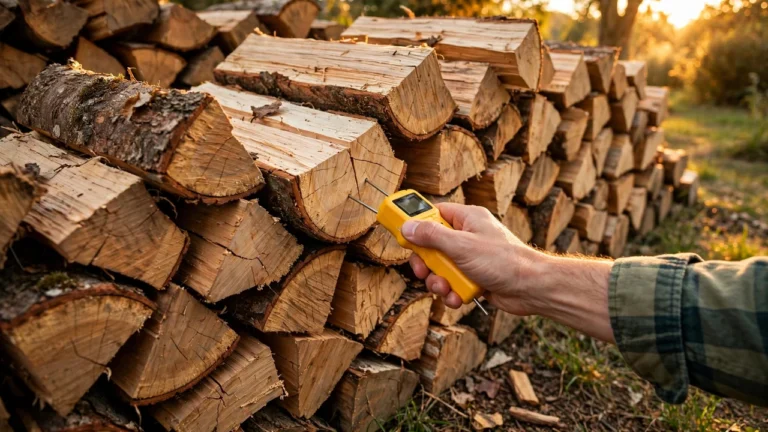
Guessing is where most people go wrong. A pin-style moisture meter removes the guesswork — split a piece open, press the pins into the fresh face, and read the number. Firewood is ready to burn at below 20% moisture.
Testing the bark-side face gives a false low reading, so always test a freshly split face. Our guide on how to tell if firewood is seasoned covers the no-tool checks too — cracked ends, light weight, and a hollow knock sound.
Burn the Driest Pieces First on a Hot Bed of Coals
Once some pieces test under 20%, burn those and keep the rest drying. Start the fire with dry kindling and let it build a thick bed of coals. Hot coals burn cleaner and hotter than fresh flames.
Lay the dry splits on the coals with space between them for air. Work through your driest wood first, and re-test the stack every few weeks — pieces on the sunny, windy side will be ready first.
| If This Happens | Try This |
|---|---|
| The wood hisses and steams in the fire | It is still too wet. Pull it out, test it with a moisture meter, and give the stack more drying time. |
| The fire keeps dying out | Use smaller, drier pieces and more kindling. Check moisture — splits over 20% will not stay lit well. |
| Thick white smoke fills the yard | That is green or smothered wood. Open up airflow and burn smaller dry pieces until the smoke clears. |
| The stove glass is black and the flue feels rough | Creosote is building up. Burn only dry wood from here on and schedule a chimney sweep soon. |
Frequently Asked Questions
Steps: 1) Split green logs 3–6 in. across. 2) Stack off the ground in sun and wind, 30 ft from home. 3) Cover the top only. 4) Wait 6–24 months by species. 5) Test a fresh split — burn at under 20% moisture. 6) Burn driest pieces first on hot coals.
Safety: CO detectors on every level; annual chimney sweep; check burn bans.
So, can you burn green firewood? Only as a last resort — it smokes, gives weak heat, and puts your chimney at risk. Split it, stack it in sun and wind, and give it the months it needs. Your reward is dry wood that lights fast, burns hot, and keeps your chimney far safer.
Your next move: start on today’s split wood now, and read our how to season firewood guide to get the stacking details right. Future you — warm by a clean, crackling fire — will be glad you did.