Can You Put a Fire Pit on a Wood Deck? Safety Rules and Setup Steps
Can you put a fire pit on a wood deck? The honest answer: yes, but only the right kind of fire pit, set up the right way. A wood-burning pit and a dry deck are a bad pair. A gas or propane fire pit with a fire-rated heat shield mat underneath is a completely different story, and it is the setup most deck owners should use.
I have seen too many people drag a bowl-style wood pit onto the deck boards, light it up, and not realize the damage until a scorch mark or worse appears. The risk is not the flames you see. It is the heat radiating straight down and the sparks that drift sideways on a light breeze.
This guide walks you through the safe way to do it: how to check your clearances, which fire pit type belongs on a deck, the heat shield that protects the boards, and the habits that keep every burn uneventful. Follow the steps in order, and you will have a deck fire pit setup that is warm, inviting, and built around safety.
⚠️ Heads Up: A Wood-Burning Pit Does Not Belong on a Deck
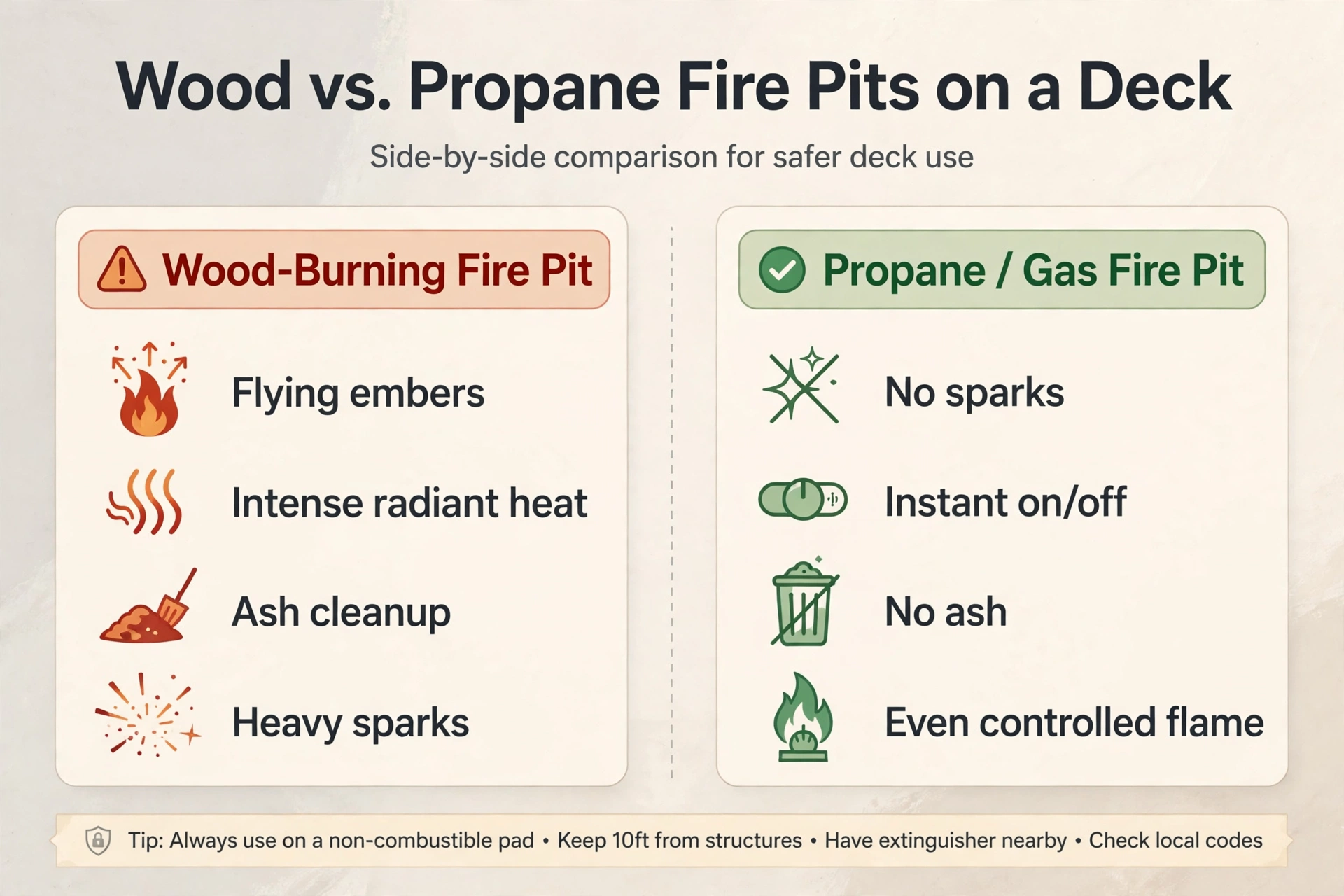
Never place a wood-burning fire pit on a wood or composite deck. Flying embers and downward radiant heat can ignite deck boards even when the flames look small, and many local fire codes ban it outright. This guide covers gas and propane fire pits only for deck use. If you want a wood-burning pit, set it on the ground on concrete, stone, or gravel away from the deck. Disclaimer: fire is dangerous. Always check your local fire codes and HOA rules before installing a fire pit on a deck, follow the manufacturer’s instructions exactly, and never leave a burning pit unattended.
Total Time
1 hour
Active Time
30 minutes
Difficulty
Beginner
📋 What You Need
- Propane or natural gas fire pit (deck-rated, with a stable wide base)
- Fire-rated heat shield mat / deck pad sized for your pit
- ABC-rated fire extinguisher
- Garden hose with a spray nozzle, or a full bucket of water
- Tape measure (25 ft or longer)
- The fire pit owner’s manual (read the clearance section first)
- Outdoor chairs and side tables for seating 3–4 ft from the flame edge
The Straight Answer
Not every fire pit belongs on a deck. The type decides everything. Here is the verdict in one glance:
| Fire Pit Type | Safe on a Wood Deck? | Why |
|---|---|---|
| Wood-burning | No | Sparks, embers, and downward heat can ignite boards; most fire codes ban it. |
| Propane / gas | Yes, with setup | No sparks, controlled flame, instant shut-off — plus a heat shield mat underneath. |
If you are still shopping, read our fire pit buying guide before you spend a dollar. The rest of this guide assumes you are using a gas or propane unit.
📅 At a Glance: 7 Steps
- Measure the clearances around your deck
- Check local codes and HOA rules before buying
- Choose a propane or gas fire pit, not wood-burning
- Lay a fire-rated heat shield mat under the pit
- Position the pit and move chairs back
- Put spark protection and an extinguisher within reach
- Supervise the flames and shut the gas off after
Step 1: Measure the Clearances Around Your Deck
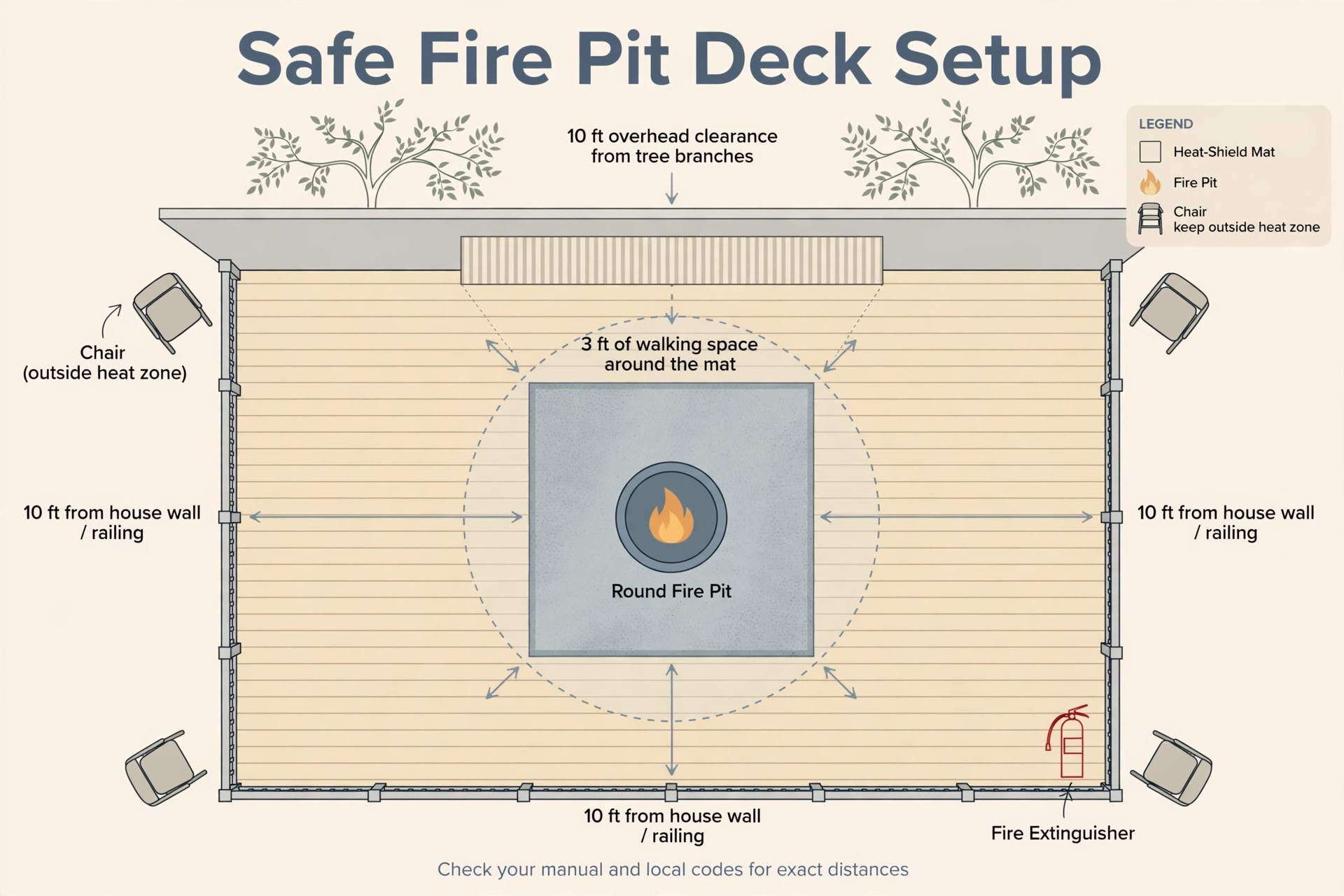
Hook your tape measure on the house wall and pull it toward the spot where the pit will sit. Fire safety authorities advise at least 10 feet between an open flame and your house, railings, and anything combustible — and 15–20 feet is the safer target when your deck has the room. Mark the spot with painter’s tape so you do not drift closer when you arrange furniture.
Then look straight up. Anything hanging over the pit — a pergola, an awning, low tree branches — is a no-go. Fire needs open sky above it so heat and smoke can escape, and our fire pit clearance guide lays out the full measuring walkthrough with a tape measure and flags.
Step 2: Check Local Codes and HOA Rules Before Buying
Some cities restrict or ban fire pits on decks outright, and many HOAs have their own rules about open flames on balconies and wooden decks. A quick call to your local fire department or a look at their website settles it in minutes. Do this before you buy the pit or the mat, not after.
The rules vary widely: one town may allow gas fire pits anywhere while banning wood-burning, while another requires a permit for any deck-mounted flame. Your manual’s clearance distances always apply too — if the manufacturer demands more space than your deck allows, the pit does not fit your deck. Our overview of backyard fire pit legality and permits explains what to ask about.
Step 3: Choose a Propane or Gas Fire Pit, Not Wood-Burning
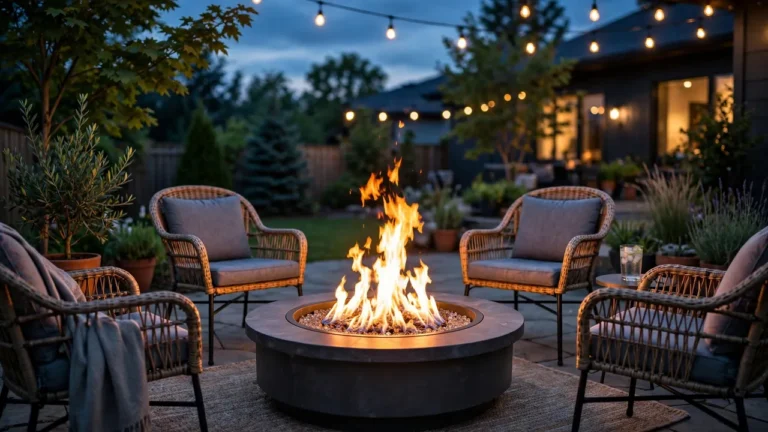
For a deck, a propane fire pit is the clear winner. There are no sparks or embers to drift onto the boards, the flame height stays under your control, and you shut the whole thing off with a valve — no smoldering coals to worry about after the party ends. Natural gas units work the same way if you have a gas line run to the deck.
Pick a model with a wide, stable base that cannot tip, and confirm the manual lists it as safe for deck or patio use. If you are deciding between fuel types, see our breakdown of propane vs natural gas fire pits, and check how long a propane tank lasts on a fire pit so you are not swapping tanks mid-evening.
Step 4: Lay a Fire-Rated Heat Shield Mat Under the Pit
Even a gas pit radiates heat downward, and deck boards dry out and scorch over time. A fire-rated heat shield mat (also sold as a deck pad) sits under the pit and blocks that downward heat. Choose a mat rated for fire pit use, and size it so it extends at least a foot past the pit’s footprint on every side.
Unroll the mat on the cleanest, flattest part of the deck and press it flat — wrinkles create hot spots. The mat does not make the setup fireproof on its own; it works together with the clearances you measured in step 1. Replace the mat if it ever cracks, warps, or shows burn marks.
Step 5: Position the Pit and Move Chairs Back
Center the fire pit on the mat and make sure all four feet — or the full base ring — sit on the mat, not half on and half off. An overhanging edge puts direct heat on the boards. Give the pit a firm push from the side: it should not rock or slide on the mat.
Arrange seating at least 3–4 feet from the flame edge. That distance keeps guests comfortable and keeps loose clothing, blankets, and chair cushions away from the heat.
Step 6: Put Spark Protection and an Extinguisher Within Reach
Gas pits throw no embers, but wind can still blow a napkin or a dry leaf into the flame, and a grease flare-up can surprise you. Keep an ABC-rated fire extinguisher at the deck edge, no more than a few steps away — not inside the house where you would have to run for it. Learn how to pull the pin and aim before you ever need it.
A garden hose with a spray nozzle, or a full bucket of water, covers small mishaps. Clear dry leaves, pine needles, and cushions away from the mat before lighting, and check that the propane connections are snug with no hiss of leaking gas. If you smell gas, do not light the pit — turn the tank valve off and step away.
💡 Pro Tip: Do a cold run before your first guests arrive. Set everything up, sit in each chair, and check sight lines, walkways, and reach to the extinguisher. Adjusting furniture with a lit pit is exactly what you want to avoid.
Step 7: Supervise the Flames and Shut the Gas Off After
Stay with the pit the entire time it burns. Deck fires start from moments of inattention — a gust, a knocked-over drink, a pet nosing too close. When the evening ends, turn the tank valve off first, then the pit’s control knob, and wait until the unit is fully cool before covering it or moving anything.
After it cools, wipe down the burner area and check the mat underneath for scorch marks. Our guide to cleaning a fire pit keeps the burner ports clear so the flame stays even and safe burn after burn.
❌ 4 Mistakes That Ruin a Deck Fire Pit Setup
- Skipping the heat shield mat. “It is only a small gas pit” is how deck boards get permanent scorch rings. The mat is cheap insurance — always use one.
- Pushing the pit against the railing. Railings are wood, and radiant heat warps and discolors them fast. Respect the 10-foot minimum from the house and railings.
- Burning under a cover. Pergolas, awnings, and umbrellas trap heat above the flame. If the sky is not open directly above the pit, move the pit.
- Walking away “for a minute.” Every deck fire story starts with an unattended flame. If everyone goes inside, the pit goes off first.
❓ Fire Pit on a Wood Deck: Common Questions
Can you put a fire pit on a wood deck safely?
Yes, with a propane or gas fire pit on a fire-rated heat shield mat, proper clearances, and local code approval. Wood-burning pits should never go on a wood deck.
Is a propane fire pit safe on a deck?
Propane fire pits are the safest option for decks because they produce no sparks or embers and shut off instantly. You still need a heat shield mat and at least 10 feet of clearance from the house and railings.
What do you put under a fire pit on a deck?
A fire-rated heat shield mat, also called a deck pad, sized to extend at least a foot past the pit on every side. It blocks downward radiant heat from reaching the deck boards.
How far should a fire pit be from the house on a deck?
At least 10 feet from the house, railings, and anything combustible, with 15 to 20 feet as the safer target. Check the manufacturer’s manual too — its required clearances always win.
Will my HOA or city allow a fire pit on my deck?
It depends on where you live. Many cities and HOAs restrict flames on wooden decks or require permits. Call your local fire department before you buy anything.
✂ Quick Reference Card
WHAT YOU NEED
Gas/propane fire pit · heat shield mat · ABC extinguisher · hose or water bucket · tape measure · owner’s manual
STEPS
- Measure: 10 ft minimum from house and railings, open sky above.
- Check local codes and HOA rules before buying.
- Buy a propane or gas pit — never wood-burning on a deck.
- Lay a fire-rated heat shield mat, pit fully on the mat.
- Center the pit, set chairs 3–4 ft back.
- Stage an extinguisher and water within a few steps.
- Stay with it; shut the gas off first, then the knob.
You now have a fire pit on a wood deck set up the safe way: a gas unit on a heat shield mat, real clearances measured, and a shut-down routine that leaves nothing to chance. Enjoy the warm evenings — the deck stays intact, and so does your peace of mind.
When you are ready to take your setup further, our propane vs natural gas fire pit guide helps you decide whether a plumbed gas line is worth it for the long run.