How to Clean a Fire Pit: Ash Removal, Rust Fixes, and Wood vs Gas Care
Safety first: embers buried in ash can stay hot enough to burn you for 24 hours or more after the last flame. Let the pit cool fully before you start, wear work gloves and a dust mask, and keep children and pets away from the work area. Never burn treated, painted, or stained wood, plywood, or household trash in a fire pit — the fumes are toxic. If you smell gas at any point, stop, move away, and call your gas supplier or the fire department.
A fire pit that never gets cleaned turns into a slow-burning problem. Ash piles up and chokes airflow, moisture gets trapped under the ash and rust eats through the steel, and soot stains make the whole patio look tired. If you have been staring at a gray, crusty fire pit and wondering where to start, this guide on how to clean a fire pit is exactly what you need. You will work through a clear 7-step routine that takes about 30–40 minutes of active effort, and you will finish with a pit that lights easier, looks better, and lasts years longer.
This method works for round steel bowls, square pits, stone pits, and chimineas. It covers both wood-burning and gas or propane fire pits, with a separate section that spells out exactly what changes for gas. You will also learn what to do with the leftover ash (some of it is genuinely useful in the garden), how to scrub out rust spots before they become holes, and how to wash lava rock and fire glass so it shines again. Grab a metal bucket and a stiff brush, and let us get your pit back in shape.
What You Need
At a Glance: The 7 Steps
- Wait until every ember is cold
- Pull out loose ash and debris
- Scoop and sort the remaining ash
- Scrape soot and burn marks
- Wash the bowl and rim
- Dry the pit fully in the sun
- Inspect for rust and cover the pit
1. Wait Until Every Ember Is Cold
Buried embers hide under ash and keep their heat far longer than most people expect. Give the pit at least 24 hours after your last fire before you touch anything. The only safe test is a bare-hand check held a few inches above the ash bed — if you feel any warmth at all, walk away and come back later.
⚠️ Heads up: ash can insulate live embers for days. Never dump warm ash into a trash can, a plastic bag, or a pile of leaves. A metal bucket with a lid, set on concrete away from the house, is the only safe holding spot.
2. Pull Out Loose Ash and Debris
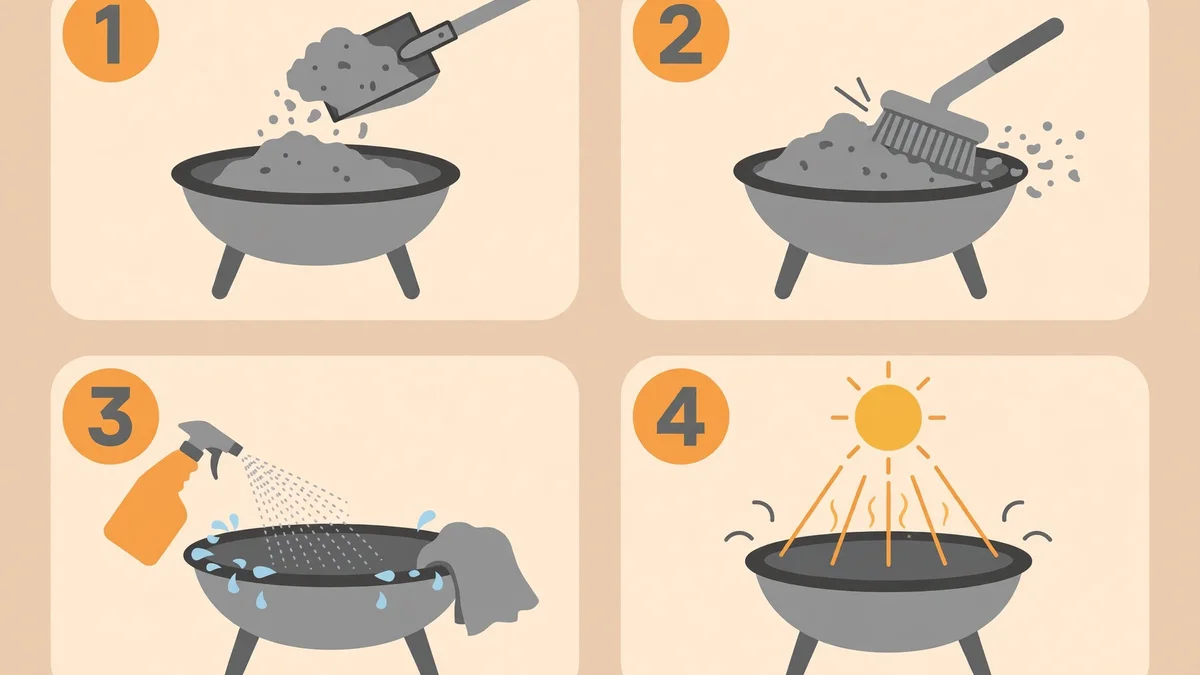
Start with the big, loose stuff — it comes out fast and makes the rest of the job easier. Pull on your gloves and dust mask, then lift out half-burned logs, chunks of charcoal, sticks, leaves, and anything the wind dropped in. Toss unburned wood aside to reuse in your next fire, and drop everything else into the metal bucket.
If your pit has a spark screen or a log grate, lift those out now and lean them against the pit. Cleaning around them is frustrating; cleaning them separately takes two minutes. This is also a good moment to notice whether your fire pit has a drain hole at the bottom — many steel bowls do, and it tells you water can pass straight through when you rinse later.
3. Scoop and Sort the Remaining Ash
One to two inches of fine ash left in a wood-burning pit is actually fine — a thin ash bed insulates the metal and helps the next fire catch. The problem is the deep, compacted layer. Scoop the excess into the metal bucket with your shovel or trowel, working from the edges toward the center so nothing spills over the rim.
Sort as you go: powdery gray ash goes in the bucket, and any small hard clumps of charcoal go in a separate pile to reuse. A separate section below covers exactly what to do with the ash once it is fully cold, including how much is safe to spread on garden beds.
4. Scrape Soot and Burn Marks
Thick black soot on the bowl walls and rim is mostly carbon, and a dry wire brush takes most of it off. Scrub in short strokes with steady pressure, working top to bottom so the dust falls into the bowl instead of onto your clothes. Steel bowls and cast iron can take firm scrubbing; go gentler on painted or copper finishes so you do not strip the coating.
💡 Pro tip: for stubborn creosote-like buildup near the rim, dampen the rag with white vinegar and let it sit on the spot for 10 minutes before scrubbing. The mild acid softens the gunk so the wire brush finishes the job instead of doing all of it.
5. Wash the Bowl and Rim
With the dry debris gone, wash what is left. Mix a squirt of mild dish soap into a bucket of warm water, or use the garden hose on a gentle spray. Wipe the inside of the bowl and the rim with a sponge, then rinse. Plain water and soap are enough — harsh chemicals and oven cleaner can damage finishes and leave residues you do not want near an open flame.
Skip the pressure washer on this job. The force can push water into seams, chip paint, and dent thin steel. If you built the pit yourself from stone or pavers, the same gentle wash works — mortar joints do not like blasting water either.
6. Dry the Pit Fully in the Sun
30–60 minutes of direct sun usually dries a steel bowl completely. Water left sitting in the bowl is the fastest way to start new rust, so this step matters more than it looks. Tilt portable pits slightly so the drain hole empties, and wipe the rim with a dry rag to catch the last drips.
No sun today? A dry towel plus an hour of air movement from a fan works. Do not cover the pit while it is still damp — trapping moisture under a cover is worse than leaving it uncovered overnight in dry weather.
7. Inspect for Rust and Cover the Pit
With the bowl clean and dry, look closely at the metal. Small orange specks are surface rust, and catching them now stops the spread. Scrub them with the wire brush or steel wool, wipe the dust away, and touch up bare steel with a dab of heat-resistant paint if you keep some on hand. Holes, flaking through the metal, or a bowl that flexes when you press it mean the pit is done — replace it rather than repair it.
Finally, put the cover on. A cover is the single best habit for keeping a clean pit clean: it blocks rain, leaves, and the ash-soup that forms when rain mixes with leftover dust. If you host often, a quick sweep-out after every 2–3 fires keeps this whole routine short.
How to Clean a Fire Pit That Runs on Gas or Propane
Gas and propane fire pits make no ash, but they still collect dust, spider webs, and food grease — and their burner parts need a gentler touch. Follow the same cool-down rule, then use this shorter routine.
Shut off and check the fuel
Turn the gas off at the tank valve or the supply shutoff, then disconnect the tank or line before you clean anything around the burner. Give the hose and connections a quick look for cracks or chew marks while you are there. If you smell gas at any point, stop and call your gas supplier.
Brush the burner and clear the ports
Lift out the lava rock, fire glass, or ceramic logs and set them aside on a tarp. Brush the burner ring gently with a soft brush to clear dust and the tiny flame ports. A toothpick clears a clogged port; a wire brush is too aggressive here and can damage the burner. Before reconnecting, a quick check of your propane supply saves you from relighting on an empty tank.
Rinse, dry, and reassemble
Wipe the bowl with a damp soapy rag, rinse, and dry it fully the same way you would for a wood pit. Wash the lava rock or fire glass separately (see below), let every piece dry completely, then put the media back and reconnect the gas. Test with a quick light-up and watch the flames: even, blue-tipped flames mean the ports are clear.
What to Do With the Ash
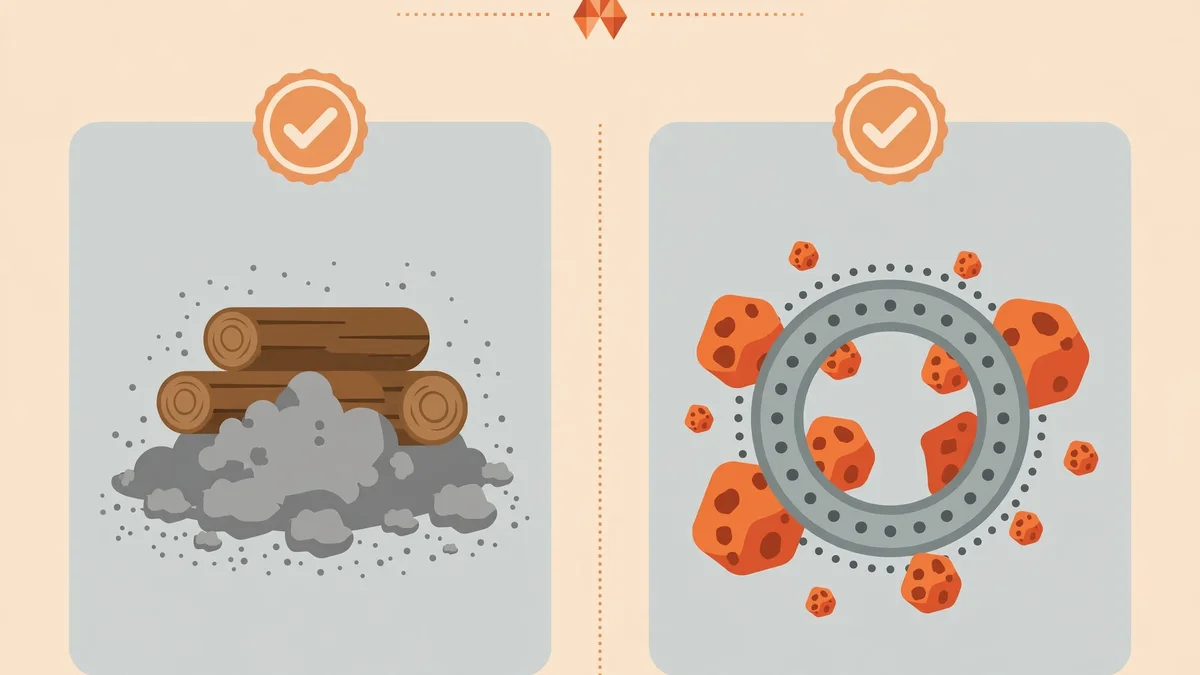
First, make sure it is truly cold — wait 2–3 days and store it in a covered metal container away from the house and anything flammable. Wood ash is alkaline and contains potassium, so a thin sprinkle worked into garden soil can help plants — but keep it light, roughly a dusting rather than a layer, and skip acid-loving plants like blueberries and azaleas. When in doubt about your soil, a simple soil test from a garden center answers the question cheaply.
Small amounts can also go into the compost pile. Never spread ash from treated, painted, or stained wood, plywood, or trash — those ashes can contain heavy metals and other toxins. Leftover ash you cannot use goes in the trash inside a bag, never loose in the bin on a windy day. And one thing ash cannot fix: embers that jump the pit. Keep the area around your pit clear using proper fire pit clearance distances from your house, trees, and fence.
Scrub Out Rust Before It Spreads
Rust on a fire pit almost always starts where water sat too long — under ash, around the drain hole, or where a cover trapped damp air. Surface rust comes off with a wire brush or steel wool and a little elbow grease. Wipe the area clean, let it dry, and seal bare spots with heat-resistant paint made for grills and fire pits.
Check the legs and base too, since rust there affects stability. A pit that wobbles, has soft spots you can poke through, or sheds flakes of metal is past saving — retire it. Storing the pit under a cover on a dry surface, and emptying ash after wet weather, stops most rust before it starts.
Wash Lava Rock, Fire Glass, and Ceramic Logs
Pull the media out of the pit and spread it on a tarp. Rinse lava rock and fire glass with the garden hose, scrubbing off soot with a soft brush and a drop of dish soap. Ceramic logs get the same gentle treatment — no wire brushes, which can crack the coating.
The critical part is drying: every piece must be bone dry before it goes back over a burner. Trapped moisture can pop or crack hot rock and glass. Spread the pieces in the sun for a few hours, and only reassemble when nothing feels cool or damp to the touch.
Troubleshooting: If This Happens, Try This
| If this happens | Try this |
|---|---|
| Ash dust goes everywhere | Mist the ash lightly with water from a spray bottle first — damp ash scoops cleanly instead of floating. |
| Soot will not budge | Soak the spot with white vinegar for 10 minutes, then scrub again with the wire brush. |
| White film on fire glass | That is mineral deposit from hard water. Rinse with a 50/50 vinegar-water mix and dry fully. |
| Pit smells musty after cleaning | It was covered while damp. Uncover it, let it dry in the sun, and leave the cover off until it is fully dry next time. |
| Gas burner flames look weak after cleaning | A port is still clogged or the tank is low. Clear ports with a toothpick, check the gas level, and relight. |
Frequently Asked Questions
How often should you clean a fire pit?
Scoop out excess ash every 2–3 fires, and do the full wash-and-inspect routine 2–4 times per season depending on how often you burn. Gas fire pits need the burner brushed and the media rinsed about twice a year.
Can you put fire pit ash in the garden?
Yes, if it is plain wood ash from untreated firewood. Work a thin sprinkle into the soil — wood ash is alkaline, so keep it away from acid-loving plants like blueberries. Never use ash from treated wood, painted wood, or trash.
How do you clean rust off a fire pit?
Scrub surface rust with a wire brush or steel wool until you reach bare metal, wipe it clean, let it dry, and touch up the spot with heat-resistant paint. If the metal is flaking through or has holes, replace the pit.
Can you hose down a fire pit?
Yes, with a gentle spray — not a pressure washer. Rinse out ash and soot, then dry the pit fully in the sun. Standing water is what causes rust, so drying matters more than the wash itself.
How do you clean a gas fire pit burner?
Shut off and disconnect the gas first, remove the lava rock or fire glass, and brush the burner ring gently with a soft brush. Clear clogged flame ports with a toothpick, wash the media separately, and dry everything fully before reassembling.
📋 Quick Reference Card
You need:
Metal bucket with lid · ash shovel · stiff brush · wire brush · gloves · dust mask · rags · hose · dish soap · vinegar
Steps:
- Cool 24+ hours; check for warmth
- Remove logs, debris, and grates
- Scoop excess ash (keep 1–2 in. bed)
- Scrape soot; vinegar on tough spots
- Wash with soap and gentle rinse
- Sun-dry 30–60 min, rim wiped dry
- Scrub rust, touch up, cover the pit
Gas pits: shut off gas → brush burner gently → wash media separately → dry fully → relight and check flames.
You did it — your fire pit is clean, dry, rust-checked, and covered, ready for the next night out under the stars. That 30–40 minutes of work protects a pit that would otherwise rust out years early. The one habit that keeps it this way is also the quickest: scoop the excess ash after every couple of fires so it never builds up again. And when you are ready to light it up, here is how to start a fire in a fire pit the right way.