Vented vs Ventless Gas Fireplace: Which Is Right for You?
Shopping for a vented vs ventless gas fireplace can feel like listening to two salespeople argue. One swears vented is the only safe choice. The other says ventless saves money and needs no chimney. Both leave out the parts that matter to you.
Here is the plain version. Vented and ventless gas fireplaces burn the same fuel, but they handle exhaust in opposite ways — and that one difference changes heat output, installation cost, indoor air, and even where the law lets you put one.
By the end of this guide, you will know exactly which type fits your home, your budget, and your local rules. No showroom talk, no guesswork — only the facts that decide it.
- Carbon monoxide (CO) is colorless and odorless, and any fuel-burning appliance can produce it if something goes wrong. Install CO alarms on every level of your home and near sleeping areas, test them monthly, and replace them on the maker’s schedule. Pets — especially birds — are more sensitive to CO than people, so alarms protect the whole household.
- Smell gas (a rotten-egg odor)? Do not touch switches, flames, or appliances. Get everyone — people and pets — out of the home right away, then call your gas utility’s emergency line or 911 from outside. Never try to find or fix a leak yourself.
- Leave gas work to licensed professionals. Never open gas lines, never adjust valves beyond the normal controls in your owner’s manual, never bypass safety devices like oxygen-depletion sensors or thermocouples, and never block vents. Installation, conversion, venting changes, and repairs go to a licensed gas fitter.
- Vent-free warning: ventless appliances release combustion byproducts — including carbon monoxide and water vapor — directly into the room. They are restricted or banned in some states and cities, and many codes limit or bar them in bedrooms and bathrooms. Check local codes before you buy.
- Know the warning signs of CO poisoning — headache, dizziness, nausea, confusion. If they appear while a fuel-burning appliance is running, get to fresh air and call 911.
How Each Type Actually Works
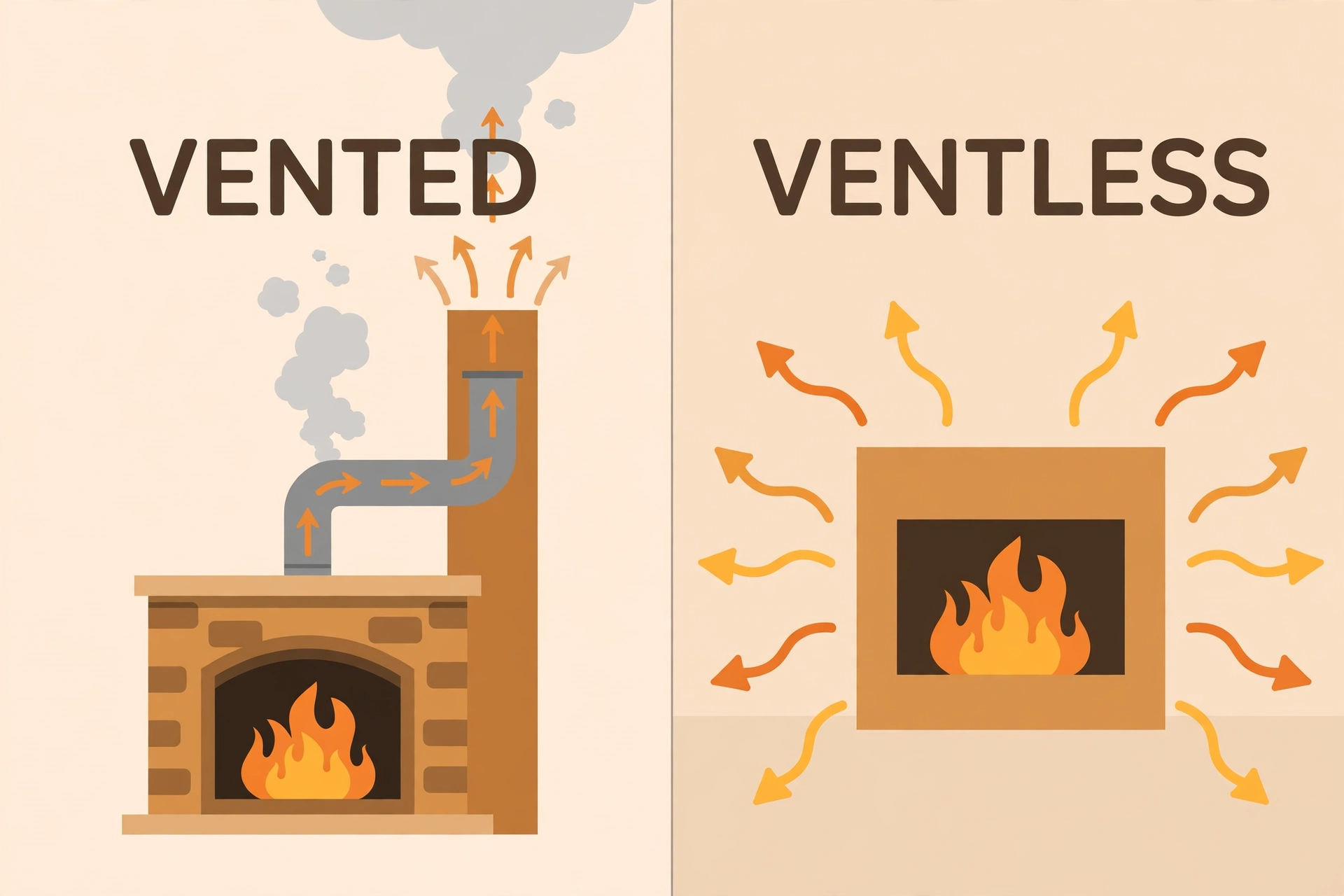
A vented gas fireplace sends its exhaust outside through a chimney or vent pipe, the way a wood stove does. The flame sits in a firebox, and combustion gases — plus a good share of the heat — rise up and out of your home.
A ventless (vent-free) fireplace has no chimney and no vent pipe. It burns gas using room air, then releases heat, water vapor, and small amounts of combustion byproducts straight into the room. A built-in oxygen-depletion sensor watches the air and shuts the burner off if oxygen drops too low.
Direct-vent is the most common vented style sold today. It uses a sealed glass front and a two-way pipe: one channel pulls combustion air in from outside, the other pushes exhaust back out. Nothing from the flame ever mixes with your indoor air. The older vented style — gas logs sitting in an open chimney fireplace — works too, but sends most of its heat up the flue.
Vented vs Ventless Gas Fireplace: Which Heats Better?
Ventless wins on raw heat delivery. With no chimney carrying warmth away, nearly all the heat stays in the room. If your goal is warming a chilly space fast, ventless gives you more heat per hour of burn.
Vented fireplaces lose a large share of their heat up the vent. They still warm the room — radiant heat through the glass and warm air off the unit — but they work harder to do it. Plenty of buyers accept that trade because they prefer the flame and the air quality.
Room size matters more than type. Follow the manufacturer’s room-size minimums, especially for ventless units, and do not oversize a unit for a small, tight room. When output ratings are unclear, ask the dealer to show you the rating plate on the actual model.
Installation and Upfront Cost
Vented installation is the bigger project. It needs a chimney or a vent run through a wall or roof, proper clearances from anything that can burn, and a licensed pro to connect the gas line. A home with a usable chimney has a head start; a home without one faces real construction work.
Ventless installation is far simpler: no chimney, no vent pipe, usually only a gas connection and wall clearances. That is why ventless costs less to put in — but the savings vanish if your town does not allow vent-free appliances.
I will not quote prices here, because they swing widely by region, unit size, and how much construction your home needs. Get two or three written quotes from licensed installers and compare the same scope of work.
The one rule with no exceptions: gas connections and venting are licensed-professional work, and most towns require a permit and inspection. That applies to both types, with no DIY middle ground.
Safety and Indoor Air Quality
Both types burn gas, so both need working CO alarms and yearly professional service. But the air you breathe is different. A vented unit’s exhaust goes outside; a ventless unit’s byproducts — water vapor plus small amounts of carbon monoxide and other combustion gases — stay in the room with you.
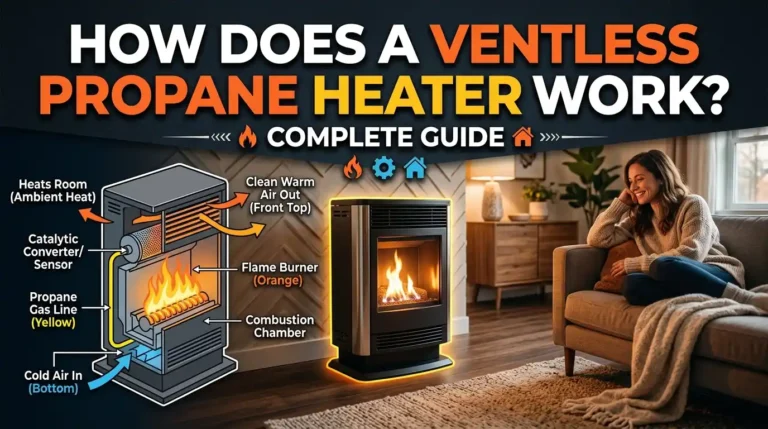
That is why ventless units carry extra rules: a working oxygen-depletion sensor (never bypass it), strict room-size minimums, and, in many codes, no bedrooms or bathrooms. Our guide to how ventless propane heaters work walks through those byproducts in more detail.
In a tight, well-sealed modern home, ventless moisture can fog windows and feed mold on cold walls over a long heating season. Ventless units can also give off a faint odor when they first fire up each season. If anyone in the home has asthma or breathing trouble, or you keep pet birds, lean vented.
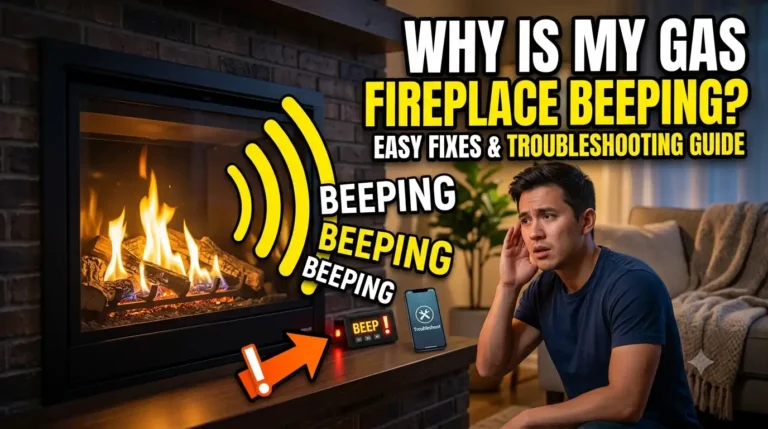
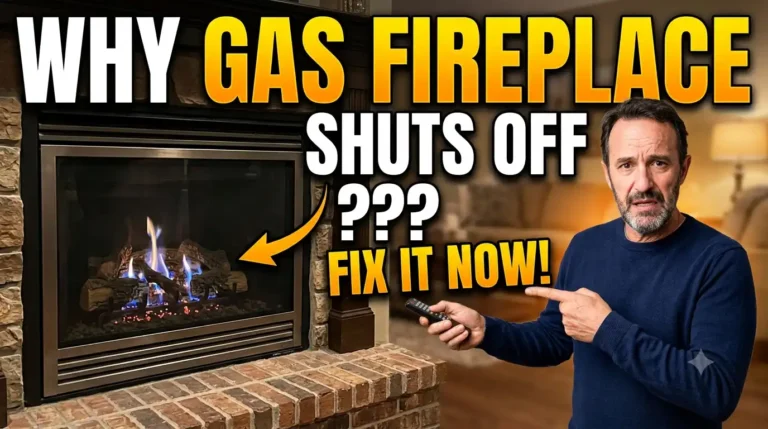
Never run any gas fireplace with a blocked vent, and never disable a safety device to stop a shutdown. A unit that keeps shutting itself off is telling you something is wrong — call a professional and leave it off until it is checked.
Where Each Type Is Allowed
Check local codes before you fall in love with a model. Vent-free gas fireplaces are restricted or banned in some states and cities — California and Massachusetts are the best-known examples — and many codes limit or bar them in bedrooms and bathrooms even where they are legal.
Vented units face no such patchwork. Where gas appliances are allowed, a properly installed vented fireplace is allowed. Permits and inspections still apply, but the answer does not change from town to town.
Maintenance and Upkeep
Both types need a yearly visit from a licensed pro: gas connections checked, burner and pilot cleaned, safety devices tested, and — for vented units — the vent or chimney inspected for blockages or damage.
Between visits, keep the glass and louvers dust-free and keep the area around the unit clear of clutter. On a ventless unit, light dusting of the pilot and burner area, done exactly as the manual describes, keeps the flame burning clean.
Watch for warning signs: yellow, lazy flames (gas flames should burn mostly blue), soot on the glass or logs, or an unusual smell while the unit runs. Any of these means stop using it and call a professional — they can signal incomplete combustion.
The Verdict: Vented vs Ventless at a Glance
| Feature | 🔥 Vented | 💨 Ventless |
|---|---|---|
| Exhaust | Goes outside via chimney or vent | Stays in the room (heat + byproducts) |
| Heat in the room | Lower — much escapes up the vent | Higher — almost all of it stays |
| Installation | Bigger job: venting + pro gas line | Simpler: gas connection + clearances |
| Indoor air | Cleanest — exhaust leaves the house | Adds moisture + trace combustion gases |
| Legal limits | Allowed wherever gas appliances are | Banned or restricted in some areas |
| Upkeep | Yearly pro service + vent/chimney check | Yearly pro service + keep burner clean |
| Best for | Realistic flame, clean air, bedrooms | Max heat, no chimney, tight budget |
5 Mistakes to Avoid When Choosing
1. Buying ventless before checking local codes. This is the costliest mistake on the list. A unit you cannot legally install is money wasted — call your building department first, not after delivery.
2. Skipping the CO alarm. “Vented is safe, so I don’t need one” is wrong. Any fuel-burning appliance can produce carbon monoxide if something fails. Alarms on every level and near sleeping areas, tested monthly — both types, no exceptions.
3. Blocking vents or closing the damper. A vented unit with a blocked or closed vent pushes exhaust into your living space. Keep vents clear, keep the damper open when a vented gas unit burns, and never store anything against vent pipes.
4. Doing the gas hookup yourself. Gas lines, valves, and venting are licensed-professional work, full stop. A handyman special or a DIY gas connection risks leaks and carbon monoxide poisoning — and can void your insurance.
5. Choosing by flame looks alone. The prettiest flame in the showroom means little if the unit is wrong for your room size, your air quality needs, or your local code. Decide on heat needs and rules first, then pick the looks you like.
If venting turns out to be the deal-breaker, remember that electric fireplaces need no venting at all — worth a look before you give up on the idea. And if you are torn between fuel types altogether, our gas vs electric fireplace comparison covers the bigger picture.
Frequently Asked Questions
Is a ventless gas fireplace safe to use in a bedroom?
Usually not. Many building codes restrict or ban vent-free appliances in bedrooms and bathrooms, and some jurisdictions allow them only at reduced output. Check your local code and the unit’s manual — and never sleep with one running unless both allow it. Keep a working CO alarm in any room with a fuel-burning appliance.
Does a ventless gas fireplace add moisture to the air?
Yes. Burning gas produces water vapor along with heat and small amounts of other combustion byproducts. In a tight, well-sealed home this can show up as window condensation or damp spots over a long heating season. Vented units send all of that moisture up the flue.
Can I install a gas fireplace myself?
No. Gas-line work, venting, and combustion setup must be done by a licensed gas professional, and most towns require a permit and inspection. DIY gas work risks leaks and carbon monoxide poisoning. You can choose the model and the spot — leave the pipes and venting to the pro.
Do I need a carbon monoxide detector with a vented gas fireplace?
Yes. Any fuel-burning appliance can produce CO if something goes wrong — a blocked vent, a failed part, incomplete combustion. Install CO alarms on every level of your home and near sleeping areas, test them monthly, and replace them on the maker’s schedule.
Will my gas fireplace work during a power outage?
Some do and some don’t. Standing-pilot and millivolt models often keep working with no household power, while electronic-ignition models usually need electricity or a battery backup. We covered exactly which types keep running in our guide to whether a gas fireplace works without electricity.
Can I convert my vented gas fireplace to ventless?
Conversion and venting changes are gas work for a licensed professional — and the first step is checking local codes, because ventless is banned or restricted in some places. If it is not legal where you live, the conversion is off the table no matter who does the work.
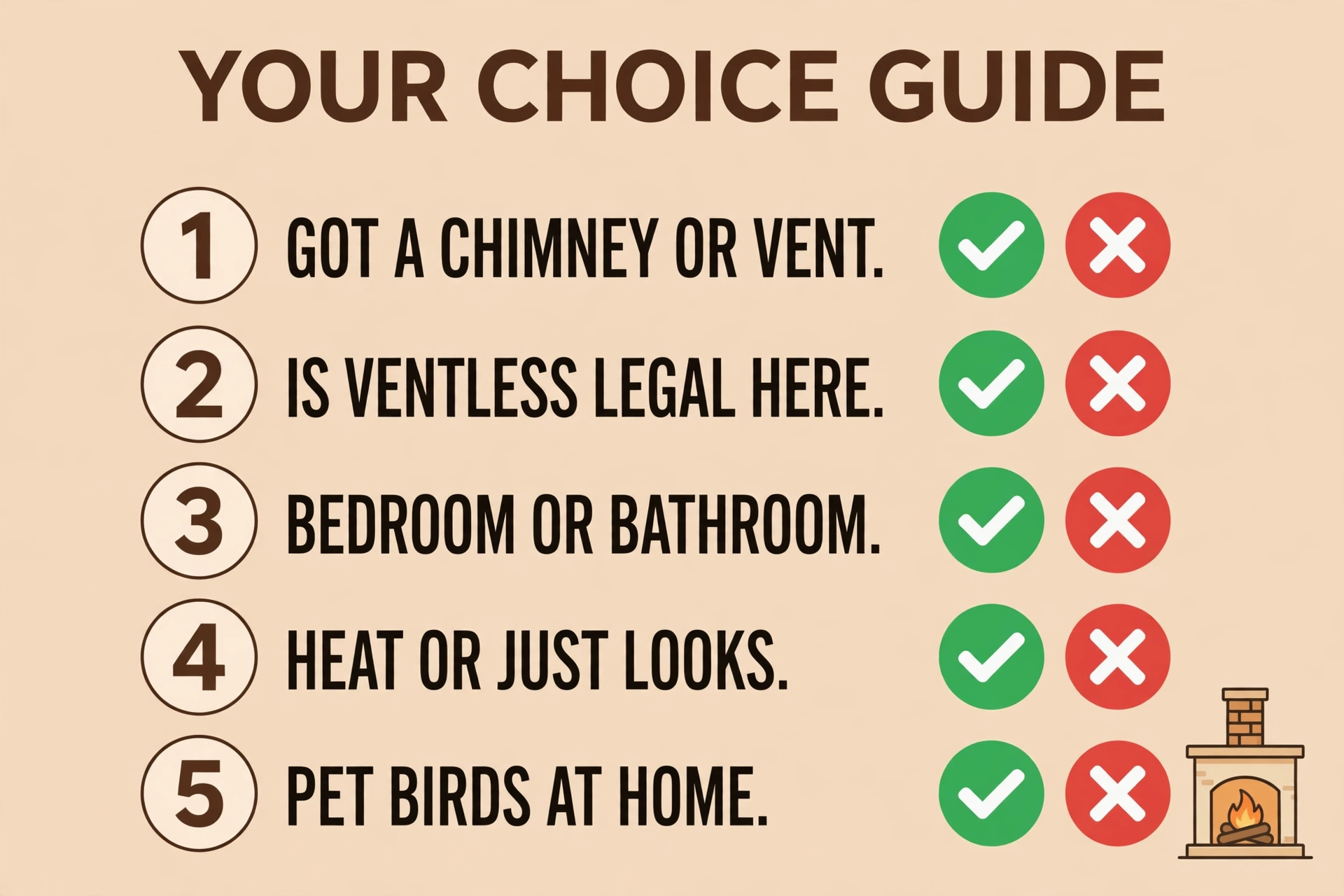
- Want the most realistic flame and the cleanest air? → Go vented.
- No chimney, need cheap install, code allows it? → Go ventless.
- Bedroom, bathroom, or pet birds at home? → Go vented (or check the code first).
- Renting or in a condo? → Get written approval before buying.
- Either way: CO alarms on every level, yearly pro service, licensed installer only.
Most buyers land on vented for peace of mind and ventless for heat per dollar — and both are reasonable once the facts are on the table. Run through the checklist, confirm your local code, and get a licensed pro to do the install.
Do that, and your vented vs ventless gas fireplace decision will be one you enjoy every cold evening.