Why Gas Fireplace Won’t Stay Lit? Reasons & Fixes
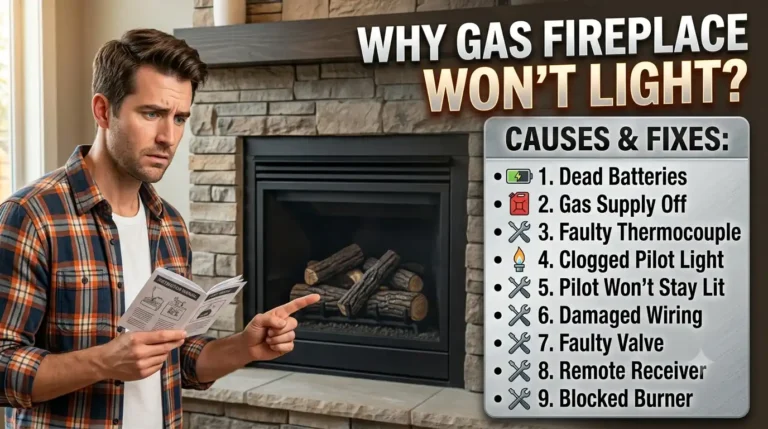
Why Gas Fireplace Won’t Stay Lit? The short answer is that if your gas fireplace pilot won’t stay lit or the main fire lights and then extinguishes, it is likely one of five issues; the thermocouple is weak or dirty, the pilot orifice is clogged, the gas pressure is low, there is a venting or draft problem, or the safety sensor has tripped. Most can be diagnosed at home within 15 minutes although there are some repairs best done by a licensed technician.
It is the most disappointing thing to turn the key, wait for the flame to catch and then a few seconds or a few minutes later watch the flame die. You try again. Same result. On the third try you’re pretty sure that there is something really wrong, and you’re right.
One of the most frequent problems with a hearth is a gas fireplace pilot that won’t light, and it’s often easy to find the cause of the problem. You’ll learn all of the actual reasons for a gas fireplace not lighting after summer, not lighting on a gas fireplace, or not lighting on a gas log insert, and what you can safely inspect and when to call a gas fireplace specialist.
Key Takeaways
- A pilot that fails to remain lit as soon as the knob is turned is almost always an indication of a faulty thermocouple, which is a small rod inside the gas valve that senses whether it is safe to keep the valve open.
- If a fireplace pilot light fails to stay lit, is weak and yellow, or fails to catch, a clogged pilot hole, typically caused by dust and/or spider webs, is the likely culprit.
- If the gas fireplace doesn’t start but the pilot is still ignited, the problem is not with the pilot assembly, but is likely associated with the thermopile, gas valve or a wall switch/receiver.
- The lack of a light in the gas fireplace after summer is a common problem that is usually caused by a draft, dust or air in the gas lines and not a problem with the unit this is because the unit sat unused for months.
- Even if all components are healthy, a pilot may blow out due to the presence of strong drafts, blocked vents or cold weather.
- Never relight a fireplace that has a gas odor. Shut off the gas, evacuate and call your gas company or 911 from outside the building.
Why Gas Fireplace Won’t Stay Lit? The 6 Real Causes
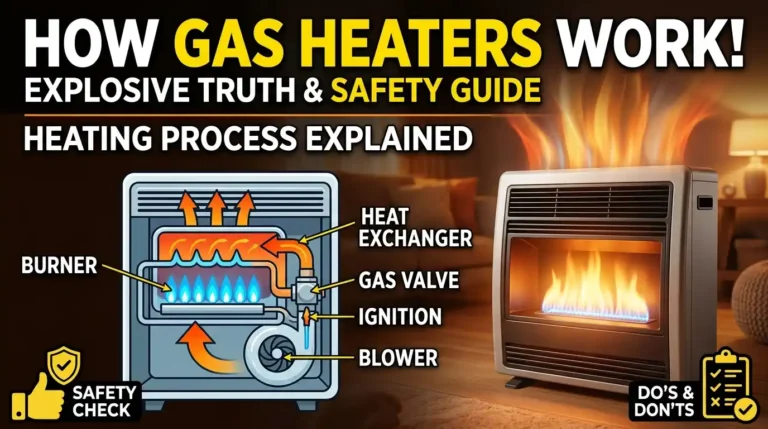
As you begin to troubleshoot your issue, it’s important to note that won’t stay lit” isn’t a single problem but rather a symptom with multiple potential causes. Let’s take a look at what’s really going on inside your gas fireplace or gas log set when your gas flame is not being maintained.
1. A Weak or Failing Thermocouple
The thermocouple is a tiny piece of metal that is placed in the pilot flame. As it is heated, it produces a small electrical signal, usually 15-30 millivolts, which informs the gas valve to remain open. No signal, no gas. It is not a “problem” it’s a safety feature, the fireplace is shielding your home from an unlit gas leak.
The carbon residue on the thermocouples accumulates over years of use, the position of the thermocouples can change, or the thermocouples can become worn internally. At that time, the valve senses “not enough heat” and although the pilot is burning, the valve turns off the gas typically when you release the control knob. This is the one most frequent cause of a gas fireplace pilot not staying lit.
2. A Clogged Pilot Orifice
The pilot flame is drawn through a very small hole (usually 0.018″-0.026″) in the opening. Dust, lint and particularly spider webs (which are attracted by the Sulphur-like odor added to the natural gas) can be a partial obstacle to that opening. Gas fireplaces with these types of clogged pilot lights will have a weak, flickering or yellow flame that may not be able to heat the thermocouple sufficiently even if it is in perfect working order.
3. Low or Unstable Gas Pressure
Gas fireplaces and gas log inserts are designed to operate at a set pressure, typically 3.5 inches of water column (in. H2O for water. For natural gas is about 10 – 11 in. H2O and for water are about 1/2 in. H2O. W.C. for propane. If the pressure is below spec the flame will become weak and unstable. It can be caused by a partially closed shutoff valve, low propane tank, malfunction or failure of the regulator, or a pressure fluctuation on the utility side when temperatures are extremely low.
4. Venting, Draft, or Airflow Problems
All gas fireplaces require combustion air to enter and exhaust to leave. Droughts that are strong enough to blow out a pilot light may be caused by one or more of the following: strong wind, vent cap blockage, a bird’s nest, or a house that is too “tight” for make-up air, especially in tall chimneys and during winter storms.
5. A Tripped Safety Shut Off
Newer models are equipped with safety sensors that automatically shut off gas supply when they sense low oxygen, overheating or a venting issue. On any of these trips, the fireplace will close as designed. It’s not a fault, it’s what the system is designed to do, but it does mean something needs to be addressed upstream.
6. Ignition System or Control Valve Failure
With fireplaces without standing pilots (electronic ignition), a faulty ignition module, damaged wiring or a worn gas valve diaphragm can make the flame fail to catch or stay. It is also a frequent reason for Heat & Glo fireplace pilot won’t stay lit and other electronic-ignition brands, as it requires circuit boards and sensors, not just a mechanical pilot. These are generally not “cleaning” problems, and require the services of a technician, involving replacement of electronic components.
Gas Fireplace Won’t Light After Summer? Here’s Why
There is a very common problem with gas fireplaces or gas log pilots the first time it is lit in the fall, when it has not been used for months. Generally, a few things occur during that dormant time:
- During the off-season when the fireplace isn’t operating to prevent dust and spider webs building up in the pilot assembly and the orifice.
- After a long time that the air has been idle in the gas line, the pilot may sputter or require a number of attempts to catch.
- The contact points of the thermocouple can be slightly corrosive, or have moisture on them, which can prevent a strong signal from being produced.
- If left off all summer, the first light-up will just take longer as the trapped air is purged from the line this should not be considered a malfunction.
If the gas fireplace does not ignite following the summer, follow the procedure outlined in the owner’s manual 2 or 3 times before deciding a component has failed; it may simply be a bit of air in the line. If it still won’t hold after that, go through the diagnostic steps later in this guide.
Quick Diagnosis: Match Your Symptom to the Cause
| Symptom | Probable Cause | Do-It-Yourself? |
| Pilot lights, but goes out when the knob is released | Failing thermocouple | Yes — cleaning is easy DIY; replacement is medium DIY |
| Weak, yellow, or difficult-to-light flames, and pilot won’t stay lit | Clogged pilot orifice | Limited — light cleaning only; do not probe pilot opening |
| Pilot is on, but gas fireplace will not light | Thermopile, gas valve, or wall switch/receiver | No — call a technician |
| Pilot does not light, or does not hold a flame in windy weather | Draft / venting problem | Partial — check vent cap/termination yourself |
| Fireplace turns off a few minutes after being lit | Safety sensor trip (oxygen or overheat) | No — contact a technician |
| Pilot will not light even after smelling gas (first time after summer) | Air in the line or seasonal dust/webs | Yes — try again (refer to manual), then clean gently |
| Pilot does not light at all and valve is not open | Gas valve may be closed or propane tank may be empty | Yes — check valve / tank level |
Safety Warning: If at any time you detect a gas leak, evacuate immediately and call your gas utility provider.
Safety First: When to Stop and Call for He
Before attempting anything, understand what are the red flags that will indicate that this is not a DIY project:
- You smell gas. Natural gas and propane are odorized with a distinctive rotten egg smell to make them detectable in case of leaks. If you smell it, avoid lighting anything or turning on electrical switches, don’t use phones inside get out of the house and call the gas company or fire department from outside.
- Soot or black staining is visible outside the firebox, or flames are rolling out from the firebox. These can mean the fire has not burned completely or it may be a serious venting issue.
- You hear hissing, popping or rattling noises coming from the gas valve or line.
- The fireplace has not been professionally inspected recently and is older than 15-20 years.
- You’re not comfortable working near gas lines or an open flame. This is not something to be embarrassed about — visit by a technician is a cheap insurance policy.However, if none of these are applicable, it’s fair to assume that you can go through the following checks on your own.
Step-by-Step: Troubleshooting a Gas Fireplace Pilot That Won’t Stay Lit
Step 1: Confirm Gas Is Actually Reaching the Fireplace
- Make sure that the manual shutoff valve (a small lever found near the fireplace or gas line) is in the fully open position (handle should be parallel to the gas pipe, not perpendicular).
- If you use propane then check the tank gauge. Less than 20% may result in pressure issues especially during colder months.
- Test another gas appliance (stove, water heater) to eliminate a whole house/utility problem.
Step 2: Turn Off and Let the System Reset
Make sure the pilot is fully extinguished before turning the gas back on and turn the gas control all the way to “off” and wait about 5 minutes for gas to clear. This resolves smaller problems of air-in-the-line, which can sometimes be the reason why a gas fireplace won’t light after summer.
Step 3: Inspect the Pilot Flame
Follow the instructions in your owner’s manual to re-light the pilot (usually by pushing a control knob in as you press an igniter button then holding for 30-60 seconds and releasing). Please be careful with the flame:
- A steady blue, large enough to completely cover the thermocouple tip is considered healthy.
- Weak or yellow pilot: indicates clogged pilot, or low gas pressure.
- Strong pilot that will not hold after releasing the knob: points to the thermocouple.
Step 4: Clean What You Can Safely Reach
If you have a removable glass panel or access cover on your fireplace that you can remove without the use of a tool:
- Gently brushes away any dust or spiderwebs around the pilot assembly with a soft brush, but do not move or dislodge the position of the thermocouple.
- Lightly polish visible carbon buildup off the thermocouple rod with fine (400-grit or higher) sandpaper. Don’t use steel wool or anything abrasive that can change the shape of the metal.
- Avoid compressed air on the pilot orifice this can force trapped debris further into a hole, which is already smaller than a pencil lead.
- Don’t poke a hole in the orifice with a pin, wire or needle; this is a common homeowner’s error that will make the hole bigger and will likely necessitate replacing the entire pilot assembly.
Step 5: Check the Thermocouple Position
The tip of the thermocouple should be 3/8″-1/2″ deep in the pilot flame. Even if it is otherwise good, it may not be reading sufficient heat if it is bent away from the flame. Gently move it into place (do not use force); do not disconnect wires that are not certain of reconnecting properly.
Step 6: Relight and Test
Once cleaned, re-light the pilot and keep the knob depressed for the recommended amount of time. Open the valve slowly and observe if the flame stays alive. If it does, then you’re finished. If it resumes again, then the thermocouple may need to be replaced (which is a simple yet inexpensive component) but requires a gas connection and therefore many homeowners opt to do this professionally.
Thermocouple vs. Thermopile: Know the Difference
| Feature | Thermocouple | Thermopile |
| Primary Function | Keeps the pilot gas valve open safely | Generates power to operate the main burner, wall switch, or remote control |
| Voltage Output | ~15–30 millivolts (mV) | ~300–750 millivolts (mV) |
| Symptom When Failing | Pilot won’t stay lit after releasing the control knob | Pilot stays lit, but the main burner flame won’t ignite or stay on |
| Average Lifespan | 5–10 years | 5–10 years |
| Diagnostic Complexity | Moderate (direct voltage check with multimeter) | Higher (often combined with valve, switch, or receiver circuit diagnostics) |
If the pilot is lit but the main fireplace won’t engage, suspect the thermopile or the gas valve circuit.
Rule of Thumb:
If the pilot flame won’t hold, suspect the thermocouple.
Common Mistakes That Make the Problem Worse
- Repeatedly re-lighting without diagnosing. A little unburned gas is vented into the firebox each time it fails. If it’s not catching, stop, and determine the reasons for the loss of catch, and try again.
- Using compressed air or sharp tools on the orifice. This is the most frequent cause of debris clogging a gas fireplace pilot that leads to DIY damage.
- Failing to call the fire department after a fire. “Don’t take anything for granted.”
- Skipping annual maintenance. Carbon buildup, dust and slight wear add up an annual cleaning will catch any small problems before they reach the “won’t stay lit at all” stage.
- If the thermocouple is at fault, the following factors may be to blame: It is the most common reason, but not the only one—working through the diagnostic table above saves time and prevents replacing parts that were not broken.
Myth vs. Fact
| Myth | Fact |
| “If the pilot won’t hold, the entire unit is dying.” | Most cases involve a single inexpensive issue—such as a failing thermocouple or a dirty pilot orifice—not a catastrophic unit failure. |
| “Inserting a pin into the pilot opening will safely clear a clog.” | Poking a pin into the opening can enlarge the precision-drilled orifice, altering the gas flow and causing costly damage or safety hazards. |
| “A gas smell when turning the fireplace on is completely normal.” | A faint odor for a few seconds during ignition can happen, but persistent or strong gas smells are never normal—always assume a leak and prioritize safety. |
| “Newer fireplaces are immune to ignition and lighting issues.” | Electronic-ignition systems eliminate the standing pilot, but they can still fail to ignite due to sensor errors, control board issues, or wiring faults. |
| “If the pilot won’t start after summer, the pilot assembly is broken.” | Seasonal disuse often traps air in the gas line or collects light dust/cobwebs; it usually just requires purging the line and gentle cleaning. |
When to Repair vs. When to Replace
Repair is almost always the right thing to do when:
- Fireplace is less than 15 years old
- This was the first or second problem you experienced
- The part being affected (thermocouple, orifice, valve) is a known and isolated fault
When: Replacement is the more sensible option:
- The unit has been in operation for 15-20+ years, and parts are becoming difficult to find.
- More than one servicing call per 2 or 3 years (repeat breakdowns)
- Cracking, rust or corrosion is visible in the firebox.
- Efficiency is important — old units typically operate at 50-65% efficiency, and many modern models are 70-85% efficient.
| Factor | Repair | Replace |
| Unit Age | Typically under 15 years old | Exceeding standard lifespan (~15+ years) |
| Failure History | First-time or isolated failure | Recurring, frequent, or multiple cascading failures |
| Cost Consideration | Low (isolated component fix, e.g., thermocouple) | High relative to the total value or age of the unit |
| Efficiency & Modern Standards | Adequate for heating and aesthetic needs | Noticeably outdated, poor fuel efficiency, obsolete controls |
| Structural & Safety Condition | No structural concerns or intact firebox | Cracks, corrosion, damaged venting, or lack of modern safety sensors |
Preventing This from Happening Again
- Have annual professional maintenance, preferably before the heating season begins. This is by far the most important key to preventing mid-winter failures.
- Perform monthly visual inspection of the following during the season: Flame color, soot on the glass, and normal response of remotes/switches.
- Carbon monoxide detectors should be installed near the fireplace and on each floor of the house and batteries replaced annually and detectors replaced every 5 to 7 years.
- Ensure no debris, nests or buildup is around the fireplace and vent termination.
- If you don’t need to, don’t operate the pilot light all the time — some homeowners opt to turn off the pilot light between heating’s to conserve gas and prolong the life of the pilot, depending on individual convenience.
You May Also Read:
FAQs:
My Gas Fireplace Pilot Light keeps going out.
Most frequently, it is caused by a weak or dirty thermocouple, which is insufficient to maintain the gas valve open. This can also be caused by a clogged orifice, low gas pressure or a strong draft.
My gas fireplace pilot won’t light for some reason after it hasn’t been used all summer.
This is typically due to seasonal dust, spider webs or trapped air in the gas line and not due to a break in the component itself. If the lights don’t light, try relighting them a few times before deciding a part is defective, following the owner’s manual instructions.
My gas fireplace will not light, but the pilot is on what does that mean?
This indicates that there is a different problem than the pilot assembly, which is typically the thermopile, the main gas valve assembly, or the wall switch/remote receiver. When the pilot circuit is energized, the main burner circuit is not energized.
Is it possible to repair a gas fireplace that won’t retain the flame on my own?
Simple cleaning around the pilot assembly and testing the gas supply can be relatively safe do-it-yourself projects. Gas valve or internal wiring or venting should be done by a licensed technician.
How can I tell if my thermocouple is faulty?
If the pilot burns while the control knob is in and then extinguishes within seconds of releasing the knob, then it is likely the thermocouple is the main suspect.
What can cause a gas fireplace pilot light to become clogged?
The most common causes are dust, lint and spider webs. The fragrance that is mixed in with the natural gas can in fact draw spiders to the pilot assembly which can cover the small opening in the part of the assembly.
Can I continue to use a fireplace that continues to blow out?
No. Multiple shutdowns typically indicate that a safety system is performing its intended function as a result of a genuine event, such as low oxygen, a venting failure or a safety system failure. Don’t remove until checked.
What is the typical cost to fix this problem?
There are different costs of parts and areas. A simple pilot cleaning is a low cost; a thermocouple is a low-cost part and a labor cost; a full gas valve or control module replacement is a decidedly higher cost. Call a local technician to get a quote for an exact amount – as with prices, the amount can vary too greatly to give a single number.
At what point is it better to replace than repair?
If your unit is more than 15-20 years old, has had several recent repair failures, has cracks or corrosion, or the repair estimate is roughly half of the cost of a replacement, consider replacing the unit.