Fire Pit Clearance: How Far Should It Be From the House, Trees, and Fence?
You picked the perfect corner of the yard, the chairs are arranged, and the wood is stacked. Then one question stops everything: how far from the house should a fire pit actually sit? Most people guess. Some guess too close, and that is how siding melts, fences scorch, and embers land on roofs.
This guide walks you through measuring the right fire pit clearance in your own backyard, with a tape measure and about twenty minutes. You will learn the widely accepted distance rules for houses, fences, trees, and property lines, plus how wind and fire type change the math. The 10-foot rule — keep an open flame at least 10 feet from your house, garage, shed, fence, and anything that can burn — is the number most fire authorities agree on, and we will build from there.
Safety note: fire pits are open flames, so the rules below are only starting points. Your city or county fire code may require bigger setbacks, permits, or ban open burning entirely. Check your local rules and HOA before you light anything.
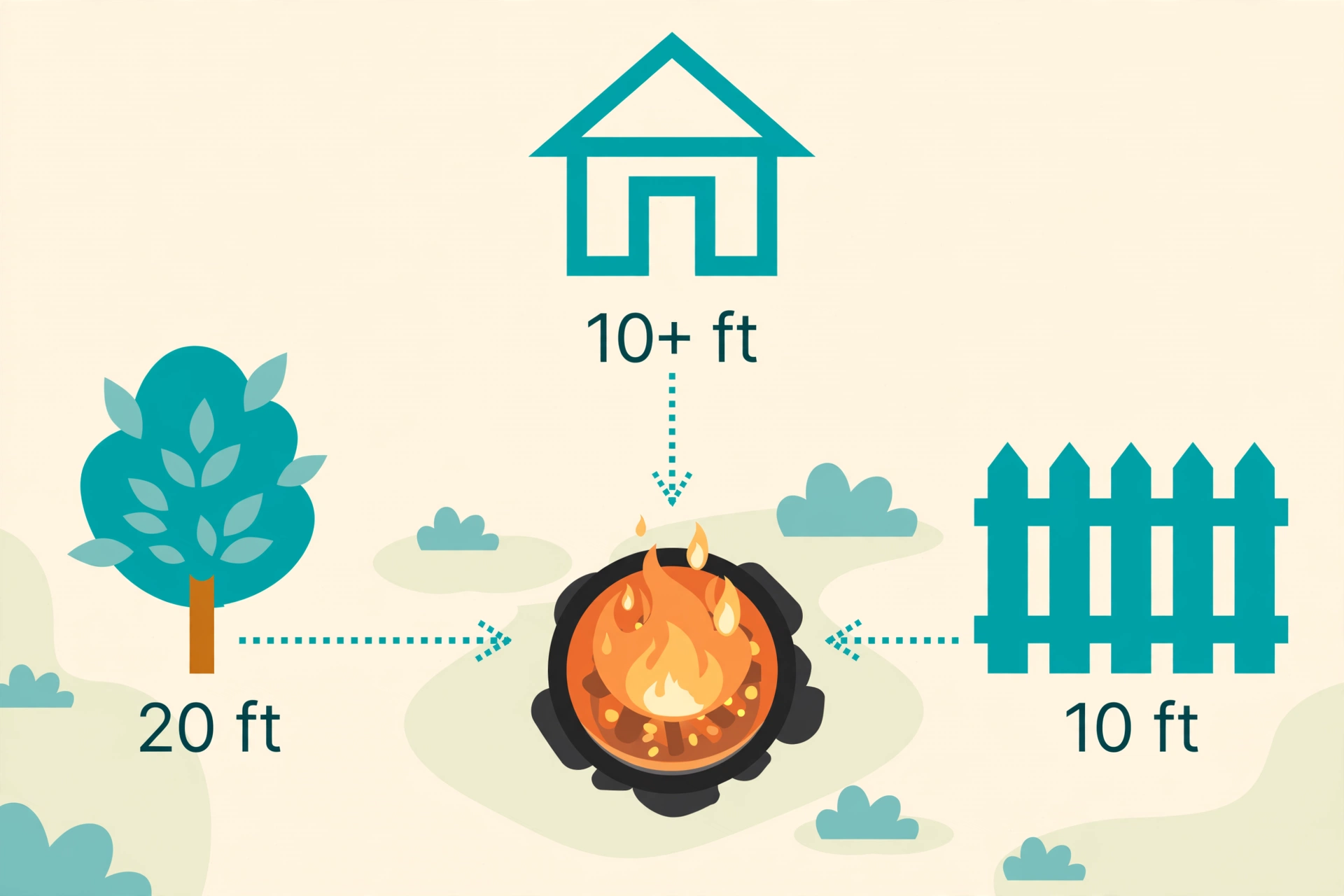
Before you measure, lock in the core numbers that fire authorities repeat. A wood-burning fire pit throws three dangers outward: direct heat, wind-carried embers, and smoke. Each travels farther than you expect.
Memorize the 10-foot rule before you touch the tape
The U.S. Fire Administration and the National Fire Protection Association both advise keeping a fire pit at least 10 feet from your house, garage, shed, wooden fence, deck, and anything else that can catch fire. That is your absolute minimum for a wood-burning pit. Many fire safety experts suggest 15–20 feet from structures when you have the room, because radiant heat can warp vinyl siding and scorch wood even without touching it.
Gas fire pits throw no embers, which makes them more forgiving — but heat still radiates. Keep the same 10-foot minimum unless your unit’s manual says otherwise.
Mark ten feet from your house and shed
Walk to the corner of your house closest to where the pit will sit. Hook your tape measure on the wall and pull it straight toward the planned spot. Heat from a fire rises and drifts toward walls, and a 10-foot gap is the floor — push for 15 feet or more if your yard allows. Do the same from any shed, garage, or play structure.
Stick a landscape flag where each measurement lands. Your pit must sit beyond every flag, not between them.
Look up and check the trees overhead
Fire travels upward as fast as it travels sideways. Stand where the pit will go and look straight up: any branch within 15–20 feet overhead is a problem. Dead leaves and dry needles can catch from rising heat alone, so trim low branches well above the fire — fire safety sources suggest trimming at least 12 feet up, and 20 feet when you can.
Also measure horizontally from nearby trunks: keep the pit at least 10 feet from them. Roots near the surface can smolder underground in dry soil, and you will never see it start.
Measure to the fence and your property line
Pull the tape from the pit’s planned center to the fence: you need 10 feet here too. Wood fences dry out in the sun, and a single ember landing on dry wood can do real damage before anyone notices. If your lot is narrow and the fence sits closer than 10 feet, the spot is wrong — no debate.
Leave 10–15 feet between the pit and your property line as well. Your neighbor’s side of the fence counts: their shed, their brush pile, their parked car. Knock on their door and mention the plan. Surprised neighbors call the fire department.
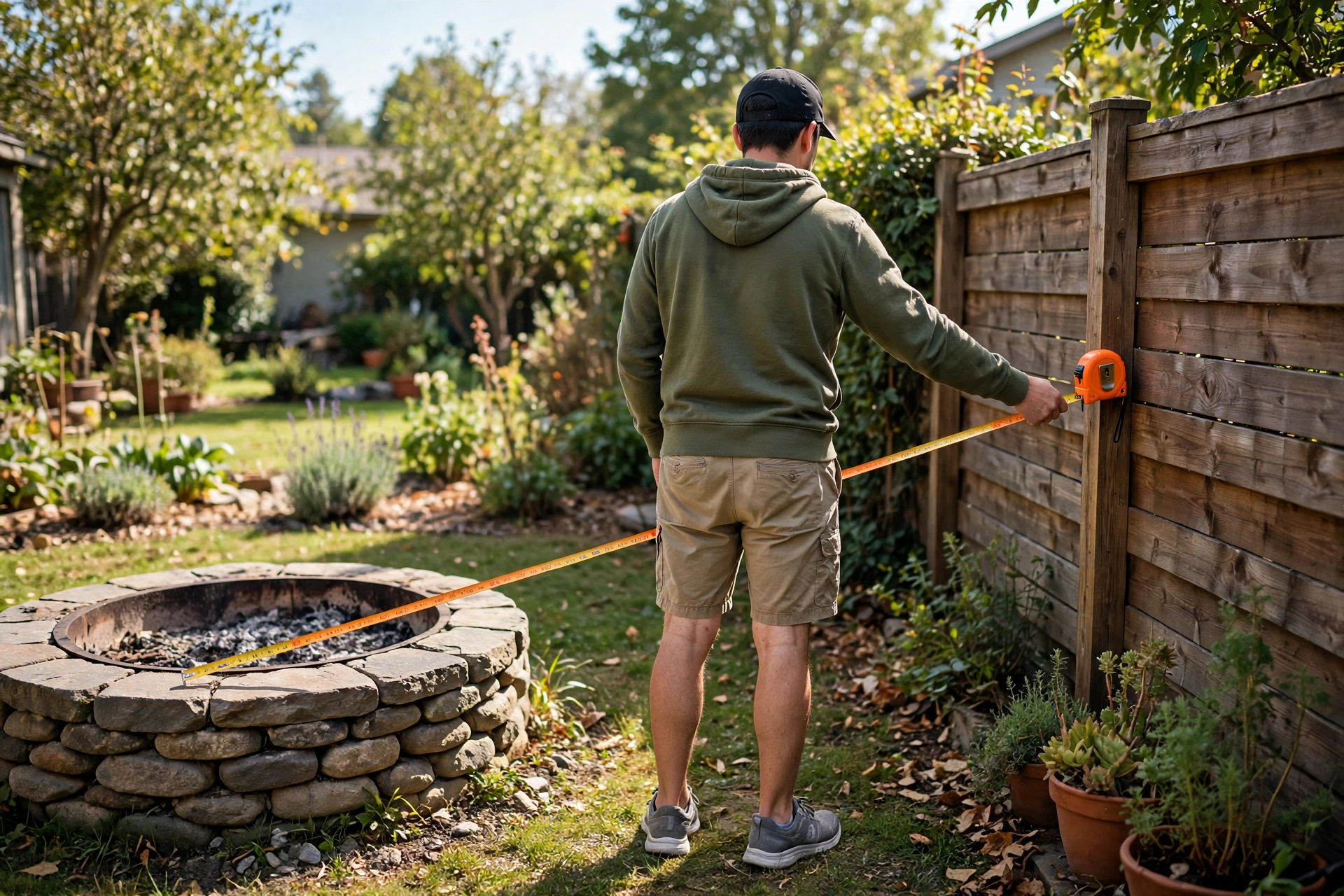
Clear a fire-safe ring around the pit
Measurements mean nothing if the ground around the pit is tinder. Rake away leaves, pine needles, mulch, and dry grass in a circle at least 10 feet across, centered on the pit. Mulch looks harmless, but it smolders for hours.
Set the pit on a non-combustible surface — concrete, stone pavers, or gravel — with a 2-foot apron of the same material extending past the pit’s edge on every side. If you are digging in, call your local utility locator first so you do not hit a buried line.
Recheck the spot on a breezy day before lighting up
Calm-day measurements can lie. Wind is what carries embers over the fence and onto roofs, so revisit your marked spot on the kind of breezy evening you would actually burn. Hold a strip of ribbon or a light scarf at arm’s length: watch which way it points.
If the wind points at your house, your fence, or a neighbor’s yard, pick a different evening or a different spot. Burn only when the air is still or the breeze pushes smoke away from structures. On your first burn, keep the fire small and the hose within arm’s reach while you watch how it behaves.
If you are still deciding what kind of pit fits your yard, read our best type of fire pit buying guide before you buy. It is also worth checking are backyard fire pits legal for your area, since local burn rules decide everything about placement.
How far from the house should a fire pit be?
At least 10 feet, according to U.S. Fire Administration and NFPA guidance. 15–20 feet is a safer target when your yard has the space, and your local fire code may require more.
Can a fire pit be close to a fence?
Keep 10 feet between the fire pit and any wooden fence. Dry fence wood ignites easily from heat and embers, so treat the fence like a wall of your house.
How far should a fire pit be from trees?
Keep 10 feet from tree trunks and 15–20 feet of open air above the fire, with no overhanging branches. Trim low branches at least 12 feet up.
Do propane fire pits need the same clearance?
Propane pits produce no embers, so the risk is lower — but radiated heat can still damage siding and fences. Keep the 10-foot minimum unless the manufacturer’s manual states a shorter distance.
Can I put a fire pit under a pergola or patio cover?
No. A fire pit needs open sky above it so heat and smoke can escape. Covered structures trap heat and can ignite. Move the pit to an open area instead.
Do I need a permit for a fire pit?
Many cities and counties require a permit or restrict open burning, and some HOAs ban fire pits outright. Call your local fire department or check their website before you install anything.
- House, garage, shed: 10 ft (aim for 15–20 ft)
- Wooden fence: 10 ft
- Property line: 10–15 ft
- Tree trunks: 10 ft; branches overhead: 15–20 ft clear
- Seating: 3–4 ft from flame edge
- Memorize the 10-foot rule.
- Measure and flag 10+ feet from the house and shed.
- Look up — clear 15–20 feet of open sky; trim branches 12 feet up.
- Measure 10 feet to the fence and 10–15 feet to the property line.
- Rake a 10-foot cleared ring; set the pit on stone or gravel.
- Recheck on a breezy day; burn only when wind points away from structures.
That is the whole job: measured once, marked with flags, and ready to burn safely. A fire pit that sits a proper distance from your house, trees, and fence lets you enjoy the evening instead of watching the wind. When you are ready to light it for the first time, our guide on how to start a fire in a fire pit walks you through a clean first burn.