Cedar Firewood: The Complete Burning Guide for Quick, Safe, Sweet-Smelling Fires
Cedar firewood is the friendliest wood you will ever burn. It smells like a cedar chest, splits with one clean swing, and catches from a single match. It also burns out faster than you expect and throws sparks that can land on the rug. I learned that second part the winter I filled my whole fireplace with cedar and spent the evening feeding it log after log.
Here is the method that finally worked: treat cedar as your kindling and your quick-evening-fire wood, not as your all-night heat. By the end of this guide you will know how to pick good cedar, split and season it, test it for dryness, and burn it on a hardwood base for a fire that starts fast and stays safe. Plan on one warm season of drying if you buy green wood, plus one afternoon of splitting and stacking.
Safety note: Never burn treated, painted, or stained cedar — deck boards and fence pickets release toxic fumes. Burn only in a fireplace, stove, or fire pit with a working flue, keep a spark screen or doors closed, have your chimney inspected and swept once a year, and keep a carbon monoxide detector in the room.
What You Need
- Cedar rounds or logs (a face cord is plenty for kindling)
- Splitting maul or axe
- Chopping block
- Moisture meter
- Work gloves, safety glasses, and sturdy boots
- Pallets or rails for stacking
- Tarp or metal roofing (to cover the top of the stack only)
- Spark screen or fireplace doors
- Hardwood logs for the fire base
- Fire starters or newspaper
At a Glance: The 6 Steps
- Buy real cedar — skip the scrap lumber.
- Split every round into wrist-thick pieces.
- Stack the wood where wind and sun reach it.
- Test the moisture before you burn a single log.
- Burn cedar firewood on a hardwood base.
- Keep the fire hot, the flue open, and the screen shut.
Buy real cedar — skip the scrap lumber
Good cedar shows reddish-brown heartwood and gives off a sharp, sweet smell when you scratch the bark. Both eastern red cedar and western red cedar burn well, so buy whichever grows near you. Ask the seller when the wood was cut — fresher wood means a longer wait before you can burn it.
Skip deck boards, fence pickets, and job-site scraps. Treated cedar looks like clean cedar once weathered, but its fumes are toxic. A face cord is plenty — cedar works best as kindling, not your main fuel.
Split every round into wrist-thick pieces
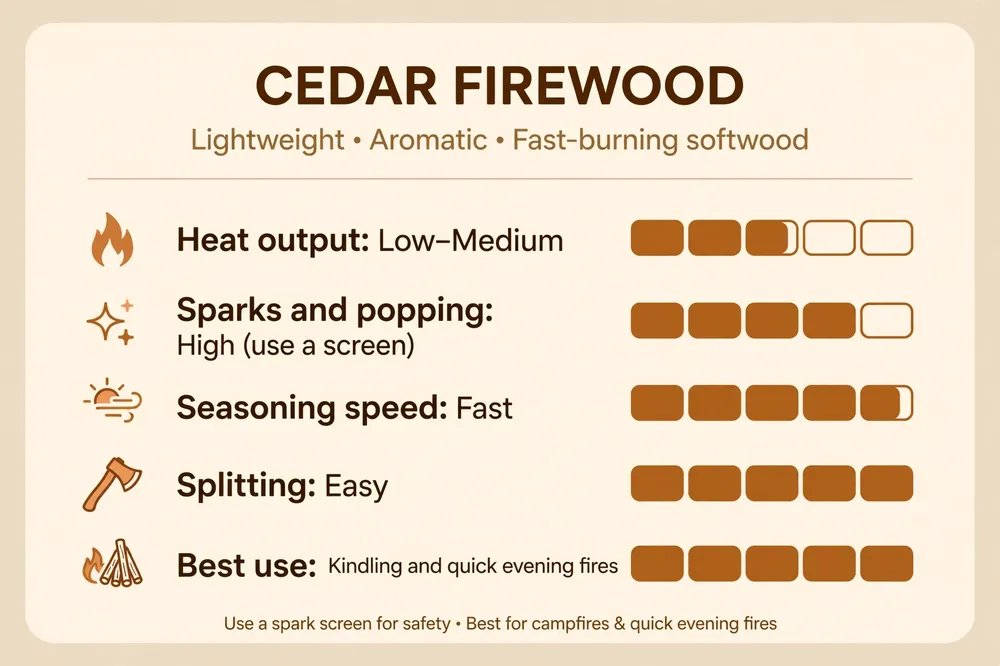
Cedar has straight grain, so it pops apart with far less force than oak or hickory. Set each round on your chopping block and split it down to pieces about 4–6 inches across at the widest point. Smaller pieces dry faster and light faster, which is the whole point of cedar.
Wear gloves, safety glasses, and sturdy boots every time you swing. A splitting maul does the job with less stuck-head frustration than an axe. Keep children and pets well clear of the swing zone, and never split when you are tired — that is when misses happen.
Stack the wood where wind and sun reach it
Pick your most open spot — wind and sun do the seasoning. Set the stack on pallets at least 4 inches off the ground, bark side up, in single rows with finger-width gaps so air moves through.
Cover the top only; a tarp draped over the sides traps damp air. For a refresher on the process, read our guide on how to season firewood.

Test the moisture before you burn a single log
Split one piece and press a moisture meter into the fresh face — under 20% means burn-ready. No meter? Knock two pieces together: dry cedar rings with a sharp crack; wet wood thuds. See how to tell if firewood is seasoned for every test.
Wet cedar hisses, smokes, and coats your flue with creosote. If the reading is high, restack with better airflow and retest — cedar dries fast. In a hurry? See how to dry firewood fast.
Burn cedar firewood on a hardwood base
Here is where cedar earns its keep. Lay two or three hardwood splits in the firebox — oak, beech, or hickory all work, and our roundup of the best firewood to burn will help you pick. Tuck newspaper or shavings between them, then crosshatch thin cedar pieces on top.
Light the cedar at the top and let it burn downward. Because cedar catches so fast, the flame drops into the hardwood and the whole lay takes off with almost no smoke. Cedar alone burns out quickly, so always let the hardwood carry the long burn.
Keep the fire hot, the flue open, and the screen shut
Open the flue wide so the fire burns hot and clean — cedar’s resins build creosote fast in a smoldering fire. Keep the spark screen or doors closed: cedar pops and throws embers without warning.
Stay in the room while it burns and keep an extinguisher nearby. Never burn cedar in an unvented space, and keep your carbon monoxide detector working.
Cedar Firewood Troubleshooting
| If This Happens | Try This |
|---|---|
| Fire pops and throws sparks | Keep the spark screen or doors closed. Cedar belongs in a stove, fire pit, or screened fireplace — not an open hearth. |
| Logs burn out in under an hour | That is normal for cedar. Use it as kindling over a hardwood base instead of your only fuel. |
| Wood hisses and smokes | It is too wet. Stack it longer and retest with a meter until a fresh-split face reads under 20%. |
| Black buildup on the glass or flue | You are smoldering, not burning. Open the air supply, burn hotter, and book a chimney sweep. |
Cedar Firewood FAQs
Is cedar good firewood?
Cedar is good firewood for kindling and quick fires, not for all-night heat. It lights fast, splits easily, and smells wonderful, but it burns through faster and gives less heat than dense hardwoods. Treat it as your fire starter and mix it with hardwood for longer burns.
Can you burn cedar in a wood stove?
Yes — a wood stove is one of the safest places to burn cedar. The closed door contains the sparks and popping that make cedar risky in an open fireplace. Burn only seasoned cedar, keep the air open enough for a hot fire, and have the chimney swept every year.
Does cedar firewood cause creosote?
Any wood can add to creosote buildup, and cedar’s resins make it worse when burned green or in a slow, smoky fire. Season it under 20% moisture, burn it hot with plenty of air, and get an annual chimney inspection. Never burn treated or painted cedar — the fumes are toxic.
How long does cedar firewood take to season?
Split cedar stacked in sun and wind with good airflow is often ready after one warm season. Test with a moisture meter — it is ready when a fresh-split face reads under 20%. Thicker unsplit rounds take longer, so split everything before stacking.
Is it safe to burn cedar indoors?
Yes, as long as you burn it in a fireplace or stove with a working flue and a closed spark screen or doors. Keep a carbon monoxide detector in the room and never burn cedar in an unvented space. Have your chimney swept once a year.
Quick Reference Card: Cedar Firewood
You need: cedar logs, maul, chopping block, moisture meter, gloves/glasses/boots, pallets, top cover, spark screen, hardwood splits, fire starters.
- Buy clean cedar; reject treated or painted scrap.
- Split to 4–6 inch pieces.
- Stack off the ground, bark up, gaps between rows, cover top only.
- Burn only when a fresh-split face reads under 20% moisture.
- Light cedar kindling on top of a hardwood base.
- Flue open, screen shut, stay in the room, sweep the chimney yearly.
You now know how to pick, split, season, and burn cedar firewood the way it was meant to be used: as the best kindling in the woodpile and the star of a quick evening fire. Enjoy that sweet cedar smell — and the way your hardwood base catches on the first try.
Ready to pick the hardwood that carries your long burns? Start with our guide to the best firewood to burn.