How to Start a Kerosene Heater: A Step-by-Step Guide for Safe, Reliable Heat
When you have recently purchased a kerosene heater, or when you are getting one out of the storage before a cold spell, how to start it right is even more important than most people think. A kerosene heater that is lit improperly may smoke up your home, fail to keep on, or in the infrequent instances may pose a real safety risk. Done right, though, it’s a simple process you’ll have down after your first try.
This tutorial will step-by-step show you how to start a kerosene heater, how to start a heater that won’t start, and the safety guidelines that do matter.
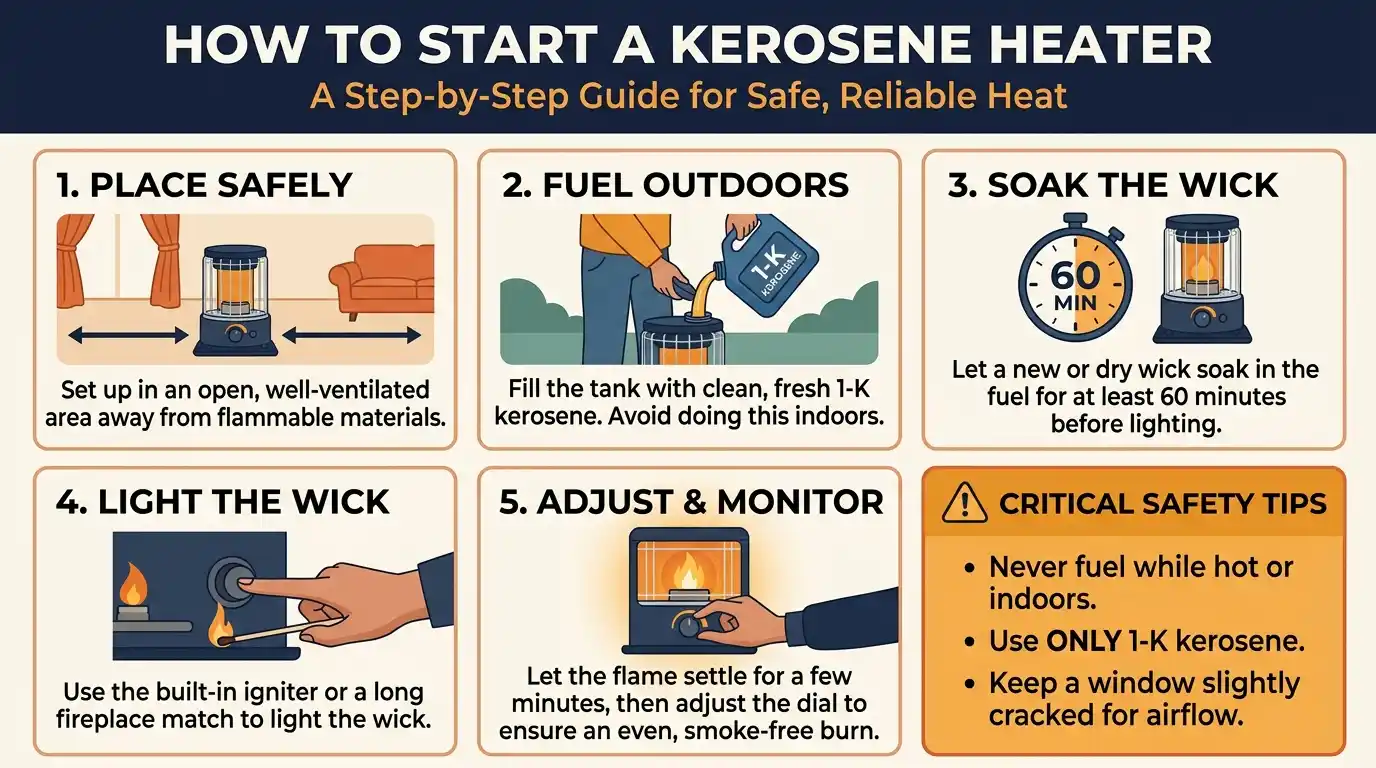
Quick answer: To turn on a kerosene heater, put it in an open place without any flammable substances, fill the tank with clean 1-K kerosene, wet a new wick in it (approximately an hour), and then light it with the built-in igniter (or a long fireplace match). Allow the fire to settle down a couple of minutes and then regulate it.
What Is a Kerosene Heater and How Does It Work?
A kerosene heater burns kerosene fuel in the form of liquid and this is pulled through a woven fiberglass wick. The wick absorbs the fuel as the candle wick absorbs the wax, and the flame is actually burning on the open top of the wick. The dial on the heater is turned up or down to increase or decrease the size of the flame, and the amount of heat the unit emits. If you want a deeper look at the mechanics behind how these units generate heat, it’s worth reading before you buy fuel or accessories.
Radiant vs. Convection Kerosene Heaters
There are two main types, and knowing which one you have changes how you’ll use it.
| Feature | Radiant Heater | Convection Heater |
|---|---|---|
| Shape | Flat-backed, cylindrical wick chamber | Round, tower-shaped |
| Heat pattern | Directional, like a fireplace | 360 degrees, fills a room |
| Best for | Heating one side of a room, garages, workshops | Heating an entire small room evenly |
| Ignition | Usually a spark igniter or match | Usually a spark igniter |
Both have the same basic operation; however, the wick of a convection heater is located in the middle of the unit, and therefore, you will have to take the top grate or chimney assembly off to reach the wick.
What You Need Before You Start
Choosing the Right Kerosene (1-K vs. K-1)
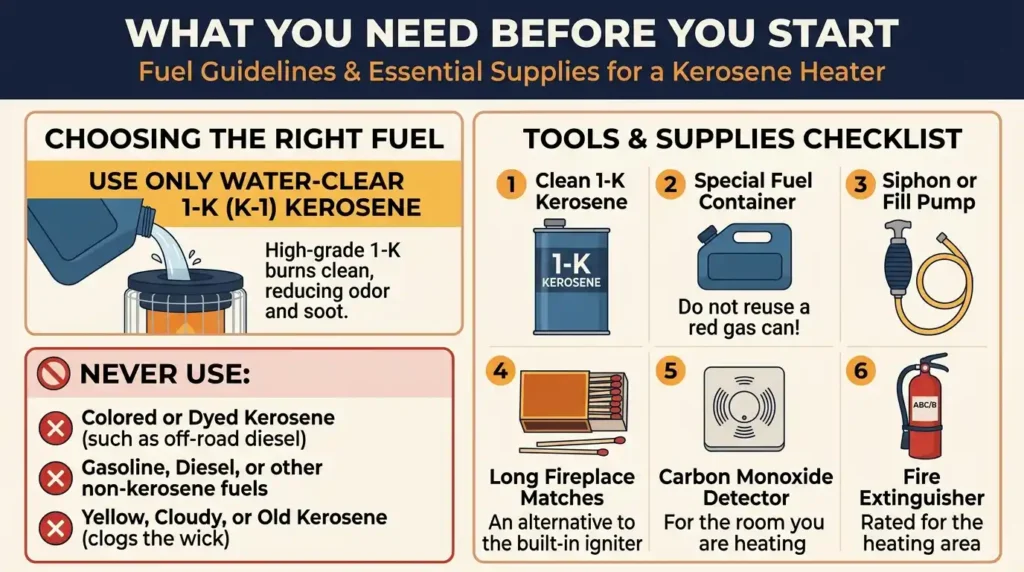
Care should be taken to only use water-clear 1-K kerosene, sometimes referred to as K-1, in an indoor kerosene heater. This is the high grade that is sold to heaters. Never use:
- Colored or dyed kerosene (commonly in use as off-road diesel)
- Gasoline, diesel or any other fuel.
- Yellow or cloudy old kerosene, as it may plug up the wick and burn dirty.
New, clear 1-K kerosene burns clean, creates less odor and less soot on the wick. Some retailers also sell odorless alternative fuels marketed under other names, so if you’re comparing options, check whether that product is actually interchangeable with true kerosene before filling your tank.
Tools and Supplies Checklist
- Clean 1-K or K-1 kerosene.
- A special kerosene fuel container (do not reuse a gas can)
- Built-in fill pump of the heater or a siphon pump.
- Long fireplace matches (as an alternative to electric igniter)
- A carbon monoxide detector, which will be located in the room where the heater is going to be used.
- A fire extinguisher with the correct rating to the room you are heating.
How to Start a Kerosene Heater: Step-by-Step Instructions
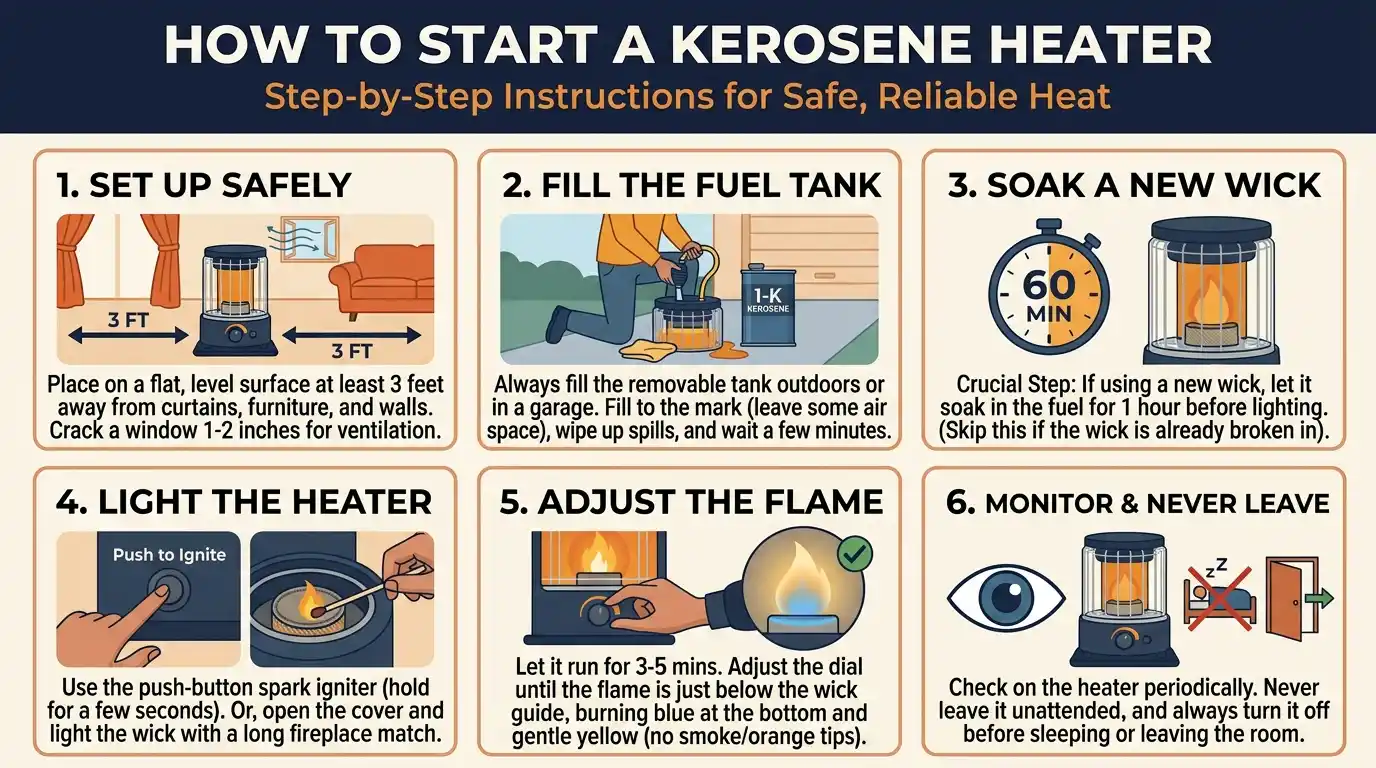
Step 1: Set Up in a Safe, Ventilated Spot
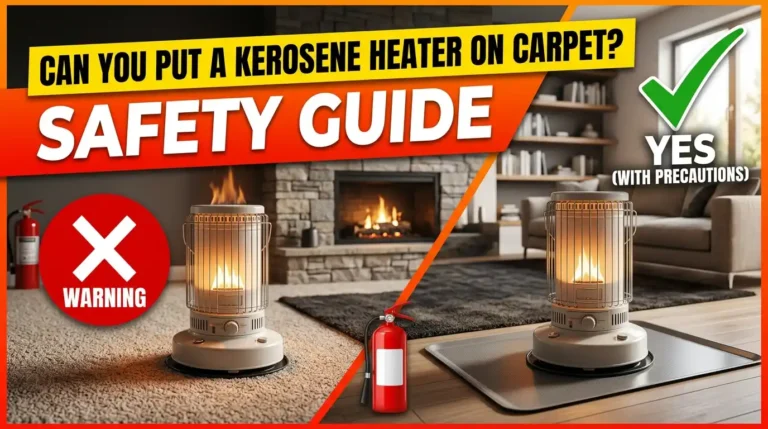
Place the heater on a flat, level, non-flammable surface, at least three feet from curtains, furniture, bedding, and walls. If you’re planning to run it in a carpeted room, it’s worth checking which flooring types are actually rated for this before you set it down. Crack a window an inch or two, or leave a door to another room open, so fresh air can replace what the flame consumes.
Step 2: Fill the Fuel Tank Correctly
Fill the removable fuel tank either outside or in a well-ventilated garage. Indoor fillings are dangerous because they may spill kerosene that can soak into the carpet or cloth. Fill to the mark on the tank, leaving a small air space, and wipe up any spilled fuel, then allow the tank to rest a few minutes before replacing it to allow the vapors to evaporate.
Step 3: Soak a New Wick Before Lighting
This is the part that most guides do not take and it is the one that causes the greatest frustration. Even a new wick must be completely filled with fuel before it can evenly burn. Once the tank is filled, allow the heater to rest about one hour before trying to light the heater. When a dry wick is lit prematurely, it burns unevenly with smoky results and may reduce the life of the wick. If you’re restarting a heater that’s already broken in, this soak time isn’t necessary; just wait a few minutes after filling.
Step 4: Light the Heater
The kerosene heaters in the majority of the modern kerosene heaters include a push-button spark igniter. Press and hold it as directed in your owner’s manual, usually for a few seconds, until the wick catches. Should the igniter malfunction, or your heater lacks one, open the front cover of the heater, and light the top of the wick all around its edge with a long fireplace match.
Step 5: Adjust the Flame
Allow the heater to run three to five minutes then make any adjustments. This allows the flame to stabilize and evenly burn down the wick. When it is stable, adjust the wick adjustment dial until the flame is just below the wick guide, and there are no orange ends or smoke. An adequately regulated flame burns blue at the bottom and a gentle yellow light and it should not have a strong smell when hot.
Step 6: Monitor While It Runs
Periodically check the heater. Before a larger problem is created, a trained eye can detect a flickering or uneven flame. Always have a kerosene heater running only when present and when leaving the room unattended or going to sleep, always ensure you turn off the heater.
How to Start a Kerosene Heater Without Matches or a Lighter
When your electric igniter is dead and you do not have matches, most heaters can be lit with a long fireplace lighter (the one with a long nozzle) and held at a safe distance by your hand. Always keep a normal disposable lighter far away the wick chamber as most of them are too deep and your fingers are too near the flame. In case you completely lack any source of ignition, you can use a piece of rolled paper or a long taper candle to light a fireplace, but the long-term solution is to replace the igniter or to have a pair of fireplace matches available.
Kerosene Heater Safety Rules You Should Never Skip
Carbon Monoxide: What to Watch For
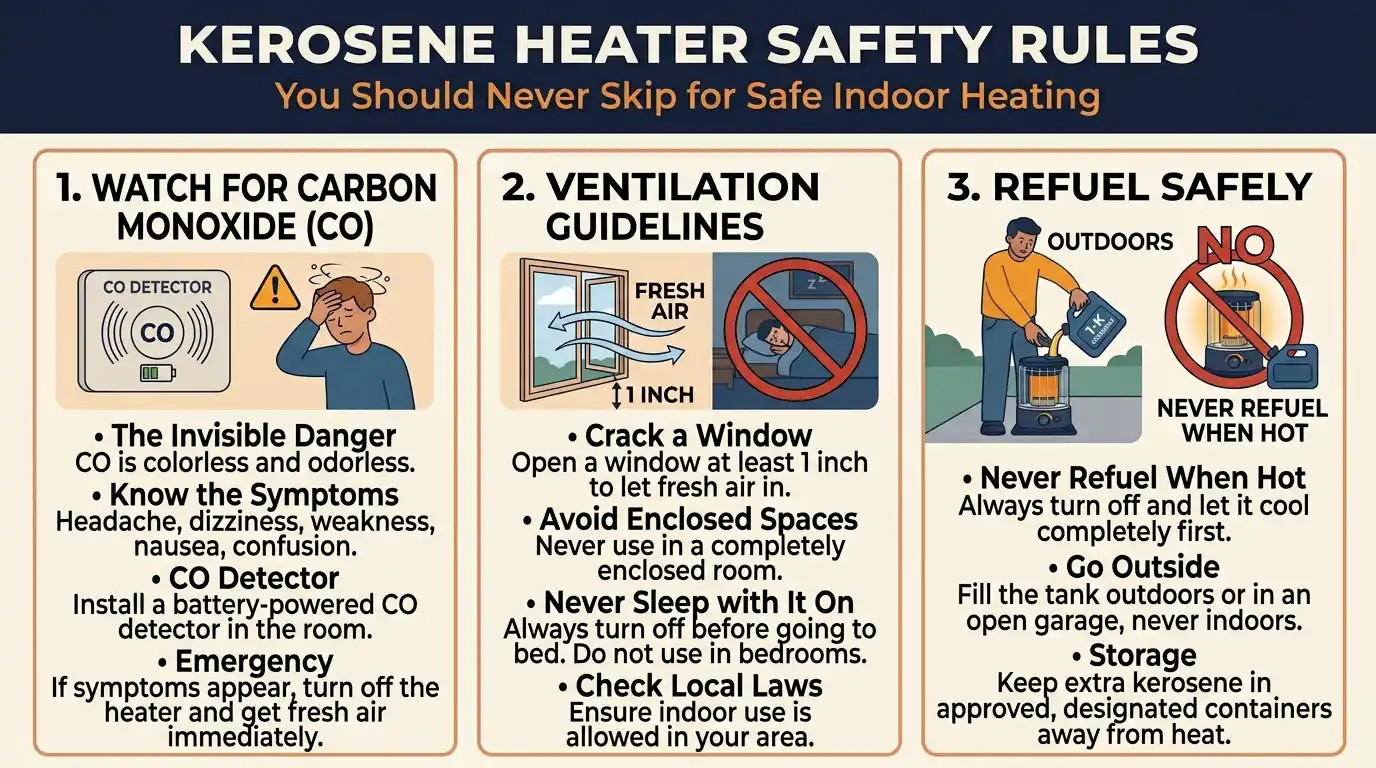
Kerosene heaters use fuel and use oxygen, and this implies that they produce carbon monoxide (CO), a gas that cannot be seen or smelled. The CDC states that initial symptoms of CO poisoning are a headache, dizziness, weakness, nausea, and confusion. When any of the people in the room develop such symptoms during the running of the heater, switch it off, rush to the open air and consult a doctor.
Place a battery-powered or battery-backup carbon monoxide detector in any room where you use a kerosene heater, and check it periodically.
Ventilation Guidelines
Do not use a kerosene heater in a completely enclosed room. Crack a window at least an inch, even in cold weather. The fresh air exchange is worth the small amount of heat lost. Do not use a kerosene heater in a bedroom when sleeping unless the manufacturer specifies that the unit is rated to be used in this manner and the room is ventilated and review your local and state fire codes, because some jurisdictions limit or prohibit the use of indoor kerosene heaters altogether.
Refueling Safely
Never refuel when the heater is still hot and the flame has not been put out. Do not put fuel in a hot or running heater. Paint in the open air or in a garage with the door open, and keep extra kerosene in a proper container, out of the way of any heat source or open flame.
Troubleshooting: Why Won’t My Kerosene Heater Light?
| Problem | Likely Cause | Fix |
|---|---|---|
| Heater won’t ignite at all | Dead igniter battery or new wick that hasn’t soaked | Replace igniter battery; let wick soak 1 hour |
| Flame is uneven or low on one side | Wick not seated evenly or trimmed unevenly | Reseat the wick; trim with a wick trimmer if charred |
| Heavy smoke or strong odor | Wick lit too soon, old fuel, or flame set too high | Lower the flame; drain old fuel and refill with fresh 1-K kerosene |
| Heater won’t stay lit | Wick worn out or fuel level too low | Check fuel level; replace wick if it’s brittle or heavily charred |
| Flame flickers constantly | Draft in the room or heater not level | Move away from vents/doors; check the unit sits flat |
Kerosene Heater Maintenance for a Longer Wick Life
- When it is completely cooled, trim the wick with a correct wick trimmer (not scissors) removing only the blackened top.
- When using regularly, burn the heater until the tank is empty after a few weeks to avoid stagnant fuel.
- Wipe down the dust and soot in the wick chamber and burner unit between heating seasons.
- When not in use, store the heater with a dry tank to avoid degradation of wicks.
FAQs
What is the longest time a kerosene heater wick takes to light up?
Approximately an hour on a new wick. This allows the fuel to saturate the fiberglass completely prior to being lit and this helps avoid smoky burning that is uneven.
Is it safe to leave a kerosene heater on when sleeping?
It is only in case the unit is specifically rated by the manufacturer in their manual as being suitable to be used overnight or in a bedroom and the room is ventilated. Most experts suggest that it is a general safety measure to turn off the kerosene heaters when going to sleep.
How many kerosene does a heater consume in an hour?
Depending on the model and the flame setting, the majority of portable kerosene heaters consume between a pint and a quart per hour on a moderate setting. Your owner’s manual will have the rated consumption of your particular unit.
Is it safe to heat a garage with a kerosene heater?
Yes, provided that the garage is ventilated (open door or window) and the heater is not in contact with combustible materials, cars with open fuel caps, and stored chemicals.
Why does my kerosene heater smell so bad?
A powerful smell is a good indication that you have lit the flame too high, the wick is lit too soon or you are burning old or contaminated fuel. Turn down the fire and use new 1-K kerosene.
Are kerosene heaters electrically operated?
No, it does not need electricity to be hot, so they are popular when there is a power outage. The spark igniter is the only component that requires batteries, the heater can still be lit with a match in case the igniter fails.
What’s the difference between 1-K and K-1 kerosene?
They are identical quality of refined, low-sulfur, water-clear kerosene; the labels are interchangeable with various suppliers.
Is it possible to use a kerosene heater as my primary source of heat?
The majority of manufacturers and fire codes consider kerosene heaters to be supplemental or emergency heat sources, rather than primary heating. Do not trust to one full-time fire code, but check your local one.
How do I know if my kerosene heater’s flame is adjusted correctly?
A well-adjusted flame burns all the way around the wick, is just below the wick guide, and has a blue bottom with little smoke or odor when heated.
What do I do in case my kerosene heater topples?
The majority of the modern units have an automatic shutoff which extinguishes the flame in case tipped. Nonetheless, get it out of the way, allow it to cool and inspect it in case of fuel leakage after which it can be put back on its feet.
What frequency of replacement of the wick?
Once in a heating season with frequent use, or earlier when it becomes brittle, heavily charred or will not sustain an even flame after trimming.
Is it possible to use a kerosene heater in RV or camper?
It can only be done in case of a well-ventilated space, and the manufacturer allows it. The risk of carbon monoxide is higher in an enclosed area such as RVs, and a CO detector is necessary.
Why will not the igniter of my kerosene heater click?
This is normally a flat battery in the igniter mechanism. Change the battery or light the wick using a long fireplace match as an emergency.
Final Thoughts
It is not difficult to start a kerosene heater, and once you have the sequence down, you can set it up in a well-ventilated area, fill it with clean 1-K kerosene, allow a fresh wick to dampen, light it, and allow the flame time to stabilize before adjusting. The information that causes people to stumble, such as not soaking the wick, or lighting one close to an open window, is also the simplest to remember once you are aware of its importance.
Follow the precautions like any other fuel-burning appliance: do not ignore carbon monoxide detectors, be sure the room is well-ventilated, and never refuel a hot device. Do so, and a kerosene heater is a reliable source of heat, either as a backup heat source during an outage or as a supplemental heater in a cold garage or workshop.
If you’re still deciding whether this type of heater fits your budget, this breakdown of typical purchase and running costs can help you plan ahead. And once you’ve got the startup routine down, our broader guide to day-to-day use covers everything from refueling schedules to seasonal storage.