How Much Does a Kerosene Heater Cost? A Real-World 2026 Price Guide
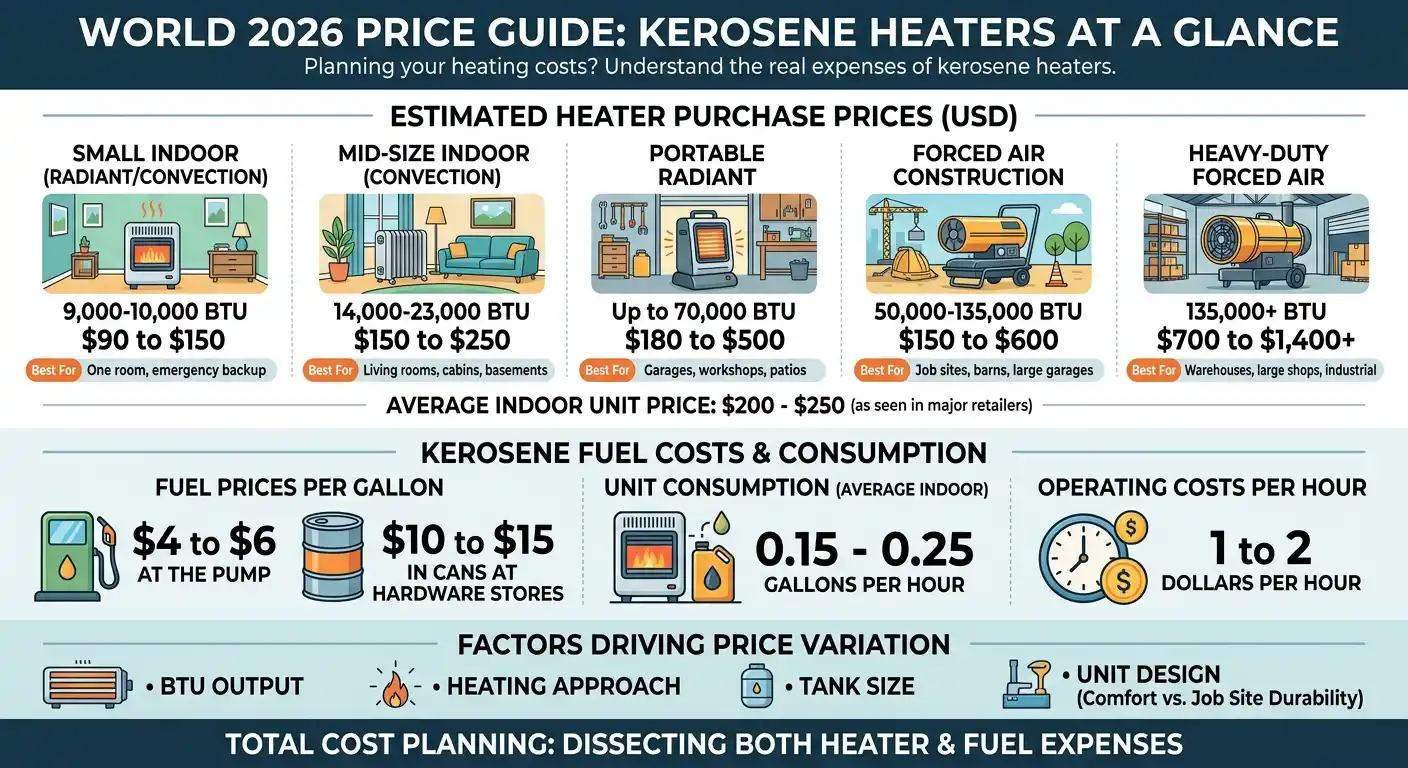
Rapid response: The average price of kerosene heaters ranges between 100-500 dollars to purchase, but more powerful forced air models used in garages and work sites can be priced between 700-1400. And over that, you can count on spending between 4 and 6 a gallon of kerosene fuel at the pump, or between 10 and 15 a gallon of kerosene fuel in cans at a hardware store. The average indoor unit uses about 0.15-0.25 gallons per hour and this normally translates to between 1 and 2 dollars per hour to operate.
That’s the short version. However, when you have ever been shopping around at Home Depot, Lowe, or Amazon, you have likely noticed that the prices are all over the map (and on the same page at times). A small radiant heater could cost as little as 99 and the next one on the list is 1,300 which seems nearly the same. The difference there is reduced to a few considerations: BTU output, heating approach, tank size, and whether the unit is designed to be comfortable or to punish the job site.
This guide dissects precisely what you will spend, on the heater and the fuel, so you can plan the entire picture rather than be caught off guard when you receive your first kerosene bill.
How Much Does a Kerosene Heater Cost? Kerosene Heater Prices at a Glance
Below is a sample of the current prices of real kerosene heaters, as per the current advertisements of large retailers.
| Heater Type | Typical Price Range | Best For |
|---|---|---|
| Small indoor radiant/convection (9,000 to 10,000 BTU) | $90 to $150 | One room, emergency backup |
| Mid-size indoor convection (14,000 to 23,000 BTU) | $150 to $250 | Living rooms, cabins, basements |
| Portable radiant (up to 70,000 BTU) | $180 to $500 | Garages, workshops, patios |
| Forced air construction heaters (50,000 to 135,000 BTU) | $150 to $600 | Job sites, barns, large garages |
| Heavy-duty/multi-fuel forced air (135,000+ BTU) | $700 to $1,400 | Warehouses, large shops, industrial use |
The average, run-of-the-road kerosene heater comes in at about $200 to 250. That is equivalent to what Lowe reports as the average price in its own catalog.
Indoor Kerosene Heater Prices
Kerosene heaters used indoors are nearly always of the convection or radiant type. They warm up quietly and evenly with the help of a wick, there is no fan blowing air around and this is one of the reasons why they are classified to be safe in an enclosed living space. If you’re curious about what’s actually happening inside the unit as it burns fuel and produces heat, this breakdown of the mechanics behind these appliances covers it in plain terms.
- Small units (9,000 to 10,000 BTU): These cost approximately 90 to 150 dollars, and are sufficient to dehumidify one room, approximately 200 to 300 square feet.
- Mid-size units (14,000 to 23,000 BTU): Expect $150 to $250. The HeatMate 23,000 BTU convection heater is popular and fits perfectly into this category and can easily warm a larger room or open living space up to approximately 1,000 square feet.
- High-end indoor models with additional safety measures (automatic shutoff, bigger fuel tanks, digital displays): $250 to $350.
When you find an indoor rated kerosene heater selling at a price much less than 90, take that as a warning sign and not as an offer. Cutting corners on an indoor combustion appliance isn’t where you want to save money.
Outdoor and Job Site Kerosene Heater Prices
Forced air kerosene heaters involve a fan to blow hot air in a single direction. They warm an area quickly, however, they are loud and most are only safe to use outdoors or in well-ventilated areas, garages, barns, and construction sites.
- Entry-level forced air (50,000 to 80,000 BTU): $150 to $220. An example of a Craftsman 80,000 BTU forced air unit is usually priced at about 200.
- Mid-range forced air (100,000 to 135,000 BTU): $200 to $500. The Dyna-Glo 135,000 BTU Workhorse and others in this category fit into this category.
- Heavy-duty radiant and forced air (125,000 to 210,000+ BTU): $500 to $1,400. These are the units that contractors charge to heat big, open buildings, and the cost increases with BTU output, tank size, and quality of construction (steel frames, oversized wheels, cold-weather starting).
The top of this range is taken by the largest forced air kerosene heaters available at DEWALT, with a maximum of 210,000 BTU and an ability to heat more than 5,000 square feet.
What Affects a Kerosene Heater’s Price
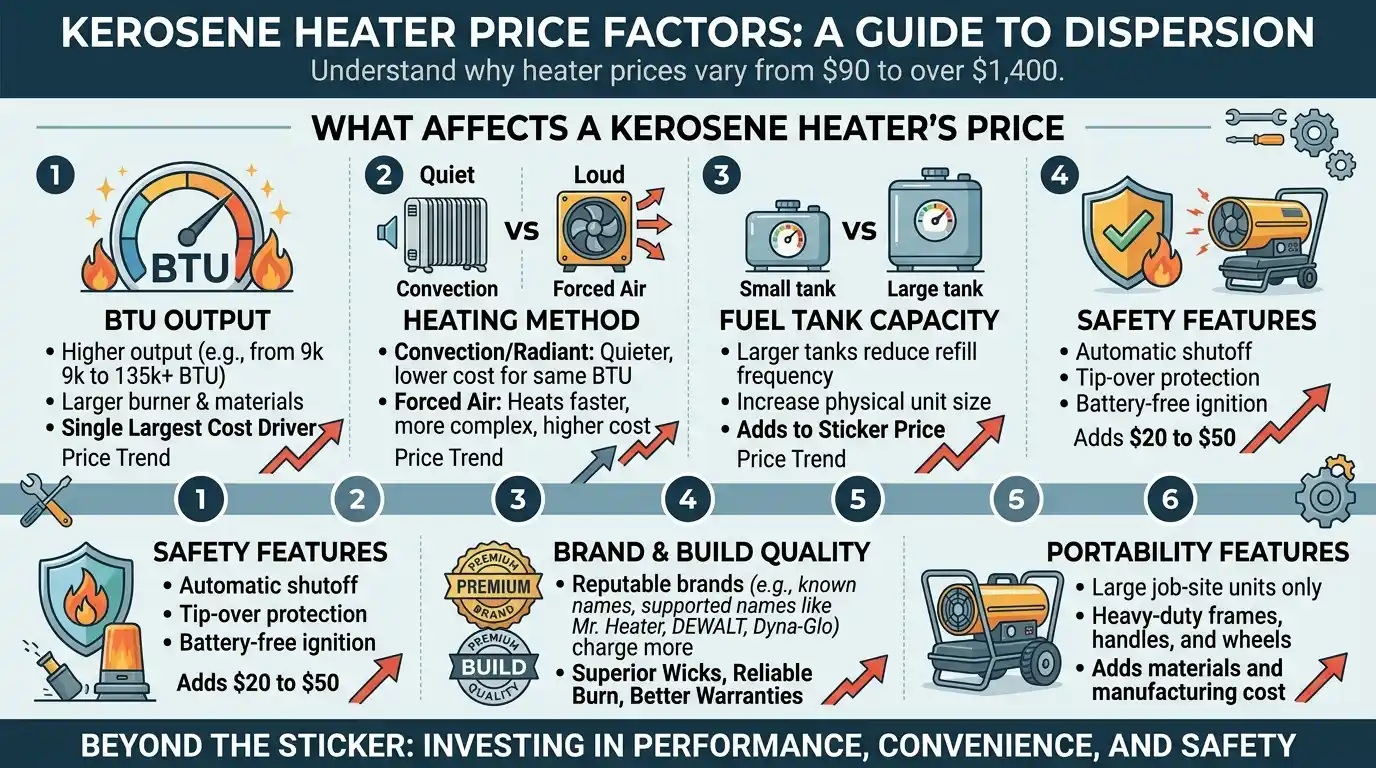
Most of the price dispersion you will encounter in the shopping process can be attributed to a few factors:
- BTU output. Increased heat production implies a larger burner, larger tank, and cost. This is the only largest cost driver.
- Heating method. Convection and radiant heaters (indoor-safe, quiet) are less expensive than forced air units of the same BTU, but forced air will heat a space more quickly.
- Fuel tank capacity. A larger tank will result in fewer refills but increase the sticker price.
- Safety features. Automatic shutoff, tip-over protection, and battery-free ignition may be an addition of $20 to 50.
- Brand and quality of the building. Brands such as Mr. Heater, DEWALT, and Dyna-Glo tend to charge higher than less known imports, but usually support it with superior wicks, more reliable burns, and superior warranties.
- Portability features. The larger job site units have wheels, handles and heavy-duty frames which increase cost.
The Real Cost: Kerosene Fuel Prices
The heater will be a one-time expense. The fuel is the thing you will continue to pay and it is where many buyers do not really know their actual budget.
| Where You Buy It | Typical Price per Gallon | Notes |
|---|---|---|
| Gas station pump (K-1 kerosene) | $4 to $6 | Cheapest option if a station near you carries it |
| Bulk/home delivery (100+ gallon minimum) | Roughly $2 to $3.50, varies widely by state and season | Only practical if you’re heating heavily all winter |
| Packaged cans (Home Depot, Lowe’s, Walmart) | $10 to $15 | Convenient, but the most expensive way to buy kerosene |
The retail kerosene prices follow closely the diesel and heating oil prices, as they are all a part of the same part of the barrel. When demand increases in winter, prices are likely to increase, and may differ considerably between states and even regions within a state. When you plan to use a kerosene heater on a regular basis during the winter, you should find a gas station that sells K-1 kerosene at the pump. The money saved by purchasing cans at a hardware store is quickly accumulated.
How Much Does It Cost to Run a Kerosene Heater?
This is the amount that most retailer product pages do not ever talk about and it is more important than the price tag on the heater itself should you intend to use it frequently.
Kerosene provides approximately 135,000 BTU per gallon. The burn rate of a heater is approximately the BTU rating of a heater divided by 135,000.
| Heater Size | Approx. Fuel Use per Hour | Cost per Hour (at $5/gal) | Cost for an 8-Hour Night |
|---|---|---|---|
| 10,000 BTU | 0.07 gal | $0.35 | $2.80 |
| 23,000 BTU | 0.17 gal | $0.85 | $6.80 |
| 70,000 BTU | 0.52 gal | $2.60 | $20.80 |
| 135,000 BTU | 1.00 gal | $5.00 | $40.00 |
Important lesson: An indoor convection heater with a mid-size burner that operates all night will use between 5 and 10 dollars of fuel, depending on the price of the gallon in your location and the height you set the burner. The real-world costs tend to fall at the lower end of these ranges since most people do not operate a kerosene heater on high overnight.
In the case of seasonal budgeting, a typical household with a mid-size kerosene heater as supplemental heat a few hours a day through a typical winter may consume 40 to 80 gallons of fuel, adding to the cost of the heater itself, totaling about 200 to 500 dollars in fuel costs.
Kerosene vs. Propane vs. Electric Heat: Cost Comparison
| Fuel Type | Typical Unit Cost | Fuel Cost | Best For |
|---|---|---|---|
| Kerosene | $100 to $1,400 | $4 to $6/gal (about 135,000 BTU/gal) | Extended power outages, unheated spaces, high heat output |
| Propane | $60 to $300 | $3 to $5/gal (about 92,000 BTU/gal) | Camping, patios, quick portable heat |
| Electric space heater | $30 to $150 | Priced per kWh, no fuel storage needed | Small rooms, apartments, where power is reliable |
Kerosene heaters generally win on heat output per dollar of fuel and are one of the few options that still work when the power is out. Electric heaters win on upfront cost and simplicity if you already have reliable power, and it helps to understand the basic mechanics behind how these plug-in units generate warmth before comparing them side by side with combustion heaters.
Propane splits the difference: it’s easier to find in small canisters but usually costs more per BTU than kerosene. Anyone weighing a propane option should also review the correct precautions for operating one indoors or in a garage, since the ventilation rules differ from kerosene.
How to Size a Kerosene Heater by Room (and Why It Affects Cost)
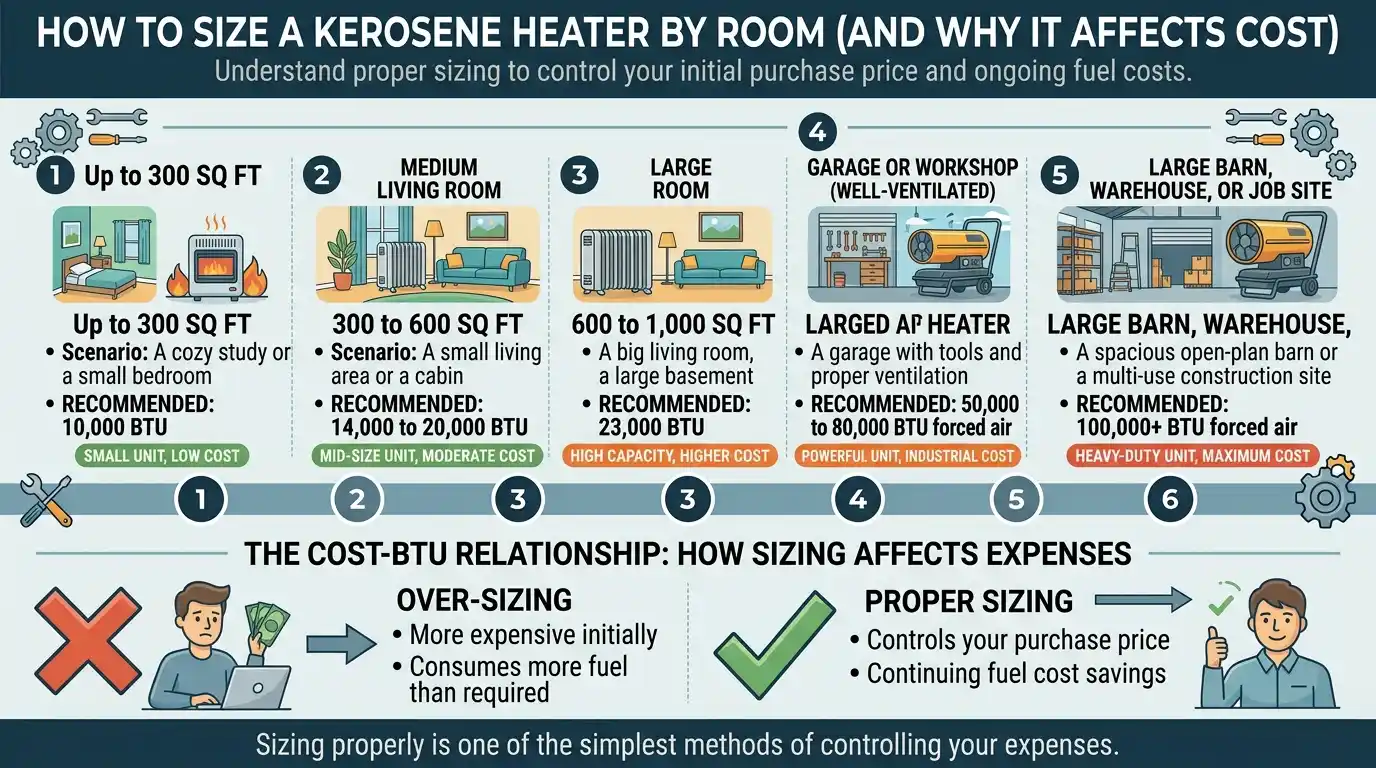
Purchasing over the required BTU will not only be more expensive initially, but it will also consume more fuel than is required. Approximately, a rule of thumb:
- Up to 300 sq ft: 10,000 BTU
- 300 to 600 sq ft: 14,000 to 20,000 BTU
- 600 to 1,000 sq ft: 23,000 BTU
- Garage or workshop (well-ventilated): 50,000 to 80,000 BTU forced air
- Large barn, warehouse, or job site: 100,000+ BTU forced air
One of the simplest methods of controlling your purchase price and your continuing fuel cost is sizing properly.
Ongoing Costs Beyond the Heater Itself
The fuel and the sticker price are not the only figures to consider:
- Replacement wicks: $10-25, required approximately once per season when used frequently.
- Batteries (on some models igniter): a few dollars a year.
- Carbon monoxide detector: $20-40 and non-negotiable when it comes to any indoor combustion heater.
- Fuel storage container: a 5-gallon blue kerosene container that complies with DOT standards costs $15 to $30.
All these are not huge costs on their own, but they can be easily overlooked when looking at the sticker price of one heater versus another. If you’re new to this type of appliance, it’s worth walking through a proper setup and operating checklist before your first fill-up, since a few basic habits go a long way toward keeping both the heater and your fuel costs under control.
Best Value by Budget
| Budget | What to Expect |
|---|---|
| Under $150 | A solid small-to-mid indoor convection heater for one room |
| $150 to $300 | The sweet spot for most households: a mid-size indoor unit or an entry-level forced air garage heater |
| $300 to $600 | Larger forced air units for garages, barns, or job sites |
| $600+ | Heavy-duty, high-BTU forced air heaters for large or industrial spaces |
Common Mistakes That Waste Money
- Purchasing excess heater. A small bedroom will be overheated by a 70,000 BTU forced air unit and burn through fuel quickly. Correlate the BTU with the space.
- Forced air heater that is used outdoors. In addition to the safety hazard, these units are not made to operate under the more regulated, lower burn rates that indoor convection heaters operate.
- Purchasing fuel in little cans to be convenient. The cost of gas is $10-15 a gallon, which is very expensive when you have to heat up often. Locating a pump that sells K-1 kerosene can cut your fuel cost by more than half.
- Skipping maintenance. A dirty or worn wick burns less efficiently and produces more odor and soot, which burns you more per gallon of heat production over time.
FAQs
Is kerosene heater more cost-effective than electric heat?
In most places, kerosene costs less than electricity, and the amount of heat kerosene provides per dollar of fuel is usually greater than what electricity provides, particularly when there is a power outage, and the electric heat is not available at all. However, kerosene heaters are more expensive initially and need continuous fuel supplies, so when used infrequently an electric space heater is usually easier and cheaper in general.
How much does it cost to run a kerosene heater overnight?
A typical mid-size indoor unit (approximately 23,000 BTU) will cost about $5 to 10 a night, depending on the local fuel prices and the burner height positioning.
What amount of kerosene is used by a heater per hour?
Approximately, the BTU rating of the heater divided by 135,000 will give an approximation of gallons per hour. A 23,000 BTU heater will burn approximately 0.17 gallons per hour at full capacity.
Which is the lowest priced kerosene heater that is safe to use indoors?
Convection heaters 9,000 to 10,000 BTU with well-known brands usually begin at about 90 to 100 dollars. Do not buy unbranded units that are much cheaper than that, as corners are cut in safety features and build quality.
Are kerosene heaters worth it?
To anyone who loses power regularly in winter, heats an uninsulated garage or workshop, or requires a dependable back-up heat source, yes, the initial investment usually pays back in a short period of time as compared to using a generator to run electric heat.
How much does it cost to fill a kerosene heater’s tank?
The majority of indoor kerosene heaters contain a 1-2.5 gallon tank. At $5 a gallon, a full tank costs roughly $5 to $12.50.
Is it possible to use a forced air kerosene heater in a house?
The majority of forced air kerosene heaters are only to be used outdoors or in a well-ventilated location, like a garage with the door open or on a job site. Always use a carbon monoxide detector and check the rating of the manufacturer before using one in the house.
Are the prices of kerosene heaters higher in winter?
The heaters per se do not vary much in terms of price, although kerosene fuel does tend to increase in winter as the heating demand increases. It can save money by purchasing fuel early in the season, or finding a good cheap pump.
What is the duration of a gallon of kerosene in a heater?
It varies with BTU output and the high it is run. A gallon can be stretched to 14 hours on a small 10,000 BTU heater and a large 135,000 BTU forced air unit will burn a gallon in approximately an hour.
What is the size of the kerosene heater I require in 1,000 square feet area?
Calculate about 23,000 BTU of good, even indoor heat in that size area, with fairly normal insulation and ceiling height.
Is bulk delivery of kerosene worth it?
You must be burning a lot of fuel during the winter, typically 100+ gallons. In the occasional or backup case, it is often more practical to purchase at the pump on demand, and not have a large initial purchase of fuel.
Are kerosene heaters to be serviced annually?
Yes. Changing the wick about once a season, maintaining the tank and the burner clean, and checking the unit at the start of each winter, will ensure that it is running safely and efficiently.
Final Thoughts
The cost of a kerosene heater is just half the tale. A heater that burns too slowly, or one that is too large to fit your room, may turn out to be more expensive than a winter than a slightly more expensive, better-fitting model. Find out how much square foot of heat you really need to warm before you purchase, whether you need an indoor-rated convection unit or an outdoor forced air unit, and add $4 to $6 a gallon of fuel to the sticker price.
Get those three things correct and a kerosene heater is one of the most dependable and economical means of providing the amount of heat at the right place and at the right time.