Best Firewood for Christmas Fires: What Burns Best and Smells Great
The Best Firewood for Christmas Fires: What Burns Best & Smells Great comes down to two choices that work together. Pick a dense hardwood as your main heat source, then add a small amount of fragrant wood for scent. Oak, maple, and hickory give steady heat and long-lasting coals. A few sticks of cherry, birch, or cedar add the smell that makes a Christmas fire feel special.
Dry wood matters more than species. Wood that still holds water burns cool, smokes, and leaves more buildup in your chimney. Seasoned wood lights with less fuss, burns cleaner, and gives more heat from each log. That is why this guide starts with a moisture check and ends with a fire plan for Christmas week, covering which woods to buy, how much to keep on hand, and which woods to leave out.
Scent also needs care. Strong scented woods smell best in small amounts, and resin heavy woods can spark and coat a chimney faster. Mix fragrant wood into a hardwood base fire instead of building a whole fire from it. The result is a warm room, a pleasant smell, and a fire that stays calm and controlled while guests are over.
Fire Safety Disclaimer
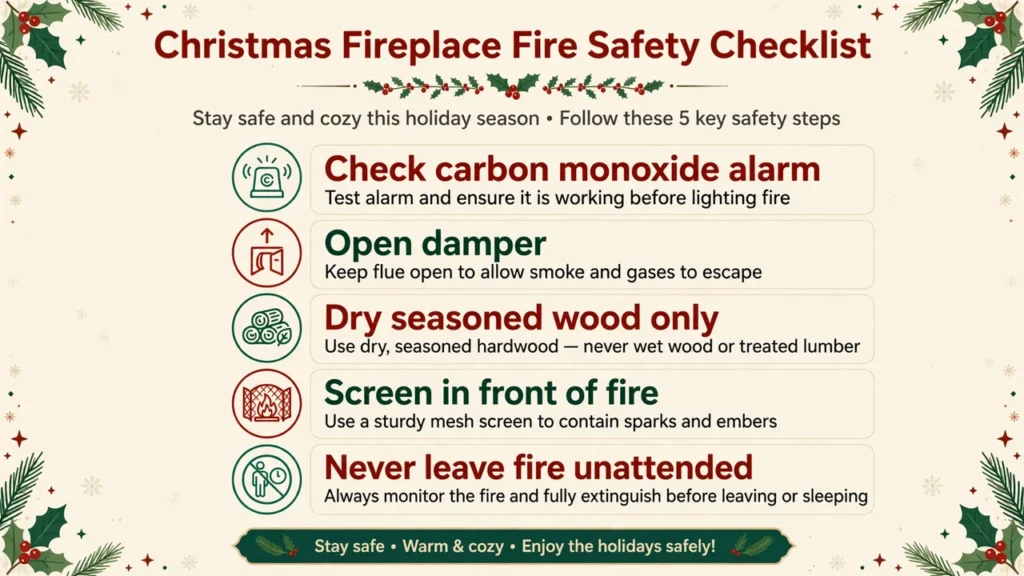
This guide is general information, not professional advice. Burn wood only in a fireplace or stove made for wood burning, with a working damper and vent. Fit working carbon monoxide alarms and smoke alarms, and test them often. Have your chimney inspected and swept each year by a qualified sweep. Never burn wood in an unvented indoor space. Check local burn rules and firewood transport rules before you buy or move wood.
Time and Difficulty
Time: 30 minutes to sort, test, and stack a Christmas supply, plus 10 minutes to build each fire. Difficulty: Beginner. Best for: Christmas Eve and Christmas Day fires in a wood fireplace or wood stove.
What You Need
- Seasoned hardwood logs, split and sized for your firebox
- A small amount of fragrant wood, such as cherry, birch, or cedar
- Dry kindling and two or three fire starters
- A moisture meter for testing log ends
- A fireplace screen, poker, gloves, and a metal ash bucket with a lid
- A small indoor log rack near the fireplace
At a Glance: The 7 Steps
- Check that your wood is dry
- Pick a hardwood base for heat
- Add fragrant wood for scent
- Match log size to your firebox
- Stack and store wood for Christmas week
- Build a top-down fire for a steady burn
- Tend the fire and close down safely
Christmas Firewood Compared
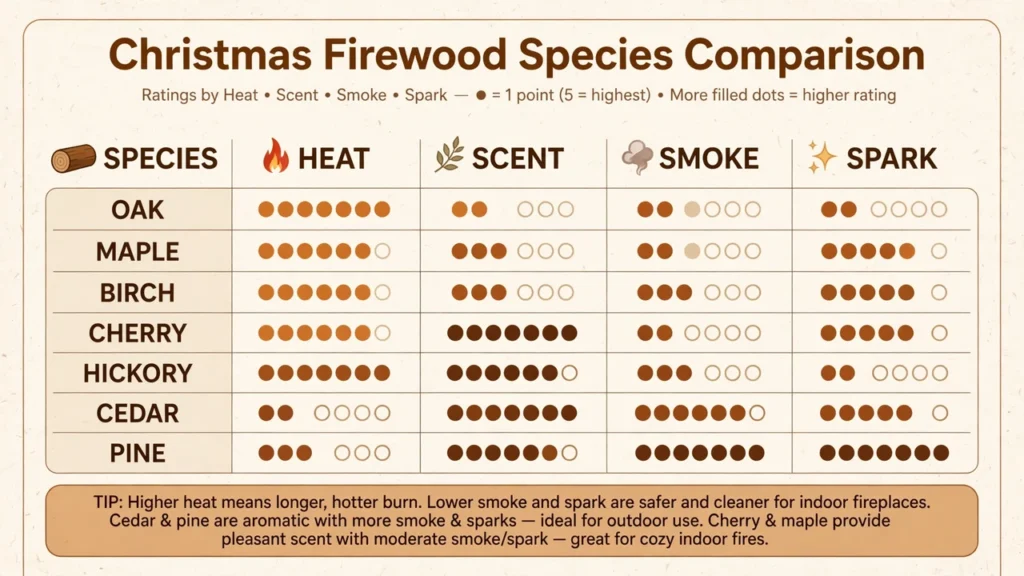
Use this table to compare the woods you are most likely to find at a local yard. Ratings are general relative guidance for seasoned wood, not lab measured values. Heat, smoke, and spark levels shift with moisture, log size, and airflow, so dry wood always beats a famous species that is still wet.
| Species | Heat | Scent | Smoke | Sparks | Seasoning Need |
|---|---|---|---|---|---|
| Oak | High | Mild, woody | Low | Low | Long, a full year or more |
| Hickory | High | Mild, slightly sweet | Low | Low | Long, a full year or more |
| Maple | High | Mild, clean | Low | Low | Medium to long |
| Birch | Medium | Light, sweet | Medium | Medium | Medium |
| Cherry | Medium | Sweet, fruity | Low | Low | Medium |
| Cedar | Low | Strong, spicy | Medium | High | Short |
| Pine | Low to medium | Strong, resinous | High | High | Short to medium |
The pattern is clear from the table. Hardwoods carry the heat and last longer as coals, while fragrant softwoods and cherry carry the scent. A mix of the two gives you both, and that mix is the plan the steps below follow. Keep scented wood to about one log in four so the fire stays steady and the smell stays pleasant rather than sharp.
Christmas Week Fire Plan
Planning counts in advance stops a cold house on Christmas Day. The counts below are a planning guide for a typical open fireplace, not a promise for every firebox. Smaller stoves need fewer logs, and larger fireplaces need more. Adjust the counts to your own firebox after your first fire.
| Day | Fires | Wood Mix | Notes |
|---|---|---|---|
| Christmas Eve | 1 evening fire | 4 to 6 hardwood logs, 1 cherry or birch log | Test moisture before guests arrive |
| Christmas Day | 2 fires | 8 to 12 hardwood logs, 2 scented logs | Keep spare logs indoors on the rack |
| Boxing Day | 1 relaxed fire | 4 to 6 hardwood logs, 1 scented log | Let coals cool fully before ash removal |
Heads Up: Carbon Monoxide and Chimney Buildup
Carbon monoxide has no color and no smell, so working alarms are your only warning. Test carbon monoxide alarms and smoke alarms before your first Christmas fire. Wet wood and resin heavy wood raise smoke and creosote, a flammable coating that can build up inside a chimney. Annual inspection and sweeping by a qualified sweep lowers that risk.
Check That Your Wood Is Dry
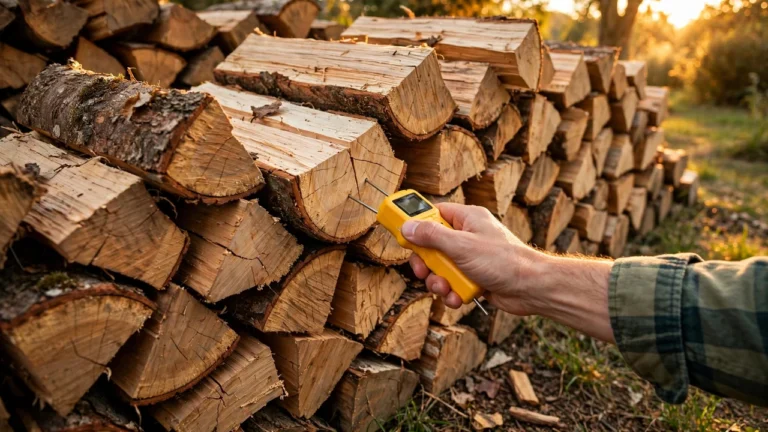
Press moisture meter pins into a freshly split face, not the old outer end. Aim for 20% moisture or less, the common target used by stove makers and extension services. Logs above that target hiss, darken at the ends, and throw more smoke than heat.
Use your senses as a backup check. Dry logs feel light, show end cracks, and sound hollow when knocked together. Wet logs feel heavy, look damp at the split face, and resist lighting. If a load fails the meter test, set it aside and read our guide to what seasoned firewood means.
Pick a Hardwood Base for Heat
Oak, hickory, maple, and ash make the best base for a Christmas fire. They are dense, so they burn slowly and leave a deep bed of coals that keeps giving heat after the flames drop.
Buy the hardwood your local yard stocks in seasoned form rather than chasing one species. A dry load of local maple will beat a wet load of oak every time. Ask when the wood was split and stacked, and test a few logs on delivery. Our guide on where to buy firewood lists checks that help you spot a sound seller.
Add Fragrant Wood for Scent
Cherry gives a sweet, gentle scent and burns with little smoke, so it is the safest scent pick for most homes. Birch adds a light sweet note and lights fast. Cedar smells strong and festive, but it sparks more, so use it in thin sticks rather than full logs.
Keep scented wood to about one log in four. That ratio keeps the smell pleasant without pushing smoke or sparks up. A fire built only from pine or cedar burns fast, sparks, and coats a chimney faster than a hardwood fire.
Pro Tip
Add your scented log after the hardwood base is burning well, about 20 minutes into the fire. Late scent wood gives a fresh wave of fragrance when guests sit down, instead of burning away during lighting.
Match Log Size to Your Firebox
Measure the width of your firebox, then choose logs at least 3 inches shorter than that width. Logs that fit with room to spare let air move around the fire. Logs that jam against the walls block airflow and can roll toward the screen.
Split size matters as much as length. Logs about 3 to 5 inches across light well and burn at a steady pace. Very thick rounds can sit and smolder, while very thin sticks burn out fast. Save thick rounds for the middle of a long fire.
Stack and Store Wood for Christmas Week
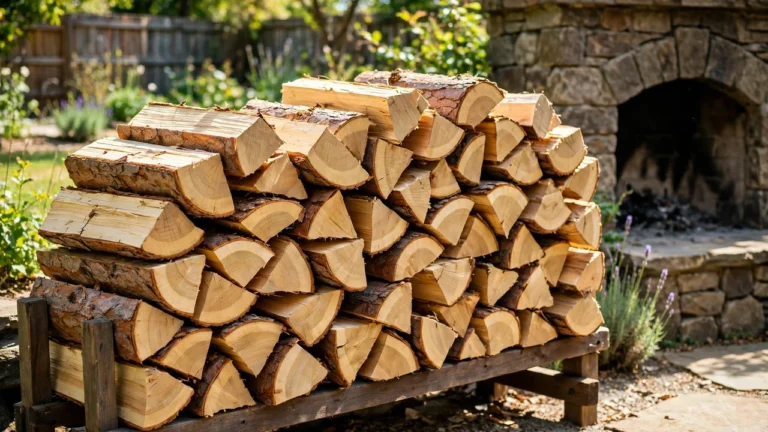
Store your Christmas supply outdoors with the top covered and the sides open to air. A tarp over the top keeps rain off, while open sides let wind dry the stack. Raise the stack on pallets or rails so damp ground cannot soak the bottom row.
Move one or two days of wood indoors a day ahead of use. A rack by the fireplace saves trips outside in the cold on Christmas Day. Never store large amounts of wood against the house wall, since stacked wood can hide pests and catch fire if placed too close to heat.
Build a Top-Down Fire for a Steady Burn
Place two or three large hardwood logs flat on the grate, side by side with small gaps. Lay two smaller logs across them at right angles, then add kindling on top. Put one or two fire starters among the kindling and light them from the top.
A top-down fire lights from the top down, so flames spread slowly and smoke stays low. Open the damper fully before lighting, and keep the screen closed. Add your scented log once the base logs are burning well. If smoke spills into the room, open a window to feed air to the fire.
Tend the Fire and Close Down Safely
Add only one or two logs at a time, and wait until they catch before adding more. Piling logs on a weak fire smothers it and fills the room with smoke.
Never leave a burning fire unattended, and never go to bed with flames still showing. Let the fire burn down to cold coals, then close the damper only when the coals are fully cold. Scoop ash into a lidded metal bucket and store it outside on concrete for at least three days, since coals can stay hot far longer than they look.
Heads Up: Never Burn These
Never burn treated, painted, or stained wood, plywood, MDF, particleboard, or household trash. These materials can release harmful fumes and leave residue in your chimney. Never burn a Christmas tree, wreaths, or gift wrap in a fireplace. Dry needles and resin flare fast, throw sparks, and raise creosote risk. Check local burn bans and firewood transport rules, since moving wood can spread pests to new areas.
Match Wood to Your Fireplace Type
Open fireplaces suit the hardwood plus scent mix in this guide, since the open front lets scent reach the room. Use the screen at all times, and keep scented wood to the one in four ratio so sparks stay behind it. A stove with a closed door holds heat longer, so mid-size hardwood splits work well there, and scent reaches the room less, which makes cherry a better pick than cedar.
Outdoor fire pits allow more freedom with scented wood, since sparks and smoke disperse outside. Even outdoors, never burn treated wood, trash, or a Christmas tree, and respect local burn bans. Check wind and nearby trees before lighting, and keep a hose or bucket of water within reach.
Common Mistakes to Avoid
Most Christmas fire problems come from a few habits that take minutes to fix. Check your own routine against this list before you light the first fire of the season. Each fix below takes only minutes and makes the whole evening safer and more pleasant.
- Burning wet wood: Wet logs smoke, hiss, and give little heat. Test with a meter and read why burning wet firewood causes trouble before you light a damp load.
- Building a whole fire from pine or cedar: Scented softwoods burn fast and spark. Use them as a small part of a hardwood fire, not the whole fire.
- Burning green wood: Fresh cut wood holds far too much water for a clean fire. See whether green firewood can be burned and how long seasoning takes.
- Closing the damper too soon: A damper closed over warm coals can push smoke and gases into the room. Wait until coals are fully cold.
- Skipping the annual sweep: Creosote builds up quietly over a season. Book inspection and sweeping each year, even if fires looked clean.
- Guessing at amounts: Running out mid evening is a poor end to Christmas Day. Our guide to how much firewood a holiday weekend needs shows the same counting method for a busy week.
Frequently Asked Questions
What is the best firewood for Christmas fires?
Seasoned oak, hickory, maple, or ash makes the best base, with one cherry or birch log in four for scent. Dry wood matters more than species, so test moisture and aim for 20% or less before you buy for Christmas.
What firewood smells best at Christmas?
Cherry gives a sweet and gentle scent that suits a living room, and birch adds a light sweet note. Cedar smells strong and festive but sparks more, so use it in thin sticks within a hardwood fire rather than as the main fuel.
Can I burn pine or cedar at Christmas?
You can use small amounts of pine or cedar in a hardwood fire, but do not build a whole indoor fire from them. They burn fast, spark more, and raise smoke and creosote compared with seasoned hardwood.
How do I know my firewood is dry enough?
Test a freshly split face with a moisture meter and look for 20% or less. Dry logs also feel light, show end cracks, and sound hollow when knocked together, while wet logs feel heavy and hiss as they burn.
How much firewood do I need for Christmas week?
For a typical open fireplace, plan on 4 to 6 hardwood logs per evening fire, plus one scented log per fire. Christmas Day often needs two fires, so keep 8 to 12 hardwood logs and 2 scented logs on hand for that day.
Can I burn a real Christmas tree in the fireplace?
No, never burn a Christmas tree, wreaths, or branches in a fireplace or stove. Dry needles and resin flare fast, throw sparks, and raise creosote buildup in the chimney. Recycle or dispose of the tree through your local collection program instead.
Quick Reference Card
- Best heat: Seasoned oak, hickory, or maple
- Best scent: Cherry or birch, one log in four
- Best for lighting: Birch kindling over a hardwood base
- Moisture target: 20% or less on a freshly split face
- Use with care: Cedar and pine in small amounts only
- Never burn: Treated or painted wood, plywood, MDF, trash, or Christmas trees
- Before each fire: Damper open, alarms tested, screen closed
- After each fire: Coals fully cold before closing the damper, ash in a lidded metal bucket outside
Conclusion
Pick dry hardwood for heat.
Add a little cherry or birch for scent.
Keep cedar and pine to small amounts.
Test moisture, mind the damper, and enjoy a warm Christmas fire.