Burning Wet Firewood: Why You Shouldn’t — and What to Do With a Damp Pile Instead
Burning wet firewood feels like a shortcut on a cold night, but it backfires fast. Rain-soaked logs hiss, smoke, and give off far less heat than dry wood, because much of the fire’s energy goes into boiling water out of the log instead of warming your room. The extra smoke also leaves sticky creosote in your chimney, which raises the risk of a chimney fire. This guide explains why wet wood burns so poorly, how to tell wet wood from dry wood, and what to do with a damp pile instead.
Wet wood is not the same as green wood. Green wood is freshly cut and still full of sap and moisture from the living tree. Wet wood was once dry, or partly dry, and then soaked by rain or ground damp. Both burn badly, but wet wood can often be saved with a few weeks or months of good drying, while green wood needs a full seasoning period — so knowing which pile you have helps you pick the right fix, and our guide to how to season firewood covers the longer drying process in full.
Safety note: This article shares general guidance for home fireplaces and wood stoves. It is not a substitute for advice from a certified chimney sweep or your stove maker. Always follow your local fire rules and your appliance manual.
⚠️ Heads Up: Real Dangers
Have your chimney inspected and swept at least once a year by a certified sweep. Fit working carbon monoxide detectors on every floor and test them monthly. Never burn treated, painted, or stained wood, plywood, MDF, or trash — these give off toxic fumes. Respect local burn bans and firewood transport or quarantine rules, and check local rules before you burn.
⏱️ Time: 10 minutes to test a pile · Days to months to dry it, depending on weather
📈 Difficulty: Low — no special skills needed, and a moisture meter does most of the work
🧰 What You Need
- A moisture meter (a pin meter from a hardware store works well)
- Pallets, old rails, or scrap boards to lift wood off the ground
- A tarp or sheet of metal for a top cover, plus bricks or spare logs to weigh it down
- Work gloves and tongs for handling logs near the fire
- A separate spot in sun and wind for the damp pile
No moisture meter? The knock test in the FAQ below works as a rough check, but a meter gives a clear number and removes the guesswork.
📌 At a Glance
- Test the moisture before you burn
- Set wet wood aside in its own pile
- Stack the wood for airflow and sun
- Cover the top of the stack only
- Wait until the wood tests dry
- Build your fire with dry wood only
- Book a chimney check after a smoky fire
Burning Wet Firewood: Why It Burns So Poorly
A log can hold a surprising amount of water after rain, and that water has to go somewhere when the log hits the flames. The fire spends its heat turning water into steam, so the room stays cold while the chimney fills with smoke. Cooler smoke also drops more soot and creosote on the flue walls, and over time that buildup narrows the flue and raises the risk of a chimney fire. In short, wet wood wastes your wood pile, dirties your chimney, and leaves you cold.

Test the Moisture Before You Burn
Push the meter pins into the fresh face of a split log, not the bark or the old ends. Bark and ends dry faster than the middle, so they can fool you. Aim for a reading of under 20% before any log goes near the fire. If you get a higher number, that log goes back to the drying pile, so test two or three splits from different parts of the pile, since one dry log does not mean the whole pile is ready.
Set Wet Wood Aside in Its Own Pile
Wet logs mixed in with dry logs cause trouble, because it is tempting to grab whatever sits on top. Move damp logs to their own pile in a sunny, breezy spot. Keep that pile apart from your ready-to-burn wood so nobody grabs a wet log by mistake in the dark, and mark it with a scrap board or a tag if others in the house fetch wood too. This one habit prevents most smoky fires.
Stack the Wood for Airflow and Sun
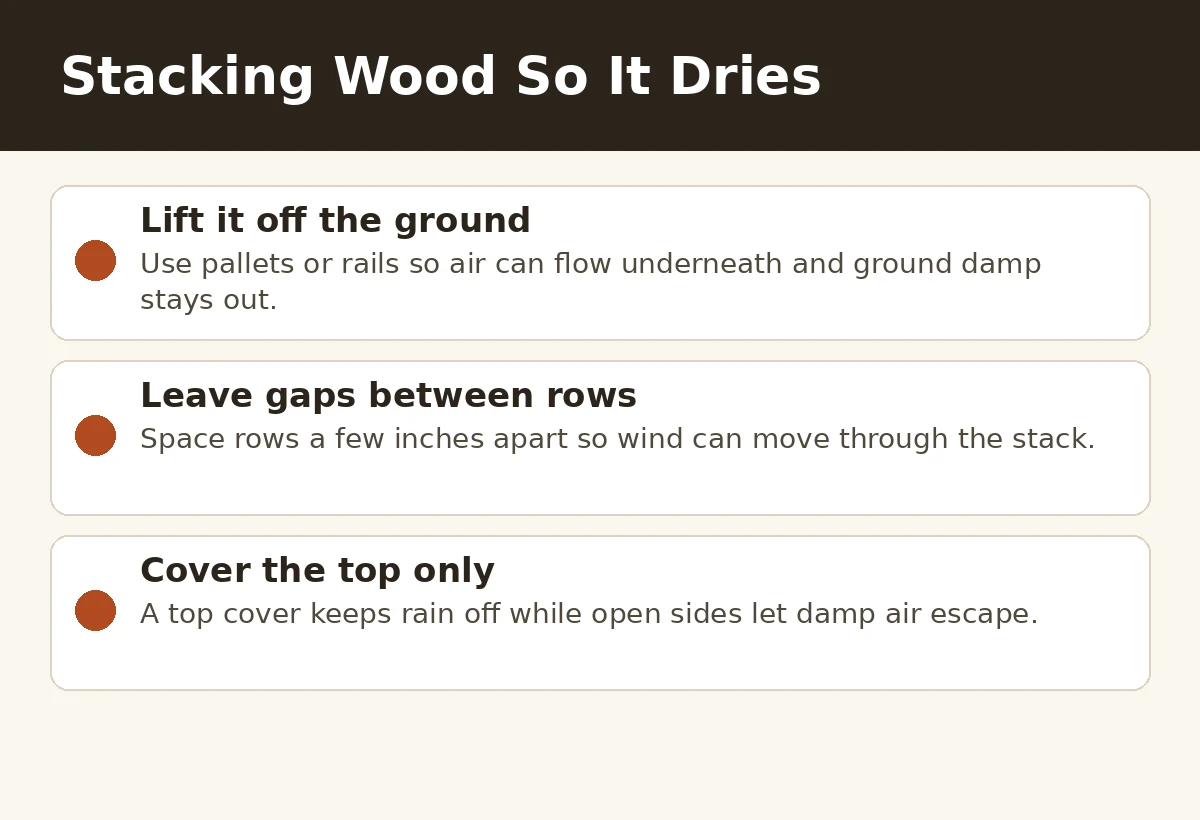
Lay pallets, old rails, or scrap boards on the ground first, then stack the splits on top in a single row if you have room. Leave a gap of a few inches between rows so wind can pass through. Face the long side of the stack toward the sun and the prevailing wind when you can. Do not stack wood tight against a house wall, since trapped damp air slows drying and can draw insects close to the home — a loose, airy stack dries far faster than a dense block of wood.
Cover the Top of the Stack Only
Drape a tarp or a sheet of metal over the top of the stack, and weigh the edges down with bricks or spare logs. Leave the sides wide open. A tarp wrapped around the sides traps damp air inside and keeps the wood wet longer. Rain runs off the top cover while wind still moves through the sides, so check the cover after heavy storms, since a blown-off tarp leaves the stack open to the next rain.
Wait Until the Wood Tests Dry
Drying takes time, and the wait depends on the wood type, the weather, and how the stack is built. Softwoods often dry in a few months, while dense hardwoods can need six months or more. Do not guess by the calendar alone — test the wood again with your meter after a stretch of dry, windy weather. When several splits from different spots read under 20%, the pile is ready to burn, and if you need speed, our guide on how to dry firewood fast lists safe ways to shorten the wait.
Build Your Fire with Dry Wood Only
Start with dry kindling and small dry splits, and add larger logs once the fire is hot and steady. Dry wood catches fast and burns with a bright flame and little smoke. If a log hisses or bubbles at the ends, pull it out with tongs and set it aside to dry longer. Never pour fuel or lighter fluid on a struggling fire, since a fire that needs coaxing is often telling you the wood is still too wet.
Book a Chimney Check After a Smoky Fire
A smoky fire leaves extra soot and creosote in the flue, so book a certified chimney sweep to inspect and clean the chimney at least once a year, and sooner if you have burned wet wood. Watch for warning signs between visits: thick smoke spilling into the room, a strong smoky smell when the fire is out, or black flakes falling into the firebox. Fit working carbon monoxide detectors on every floor, and test them each month. If a detector sounds, get everyone outside and call emergency services from outside.
Common Mistakes to Avoid
- Burning wet wood “one time only.” One smoky fire still adds creosote to the flue.
- Wrapping the whole stack in a tarp. Sealed sides trap damp air and slow drying.
- Testing only the ends of a log. Ends dry first — test a fresh split face for a true reading.
- Stacking wood straight on bare soil. Ground damp soaks up into the bottom row.
- Burning painted or treated wood to get rid of it. These release toxic fumes and are never safe to burn.
One more note: wood can also go too far in the other direction. If your pile has sat for years in a hot, dry shed, read our guide on whether firewood can be too dry before you burn it.
Frequently Asked Questions
Can I burn wet firewood if I mix it with dry wood?
No. Mixing still fills the flue with extra smoke and creosote, and the wet logs drag down the heat of the whole fire. Keep wet logs out until they test under 20% moisture.
How long does wet firewood take to dry?
It depends on the wood type, the weather, and the stack. A few weeks of sun and wind can help a lightly damp pile, while soaked hardwood may need several months. Test with a meter rather than guessing by date.
How can I tell if firewood is wet without a meter?
Knock two logs together: dry wood gives a sharp crack, while wet wood gives a dull thud. Wet logs also feel heavy for their size and may show damp or dark ends. For a sure answer, use a meter.
Is it safe to burn wet wood once in a while?
It is best avoided. Even one wet fire adds creosote to the chimney and raises smoke levels in the home. If you have already burned wet wood, book a chimney check sooner rather than later.
Can I dry wet firewood indoors?
Bring in only what you plan to burn in the next day or two. Storing large amounts indoors can bring in insects and damp, and it raises the risk of mold in the house. The main drying pile belongs outside in sun and wind.
📌 Quick Reference Card
- Burn only wood under 20% moisture — test a fresh split face.
- Wet wood: set aside, stack off the ground, cover the top only.
- Drying time: weeks for light damp, months for soaked hardwood.
- Chimney: inspected and swept at least once a year by a certified sweep.
- CO detectors: on every floor, tested each month.
- Never burn: treated, painted, or stained wood, plywood, MDF, or trash.
Dry wood means a warmer room, a cleaner chimney, and a fire you can relax beside. Test your pile today, and move any damp logs to their own sunny stack. If you want the full drying process, our guide on what seasoned firewood is is a good next read.