Can Firewood Be Too Dry? What to Know Before Burning It
Yes, firewood can be too dry for easy, controlled burning. Wood that has dried well past the normal seasoned range tends to catch fast, burn hot, and burn down quicker than you expect. That does not mean it is ruined, but it does mean you need to handle it with a bit more care.
Most firewood advice focuses on wood that is too wet. Wet wood smokes, hisses, and leaves more buildup in a chimney. Very dry wood sits at the other end of the scale, and it brings a different set of problems. This guide explains how to spot it, why it burns the way it does, and how to burn it safely.
Burn wood in a vented fireplace, stove, or outdoor fire pit made for burning wood. Never burn wood in an unvented indoor space. Fit working carbon monoxide detectors in your home and test them often.
Book an annual chimney inspection and sweep, since creosote buildup can raise the risk of a chimney fire. Never burn treated, painted, or stained wood, plywood, MDF, or trash. Check your local burn rules before you light a fire.
- A moisture meter (helpful, not required)
- Firewood in mixed sizes, if you have it
- Heat-proof gloves
- A working carbon monoxide detector in the home
The Short Answer
Firewood can be too dry when it burns so fast and hot that it is hard to control. You may find yourself feeding the fire often, closing the air control sooner than usual, or watching flames run higher than you like. In a wood stove, that fast burn can also push stove temperatures up if the air supply stays wide open.
The fix is rarely to throw the wood away. Mix very dry pieces with normal seasoned wood, use larger pieces where you can, and keep the air control in check. If your stove manual gives a temperature range, follow it. When in doubt, burn smaller loads and watch the fire until you learn how that batch behaves.
What Does “Too Dry” Mean?
Seasoned firewood is wood that has dried long enough to burn well, with most of its free water gone. Guides often point to a moisture reading below 20% as a good target for seasoned wood. There is no single official cutoff that marks wood as “too dry,” and readings can vary by species, meter, and where you test the log.
Very dry wood is wood that has dried far below that normal seasoned range, often after years in a hot, dry store or after kiln drying and long storage. It feels light for its size, and it may show deep cracks at the ends. The wood itself is not damaged in a way that makes it unsafe to burn, but its burning behavior changes.
Think of it like kindling. Small, dry pieces catch in seconds and flare up, while a large seasoned log catches more slowly and burns at a steadier pace. A whole load of very dry wood acts more like kindling than like a normal load of logs.
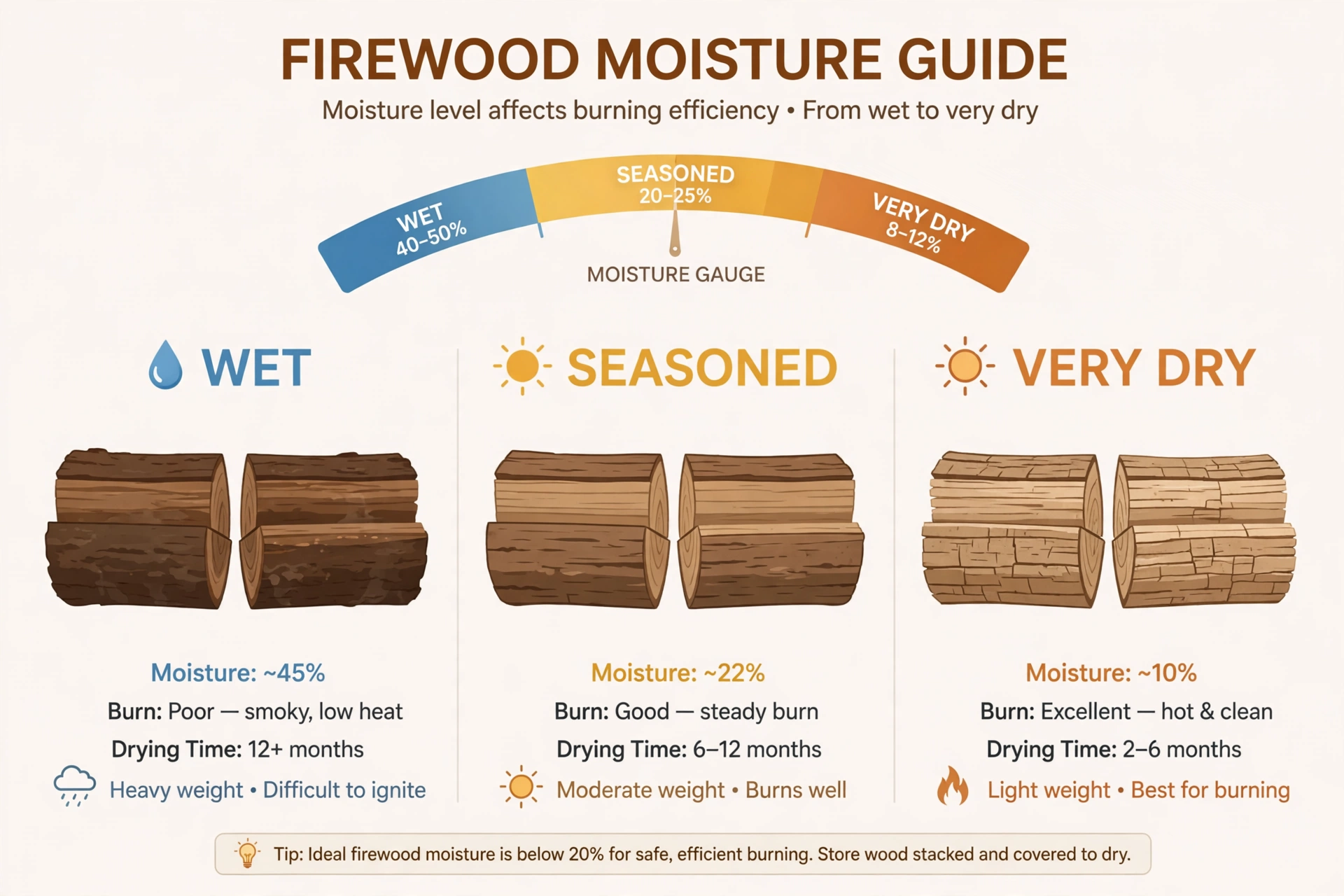
| Too wet | Hisses, smokes, and struggles to catch. Leaves more creosote behind. |
| Seasoned range | Catches well and burns at a steady pace. This is the range to aim for. |
| Very dry | Catches very fast, burns hot, and burns down quickly. Mix sizes and control the air supply. |
Signs Your Firewood Is Very Dry
You do not need a meter to spot the clues, though a meter can confirm what you see. Look for a mix of these signs across a batch, not a single log in isolation. One cracked log does not prove a whole stack is over-dried.
- Ends show deep radial cracks, and bark peels off with little effort.
- Logs feel much lighter than fresh-cut logs of the same species and size.
- Two pieces knocked together give a hollow, sharp knock rather than a dull thud.
- Pieces catch almost at once and flare up with tall, fast flames.
- A load burns down far sooner than a normal load of seasoned wood.
- Kindling-sized pieces crumble or split apart with very little force.
If you use a moisture meter, test a freshly split face, not the weathered outside of a log. The outside can read drier than the inside, which can mislead you. For a fuller check, see how to tell if firewood is seasoned.
Why Very Dry Wood Burns Differently
Water in wood absorbs heat as it turns to steam, which slows the burn. With little water left, almost all the heat goes straight into burning the wood itself. That is why very dry wood lights fast and gives off heat in a rush rather than over a longer period.
That rush can be a problem in a closed stove. A stove is built to handle a certain heat output, and a full load of very dry wood with the air wide open can run hotter than planned. Check your stove manual for its guidance, and never leave a new batch burning while you are away from the house until you know how it behaves.
Very dry wood can also throw more sparks and small embers, mainly in an open fireplace or fire pit. Keep a screen in front of an open fireplace, and keep the area around a fire pit clear of dry leaves and other flammable material.
Burn Very Dry Wood Safely: 5 Steps
1. Mix sizes in each load
Pair small, very dry pieces with larger seasoned logs. The larger logs slow the load down, while the small pieces help the fire catch. Avoid filling a stove or fireplace with small, very dry pieces alone.
2. Load less at a time
Start with a smaller load than usual when you try a new batch. You can always add another log once you see how fast the first load burns. A smaller load gives you more control and less heat buildup.
3. Close the air control in stages
Once the fire is going well, ease the air control down in stages rather than leaving it wide open. Watch the flames and the stove temperature as you adjust it. If flames stay high and fierce, reduce the air a little more, within the range your stove manual allows.
4. Keep a screen and clear space
Use a fireplace screen for open fires, and keep rugs, paper, and other flammable items well back from the hearth. Outdoors, clear dry leaves and debris from around a fire pit before you light it.
5. Stay with the fire until it settles
Remain nearby until the fire has settled into a steady burn. Very dry wood is most unpredictable in the first minutes, when flames run highest. Never leave a fresh fire unattended.
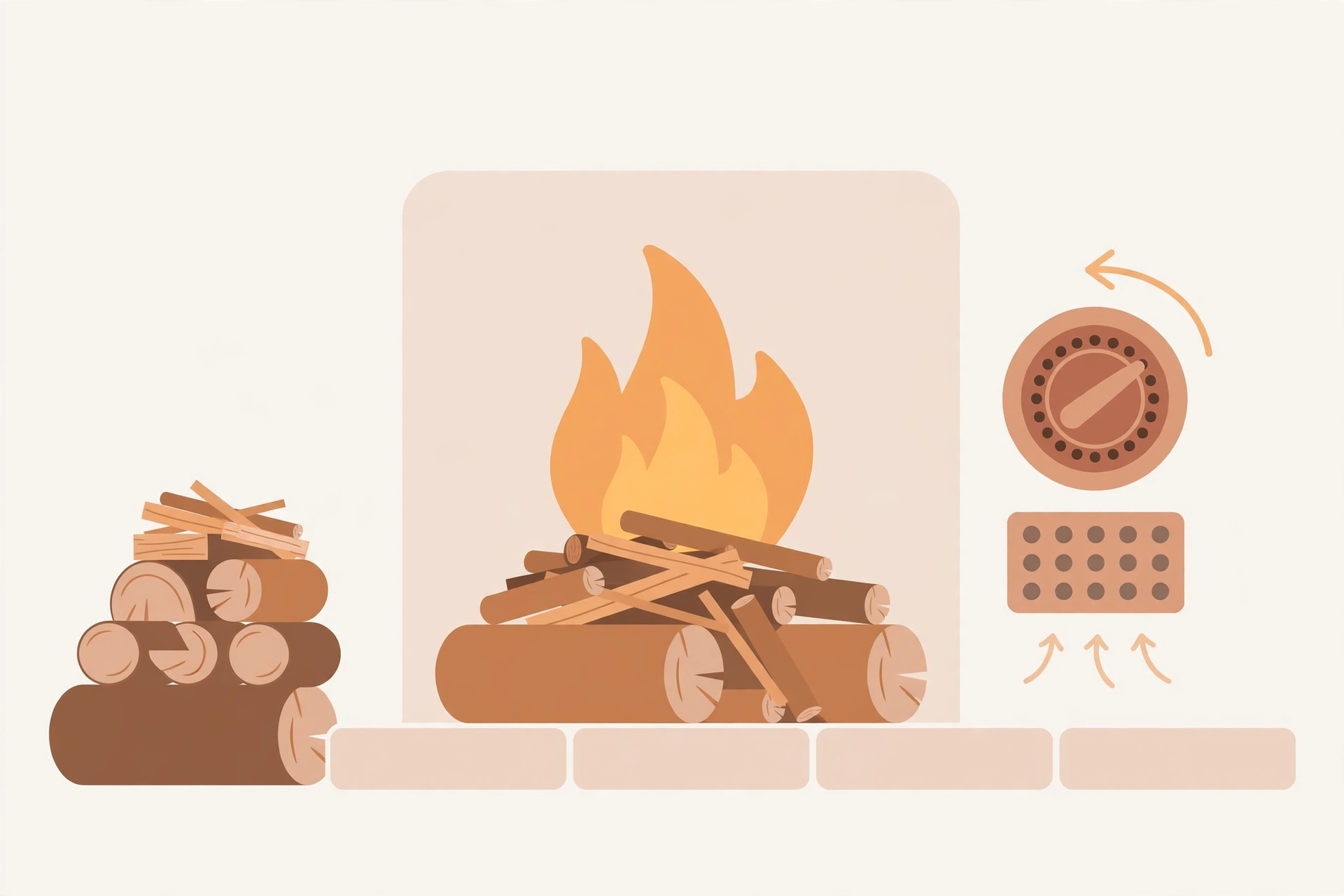
- Mix very dry pieces with larger seasoned logs
- Load less until you know how the batch burns
- Ease the air control down in stages
- Use a screen on open fireplaces
- Stay nearby until the fire settles
What About Kiln-Dried Wood?
Kiln-dried wood is dried in a heated chamber rather than by air over months. It is often drier than air-seasoned wood when you buy it, and that is normal. It can still burn well if you load it with care, using the same mix-and-control approach.
If kiln-dried wood seems to burn too fast in your stove, try larger pieces or mix it with air-seasoned logs. That blend often gives a steadier fire than either type on its own. Store kiln-dried wood under cover, since it can take up moisture again if it sits in rain.
Can You Fix Over-Dried Wood?
You cannot season wood in reverse, and soaking logs is not a good answer. Soaked wood brings back the smoke, poor heat, and creosote problems of wet wood. The practical fix is how you burn it, not how you treat it.
Mixing is the most useful step, followed by smaller loads and careful air control. If a batch is so dry and small that it acts like kindling, use it as kindling. Save it to start fires, and burn larger seasoned logs as your main fuel. That way nothing goes to waste.
If you have a large amount of very dry wood and a stove that runs hot with it, ask a chimney sweep or stove dealer for advice on your setup. They can check whether your stove, flue, and air controls suit the fuel you are burning.
Wet, Seasoned, and Very Dry: Side by Side
It helps to see the three states next to each other. Wet wood is the worst choice for regular burning, seasoned wood is the goal, and very dry wood is usable with care. The table below sums up the difference in plain terms.
| Wood state | How it lights | How it burns | Best use |
|---|---|---|---|
| Wet / green | Slowly, with smoke | Weak heat, heavy smoke | Do not burn; season it first |
| Seasoned | Readily | Steady heat, manageable flames | Main fuel for stoves and fireplaces |
| Very dry | Almost at once | Fast, hot, short-lived | Mixed with seasoned logs, or as kindling |
For the other end of the scale, read can you burn green firewood and how to season firewood. Both explain why drying matters and how long seasoning can take.
Bottom Line
Yes, firewood can be too dry for carefree burning. It lights fast, burns hot, and burns down quickly, which makes it harder to control than normal seasoned wood. None of that means the wood is useless.
Mix it with larger seasoned logs, load less at a time, control the air supply, and stay with the fire until it settles. With those habits, very dry wood can still heat your home well. If a batch keeps running too hot for your stove, get advice from a chimney professional before you burn more of it.
Frequently Asked Questions
Can firewood be too dry to burn?
Yes, firewood can be too dry for easy, controlled burning. Very dry wood catches fast, burns hot, and burns down quickly, so it needs smaller loads, mixed log sizes, and careful air control.
What moisture level is too dry for firewood?
There is no single official cutoff for too dry, and readings vary by species, meter, and test spot. As a guide, seasoned wood often targets below 20% moisture, while wood far below the normal seasoned range tends to burn fast and hot.
Is it safe to burn very dry firewood?
Very dry wood can be burned safely in a vented stove or fireplace if you load less, mix sizes, and control the air supply. Keep working carbon monoxide detectors in the home, use a screen on open fires, and never burn in an unvented indoor space.
Does very dry firewood give less heat?
Very dry wood still gives heat, but it releases that heat in a rush rather than over a longer period. That fast burn can feel less useful, since you need to reload sooner and watch the fire more closely.
Can I fix firewood that is too dry?
You cannot re-season wood in reverse, and soaking logs is not a good fix. Mix very dry pieces with larger seasoned logs, use smaller loads, and use the driest small pieces as kindling.