Poplar Firewood: How to Season, Split, and Burn It for Quick Warmth
A load of poplar firewood can feel like a letdown the first time you burn it. The fire catches fast, throws out pleasant heat, and then dies back sooner than you expected. That is not a sign you did something wrong. Poplar is a light, fast-burning wood, and it rewards a different approach than oak or maple.
This guide shows you how to get the best from poplar firewood, from spotting which tree you actually have to stacking it, drying it, and pairing it with denser wood for a fire that lasts. By the end, you will know when poplar is the right choice, when to reach for something heavier, and how to keep your chimney safe while you burn it.
⚠ Safety first — read this before you light a fire
Never burn fuel in an unvented indoor space. Fit working carbon monoxide detectors on every floor, and have your chimney inspected and swept once a year by a certified chimney sweep. Burning wet wood raises creosote buildup and chimney-fire risk.
Never burn treated, painted, or stained wood, plywood, MDF, or household trash — the fumes are toxic. Check your local burn rules and any burn bans before you light up.
TOTAL TIME
6–12 months to season
ACTIVE TIME
About 1 hour per cord to split and stack
DIFFICULTY
Beginner-friendly
What You Need
- Split poplar logs, cut to fit your firebox (most stoves take 16-inch lengths)
- A moisture meter (a pin meter costs little and removes all guesswork)
- A maul or splitting axe, plus a chopping block
- Work gloves, eye protection, and sturdy boots
- A raised wood rack or pallets, and a top cover that leaves the sides open
- A dense hardwood such as oak, maple, or ash for mixing
- A fireplace screen for open fireplaces
- Kindling and a fire starter
At a Glance: The Steps
- Identify the poplar in your pile
- Split each round into narrow pieces
- Stack poplar where wind and sun reach it
- Test the moisture before you burn a log
- Lay a top-down fire with poplar kindling
- Add poplar logs for a fast warm-up
- Mix in dense hardwood for lasting coals
- Tend the fire and keep the rest of the pile dry
Know Which “Poplar” You Have
The word poplar covers more than one tree, and the label on a load of firewood rarely tells you which one you bought. True poplars belong to the genus Populus and include cottonwoods, aspens, and balsam poplar. They are botanical hardwoods, even though the wood feels light and soft.
Yellow poplar is a different tree altogether. Also called tulip poplar or tuliptree, it belongs to the magnolia family, not to Populus. Its wood is also light and modest in heat, so the day-to-day advice in this guide still holds. Ask your seller which tree they mean if you want to compare heat figures, because published charts rate them differently.
If your area grows cottonwood, our cottonwood firewood burning guide covers that close cousin in detail. Cottonwood shares poplar’s fast burn and low density, with a smell all its own when wet.
What Poplar Firewood Is Really Like
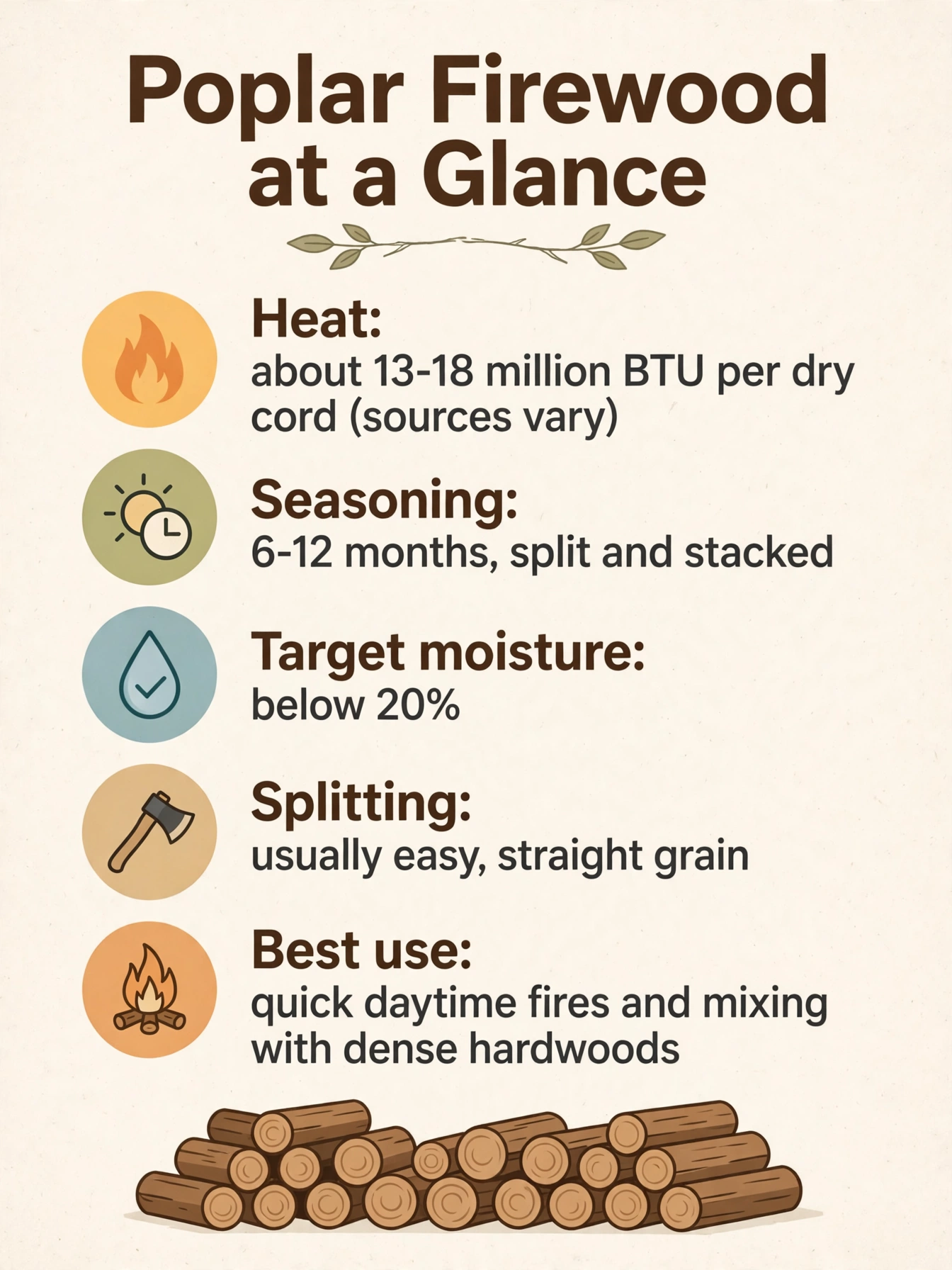
Poplar’s reputation is fair, not glowing. It lights with little coaxing, gives off quick warmth, and splits with far less effort than oak or hickory. Those traits make it a strong choice for shoulder-season fires in fall and spring, for daytime fires when you are home to feed the stove, and for campfires.
The trade-off is density. A cord of poplar holds far less stored energy than a cord of dense hardwood, so you will burn through more wood for the same warmth. Expect shorter fires, more frequent loading, and a bigger woodpile. Poplar is a poor pick for overnight burns or for a home that relies on wood as its main heat source in deep winter.
Poplar heat, side by side with other woods
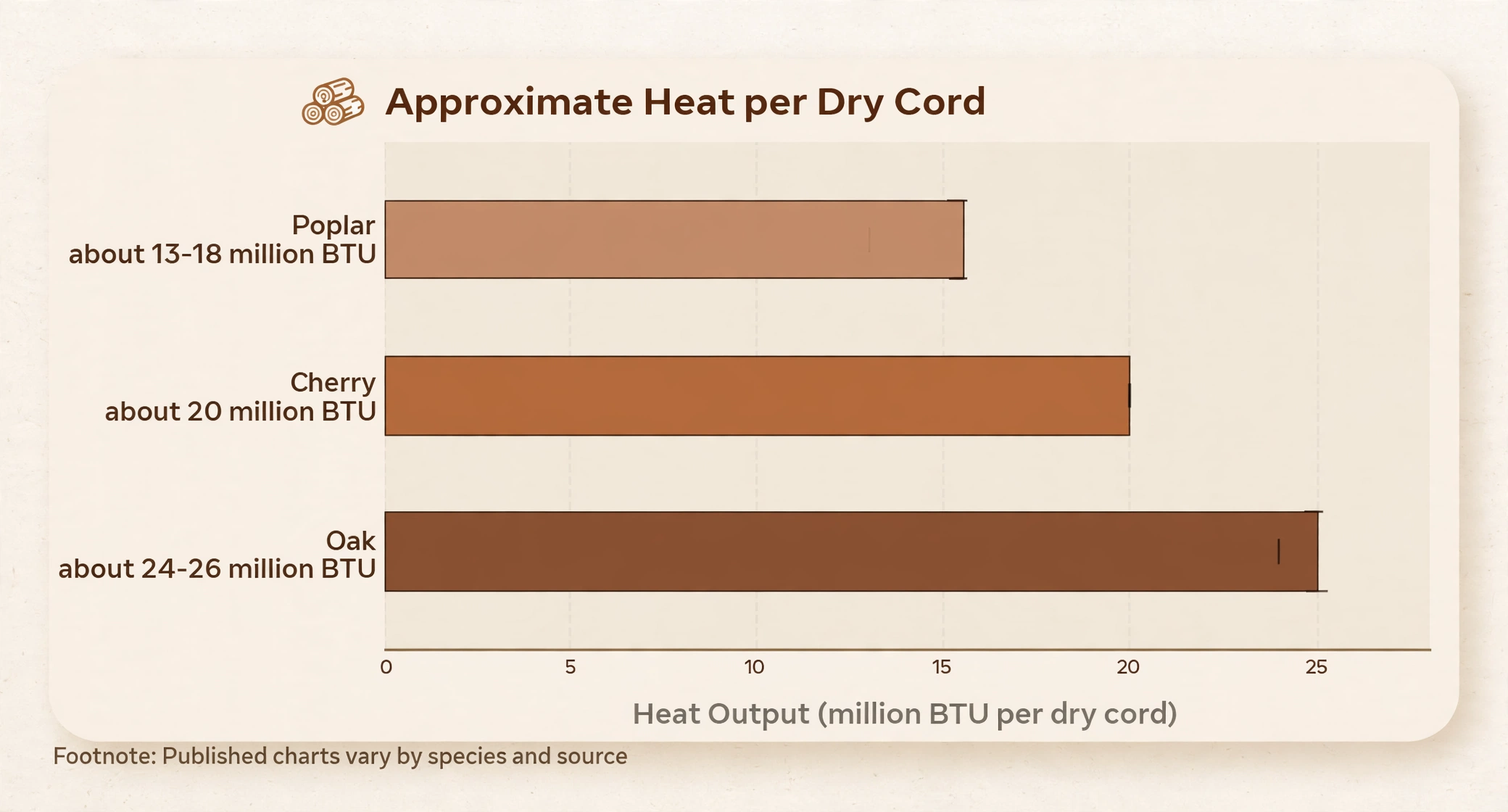
Published firewood charts disagree on exact figures, because species, growing conditions, and moisture all shift the numbers. Most charts place true poplars and aspen near 13–16 million BTU per dry cord, with some charts listing up to 18 million BTU. The Pennsylvania DCNR firewood guide rates yellow-poplar higher, at 19.2 million BTU per cord — a reminder that the species name matters.
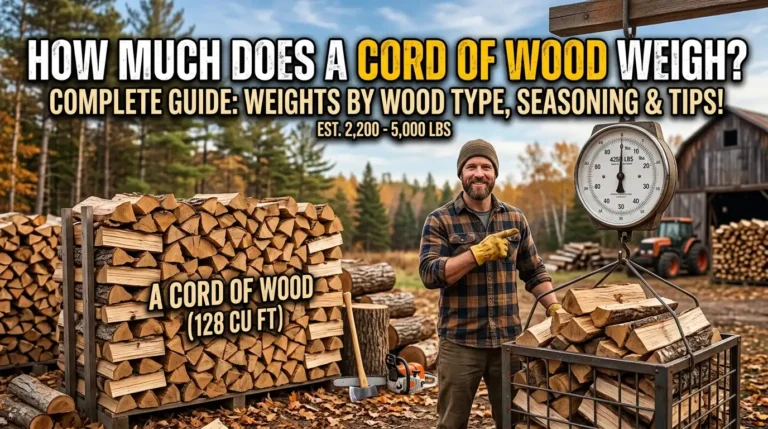
For comparison, the same charts put oak near 24–26 million BTU per cord and cherry near 20 million BTU. A cord of poplar also weighs far less, roughly 2,000–2,300 pounds against oak’s roughly 4,200 pounds. That light weight is why poplar feels so light to carry — and why it burns down so fast.
Step 1: Identify the Poplar in Your Pile
Fresh-cut poplar bark is often gray-green and fairly smooth on young trees, turning furrowed with age. The wood itself runs pale cream to light yellow-brown, with little contrast between heartwood and sapwood. Aspen bark stays pale and smooth much longer, while cottonwood bark turns thick and deeply ridged.
Why bother naming the tree? Seasoning time, smell, and heat all shift a little by species, and a seller’s “poplar” might be any of them. A photo sent to your local extension service can settle a doubtful load.
Step 2: Split Each Round Into Narrow Pieces
Poplar splits with less fight than most hardwoods, thanks to its straight grain. Set a round on a solid chopping block, aim the maul near the edge rather than dead center, and let the tool’s weight do the work. Split each piece down to about 4–6 inches across at the widest point.
Narrow splits dry faster, and quick seasoning is poplar’s whole advantage. A few rounds may feel stringy and hold together by fibers — twist the halves apart or strike the same line twice. Split while the wood is still green, since it hardens a little as it dries.
Pro tip: Poplar makes excellent kindling. Set aside your thinnest splits and bark-free slivers in a dry bucket by the stove. You will reach for them every time you start a fire, even on days you burn oak.
Step 3: Stack Poplar Where Wind and Sun Reach It
Airflow matters more than sunshine, though both help. Build your stack on pallets or a rack at least 4–6 inches off the ground, with the cut ends facing the prevailing wind. Leave a few inches of space between rows so air can move through the pile.
Cover only the top of the stack. A tarp draped down the sides traps moisture and invites mold, and poplar rots fast once it sits damp. If you are new to stacking, our how to season firewood guide walks through rack placement and covering in full.
Heads up: Poplar left on bare, damp ground can start to rot within a single wet season. Rotten wood burns poorly, smells musty, and can carry mold spores indoors. Get every row off the soil on day one.
Step 4: Test the Moisture Before You Burn a Log
Split a test piece open and press the meter pins into the fresh face, not the weathered outside. Dry firewood reads below 20% moisture. Split, stacked, and ventilated poplar usually reaches that mark in 6–12 months — faster than oak, but not instant.
Wet poplar hisses, smokes heavily, and leaves dark, sticky deposits in the flue. If your reading sits above 20%, give the pile another month and test again. Our guide to telling if firewood is seasoned lists sight, sound, and weight checks. Wait until it is dry — our green firewood guide explains why in full.
Step 5: Lay a Top-Down Fire With Poplar Kindling
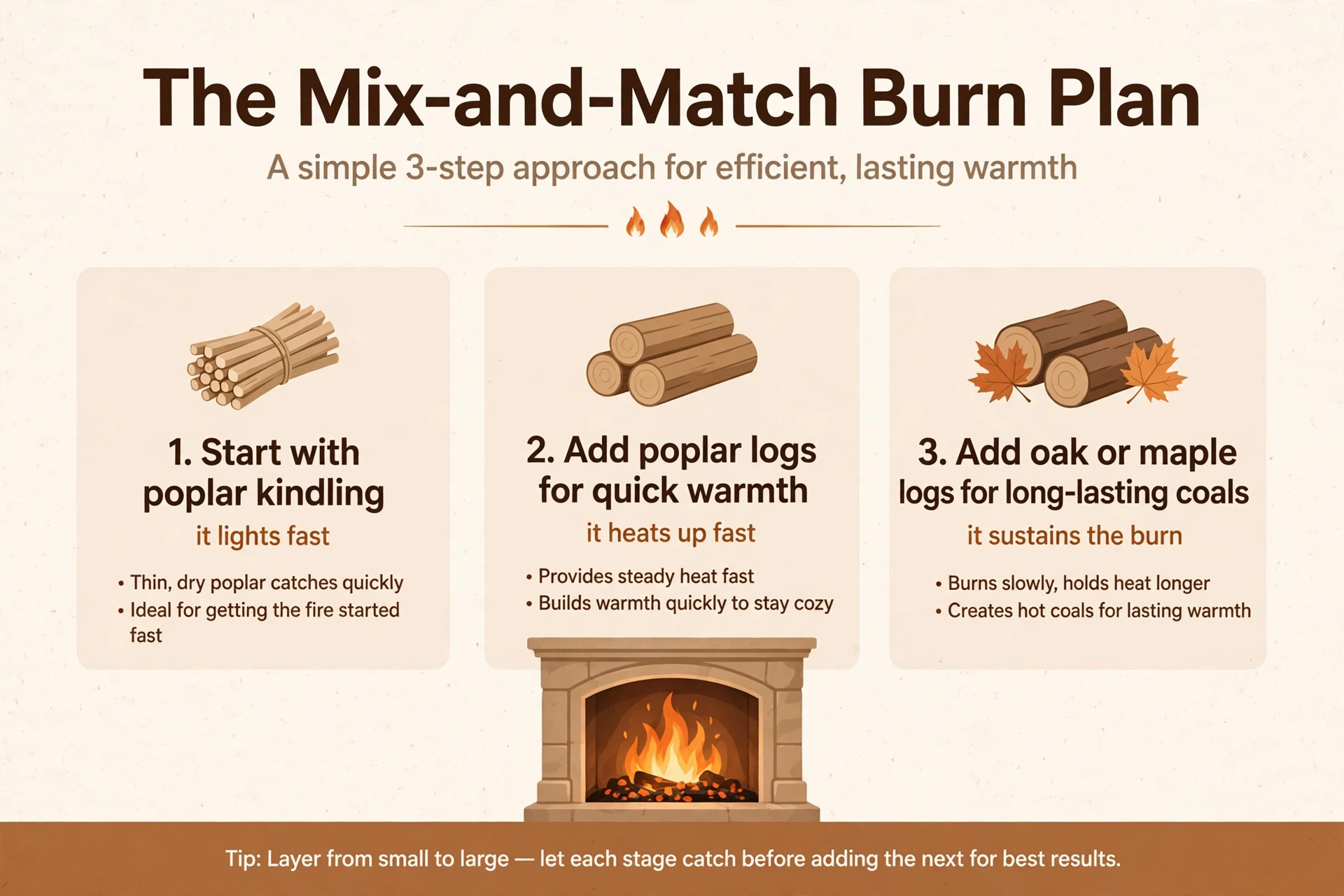
Place two or three larger logs on the grate or firebox floor with small gaps between them. Stack poplar kindling crosswise on top, then add a fire starter at the very top of the pile. Light the starter and let the flame work downward.
A top-down lay suits poplar well because the kindling catches at once and the fire builds without constant poking. Keep the air control wide open for the first 15–20 minutes until the logs are fully engaged. Choking the air early is the most common cause of a smoky, sluggish poplar fire.
Step 6: Add Poplar Logs for a Fast Warm-Up
Once the kindling bed glows, add two or three poplar splits at a time. Poplar responds quickly, so the room should feel warmer within minutes — this is the wood’s best trick, and it is why so many people keep a poplar pile for mild days.
Load smaller amounts more often rather than cramming the firebox full. A stuffed firebox starves the flames of air and sends more smoke up the flue. Watch the first few loads and learn how your stove reacts; every stove drafts a little differently.
Step 7: Mix in Dense Hardwood for Lasting Coals
When the room reaches a comfortable temperature, lay one or two oak, maple, or ash splits over the poplar bed. The dense wood catches from poplar’s lively flame and then burns slowly, laying down a coal bed that keeps giving off heat long after the poplar has burned away.
This pairing is the heart of burning poplar well. Poplar does the lighting and the quick warm-up; the dense hardwood does the long, steady work. A fire built this way needs fewer reloads, holds temperature better, and leaves coals worth banking for the next load.
Step 8: Tend the Fire and Keep the Rest of the Pile Dry
Check the fire every 30–45 minutes while poplar is the main fuel, and top it up before it burns down to ash. When you are done for the night, let the fire burn fully out rather than banking poplar alone — it will not hold coals until morning.
Between fires, keep bringing only a day or two of wood indoors. Indoor stacks dry the room’s air and can carry insects inside. Return to the outdoor pile after rain and confirm the top cover is still in place and the sides are still open to the air.
Poplar Firewood: When It Shines, and When It Falls Short
Reach for poplar when
- You need heat fast on a mild day
- You are home and can reload often
- You want kindling that lights with little fuss
- You are mixing woods and need a lively starter fuel
- Your pile is large and your budget is tight
Pick a denser wood when
- You need an overnight burn
- Deep winter cold is the norm
- Storage space is small
- You want the fewest reloads per day
- You heat mainly with wood and count every cord
Common Mistakes With Poplar Firewood
- Burning it wet. Poplar soaks up water like a sponge and gives it back as smoke and creosote. Test every new pile with a meter before it goes near the stove.
- Choking the air to stretch the burn. Turning the air down hard on a poplar fire cools the flue gases and builds creosote. Burn poplar hot, with good airflow, and let dense wood handle the long burn.
- Storing it on the ground. Damp soil rots poplar fast. Raise the stack, cover the top only, and keep the sides open.
- Expecting overnight coals. Poplar coals fade quickly. Pair it with oak, maple, or ash if you want heat that lasts past midnight.
- Burning painted or treated poplar. Old painted boards and treated lumber are not firewood. The fumes are toxic, whatever the species.
Frequently Asked Questions
Is poplar good firewood?
Poplar is fair firewood, not top-tier. It lights fast, seasons quickly, and gives quick warmth, but it burns fast and holds less heat per cord than oak or maple. It works best for mild-weather fires, kindling, and mixing with denser hardwoods.
How long does poplar firewood take to season?
Poplar usually seasons in 6–12 months when split, stacked off the ground, and open to wind. Test with a moisture meter and burn only wood reading below 20% moisture.
Can you burn poplar in a wood stove?
Yes, dry poplar burns fine in a wood stove. Keep the air supply open while it burns, reload more often than you would with oak, and mix in dense hardwood when you want a longer, steadier fire.
Does poplar cause creosote buildup?
Dry poplar burned hot with good airflow is not a high-creosote wood. Problems come from burning it wet or choking the air supply, both of which cool the flue and leave deposits. Have your chimney inspected and swept once a year no matter what you burn.
Is poplar a hardwood or a softwood?
True poplars are botanical hardwoods, even though the wood is light and soft to the touch. Yellow poplar is not a true poplar at all — it belongs to the magnolia family — but it burns in a similar, modest way.
Can you burn poplar overnight?
Poplar alone is a poor overnight fuel because it burns down fast and leaves little coal bed. For an overnight burn, build a coal bed with oak, maple, or ash, and save poplar for starting the fire and for daytime warmth.
Quick Reference Card: Poplar Firewood
You need: split poplar, a moisture meter, a maul, gloves and eye protection, a raised rack with a top cover, and dense hardwood for mixing.
- Identify the poplar in your pile.
- Split each round into narrow pieces.
- Stack poplar where wind and sun reach it.
- Test the moisture before you burn a log.
- Lay a top-down fire with poplar kindling.
- Add poplar logs for a fast warm-up.
- Mix in dense hardwood for lasting coals.
- Tend the fire and keep the rest of the pile dry.
Remember: below 20% moisture, burn hot with good airflow, and never burn treated or painted wood.
Final Word
Poplar will never out-heat oak, and it should not try. Its gifts are speed, ease, and availability: it splits with little effort, dries in a single season, and lights a fire in minutes. Treat it as a partner fuel, not a solo act, and it earns its place in the woodpile.
Start with a dry, well-stacked pile, pair it with a denser hardwood, and keep your chimney swept. If you want help picking the right mix for your stove, our best firewood to burn guide compares the top choices side by side.