Gas Fireplace Insert vs Gas Log Set: Which Should You Choose?
⚠️ Safety First: Read This Before You Shop
Gas fireplaces carry carbon monoxide (CO) risk and gas-leak risk. CO is colorless and odorless, so you cannot see it or smell it. Put a CO alarm on every level of your home and near sleeping areas, test alarms monthly, and replace them following the manufacturer guidance.
Gas-smell rule: If you smell gas (a rotten-egg odor), do not touch light switches, flames, or appliances. Leave the home right away with people and pets, and call the gas utility emergency line or 911 from outside. Never try to find or fix a leak on your own.
Never open a gas line, change a gas valve setting beyond the normal user controls in your appliance manual, bypass a safety device such as a thermocouple, oxygen-depletion sensor, or spill switch, block a vent, or disable a CO alarm. Installation, conversion, venting changes, and repairs beyond basic cleaning and normal user controls belong with a licensed gas professional. Vent-free (ventless) log sets release combustion byproducts, including CO and water vapor, into the room, and they are restricted or banned in some jurisdictions and in bedrooms. A vent-free set needs a working oxygen-depletion sensor and a CO alarm, and you need to check local codes before buying one. Pets, especially birds, react more strongly than people to CO and combustion fumes.
Gas Fireplace Insert vs Gas Log Set: Which Should You Choose? The answer depends on your fireplace, your chimney, and what you want the fire to do for your home. An insert is a sealed metal firebox that slides into your existing fireplace opening. A log set is a burner with ceramic logs that sits inside your open fireplace and burns in the open air of the firebox.
Both options give you a gas flame without hauling wood or cleaning ash. They differ in heat, venting, look, and installed cost, and those differences matter more than the flame photo in a catalog. This guide walks through each option in plain terms, compares them side by side, and gives you a checklist to use before you call a dealer or an installer.
If you already have a masonry fireplace, you have a head start. The shape, depth, and condition of that fireplace narrow your choices fast. A shallow firebox, a damaged flue, or a chimney that no longer drafts well can rule out one option or add work to the other. Sorting those facts first saves you from buying hardware that does not fit your home.
Decision Snapshot
- Pick an insert if heating the room matters most and you want a sealed unit with controlled venting.
- Pick a vented log set if you want a low-cost way to use an open fireplace that already vents well, and looks matter more than heat.
- Pause on vent-free log sets until you confirm local codes, bedroom rules, and CO alarm placement for your home.
- Call a licensed gas professional for sizing, venting, gas supply, and installation questions before you order.
What a Gas Fireplace Insert Actually Is
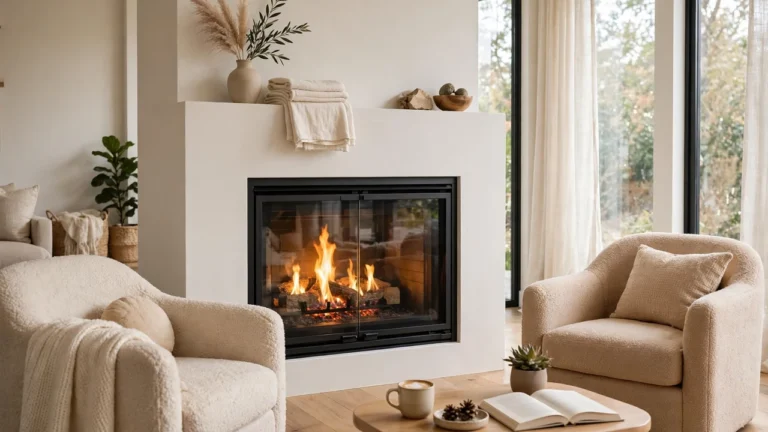
A gas fireplace insert is a self-contained firebox built to fit inside an existing masonry fireplace opening. It has its own glass front, its own burner and log or stone media, and its own venting path. The insert seals off the old open firebox, so room air does not rush up the chimney the way it does with an open fire.
Most inserts are direct-vent units. A direct-vent insert pulls combustion air from outside and sends exhaust outside through a vent liner run up the chimney. That sealed path is a big part of why inserts tend to heat a room more steadily than open flames. You can learn more about that venting style in our guide to what a direct-vent gas fireplace is.
Inserts come with a surround panel that covers the gap between the insert and the fireplace opening. The panel size matters, because an opening that is too wide, too short, or oddly shaped can limit which insert models fit. Measure the opening width, height, and depth, and note any raised hearth or mantel clearance limits, before you fall in love with a model.
An insert also changes how you use the fireplace day to day. You light it with a control or remote, set the flame height or thermostat, and watch the fire through glass. The glass stays hot during use, so homes with small children or pets need a barrier screen or gate. Cleaning is limited to the glass, the surround, and the checks listed in the manual.
What a Gas Log Set Actually Is
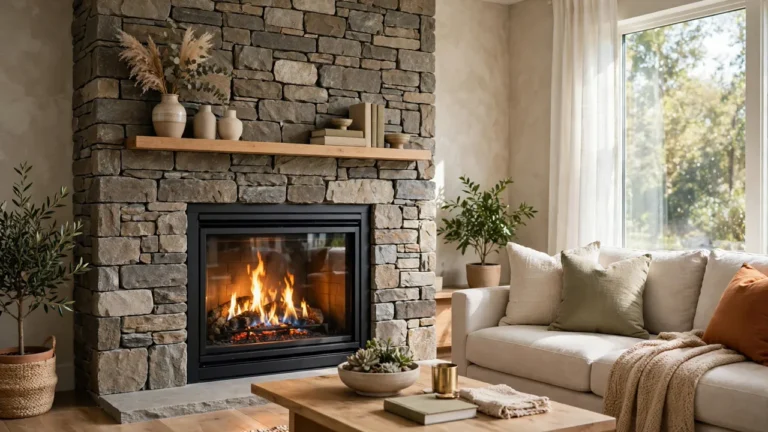
A gas log set is a burner assembly topped with ceramic logs that mimic a wood fire. It sits on the floor of your existing fireplace firebox, connects to a gas supply, and burns with the fireplace doors or screen open in most vented setups. The flame is open to the room, which gives it a loose, campfire-style look that many buyers love.
Vented log sets send most combustion byproducts up the chimney, and they need a chimney that drafts well. The damper usually stays open during use, which means some room heat escapes up the flue along with the exhaust. That trade-off is normal for an open fire, and it is one reason vented log sets are often bought for looks and mood rather than as a main heat source.
Vent-free log sets work differently. They burn without a chimney connection and release combustion byproducts into the room. That design cuts installation work, but it also raises indoor air questions that vented options avoid.
Some states, cities, and housing rules restrict or ban vent-free sets, and many manuals bar them from bedrooms. Check local codes and the manual for your model before you consider one.
Log sets cost less to buy than inserts in most cases, and the install work is smaller when the gas line and chimney are already in good shape. That lower entry cost is real, but it does not erase the other costs. You may still need a gas line extension, a chimney inspection, a damper clamp, or a new grate and screen, and a licensed gas professional should handle the gas work.
Insert vs Log Set at a Glance
The table below lines up the two options on the points buyers ask about most. Use it to spot your deal-breakers early. A fireplace with a weak chimney, for example, points away from a vented log set, while a tight budget points away from an insert.
| Feature | Gas Fireplace Insert | Gas Log Set |
|---|---|---|
| What it is | Sealed firebox with glass front that fits inside an existing fireplace opening | Burner with ceramic logs that sits inside the open firebox |
| Heat output approach | Sealed unit built to push heat into the room, often with a blower option | Open flame; vented sets lose room heat up the flue, vent-free sets keep heat in the room |
| Efficiency approach | Higher in practice, because the sealed design limits heat loss up the chimney | Lower for vented sets, since the damper stays open and room air escapes |
| Venting | Direct vent through a liner up the chimney in most models | Vented sets use the chimney; vent-free sets release byproducts into the room |
| Installation complexity | Higher: fitting, vent liner, gas hookup, surround, and clearances | Lower for vented sets with a sound chimney and an existing gas line |
| Look and flame realism | Neat, framed fire behind glass; flame pattern varies by model | Open, loose flame around ceramic logs; closest to an open wood fire look |
| Cost range approach | Typically costs more installed than a log set, because the unit and vent work cost more | Typically the lower-cost installed option when the fireplace and gas line are ready |
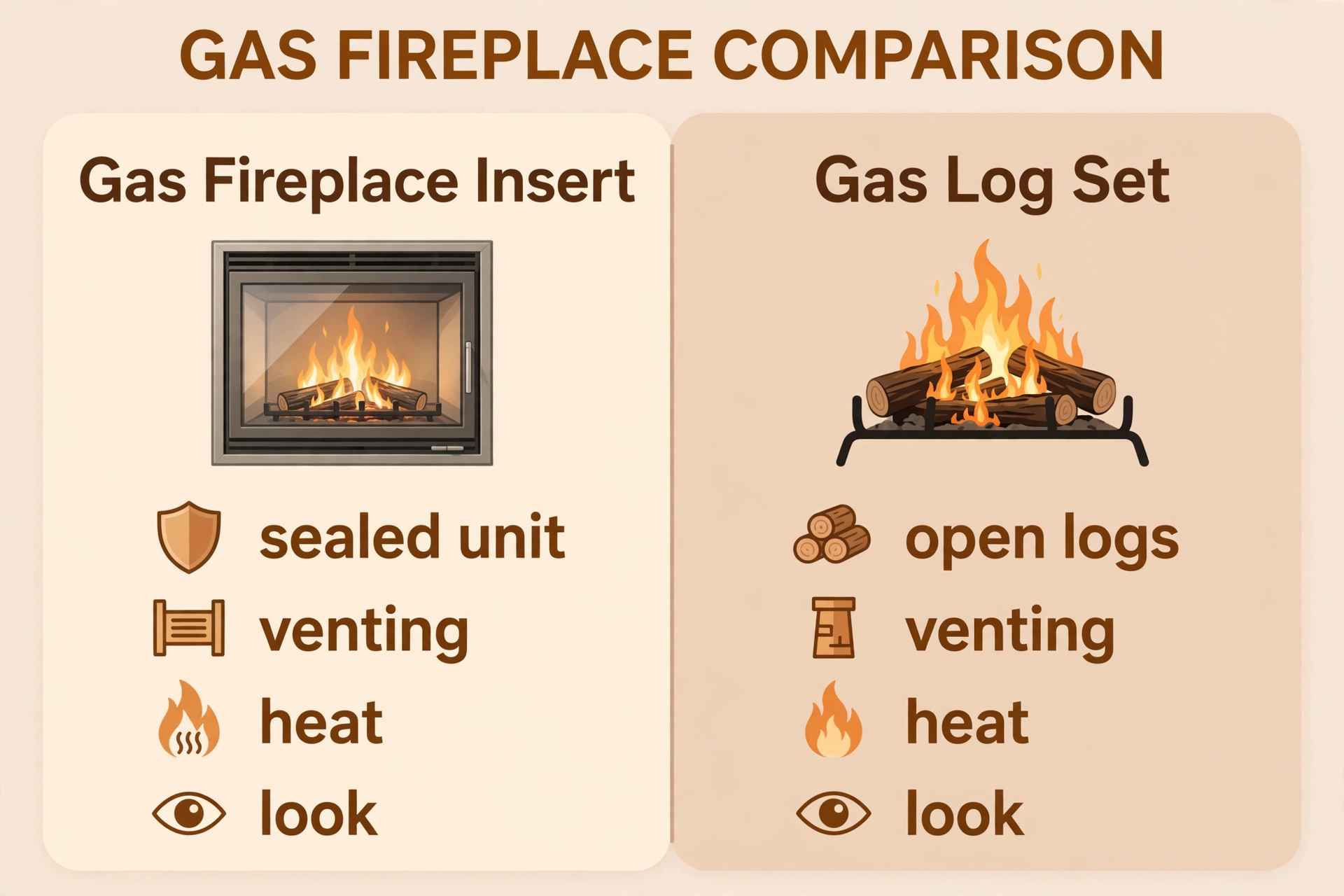
Notice what the table does not claim. It gives no BTU rating, no efficiency percentage, and no dollar price, because those figures change by model, room size, gas type, and local labor rates. A dealer quote for your exact fireplace is worth more than a national average pulled from a sales page. Ask for the model rating, the venting plan, and the full installed quote in writing before you compare offers.
For a closer look at venting choices in general, read our comparison of vented vs ventless gas fireplaces. It explains why venting shapes heat, indoor air, and code rules for both inserts and log sets. If you are starting from a wood fireplace, our guide to converting a wood fireplace to gas covers the inspection and gas-line steps that apply to either option.
Which Option Fits Your Fireplace?
Your fireplace answers half the question for you. Walk through the four checks below in order, and you will see one option pull ahead. Bring your measurements and photos to any dealer visit, because a model that looks right online may not fit your opening or clear your mantel.
1. Your existing masonry fireplace and firebox condition
An insert needs an opening that matches its size range, plus depth for the unit and its vent connection. A firebox that is cracked, crumbling, or far out of square may need repair first, and some damage can rule out an insert until a mason or chimney professional clears it. Log sets are more forgiving on shape, since the burner sits inside the open firebox, but they still need a sound firebox floor and walls.
Measure twice: opening width at the front, opening height, firebox depth, and the width at the back wall. Note the hearth height and any mantel or trim that sticks out near the opening. Those numbers decide which models even reach the shortlist, and they stop a delivery-day surprise.
2. Your chimney and venting state
A vented log set leans hard on your chimney. The flue must be clear, lined where required, and able to draft well, or smoke and combustion byproducts can spill into the room. A chimney inspection before purchase is money well spent, and it often turns up a blocked flue, a damaged liner, or a damper that will not stay open.
An insert sidesteps some of that risk with its own vent liner, but it still needs a chimney path for the liner and proper clearances. A chimney that is blocked, badly damaged, or shared with another appliance needs professional review either way. Never run a gas unit with a blocked vent, and never block a vent to stop a draft.
3. Your heating goal
Be blunt about what you want the fire to do. If you want steady warmth in a living room or family room through cold evenings, an insert is the stronger pick. Its sealed design and blower option direct more heat into the room, and a thermostat control can hold a steadier temperature.
If you want glow and mood for gatherings, with heat as a bonus, a vented log set may satisfy you at a lower installed cost. You will still feel warmth near the fire, but the open damper means the room will not hold heat the same way. A vent-free log set does keep its heat in the room, yet the indoor-air and code trade-offs above apply in full.
4. Your budget tier
Think in tiers, not in exact prices, until you have quotes for your home. A log set plus gas hookup and inspection usually lands in the lower tier when the fireplace is ready. An insert plus vent liner, surround, and install labor usually lands in the higher tier. Chimney repair, a long gas line run, or electrical work for a blower can move either option up a tier.
For a fuller picture of what install work can involve, see our guide to how much it costs to install a gas fireplace. It breaks down the parts of a job that buyers often miss, such as venting, gas supply, and finishing. Running costs matter too, so read how much it costs to run a gas fireplace before you pick a flame size.
What to Check Before You Buy
Use this list as a pre-purchase pass, and do not skip the inspection steps. A quick look now prevents a stalled install later, and it gives your installer facts instead of guesses.
- Firebox measurements: front width, height, depth, and back-wall width, plus hearth and mantel clearances.
- Chimney inspection: a professional check of the flue, liner, damper, and cap, with any needed repairs priced before you order.
- Gas supply: natural gas or propane, line size and route, and whether a new line or meter change is needed.
- CO alarms: alarms on every level and near sleeping areas, tested monthly, with a plan to replace them per manufacturer guidance.
- Local codes: vent-free rules, bedroom rules, permit needs, and any homeowner-association limits that apply to your address.
- Manual limits: the exact clearance, venting, and fuel rules for the model you are considering, read before purchase.
- Full written quote: unit, venting, gas work, labor, and finishing, so two offers can be compared line by line.
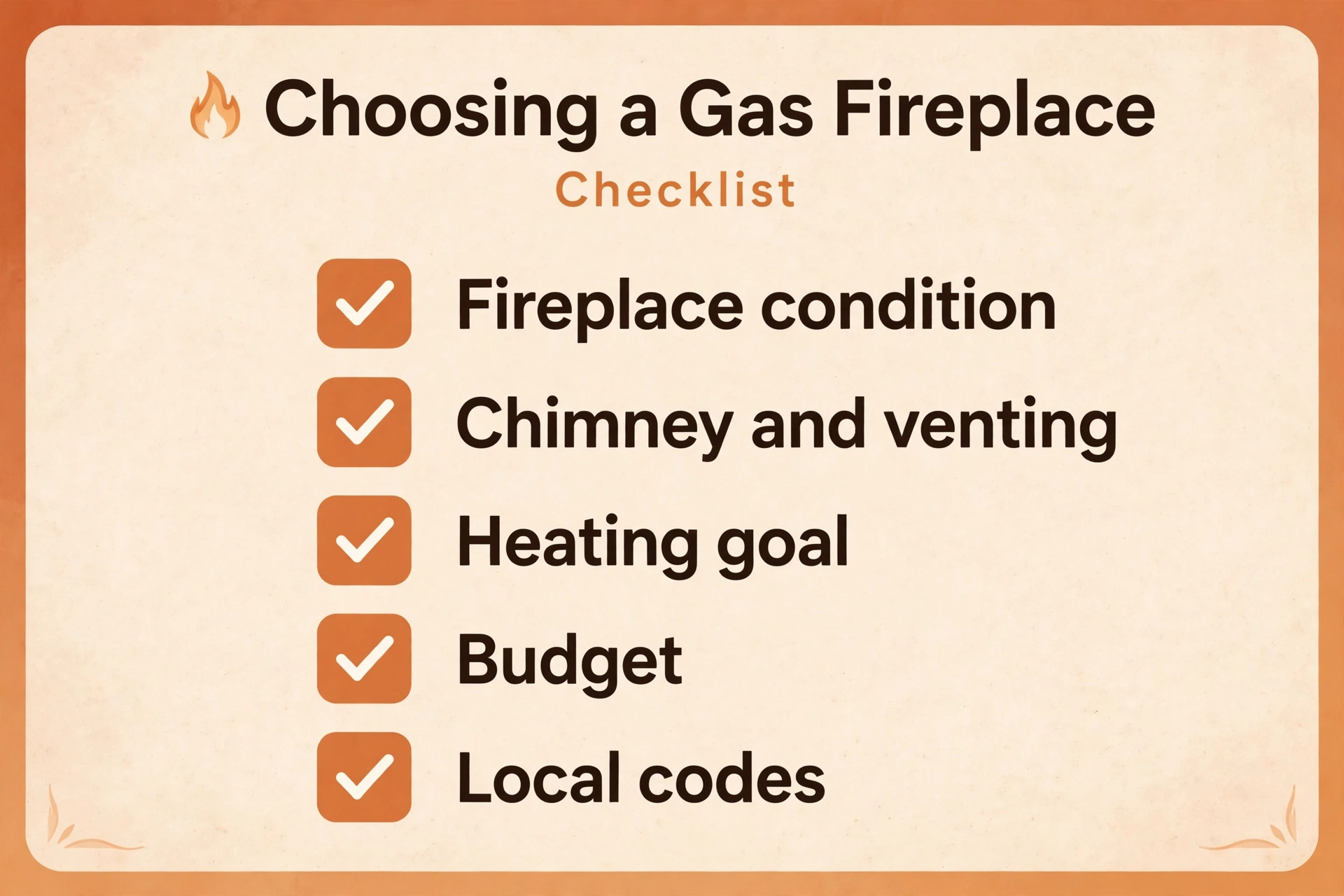
One more check deserves its own line: ask who does the gas work. Gas supply, hookup, leak testing, and venting changes belong with a licensed gas professional, even when the log set or insert looks like a drop-in unit. A clean install protects your warranty, your home insurance position, and the people and pets in the house. If a seller suggests skipping permits, inspections, or leak testing, walk away from that seller.
Indoor air safety is part of the buying decision, not an afterthought. Our guide to whether gas fireplaces are safe to use indoors covers CO alarms, ventilation, and warning signs in more detail. Read it before you run any gas fire for long stretches, and keep the manual for your unit where you can find it.
Frequently Asked Questions
Can I put a gas log set in any wood fireplace?
No. A vented log set needs a sound firebox and a chimney that drafts well, and the firebox must be large enough for the burner and logs with proper clearances. A chimney inspection and the model manual confirm whether your fireplace qualifies.
Does a gas insert heat a room better than a log set?
In most homes, yes. A sealed insert limits heat loss up the chimney and often offers a blower, while a vented log set loses room heat through the open damper. Room size, insulation, and the model rating still shape the result.
Do I need my chimney for a gas insert or log set?
A vented log set needs a working chimney. A direct-vent insert runs a vent liner up the chimney path. A vent-free log set needs no chimney, but it releases combustion byproducts into the room and faces code limits in some places.
Are ventless gas log sets safe?
Vent-free sets carry added indoor-air risk because combustion byproducts, including CO and water vapor, stay in the room. They need a working oxygen-depletion sensor, CO alarms, and compliance with local codes, and they are restricted or banned in some jurisdictions and bedrooms. They should never be presented as risk-free.
Can I install a gas insert or log set myself?
No, not the gas and venting work. Gas hookup, leak testing, conversion, and venting changes belong with a licensed gas professional. Homeowners should handle only basic cleaning and the normal user controls listed in the appliance manual.
Quick Reference Card
Insert vs Log Set: Quick Reference
- Best for heat: Gas fireplace insert (sealed, direct vent, blower option).
- Best for open-flame look at lower installed cost: Vented gas log set in a sound, well-drafting fireplace.
- Needs the most care: Vent-free log set (code check, CO alarms, oxygen-depletion sensor).
- Check first: Firebox size, chimney condition, gas supply, CO alarms, local codes.
- Gas smell: Leave at once with people and pets, call the gas utility or 911 from outside.
A Calm Way to Decide
Start with your fireplace, not with a catalog photo. If your chimney drafts well and you want glow at a lower installed cost, a vented log set earns a serious look. If you want steady room heat and a sealed, controlled fire, an insert is the stronger long-term pick. If vent-free is on your list, let local codes and CO alarm placement decide before price does.
Either way, get the inspection, get the full written quote, and let a licensed gas professional handle the gas and venting work. A fire that fits your home, vents the right way, and runs with working CO alarms is a fire you can relax beside. That peace of mind is the real upgrade, and it starts with the checks in this guide.