Are Gas Fireplaces Safe to Use Indoors? What Every Homeowner Should Know
Are gas fireplaces safe to use indoors? For most homes, the answer is yes — when the fireplace is the right type for the room, installed by a licensed professional, vented correctly, and paired with working carbon monoxide (CO) alarms. Gas fireplaces are built to burn fuel inside a sealed or vented firebox, and modern safety devices shut the unit down if a flame goes out or oxygen levels drop. Problems tend to come from the exceptions: a vent blocked by debris, a vent-free unit used in a room where it does not belong, missing CO alarms, or a fireplace that has not been serviced in years.
This guide walks through how gas fireplaces work, the real risks to watch for, and the checks that keep your household safe. You will learn the difference between vented and vent-free models, what CO alarms you need and where they go, and the warning signs that mean you should stop using the fireplace and call a professional. No special tools or background knowledge are needed — only a few minutes and an honest look at your setup.
⚠️ Safety First — Read Before You Light a Fire
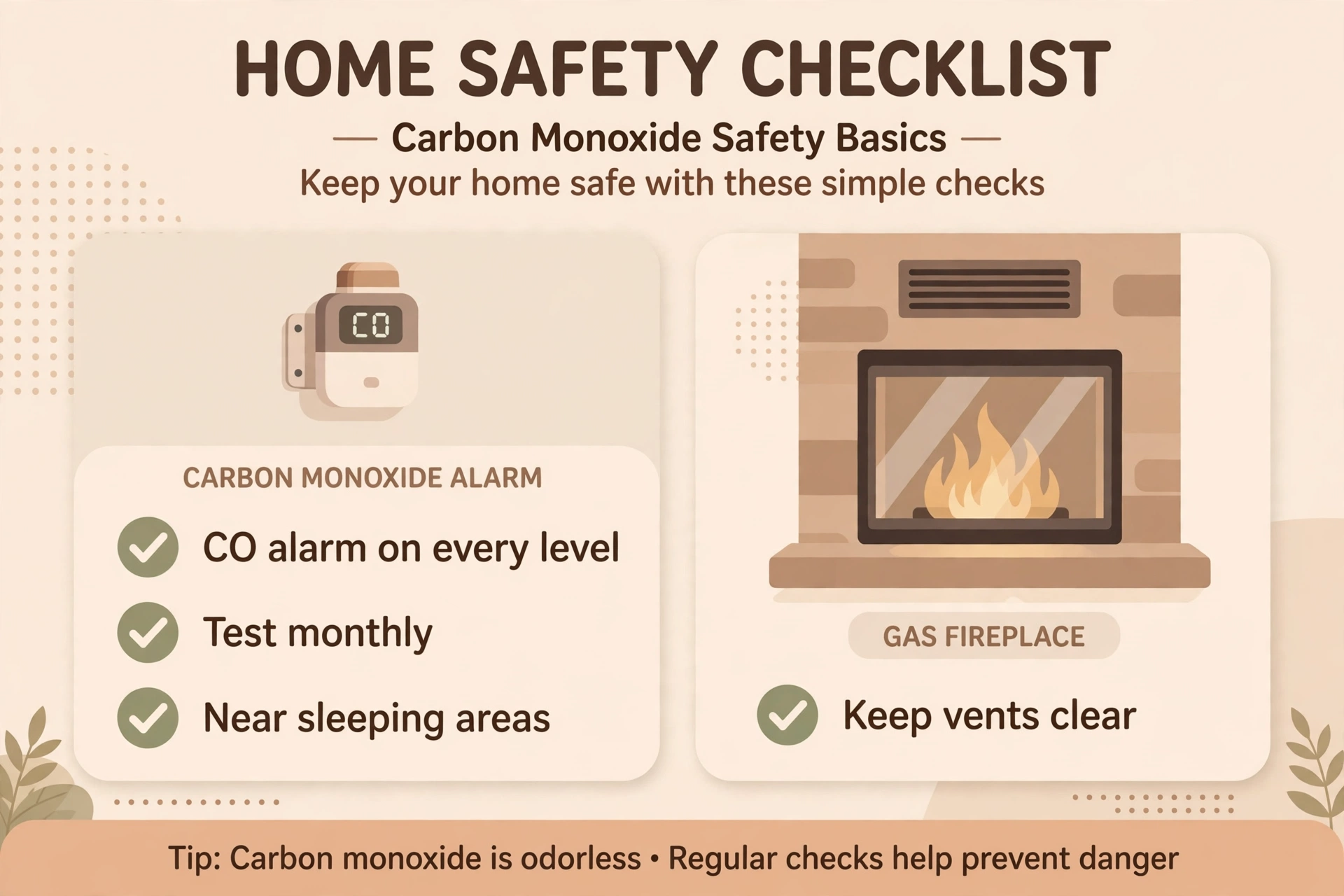
Gas fireplaces burn fuel that can produce carbon monoxide (CO), a colorless, odorless gas you cannot see or smell. Install CO alarms on every level of your home and near sleeping areas, test them monthly, and replace them as the manufacturer directs. Never run a gas fireplace with a blocked vent, and never ignore a CO alarm.
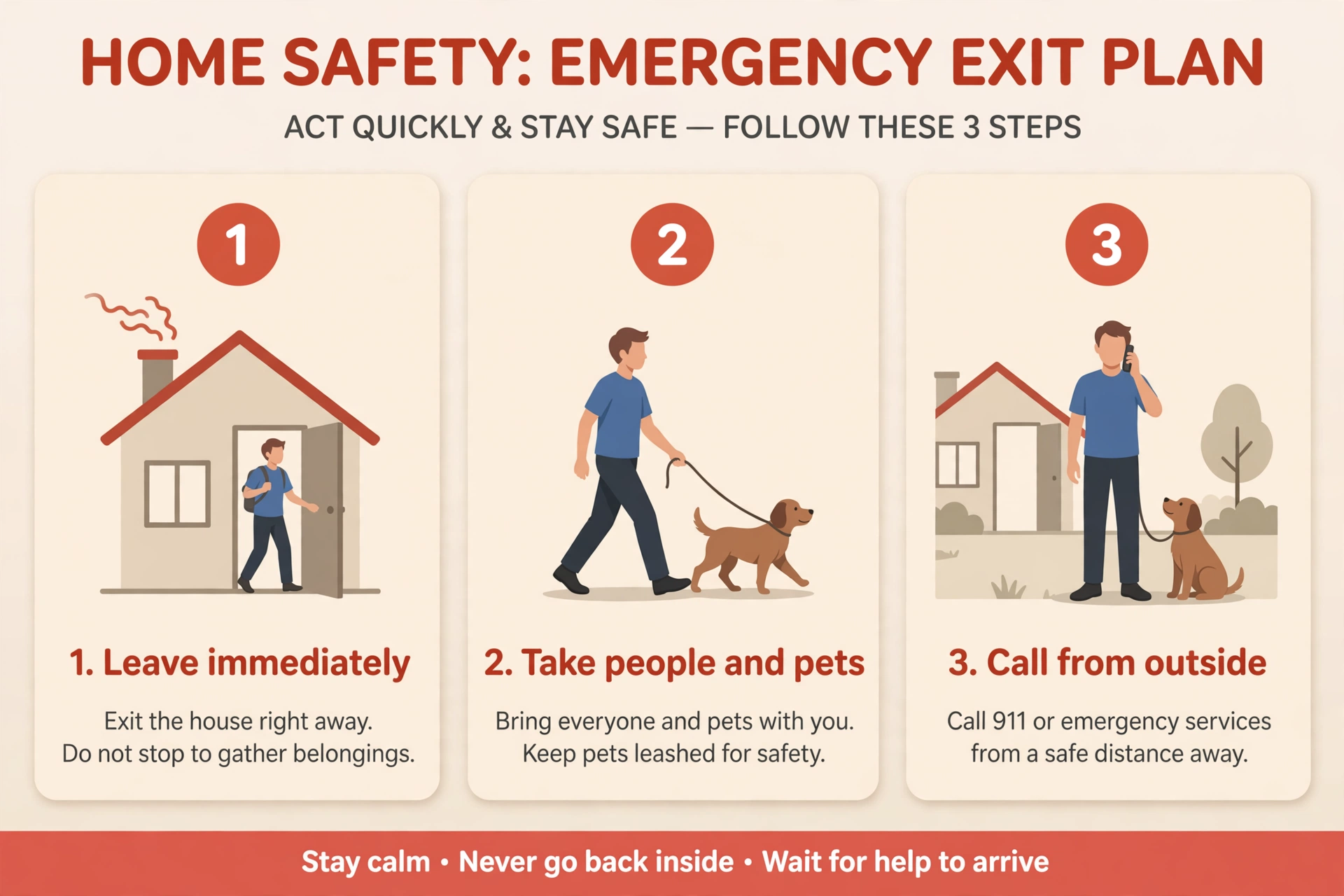
If you smell gas (a rotten-egg odor): do not touch light switches, flames, or appliances. Leave your home at once with everyone in it, including pets. Call your gas utility’s emergency line or 911 from outside. Do not try to find or fix a leak yourself, and do not relight anything after a strong gas smell — that work is for the gas utility or a licensed gas fitter only.
⏱ Time: About 15 minutes to read, plus 10 minutes for the safety checks | Difficulty: Beginner — no tools required | Best for: Homeowners with a gas fireplace, or anyone thinking about adding one
Check What You Need Before the Heating Season
You do not need a toolbox for the safety basics. Gather these items and run through them once a year, ideally before the first cold snap.
- CO alarms — one on every level of the home and near each sleeping area, with fresh batteries or a sealed long-life battery
- Your appliance manual — it lists the user controls you may use and the service intervals the maker expects
- A clear vent path — check the outside vent cap for nests, leaves, snow, or ice before the season starts
- The number for your gas utility’s emergency line — saved in your phone, not only on a sticker near the meter
- A licensed gas professional’s contact — for annual service, repairs, and anything beyond basic cleaning
Learn How Your Gas Fireplace Burns Fuel
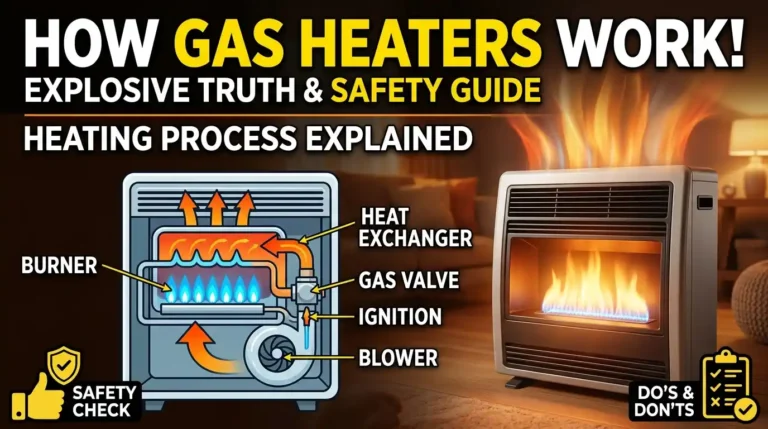
A gas fireplace burns natural gas or propane to make heat and flame. In a vented model, combustion gases travel up a flue or a direct-vent pipe to the outdoors. In a vent-free (ventless) model, there is no flue, so combustion byproducts — including CO and water vapor — go into the room. That difference drives most of the safety rules in this article.
Most modern units also carry built-in safety devices. A thermocouple shuts off the gas if the pilot flame goes out. An oxygen-depletion sensor (ODS) on vent-free units shuts the burner down if oxygen in the room drops. These devices add a layer of protection, but they do not replace CO alarms, proper venting, or yearly service. If a safety device trips more than once, stop using the fireplace and call a professional — do not bypass or disable it.
If you are still deciding between designs, read about the differences between vented and ventless gas fireplaces and how a direct-vent gas fireplace works before you buy.
Understand the Main Risks
Carbon monoxide. CO is colorless and odorless, so you cannot rely on your senses to detect it. It builds up when fuel burns without enough air, when a vent is blocked, or when a vent-free unit runs too long in a small, sealed room. Guidance from agencies such as the CDC and the U.S. Consumer Product Safety Commission centers on the same point: working CO alarms and proper venting are the main defenses. Symptoms of CO exposure — headache, dizziness, nausea, confusion — can be mistaken for flu, which is why alarms matter more than guesswork.
Gas leaks. Natural gas itself is odorless, so utilities add a rotten-egg smell (mercaptan) to make leaks detectable. A faint smell near the unit on first lighting can come from dust burning off, but a clear or lasting gas smell is an emergency. Follow the gas-smell rule in the safety box at the top of this article: leave, then call from outside.
Heat and surfaces. Glass fronts on gas fireplaces get hot enough to burn skin on contact, and they stay hot after the flames go out. Keep children, pets, and flammable items away from the glass, and consider a safety screen if your model supports one. This matters in homes with toddlers and curious pets.
Pets deserve a note of their own. Pets — especially birds — are more sensitive to CO and combustion fumes than people are. A bird cage should never sit in the same small room as a running vent-free fireplace, and a CO alarm protects the whole household, animals included.
Follow the Vent-Free Rules Carefully
Vent-free gas fireplaces are legal in many places, but they are not risk-free, and they are not right for every room. Because their byproducts enter the room, they rely on the room’s air volume and on a working oxygen-depletion sensor. Some states and local codes restrict or ban vent-free appliances, and many makers and codes bar them from bedrooms and bathrooms.
Before buying or running a vent-free unit, check your local code and the appliance manual, confirm the room meets the size the maker requires, and make sure a working CO alarm is in the room. Run the unit for the periods the manual allows, keep a window or air path as the manual directs, and never block the unit’s air openings. If your area restricts vent-free appliances, a vented or direct-vent model is the safer pick.
Run Your Annual Safety Checks
A once-a-year routine catches most problems before the heating season. Work through these steps in order.
- Test every CO alarm. Press the test button monthly, and replace batteries or the whole alarm on the maker’s schedule.
- Look at the outside vent. Clear nests, leaves, snow, and ice from the cap, and check for damage or rust.
- Watch the flame. A healthy gas flame is mostly blue with small yellow tips. A lazy, mostly yellow flame, soot on the glass, or a pilot that keeps going out are all reasons to call a professional.
- Clean only what the manual allows. Wipe the glass and clear dust from the firebox opening as the manual describes. Leave burners, valves, and venting to a licensed gas professional.
- Book a yearly service visit. A licensed technician checks the burner, ignition, safety devices, and venting — the parts homeowners should not open.
- Review the room. Keep furniture, curtains, and clutter clear of the fireplace and its air openings, and keep the manual where you can find it.
Know When to Stop Using the Fireplace
Stop using the fireplace and call a licensed gas professional if you notice soot building up on the glass or walls, a pilot light that will not stay lit, a yellow or flickering flame that looks different from normal, a strange smell that lingers after lighting, or a CO alarm that sounds. If a CO alarm sounds, leave the home and call emergency services or your gas utility from outside — do not silence the alarm and go back inside to investigate.
Avoid These Common Mistakes
Skipping CO alarms. Smoke alarms do not detect carbon monoxide. A home with a gas fireplace needs CO alarms too, on every level and near sleeping areas.
Running a vent-free unit for hours in a closed room. Vent-free models add moisture and combustion byproducts to the air. Follow the manual’s run-time and room-size limits, and give the room air as directed.
Covering vents or air openings. Blocking a vent to stop a draft can trap combustion gases indoors. Keep vents and air paths clear all season.
Doing your own gas work. Opening a gas line, changing a valve, converting fuel types, or bypassing a safety device is work for a licensed gas professional. A mistake can cause a leak or an explosion, and it can void your warranty and insurance.
Leaving the fireplace on all night without checking the manual. Some makers allow it, others do not. If you want overnight heat, check the manual first — and read our guide on whether it is safe to leave a gas fireplace on for a long gathering for the same caution applied to extended use.
Compare Gas With Electric Before You Decide
For some households, an electric model removes the gas questions entirely — no combustion, no venting, and no CO risk. That trade comes with its own limits, including heat output and the look of the flame. If you are weighing the two, our comparison of gas vs. electric fireplaces lays out the running costs, heat, and installation differences side by side.
Power outages are another factor worth knowing: many gas models keep working when the power is out, though some need electricity for ignition or fans. See whether a gas fireplace can run without electricity for the details by ignition type.
Frequently Asked Questions
Are gas fireplaces safe to use indoors?
Yes, when the unit is installed by a licensed professional, vented as the maker directs, serviced yearly, and paired with working CO alarms on every level and near sleeping areas. Vent-free models need extra care because their combustion byproducts enter the room, and some areas restrict or ban them.
Do I need a carbon monoxide detector with a gas fireplace?
Yes. Every home with a gas fireplace should have CO alarms on every level and near sleeping areas. Test them monthly and replace them as the maker directs. A CO alarm is the only reliable warning, because CO is colorless and odorless.
Can I leave a gas fireplace on overnight?
Only if your appliance manual allows it. Some makers approve extended use, others do not. Check the manual, keep CO alarms working, and never leave a fireplace running with a blocked vent or a tripped safety device.
What should I do if I smell gas near my fireplace?
Do not touch switches, flames, or appliances. Leave your home at once with everyone in it, including pets, and call your gas utility’s emergency line or 911 from outside. Do not try to find or fix the leak, and do not relight anything after a strong gas smell.
Are ventless gas fireplaces safe?
Vent-free fireplaces can be used safely only where local codes allow them, in a room that meets the maker’s size rules, with a working oxygen-depletion sensor and CO alarm. They release combustion byproducts, including CO and water vapor, into the room, so they are restricted or banned in some jurisdictions and bedrooms. Check your local code before buying one.
How often should a gas fireplace be serviced?
Once a year, by a licensed gas professional. The visit covers the burner, ignition, safety devices, and venting — parts that homeowners should not open. Between visits, test CO alarms monthly and keep vents clear.
Quick Reference Card
- Safe indoors when: professionally installed, correctly vented, serviced yearly, CO alarms working
- CO alarms: every level + near sleeping areas, test monthly, replace per maker
- Smell gas? Leave at once (people + pets), call utility or 911 from outside
- Vent-free: byproducts enter the room; check local codes; ODS + CO alarm required
- Service: once a year by a licensed gas professional
- Never do: open gas lines, bypass safety devices, block vents, disable CO alarms
Final Thoughts on Indoor Gas Fireplace Safety
A gas fireplace can be a safe, steady source of warmth indoors — the record of millions of installed units shows that the design works when the rules around it are followed. The rules are not hard: a licensed installer, a clear vent, a working CO alarm on every level, a yearly service visit, and a firm line against do-it-yourself gas work. Treat the gas-smell rule as non-negotiable, and treat vent-free models with the extra caution they call for.
If anything in this guide does not match your unit — a flame that looks off, a pilot that will not stay lit, or an alarm that sounds — stop using the fireplace and call a licensed gas professional. A short service visit costs far less than the risk of guessing.