What Is Propane Used for in a House? Every Common Use, Cost, and Safety Tip Explained
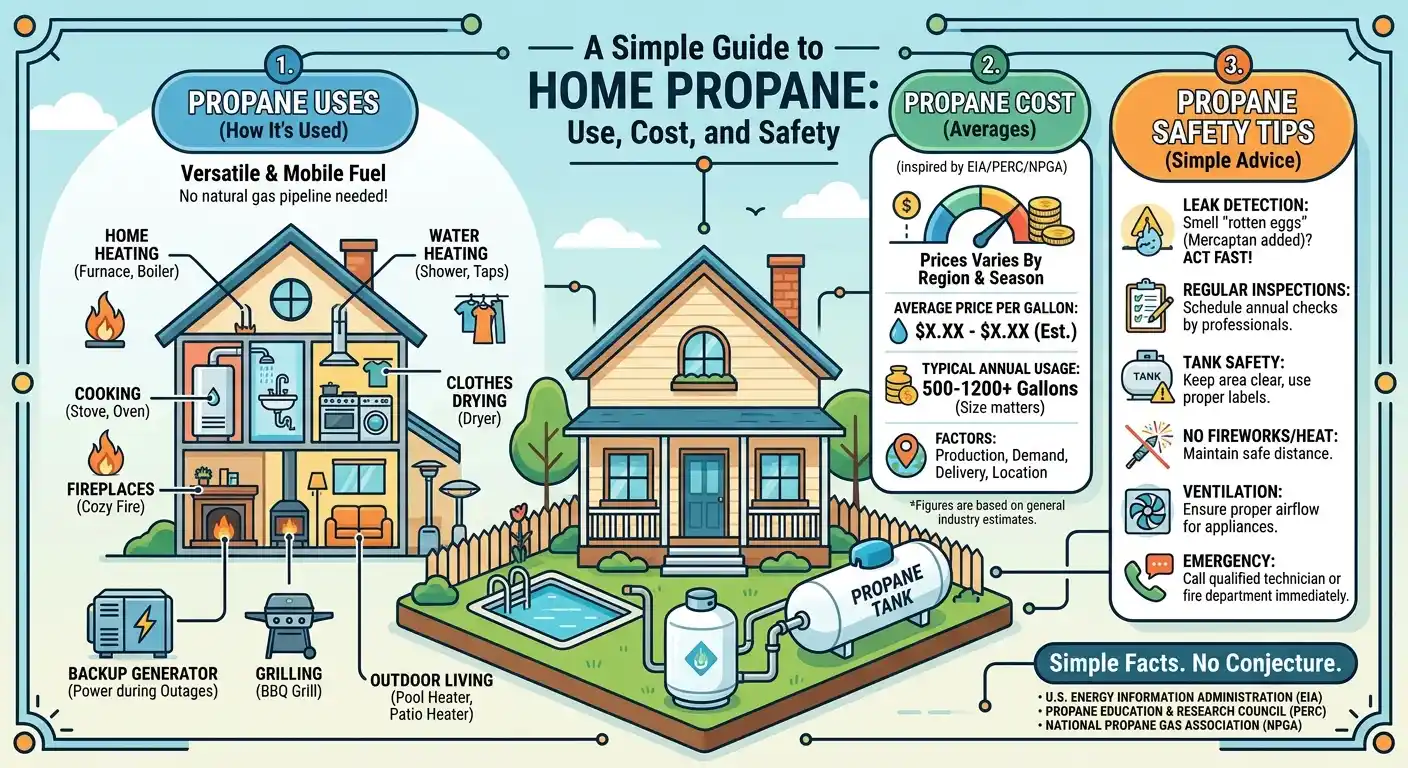
You have seen a propane tank, had you ever encountered a big white or gray tank in the yard of someone. Approximately 48 million American households burn propane in some manner, and when you are new to it, the entire system can be a puzzle. And what is it powering? Is it safe? What does it cost?
This guide explains all that in simple terms, using actual figures of the U.S. Energy Information Administration (EIA), the Propane Education and Research Council (PERC) and the National Propane Gas Association (NPGA). No hooey, no conjecture.
Quick answer: Propane is used in a house for heating, water heating, cooking, clothes drying, fireplaces, backup generators, grilling, pool heating, and other outdoor living features. It is a versatile, mobile fuel that can be used in any location, even in homes that do not have a natural gas pipeline.
What Is Propane, Exactly?
Propane (C3H8) is a natural gas byproduct as well as a byproduct of crude oil refining. It is kept in a pressurized liquid in a tank and it becomes a gas the instant it is released hence the common name liquefied petroleum gas, or LPG.
Propane is also colorless and odorless. The suppliers include a chemical that smells of rotten eggs or sulfur, known as ethyl mercaptan, so that people can notice a leak. The smell is a safety measure, not a defect.
Propane does not depend on a pipeline as opposed to natural gas. It is trucked in and kept in a tank on your lawn, hence the reason why it is the fuel of choice in homes in rural or suburban neighborhoods not served by natural gas lines.
What Is Propane Used for in a House?
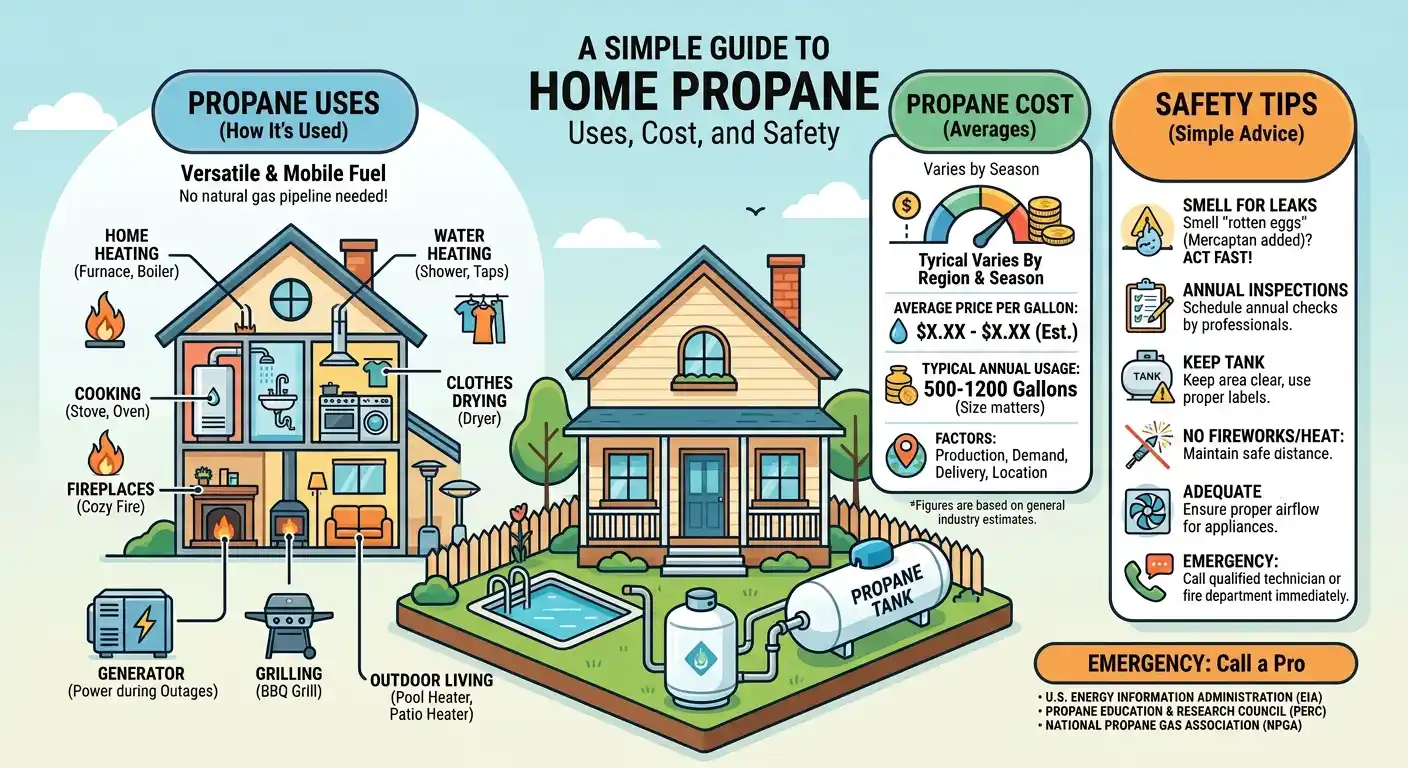
Propane can be used to run just about anything that would normally run on electricity or natural gas in a normal house. The most typical applications are:
- Central heating (furnaces and boilers)
- Water heating
- Cooking (ranges, ovens, cooktops)
- Clothes drying
- Fire places and fire pits.
- Backup generators
- Outdoor grills
- Spa and pool heaters.
- Landscape lighting and landscape furnishings.
Other households only use propane to power a single appliance such as a grill or a fireplace. Some are fully propane, also known as whole-home propane, and use it to heat, provide hot water, cook, and provide back-up power simultaneously.
9 Common Uses of Propane in a House
1. Home Heating
It is the largest job of propane in the majority of households. The entire house is heated by a propane furnace or boiler, and the high heat production of propane implies that it will warm a home quicker than an electric heat pump, particularly in cold climates.
The EIA estimates that approximately 6.6 million U.S. households relied on propane as their main space heating fuel in 2024, with the Midwest comprising about a third of that figure. That area has an estimated 83% of residential propane consumption used in heating.
The current high-efficiency propane furnaces have an AFU (Annual Fuel Utilization Efficiency) of 95 to 98, equal or slightly higher than similar natural gas furnaces.
Expert tip: When you are in an area where the winter temperatures are typically in the single digits, propane heating will last longer than an all-electric heat pump, which may not be as efficient in extreme cold.
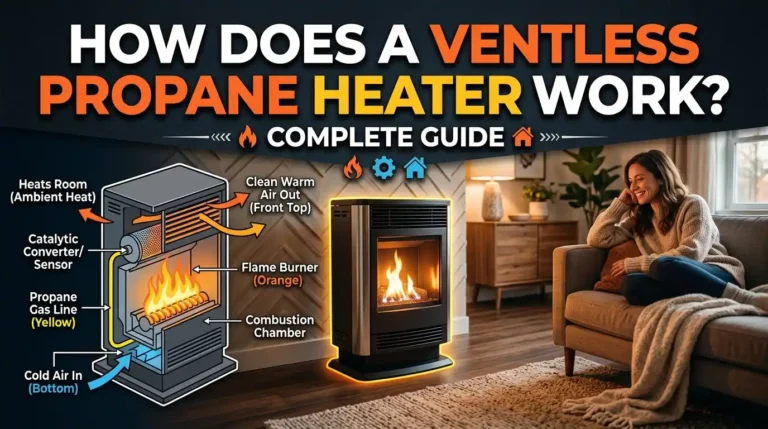
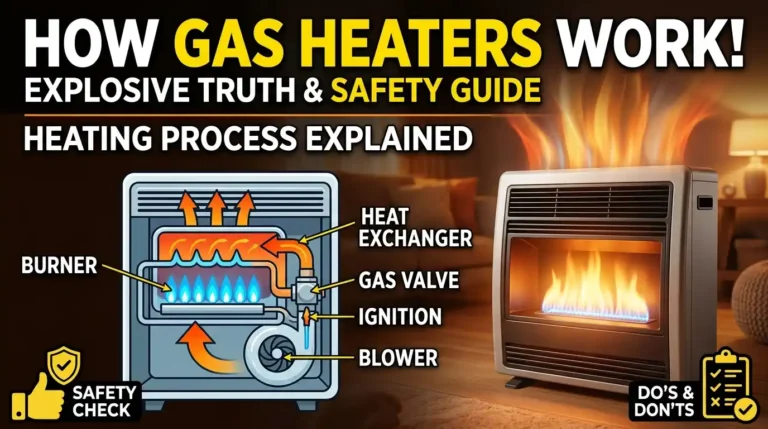
Beyond a central furnace, many homes also use standalone propane space heaters for a specific room or an addition that isn’t on the main heating zone. If you’re considering one, it’s worth understanding how a gas heater works and which gas heaters are actually safe to use indoors before buying one.
2. Water Heating
Both tank and tankless propane water heaters heat quicker than most electric types and warm up more quickly after heavy load, such as back-to-back showers. Tankless propane units do not heat a tank of water, but rather, they only heat water when you need it, which means that you are not paying to have a tank of water kept hot 24/7.
According to NPGA data of the Residential Energy Consumption Survey, Vermont has the largest proportion of propane water heating in the nation with 20 percent of households in the state using it as a primary water heating fuel.
3. Cooking
Home cooks have a reason to be loyal to gas stoves: the flame provides you with immediate, visible control of temperature. You can tell precisely the amount of heat you are putting on and can change it instantly, which is more difficult with an electric coil or even a glass-top burner.
Propane ranges and ovens evenly heat, and do not produce the cool down after you turn it off lag that electric coils do.
4. Clothes Drying
Propane dryers are warmed quicker than electric dryers and complete a load in less time. They are also less harsh on fabric since they do not use an electric heating element, and this can lead to reduced shrinkage and wrinkles. Propane dryers are generally less expensive to operate than electric over a period of one year of normal operation.
5. Fireplaces and Fire Pits
A propane fireplace provides you with the real warmth and feel without the hassle of carrying and piling wood and cleaning the ashes. Most models have a switch, remote or smartphone app to turn on and you can also adjust the flame height to produce more or less heat.
Propane fire pits that are used outside operate in a similar manner and add to the length of time you can use a patio or deck in the colder seasons.
6. Backup Generators
A standby generator that is powered by propane can keep your house going during a power outage, including the refrigerator and sump pump, the furnace, and medical equipment. A propane standby unit is hard-wired into your home and will automatically switch on in a couple of seconds in the event of an outage, unlike a portable gas generator.
This is more than people think: according to the NPGA survey data, 60 percent of households in New Jersey claimed to have been affected by a power outage longer than 24 hours in one year. A backup generator makes that an inconvenience that is not an emergency.
7. Outdoor Grilling
Propane grills boil in a very short time, maintain a consistent temperature, and do not produce the charcoal residue and ash that a charcoal grill would. A lot of homeowners have a special gas line that leads directly out of the propane supply of their homes to the grill, so that they do not run out of gas in the middle of a cookout.
8. Pool and Spa Heating
This is because a propane pool heater can heat the water much quicker than an electric heat pump particularly in colder weather conditions, which allows you to add weeks to the beginning and end of the swimming season. Hot tubs and spas are no exception.
9. Outdoor Living: Patio Heaters, Lighting, and Lawn Equipment
In addition to the big-ticket, propane also manifests itself in smaller, more everyday ways around a house: patio heaters on chilly nights, outside lanterns and pathway lights, even propane-powered mowers and trimmers, which some homeowners prefer to use instead of gasoline-powered tools due to their cleaner combustion.
Fast Facts: Propane in a Nutshell.
- Chemical formula: C3H8
- Energy content: approximately 91,500 BTUs per gallon.
- Storage: under pressure as a liquid, vaporizes on release.
- Smell: added artificially (rotten egg smell) to detect leaks.
- Households in the U.S. that utilize propane: approximately 48 million (combined uses)
How Much Propane Does a House Actually Use?
This is largely determined by your climate, the size of your home and the appliances that use propane. Homes in colder climates that heat their whole house with propane tend to consume between 500 and 1,200 gallons annually as an approximation. A house that cooks on propane and has a fireplace may burn a fraction of that.
This is a rough estimate of the flow of propane in a house that utilizes it in various ways:
- Space heating: Largest portion, particularly in cold climates.
- Water heating: Second highest
- Cooking, drying, and other appliances: Smaller, but adds up over a year
The propane supplier can provide you with an accurate history of usage and assist you in selecting the appropriate tank size, 100, 250, 500 or 1,000 gallons of propane to use in the home, depending on what you are operating.
Propane vs. Natural Gas vs. Electricity: Cost and Efficiency Compared
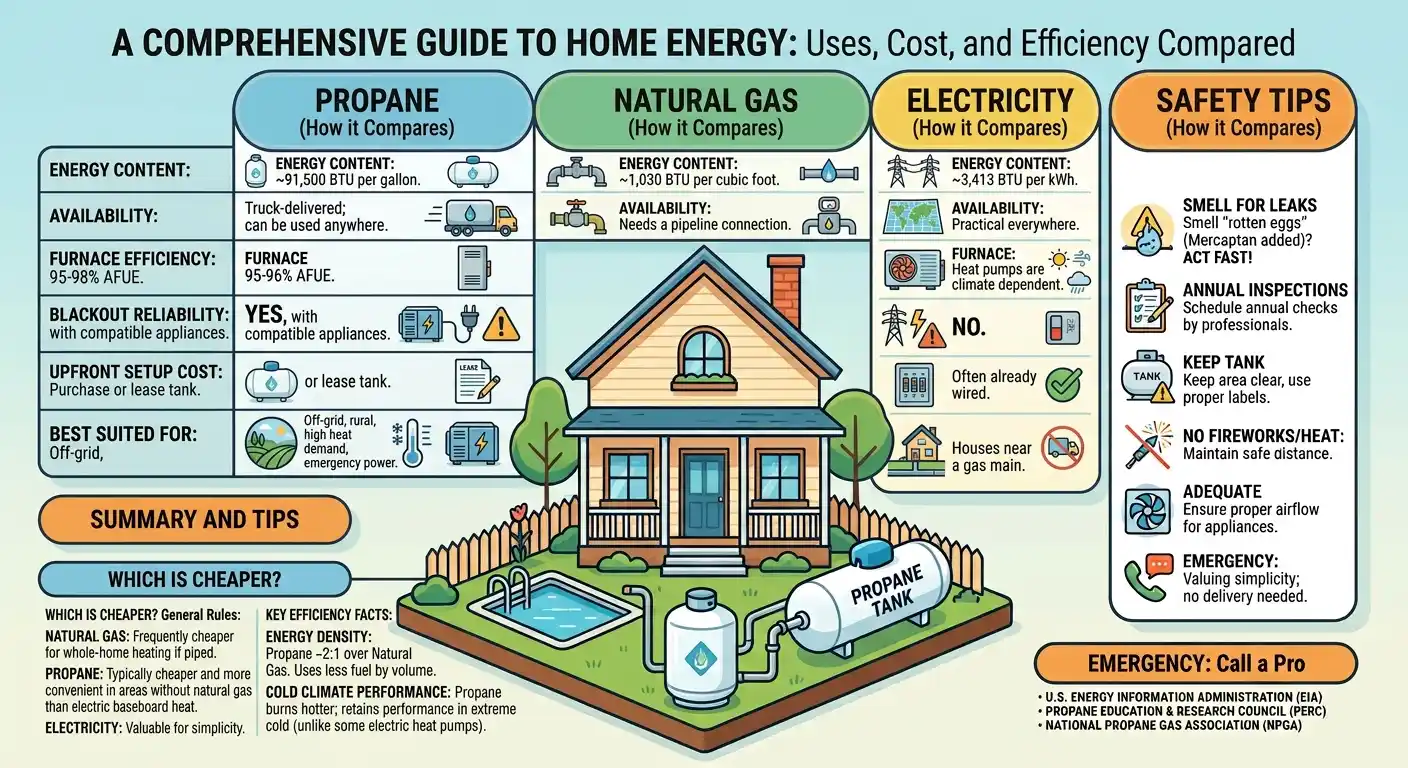
It is the comparison that most homeowners really desire to see. The three compare as follows.
Energy content Propane: ~91,500 BTU per gallon. Natural gas: ~1,030 BTU per cubic foot. Electricity: ~3,413 BTU per kWh.
Availability Propane: truck-delivered and can be used anywhere. Natural gas: needs a pipeline connection. Electricity: electricity is available practically everywhere.
Typical furnace efficiency (AFUE)
Propane: 95-98%. Natural gas: 92-96%. Electricity: heat pumps are climate dependent.
Works in case of power blackout.
Propane: yes, using a compatible appliance. Natural gas: only if the appliance doesn’t need electricity to ignite. Electricity: no.
Upfront setup cost
Propane: will need to purchase or lease tank. Natural gas: must be connected to a pipeline, where possible. Electricity: most often already wired.
Best suited for
Propane: off-grid or rural, emergency power, high heat demand. Natural gas: houses that are already close to a gas main. Electricity: houses that value simplicity, no delivery required.
The simplest way to consider it: Propane has a higher energy density per unit than natural gas, which is about two to one, and therefore a propane appliance consumes less fuel by volume to generate the same amount of heat. However, natural gas can be cheaper per BTU where there is a pipeline in place, primarily because you are not paying to have it delivered, to lease a tank, or to store it on-site.
Which Is Cheaper for Your House?
No one-size-fits-all solution, as the cost of propane and natural gas varies depending on where you live, who your supplier is, and the prevailing market conditions. As a general rule:
- When natural gas is already piped to your street, it is frequently the less expensive choice to whole-home heating.
- In areas where there is no natural gas connection, propane is typically cheaper and more convenient than long runs of electric baseboard heat, or pipeline installation.
- Propane is likely to be the performance winner in extreme cold as it burns hotter and does not lose performance at low temperatures as some electric heat pumps do.
The surest bet is to measure your local propane price per gallon against your local electricity or natural gas price because it differs by state, and even county.
Benefits of Using Propane in a House
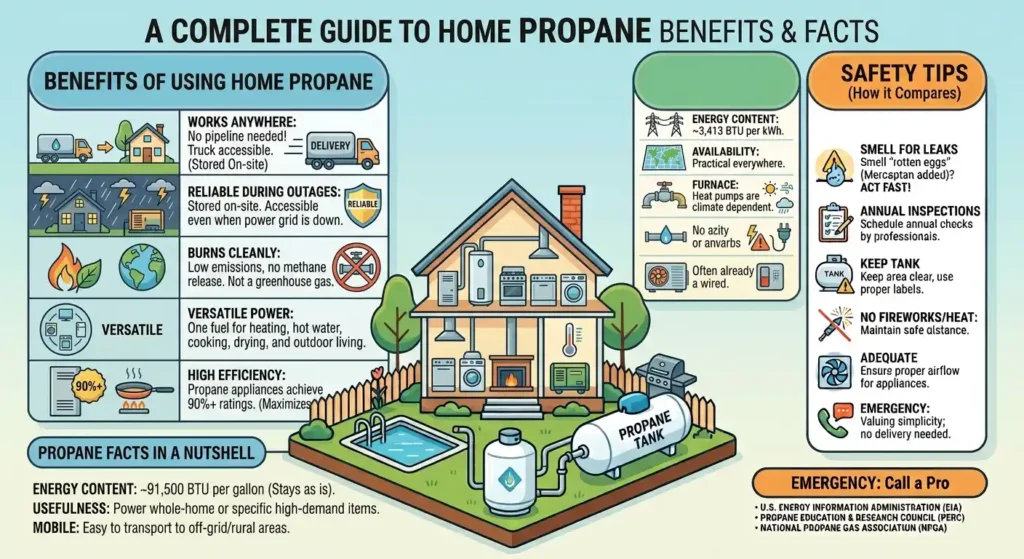
- Works anywhere. No pipeline needed. Assuming that a truck can get to your place, you can have propane.
- Reliable during outages. It is stored on-site, therefore, it is accessible even when the power grid is not.
- Burns cleanly. Propane does not emit methane as natural gas has the potential to do when released unburned and is not regarded as a greenhouse gas in itself.
- Versatile. Heating, hot water, cooking, drying, and outdoor living can be powered by one fuel source.
- Efficient. Propane appliances of high efficiency regularly achieve 90%+ efficiency ratings.
- Even heat. This is particularly apparent with cooking and heating, where propane does not have to undergo the hot-and-cold swings of certain electric systems.
Is Propane Safe to Use in a Home?
Yes, propane is very popular and is safe as long as the system is installed properly, regularly checked, and approached with simple precautions. Similar to any fuel, it presents actual dangers in the event of a leak that is not detected, and this is why the industry is designed to provide several layers of protection.
How to Recognize a Propane Leak
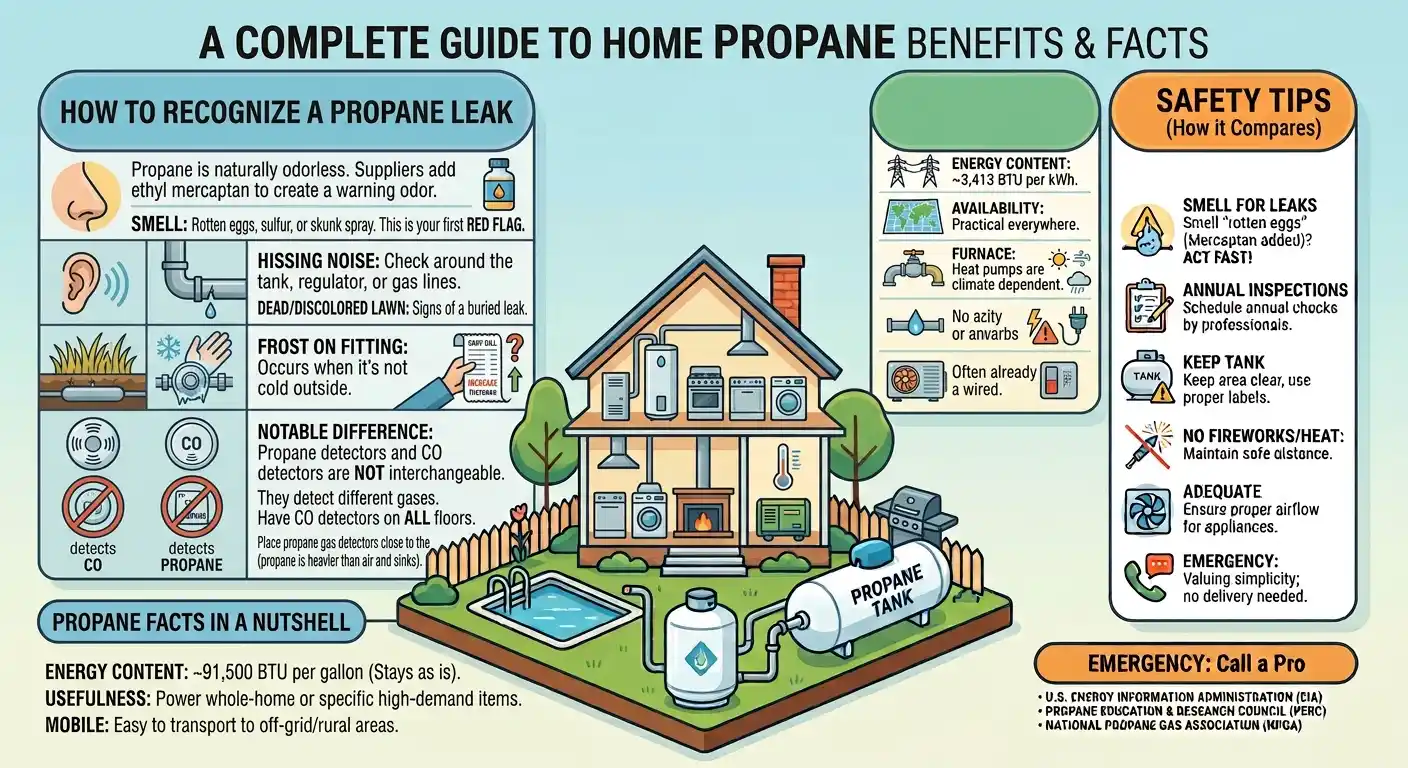
Propane is naturally odorless and therefore the suppliers add ethyl mercaptan which has a smell of rotten eggs, sulfur or skunk spray. That odor is not accidental and is your first red flag. Other signs include:
- A hissing noise around the tank, regulator or gas lines.
- Dead or discolored lawn around an underground line or tank.
- Frost on a regulator or fitting when it is not cold outside.
- Increased propane bill without an increase in consumption.
Notable difference: A carbon monoxide detector will not detect a propane leak and a propane leak detector will not detect carbon monoxide. They detect various gases, and therefore, a house with propane appliances must have a CO detector on all floors and preferably a propane gas detector close to the ground (propane is heavier than air and thus, it will be found at the bottom).
What to Do If You Smell Gas
- Put out any flames, cigarettes, or pilot lights.
- Do not touch light switches, telephones or anything that can cause a spark, such as the doorbell.
- Get all the people and pets out of the house.
- Once you’re a safe distance away, if it’s safe to do so, shut off the propane supply valve at the tank by turning it clockwise.
- Contact your propane supplier and, in case of a major leak, emergency response.
- Don’t go back inside or try to relight anything until a professional says it’s safe.
Common Mistakes Homeowners Make with Propane
- Allowing the tank to run dry. A shortage of propane may allow air and moisture to enter the system, and it is often necessary to have a professional check the leak prior to the safe refill and relight of appliances. The majority of suppliers suggest refilling approximately 20-30 percent remaining.
- Overlooking the smell as it is not strong. Even a faint smell may indicate an actual leakage, particularly when you have a cold or allergies that impairs your sense of smell.
- Skipping annual inspections. A licensed technician should check regulators, connections and tanks annually.
- Assume that a CO detector is used to cover propane leaks as well. As covered above, it doesn’t. You must have both of these kinds of detection.
- Keeping a car or flammables too near the tank. Ensure there is ample distance between outdoor tanks as advised by your supplier and local fire code.
Myth vs. Fact: Propane Edition
Myth: Propane is more harmful than electricity or natural gas.
Fact: No fuel sources are risk free. The added odorant and heavier-than-air characteristics of propane actually cause leaks to be more noticeable than others.
Myth: Propane tanks are easily exploded.
Fact: Propane tanks are constructed to high safety standards and they seldom fail disastrously. The majority of accidents are linked to outdated machinery, lack of maintenance or neglect of a suspected leak.
Myth: Propane can only be used in heating.
Fact: Propane can be used to heat, provide hot water, cook, dry, generate electricity, warm a fireplace and even in the outdoor living, all in the same house.
How to Get Propane Set Up at Your House
- Have a home energy assessment. A local propane dealer can calculate the amount of gallons that your home would consume depending on the amount of square feet, insulation, and what appliances you want to power on propane.
- Select a tank size and position. Residential tanks are typically 100, 250, 500, and 1,000 gallons, either above or below the ground.
- Choose between leasing and purchasing a tank. Leasing is usually accompanied by a delivery contract; a purchase is less restrictive in terms of the possibility of changing suppliers in the future.
- Schedule installation. A certified technician installs the tank, installs the gas lines and connects your appliances.
- Set up delivery. Select automatic delivery, in which your supplier will monitor usage and refill before you are running low or will-call, in which you order refills yourself.
- Install detectors. Install a carbon monoxide detector on each level and a propane gas detector on or near the floor in a room containing a propane-operated appliance.
FAQs
What is the use of propane in a house?
Propane is consumed in a house as space heating, water heating, cooking, clothes drying, fireplaces, backup generators, grilling and outdoor living such as pool heaters and patio heaters.
Is heating a house with propane less expensive than electricity?
It is based on your area and prevailing rates. Propane may be expensive per unit than electricity on paper, but since it is more efficient to burn and heats more quickly, particularly in cold climates, overall expenses may be similar or even less over a heating season.
Is natural gas propane?
No. Propane and natural gas are both hydrocarbon fuels, but propane contains approximately twice as much energy per cubic foot, and is stored as a liquid in a tank, whereas natural gas is distributed as a gas in a pipeline.
Is it possible to power an entire house with propane?
Yes. Numerous households, particularly those in rural locations where there is no natural gas line, are completely powered on propane to heat, provide hot water, cook, dry and provide power during outages.
Is propane bad for the environment?
Propane is said to be a relatively clean fuel. It does not emit methane as much as escaped natural gas can, and it is permitted by the U.S. Clean Air Act as a clean alternative fuel.
What is the cost of installing a propane tank at a house?
Prices depend largely on the size of the tank, whether it is leased or owned, and above ground or underground installation. To have the accurate figure, get at least two or three local suppliers to provide quotes as national averages are misleading.
Is it possible to use propane without the natural gas line?
Yes. This is the largest strength of propane. It is transported and kept on-site and therefore functions whether a natural gas pipeline is available at your home.
How big a propane tank does a house require?
This is based on what you are running on propane. A house that only serves a fireplace or a grill may only require a small tank, whereas whole-home heating normally requires a 500 to 1,000-gallon tank.
Do propane appliances cost more than electric appliances?
Initial prices depend on the brand and model, just like electric appliances. Most propane appliances have higher operational costs, but have the potential to be less expensive to operate in the long term, particularly heating and drying.
Final Thoughts
Propane has earned its popularity due to the fact that it does one thing very well: it provides reliable and high-output energy anywhere a truck can go, without the need of a pipeline. It may be warming a house during a Midwest winter, turning on the water heater, the grill, or a backup generator the second the power goes off, but propane has a broader scope of jobs than most homeowners are aware of.
When making a decision on whether propane is the right choice in your home, begin by getting an estimate of your usage with a local supplier, compare that estimate with your current fuel bill and ensure that you have a carbon monoxide detector and a propane gas detector in place before your system comes online. Maintained in simple terms, propane is a reliable, all-purpose means of operating a house.