Natural Gas vs Propane Fireplace: Which Is Better for Your Home, Your Budget, and Your Heat?
Natural gas and propane both give you a gas fireplace that lights with a switch or remote, warms a room fast, and needs no wood, ash, or chimney sweeping. The flame looks warm, the heat feels steady, and you can turn it off the moment you leave the room. That shared ease is why so many buyers get stuck on the next choice: which fuel should feed it?
The short answer is that your home often picks for you. If a natural gas line already reaches your house, natural gas is often the lower-cost, lower-hassle pick for frequent use. If no gas line reaches your home, propane is often the practical pick, because a tank can sit on your land and a delivery truck can fill it. The rest of this guide walks through cost, heat, venting, and safety, so you can check that short answer against your own home, use, and budget.
⚠️ Safety First: Read This Before You Buy or Use a Gas Fireplace
Gas fireplaces burn fuel, and all fuel-burning appliances can make carbon monoxide (CO). CO is colorless and odorless, so you cannot see it or smell it. The CDC and the U.S. Consumer Product Safety Commission advise homes with fuel-burning appliances to install CO alarms on every level and outside each sleeping area, test them monthly, and replace them on the maker’s schedule.
Gas-smell rule: Natural gas and propane are given a rotten-egg odor so a leak can be smelled. If you smell gas, do not touch light switches, flames, or appliances. Leave the home at once with people and pets, and call your gas utility’s emergency line or 911 from outside. Do not go back inside until a qualified responder says it is safe.
Never open a gas line, change a gas valve past the normal user controls in your appliance manual, bypass a safety device such as a thermocouple, oxygen-depletion sensor, or spill switch, block a vent, or disable a CO alarm. Install work, fuel conversion, venting changes, and repairs past basic cleaning and normal user controls belong to a licensed gas professional. Pets, above all birds, react to CO and combustion fumes sooner than people do, so a bird in distress near a gas appliance is a warning sign to get fresh air and get help at once.
🏠 At a Glance: The Verdict Strip
Pick natural gas if a gas line already serves your home and you plan to use the fireplace often. You get a steady supply with no tank to watch and, in most areas, a lower fuel cost per unit of heat.
Pick propane if no natural gas line reaches your home, or if you want a fireplace in a spot far from a gas line. You get fuel where pipes do not reach, and you pay for tank setup, deliveries, and a higher fuel cost per unit of heat.
Heat output alone does not settle it. Propane packs more heat per cubic foot, but the model you buy, its vent type, and how long you run it shape your bill far more than the fuel name on the box.
🧭 What You Need to Decide
- Supply: Does a natural gas line reach your home, or would you need a propane tank?
- Use: Will the fireplace run most winter nights, or a few evenings a month?
- Room size: What BTU rating and vent type fit the room? Check the model manual and local code.
- Budget: What do local natural gas rates and local propane prices do to your yearly cost?
- Venting: Can the room take a vented model, or are you weighing a vent-free model? Read the vent-free warning below first.
Start With What Your Home Can Use
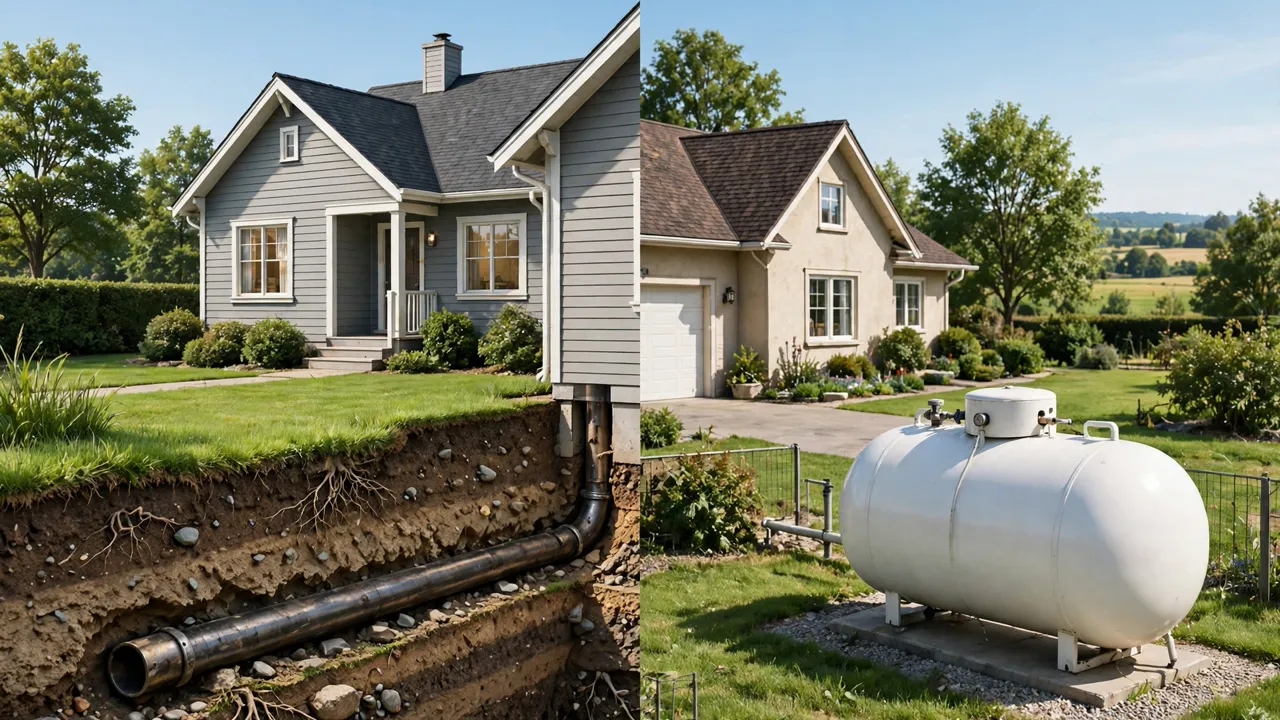
Fuel choice starts with supply, not with a sales sheet. Natural gas arrives through underground pipes run by a utility. If your street has that network and your home is hooked up, fuel flows on demand and shows up on a monthly bill. No tank sits in your yard, and no delivery visit is needed.
Propane, also called liquefied petroleum gas (LP gas), is stored as a liquid in a tank on your land and delivered by truck. That setup works in rural areas, cabins, and homes far from a gas main. It also works for a fireplace placed far from the house gas line, where a long new pipe run would cost more than a tank line. If you already have a wood fireplace and want gas heat, learn whether you can convert a wood fireplace to gas before you pick a fuel.
Ask your utility or a licensed gas professional one plain question first: is natural gas service available at my address, and what would a line to the fireplace spot cost? That one answer often cuts the choice in half. If the answer is no, propane is not a second-best fallback. For many rural homes, it is the gas option that exists.
How Each Fuel Reaches Your Fireplace
Natural gas is mostly methane, and it moves as a gas through pipes at low pressure. A licensed professional sizes the pipe, sets the pressure for the appliance, and tests the joints. Once that work is done, you turn the fireplace on and off with no fuel chores. A shared house line can see small pressure shifts when other gas appliances run, which is one more reason pipe sizing and a pro install matter.
Propane is stored under pressure as a liquid and turns to vapor as it leaves the tank. A regulator drops that pressure to the level your fireplace needs. Tanks can be bought or leased from a supplier, and you or your supplier must watch the gauge so the tank does not run dry in a cold snap. Delivery timing, tank access in snow, and supplier terms are part of propane ownership in a way they are not part of natural gas ownership.
Do not swap fuels on your own. A fireplace built for natural gas needs a maker-approved conversion kit and a licensed professional to run on propane, and the reverse is also true. The kit changes parts such as the burner orifice to match the fuel’s pressure and heat content. A wrong orifice can give a poor flame, soot, or unsafe burn, so this is never a do-it-yourself change.
Heat Output and Flame Look: What the Numbers Mean
Heat is measured in British thermal units (BTUs). One BTU is the heat needed to raise one pound of water by one degree Fahrenheit. Fireplace makers list a BTU input rating per hour, which tells you how much fuel the unit can burn at full fire. The heat that warms you is less than that input, because venting and design lose some heat.
Propane holds more heat per cubic foot than natural gas. Published energy figures put one cubic foot of propane at about 2,516 BTUs and one cubic foot of natural gas at about 1,030 BTUs. That means propane packs more than twice the heat into the same volume of gas. One gallon of propane holds about 91,500 BTUs, while one therm of natural gas, the unit on many gas bills, holds 100,000 BTUs.
Those figures do not mean a propane fireplace always heats a room better. Makers build models in a wide BTU range, often from around 20,000 to 40,000 BTUs per hour for gas logs and inserts, with larger units above that range. A 30,000-BTU natural gas model and a 30,000-BTU propane model put out the same rated heat at full fire. The fuel changes how much gas volume that takes, not the rating on the label.
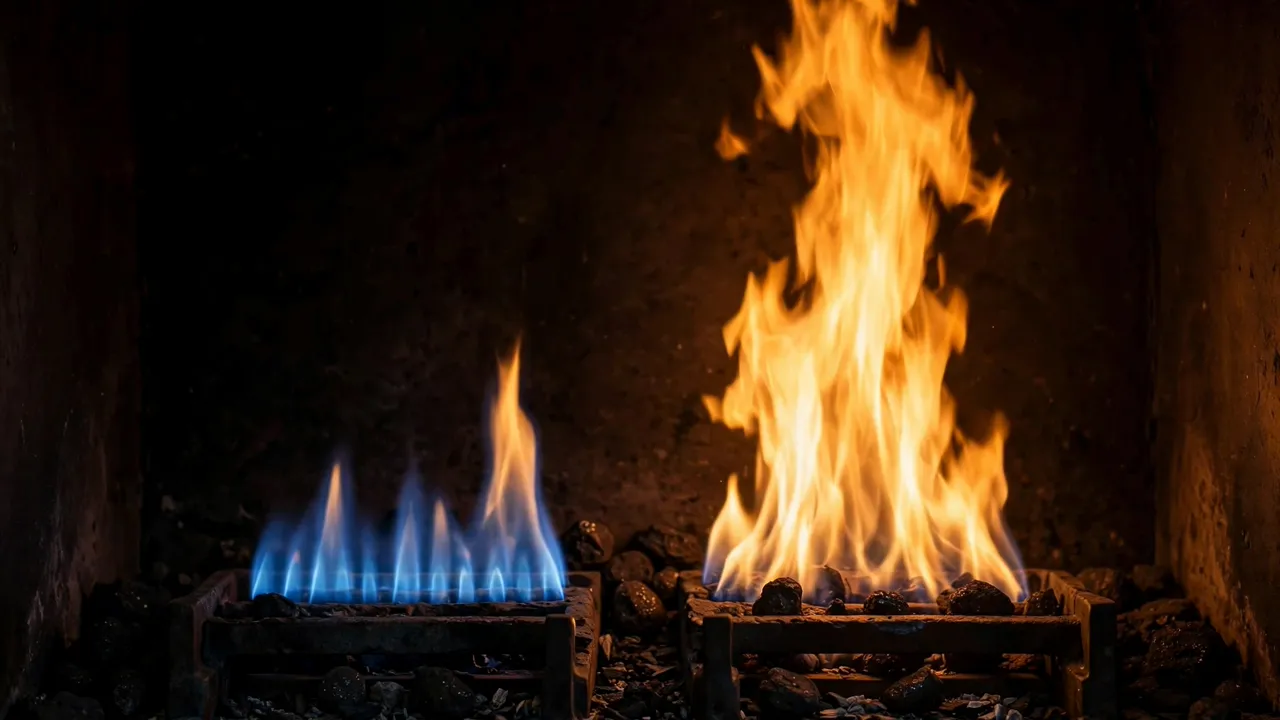
Flame look differs a bit. Natural gas flames often burn bluer and cleaner, with less soot on glass and logs. Propane flames often look taller and more yellow, which some buyers like for a wood-like look, but they can leave more soot over time. Soot, yellow tipping that grows worse, or a flame that lifts off the burner are signs to stop using the unit and call a licensed professional. Check your manual for what a normal flame should look like for your model.
Efficiency ratings add a second layer. A vented model sends combustion gases outside, so some heat leaves with them. A vent-free model keeps that heat in the room, which lifts its rated efficiency, but it also keeps combustion byproducts in the room. Read the venting section below before you let an efficiency number make the choice for you.
Running Cost: Do the Math With Your Local Prices
Natural gas is often cheaper per unit of heat than propane, so a natural gas fireplace often costs less to run hour by hour. That gap grows if you run the fireplace for many hours each week. It shrinks if you run it rarely, because tank fees, delivery charges, and install costs then weigh more than fuel price.
Local prices decide the real gap, and they change by region and season. Do not trust a national average for your bill. Get a current price per therm from your gas utility bill and a current price per gallon from a local propane supplier, then run this math for the model you are weighing:
- Natural gas cost per hour: divide the model’s BTU input per hour by 100,000, then multiply by your price per therm.
- Propane cost per hour: divide the model’s BTU input per hour by 91,500, then multiply by your price per gallon.
- Yearly cost: multiply the hourly cost by the hours you expect to run it each week, then by the weeks in your heating season.
Run that math at two use levels: light use, such as two evenings a week, and heavy use, such as most nights. A buyer who runs a fireplace twice a month may find the fuel gap small. A buyer who heats a main living room nightly may find it large. For a closer look at running costs in general, see how much it costs to run a gas fireplace.
Standing pilots add a hidden cost on older models. A standing pilot burns a small amount of gas around the clock, even when the main burner is off. Newer models with electronic ignition light only when you call for heat. If you are comparing an older used unit with a new one, ask about pilot type before you compare fuel costs.
Upfront Cost and Install Work
Upfront cost flips with your starting point. If a natural gas line already runs near the fireplace spot, the hookup is often the lower-cost path. You pay a licensed professional for the line, the hookup, venting, and safety checks, and no tank is involved. If no line exists, trenching a new gas line across a yard can raise the cost a lot, and the utility may need time to schedule the work.
Propane setup often costs less at the start when no gas line exists, because the tank and a shorter gas line replace a long utility run. Tank purchase or lease terms, pad or placement work, regulator setup, and delivery scheduling are part of that first bill. Tank rental fees and minimum delivery amounts can add to yearly cost, so ask for those terms in writing before you sign.
Both paths need a licensed gas professional for gas line work, hookup, venting, and testing. Get at least two written quotes that list the same scope: gas line or tank line, venting, appliance, permits, and inspection. A quote that leaves out venting or inspection is not a lower price. It is an incomplete price. For install cost ranges and what drives them, see how much it costs to install a gas fireplace.
Venting Choices: Where the Exhaust Goes
Both fuels work in vented and vent-free models, and venting shapes safety, heat, and room choice. Direct-vent models pull outside air for combustion and send exhaust outside through a sealed vent. They are a common pick for bedrooms and tight homes, because room air and exhaust stay apart. Natural-vent models, often called B-vent models, use room air and send exhaust up a flue or chimney. They need a clear vent path and good room air supply.
Before you assume a chimney is required, check the model type. Many gas models vent through a wall or a short flue, not a full masonry chimney. This guide on whether gas fireplaces need a chimney explains the vent paths model by model. If you are weighing an insert against a log set, this comparison of a gas fireplace insert versus a gas log set can help, since inserts and log sets vent in different ways.
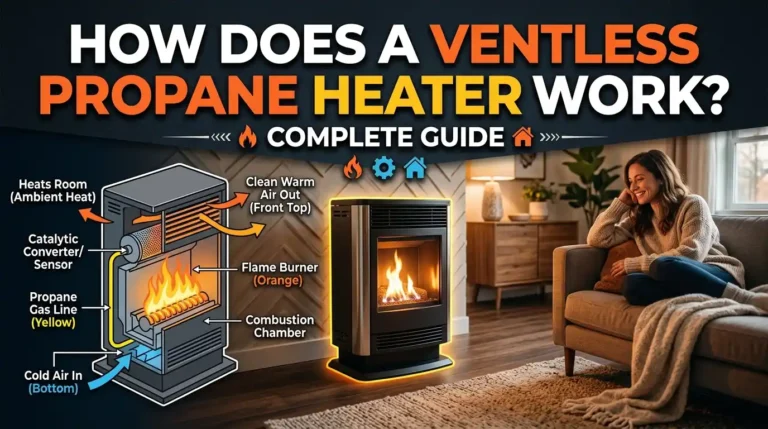
Vent-free, also called ventless, models have no vent to the outside. They burn gas in the room and release combustion byproducts, including CO and water vapor, into the room air. That is why vent-free models need a working oxygen-depletion sensor, a working CO alarm, and strict room-size and use limits from the manual. Vent-free models are restricted or banned in some states, cities, and building types, and many makers bar them from bedrooms and bathrooms. Check your local code and your manual before you buy one, and never present or treat a vent-free model as risk-free. A full side-by-side on this choice is in vented versus ventless gas fireplace.
Safety Differences You Should Know
The safety rules for both fuels are the same at the core: pro install, yearly service, working CO alarms, clear vents, and a fast exit if you smell gas. The fuels differ in how leaked gas behaves. Natural gas is lighter than air, so a leak tends to rise and spread near ceilings. Propane is heavier than air, so a leak tends to sink and pool in low spots such as basements, pits, and floor drains. That difference matters for alarm placement advice from your installer and for why you must never go into a low area to check a propane smell.
Both fuels can make CO when combustion is poor, a vent is blocked, or a unit is out of tune. CO has no color and no odor, and early signs in people can feel like flu: headache, dizziness, weakness, nausea, chest pain, and confusion. If a CO alarm sounds, or if people feel ill near a gas appliance, get to fresh air at once and call 911 from outside. Do not stay inside to hunt for the source, and do not silence the alarm and go back to sleep.
Pets need a note of their own. Birds are highly sensitive to fumes and can show distress before people notice a problem. Dogs and cats also face CO risk, and they cannot leave a closed room on their own. Keep pets out of a room with a gas smell, and take them with you when you leave. For a broader safety check, read whether gas fireplaces are safe to use indoors.
Yearly service is not an upsell. A qualified technician should service gas, oil, and coal-burning appliances each year, per CDC guidance. That visit covers burner tune, vent check, safety device check, and a look for soot or wear. Between visits, keep vents clear, keep items away from the fireplace, and follow the manual for glass cleaning and log placement. Moved logs can change the flame and raise soot, so put them back exactly as the manual shows.
Care and Upkeep Year to Year
Day-to-day care is light for both fuels, and that is part of their appeal. You clean glass as the manual directs, dust the surround, and check that the flame looks normal. No ash cans, no wood piles, and no chimney sweeping for a direct-vent gas model. Vented models that use a chimney flue still need a yearly vent and chimney check.
Propane adds one chore natural gas does not: tank watch. Check the gauge on a set schedule, learn how low your supplier allows the tank to drop before delivery, and book fills before a cold snap or a holiday week. Running a propane tank dry can shut the fireplace off and may need a pro to relight and check the system. Natural gas adds no tank chore, but you should still know where your gas shutoff is and how your utility wants you to report a smell or a damaged line.
Keep a small service record for either fuel: install date, model and serial number, service dates, and any part changes. That record helps a technician spot a trend, helps a buyer if you sell the home, and helps you prove service if a warranty claim comes up. If a flame, smell, or soot pattern changes, stop using the unit and call a licensed professional. Do not adjust gas parts to chase a better flame.
📊 Side-by-Side Comparison: Natural Gas vs Propane Fireplace
| Feature | Natural Gas | Propane |
|---|---|---|
| Fuel supply | Utility pipeline, continuous supply | Tank on your land, truck delivery |
| Where it works | Homes served by a gas main | Homes with or without a gas main, including rural homes |
| Heat per cubic foot | About 1,030 BTUs | About 2,516 BTUs |
| Running cost | Often lower per unit of heat; check local rates | Often higher per unit of heat; check local gallon prices |
| Upfront cost | Lower if a line is near; higher if a new line must be trenched | Tank and line setup; often lower when no gas main exists |
| Flame look | Often bluer, cleaner, less soot | Often taller, more yellow; can soot more over time |
| Leaked gas behavior | Lighter than air; tends to rise | Heavier than air; tends to sink and pool low |
| Chores | None for fuel supply; yearly service still needed | Gauge checks, delivery booking, tank terms |
| Best for | Frequent use in a home with gas service | Homes off the gas main, cabins, and far-flung rooms |
Pick in 5 Minutes: Your Decision Checklist
Work through this list in order, and stop at the first answer that rules a fuel out. A fuel that cannot reach your home, cannot vent in your room, or breaks your budget is out, no matter how good its flame looks.
- Check gas service: Call your utility or check your bill. If natural gas is not available, propane is your gas path.
- Price the hookup: Get written quotes for a gas line run and, if needed, for a propane tank setup. Compare full scope, not headline sums.
- Run your hourly math: Use your local price per therm and price per gallon with the BTU rating of the model you want.
- Match the room: Check room size, vent options, and local code for vented and vent-free models.
- Check safety gear: Plan CO alarms on every level and outside each sleeping area, plus yearly service.
- Weigh use: Heavy nightly use favors the lower fuel cost of natural gas, if it is available. Light use makes tank chores and install cost weigh more.
- Confirm conversion rules: If you may switch fuels later, ask what kit and pro work that switch would need for your model.
Common Mistakes to Avoid
The most costly mistake is buying the fireplace before checking supply and venting. A buyer who picks a model, then learns the gas line run costs far more than planned, or the room cannot take the vent type, faces a return, a swap, or a long delay. Check supply, vent path, room size, and local code before you pay.
A second mistake is comparing fuel by gallon or cubic foot alone. Propane and natural gas are sold in different units, so a gallon price and a therm price do not compare head to head. Use BTU math from the running-cost section, with your local prices, to get a fair hourly cost.
A third mistake is treating a vent-free model like a vented one. Vent-free heat stays in the room, but so do combustion byproducts. Skipping the CO alarm, blocking the oxygen-depletion sensor, or running a vent-free unit in a barred room or bedroom can turn a heat gain into a health risk. Follow the manual limits and local code, and pick a vented model when in doubt.
A fourth mistake is skipping yearly service to save a fee. Soot, vent wear, and safety device faults build slowly and show few signs at first. A yearly visit catches them while they are small. Keep the service record, and call a licensed professional at once if flame color, smell, or soot changes.
Frequently Asked Questions
Can I switch a natural gas fireplace to propane later?
Yes, in many cases, but only with a maker-approved conversion kit and a licensed gas professional. Never change the fuel on your own, because the burner parts and pressure settings must match the new fuel.
Which fuel costs less to run?
Natural gas often costs less per unit of heat, so it often costs less per hour for the same BTU rating. Your local price per therm and price per gallon decide the real gap, so run the BTU math in this guide with your local prices.
Do gas fireplaces need a chimney?
Not always. Direct-vent models can vent through a wall, and vent-free models have no outside vent, while natural-vent models use a flue or chimney. Check your model manual and local code for the vent path your unit needs.
Is propane safe indoors?
Propane fireplaces can be safe indoors when a licensed professional installs them, vents are clear, and CO alarms are working. Propane is heavier than air, so a leak can pool low, and any gas smell means leaving at once and calling for help from outside.
How often should a gas fireplace be serviced?
Have a qualified technician service it once a year. That visit should cover the burner, vent, and safety devices, and you should test CO alarms monthly.
Conclusion: Let Supply, Use, and Safety Make the Call
If natural gas already reaches your home and you will use the fireplace often, natural gas is the pick that gives you a steady supply and, in most areas, a lower running cost. You skip tank checks and delivery booking, and you pay for fuel on your utility bill. That ease is hard to beat for a main living room that burns most winter nights.
If no gas line reaches your home, propane is the pick that still gives you gas heat, a strong flame, and a fireplace in a cabin or a far room. You take on tank watch and delivery planning, and you pay more per unit of heat, but you gain a fuel that works where pipes do not reach. For light use, that trade can be well worth it.
Either way, do not let a flame photo or a single efficiency number decide for you. Check supply, price the full install, run your hourly math with local prices, confirm the vent path and local code, and put CO alarms and yearly service in place before the first fire. A gas fireplace should warm your home and calm your evenings, not add worry. Pick the fuel that fits your home, and let a licensed professional handle the gas work.
📌 Quick-Reference Card: Natural Gas vs Propane at a Glance
- Natural gas: pipeline supply, no tank, often lower running cost, flame often bluer, gas rises if leaked.
- Propane: tank supply, works off the gas main, often higher running cost, flame often taller and more yellow, gas sinks if leaked.
- Heat math: 1,030 BTUs per cubic foot of natural gas; 2,516 BTUs per cubic foot of propane; 91,500 BTUs per gallon of propane; 100,000 BTUs per therm of natural gas.
- Safety non-negotiables: CO alarms on every level and outside sleeping areas, yearly pro service, clear vents, and the gas-smell rule: leave at once and call from outside.
- Vent-free warning: byproducts stay in the room; check local code, keep the oxygen-depletion sensor and CO alarm working, and never use a barred room or bedroom unless the manual and code allow it.
- First step: ask your utility if natural gas serves your address, then get written pro quotes for the full install.