Why Does My Gas Fireplace Smell Like Gas? What to Do First, and When to Call for Help
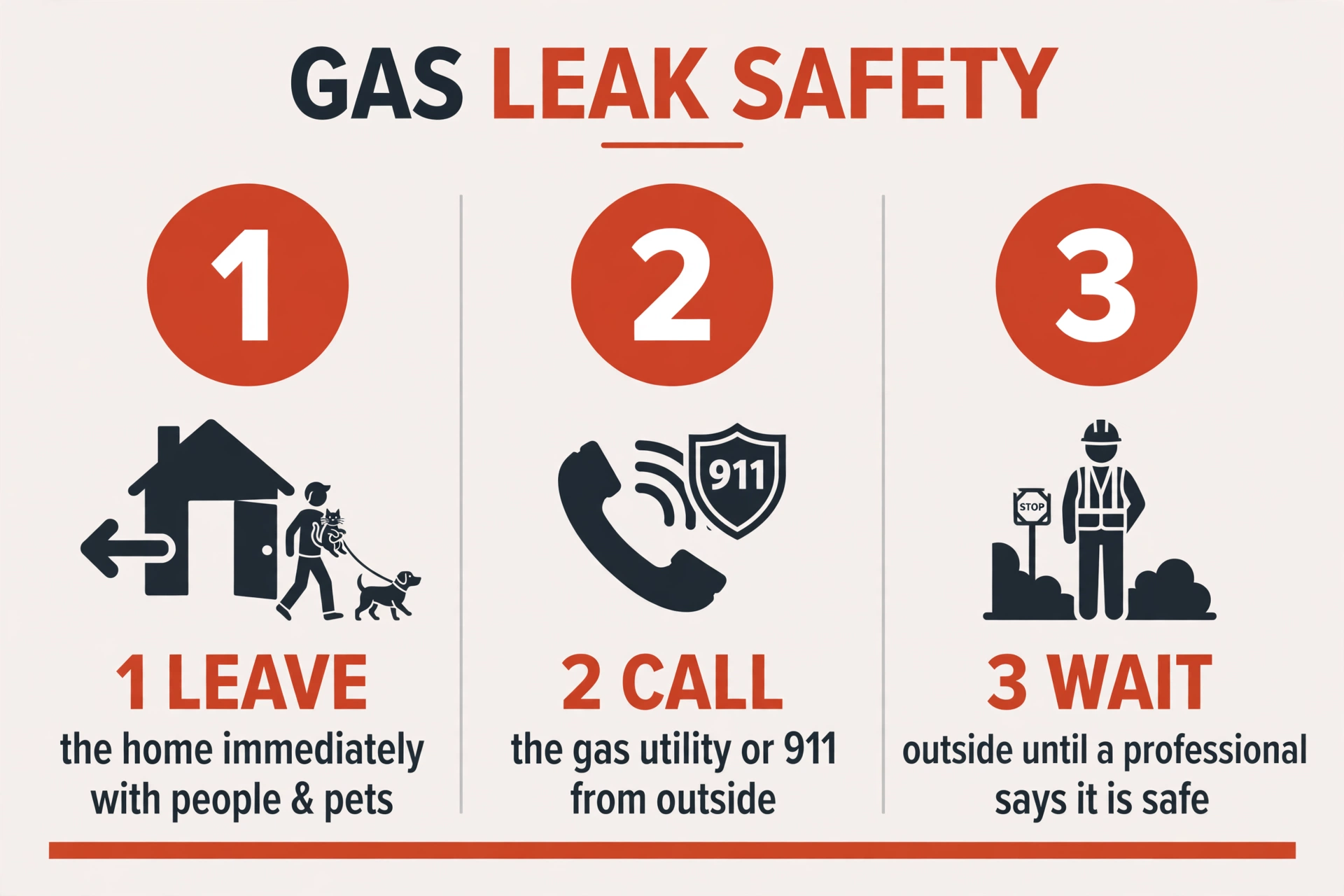
⚠️ SMELL GAS RIGHT NOW? LEAVE, CALL, WAIT.
If you smell gas in your home, stop reading and act at once:
- LEAVE the home at once with all people and pets. Do not touch light switches, flames, phones inside the home, or appliances.
- CALL your gas utility emergency line or 911 from OUTSIDE the home, from a neighbor’s phone or a mobile phone once you are out.
- WAIT outside until a professional says it is safe to go back in. Do not try to find or fix a leak. Do not relight anything.
This rule holds even if the smell seems faint. A gas leak can harm people and pets, and only the gas utility or a licensed gas fitter should deal with it.
A gas smell near your fireplace is frightening, and it deserves fast action. Your nose may be picking up a real leak, or it may be picking up dust or a new-unit odor. The hard part is that you cannot tell the difference by smell alone. That is why the safe move is always the same: if you smell gas and you are unsure, treat it as an emergency.
This guide explains what to do right now, how to think about the different smells a gas fireplace can give off, and what a professional will check. It is not a repair guide. No part of it tells you to open a gas line, hunt for a leak, or relight a unit after a gas smell. All inspection, repair, venting, and gas-line work belongs to the gas utility or a licensed gas fitter.
Carbon Monoxide Safety — Read This Too
Carbon monoxide (CO) is colorless and odorless. You cannot smell it, see it, or taste it. That makes CO alarms a must in any home with a gas fireplace or other fuel-burning appliance.
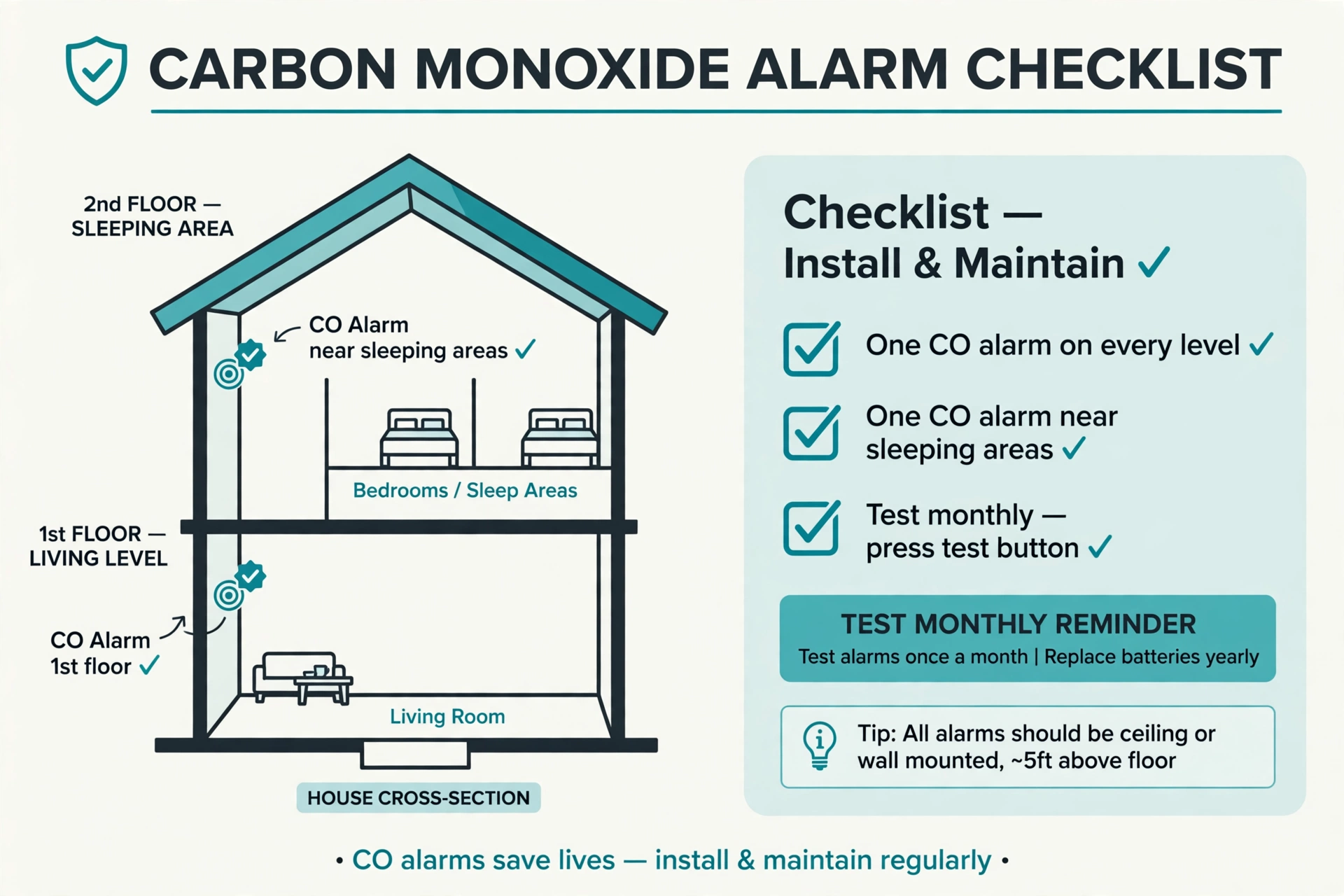
- Put CO alarms on every level of your home and near sleeping areas.
- Test alarms each month and replace them as the maker directs.
- Learn the alarm sound for CO from the maker guide, so you know it apart from a low-battery chirp.
- Pets are more sensitive to CO and fumes than people are, and birds are known to be at high risk. If an alarm sounds, get people and pets out and call for help from outside.
If a CO alarm sounds, leave the home and call 911 or your gas utility from outside. Do not silence the alarm and stay inside.
What to Do Right Now If You Smell Gas
The steps below are the only steps you need. They are the same steps gas utilities give to the public, and they apply whether the smell is strong or faint.
1. Leave
Leave the home at once with all people and pets. Do not stop to open windows, gather bags, or check the fireplace. Do not touch light switches, and do not use a phone, a flashlight switch, or any appliance inside the home. A small spark can ignite gas in the air, so the goal is to get out fast and without flipping any switch.
2. Call
Call your gas utility emergency line or 911 from outside the home. Use a mobile phone once you are out, or a neighbor’s phone. Tell the dispatcher that you smell gas and where the smell is strongest. Stay on the line if they ask you to, and follow their words over anything you read online.
3. Wait
Wait outside until a professional says it is safe to go back in. Do not go back in to open a door, feed a pet, or grab a coat. Do not relight the fireplace, a pilot light, or any gas appliance. The utility crew or a licensed gas fitter will check the home and tell you when it is safe.
Why Gas Smells Like Rotten Eggs
Natural gas on its own has no smell. Gas utilities add a chemical odorant, often called mercaptan, that smells like rotten eggs or sulfur. Propane gets a similar odorant. The smell is added on purpose, so that people can notice a leak with their nose.
That odorant is a warning tool, not a measuring tool. It tells you gas may be in the air, but it cannot tell you how much gas is there or where it came from. A faint smell does not prove a leak is small, and a strong smell does not prove where the leak sits. That is one more reason to leave and call rather than to guess.
Keep in mind that carbon monoxide has no smell at all. The rotten-egg smell warns about unburned gas, while a CO alarm warns about carbon monoxide from burning fuel. You need both kinds of warning in a home with gas appliances: your nose for a gas smell, and CO alarms for a gas you cannot smell.
Emergency Smell or Another Odor? How to Tell Without Guessing
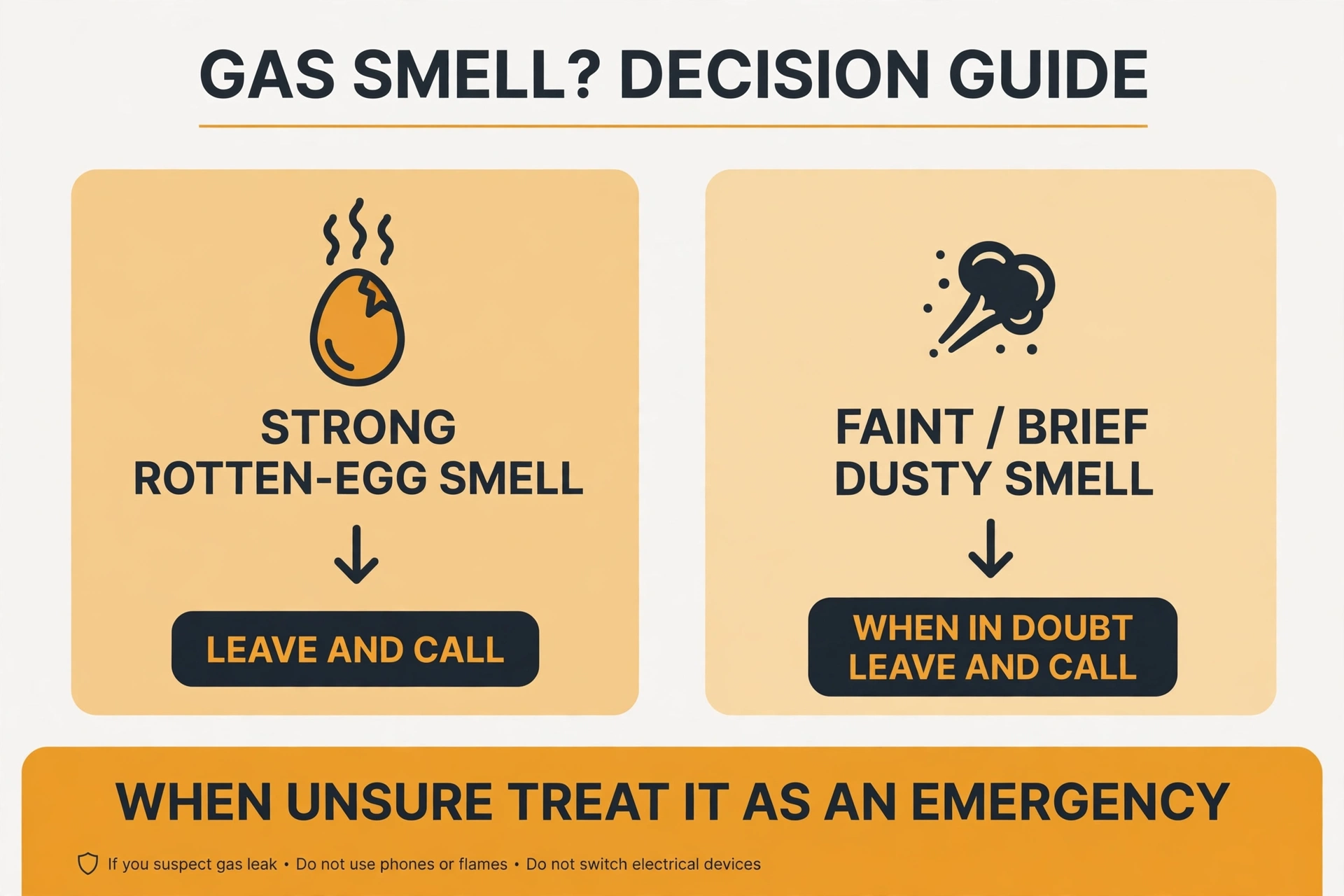
Not every odd smell near a fireplace means a leak. Dust, new parts, and other home smells can all show up near a fireplace. But no smell test at home can rule out a leak. The line below is the one to use.
The Rule That Decides It
Treat it as an emergency if the smell is strong, if it stays, if it gets worse, if it spreads through the home, or if you are unsure in any way. Leave and call from outside.
A faint, brief smell that fades fast may have a harmless cause, and the next section covers those causes in general terms. Even then, never use a harmless cause to talk yourself out of leaving when the smell is strong, lasts, or grows. When in doubt, leave and call.
Two warning signs should always send you outside at once: a CO alarm sounding, and any smell that comes with headache, dizziness, nausea, or a feeling of being unwell. Get people and pets out first, then call for help from outside. Do not wait to see if the feeling passes.
Common Non-Leak Odors, in General Terms
The causes below are the ones homeowners most often hear about. They are described here so you know what a professional might mention, not so you can diagnose your own fireplace. If any smell below does not fade fast, gets stronger, or leaves you unsure, stop and use the leave-and-call rule.
Dust burning off after months unused
Gas fireplaces often sit unused through warm months. Dust settles on the burner, logs, and glass during that time. When the unit runs again, that dust can burn off and give off a dusty or musty smell for a short time. This kind of smell tends to fade as the unit runs. If it does not fade, or if it smells like rotten eggs rather than dust, leave and call.
New-unit curing odor
A new fireplace, new logs, new paint, or new sealants can give off an odor during the first uses. Makers often call this a curing or break-in period, and their guides may say how long it can last. This odor is not the same as a rotten-egg gas smell. If a new unit gives off a strong gas-like smell, do not assume it is curing. Leave and call, and let a professional sort it out.
Other home smells drawn toward the fireplace
A fireplace pulls room air as it runs, so smells from cooking, candles, cleaning products, or a nearby hobby bench can seem to come from the fireplace itself. A smell that appears only when a certain product is in use, and that goes away when that product is put away, may have come from the room rather than the gas line. Even so, if the smell is gas-like and you cannot pin it down with confidence, treat it as an emergency.
Exhaust or soot smells
A smell of exhaust, smoke, or soot points to a venting or burn problem rather than to dust. Soot marks, a yellow or lazy flame that looks wrong for your unit, or a CO alarm sounding are all signs to stop using the fireplace. Leave the home if a CO alarm sounds, call from outside, and do not use the unit again until a professional has checked it and cleared it.
What the Professional Will Check
When the utility crew or a licensed gas fitter arrives, they will work through checks that a homeowner should not attempt. The list below describes their work so you know what to expect. It is not a set of steps for you to copy.
- Gas supply and connections. The professional checks the gas supply line and the connections that feed the fireplace, using pro instruments that can detect gas in the air.
- Burner and pilot assembly. The burner, pilot, and ignition parts are checked for wear, dirt, and correct function, as the maker guide lays out for trained service.
- Venting and flue. The vent path is checked for blocks, damage, and correct draft, so exhaust gases leave the home the way they should.
- Controls and safety devices. Parts such as the thermocouple, oxygen-depletion sensor, and spill switch are checked to make sure they shut the unit down when they should.
- Carbon monoxide levels. The professional can measure CO levels in the home with instruments and judge whether the unit is safe to run.
- Overall condition. The age, wear, and past service of the unit all feed into the call on repair, part swap, or replacement.
Your role during the visit is to share what you noticed: when the smell started, how strong it was, whether the fireplace was on, and whether anyone felt unwell. Then follow the professional’s word on whether the unit can run. If they say not to use it, do not use it until the fix is done and they clear it.
If your fireplace uses ventless design, one point needs care. A ventless gas fireplace has no flue, so combustion byproducts enter the room rather than leaving through a vent. Local codes may restrict or ban ventless units, so the rules for your area and the maker guide both matter. CO alarms and annual pro service matter even more with this type. For more on how these units differ, see our guide to vented vs ventless gas fireplaces.
Prevention: Annual Service and CO Alarms
The best time to deal with a gas fireplace problem is before a smell ever shows up. A yearly visit from a licensed gas fitter, booked before the heating season, lets a pro catch wear, dirt, and venting trouble early. Keep the service record with the maker guide, so the next pro who visits can see what was done.
CO alarms are the other half of prevention. Put one on every level and near sleeping areas, test them each month, and replace them as the maker directs. A CO alarm cannot smell gas, and your nose cannot detect CO, so the two work as a pair. Homes with birds need extra care, since birds react to fumes and CO sooner than people do.
Between service visits, follow the maker guide for the small owner tasks it lists, and nothing more. Never open a gas line, bypass a safety device, or block a vent. If the guide tells you to call a pro for a task, call a pro. For background on indoor gas use, see our guide on whether gas fireplaces are safe to use indoors, and for fuel differences, see natural gas vs propane fireplaces.
Frequently Asked Questions
Is a faint gas smell normal when I first turn on my fireplace?
A faint, brief dusty smell at the start of the season can come from dust burning off. But a rotten-egg smell, a smell that stays, or a smell that gets stronger is not normal. If you are unsure, leave the home and call your gas utility or 911 from outside.
What should I do if I smell gas right now?
Leave the home at once with all people and pets. Do not touch light switches, phones inside the home, or appliances. Call your gas utility emergency line or 911 from outside, and wait outside until a professional says it is safe to go back in.
Can I find the leak myself?
No. Never try to find or fix a gas leak yourself. Leave the home, call the gas utility or 911 from outside, and let trained professionals handle the leak with pro instruments.
Why does my CO alarm matter if I can smell gas?
Your nose can warn you about unburned gas, but carbon monoxide has no smell at all. A CO alarm is the warning for CO, so you need both: your nose for a gas smell, and CO alarms on every level and near sleeping areas for CO.
How often should a gas fireplace be serviced?
Once a year, by a licensed gas fitter, is the standard advice. Booking the visit before the heating season is a good plan, since it catches wear and venting trouble before the unit runs each day.
Should I relight the pilot after a gas smell?
No. Do not relight a pilot light, the fireplace, or any gas appliance after a gas smell. Wait until the gas utility or a licensed gas fitter has checked the home and says it is safe.
Conclusion
A gas fireplace smell is a warning to take at face value. If the smell is strong, stays, gets worse, or leaves you unsure, the right move never changes: leave with people and pets, call the gas utility or 911 from outside, and wait for a professional. No guess about dust or a new unit is worth the risk of staying inside with a leak.
Once a professional has cleared your unit, yearly service and working CO alarms keep the risk low for the seasons ahead. If you want to learn the normal lighting routine for a cleared unit, see how to light a gas fireplace, and if you are weighing a vented or ventless model, check whether gas fireplaces need a chimney. Your nose and your CO alarms, used together, are the pair that keeps a gas fireplace safe.