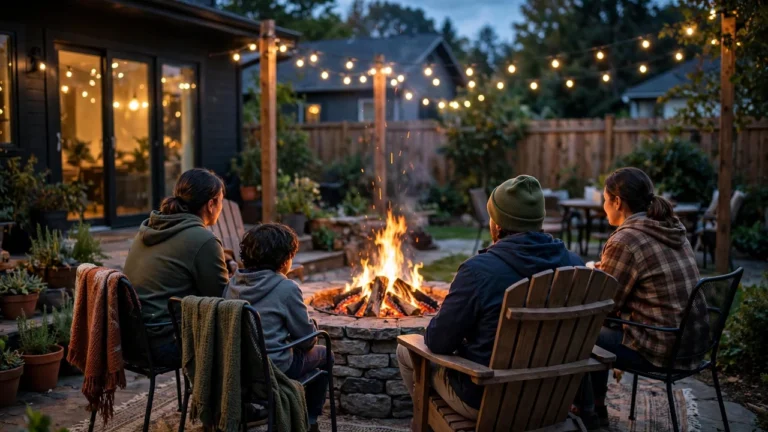
Can You Use a Fire Pit Indoors? The Short Answer Is No — Here Is What to Do Instead
Can you use a fire pit indoors? No. An outdoor fire pit belongs outside, in open air, and bringing one inside puts your household at risk from carbon monoxide, smoke, heat, and stray sparks. This guide explains why the risk stays high even in a garage, on a screened porch, or beside an open window, and it shows the indoor options that give you warmth and flame without that danger.
Many people ask this question for a good reason. A fire pit feels warm and social, and it seems fair to want that same feeling in a living room on a cold night. The trouble is that an outdoor fire pit was built to burn in open air, where smoke and gases rise and drift away. Inside a home, those same gases have nowhere safe to go, and walls, ceilings, and furniture sit far too close to open flame.
Read the carbon monoxide warning below first, then work through the checks in this guide. You will learn how to spot an indoor-rated product, which indoor choices are truly safer, and how to enjoy your outdoor fire pit where it belongs. When in doubt, call a licensed professional and check your local codes before you light anything inside.
⚠️ Carbon Monoxide Warning — Read This First
Never burn wood, propane, or any other fuel in an unvented indoor space. Burning fuel makes carbon monoxide, a gas you cannot see or smell, and it can build up fast in a closed room.
- Install carbon monoxide alarms in your home, test them as the maker directs, and change batteries on the maker’s schedule.
- Know the warning signs of carbon monoxide poisoning: headache, dizziness, nausea, weakness, and confusion.
- If anyone feels these signs, or if an alarm sounds, get everyone into fresh air at once and call emergency services.
- If you smell gas, leave the home at once and call your gas utility or 911 from outside. Do not try to find or fix a leak yourself, and do not do gas-line work yourself.
- Check local codes and call a licensed professional when you are unsure about any indoor heater or fireplace.
This warning applies to wood fire pits, propane fire pits, patio heaters, and any outdoor burner moved inside.
At a glance
✅ Verdict: Do not use an outdoor fire pit indoors.
⏱ Time to read: About 10 minutes.
🧰 Skill needed: None — this is a safety check, not a build project.
🏠 Best result: A safe indoor fireplace or electric fireplace inside, and your fire pit outside.
What You Need and What to Check
You do not need tools for this decision. You need the manual for your fire pit, the label on the unit, and a few honest answers about your room. If any check below fails, keep the fire pit outside.
- Your fire pit manual: Look for the words “outdoor use only.” If those words appear, the answer is settled.
- Your room: A living room, bedroom, basement, garage, shed, tent, or screened porch counts as indoors for this guide.
- Your alarms: Working smoke alarms and carbon monoxide alarms, tested as the maker directs.
- Your local rules: City, county, and fire codes, plus any rules for your building or rental home.
- A licensed professional: The right call for any gas line, vent, chimney, or fireplace install question.
Why an Outdoor Fire Pit Fails Indoors
An outdoor fire pit and an indoor fireplace look alike at first glance, since both hold a flame. The difference sits in how each one handles smoke, gases, and heat. An indoor fireplace sends smoke and gases up a chimney or vent, while an outdoor fire pit sends them straight up into open air. Bring the pit inside, and that open-air path disappears.
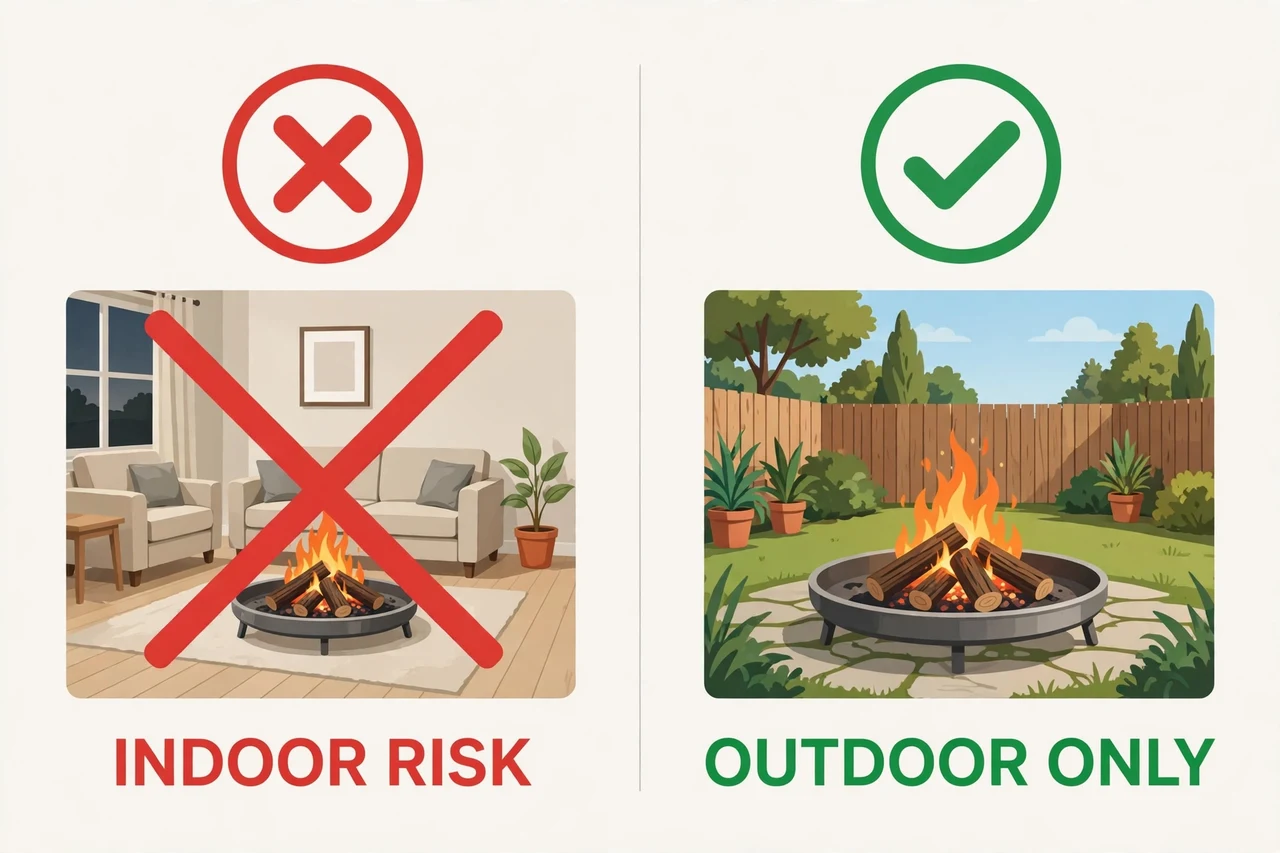
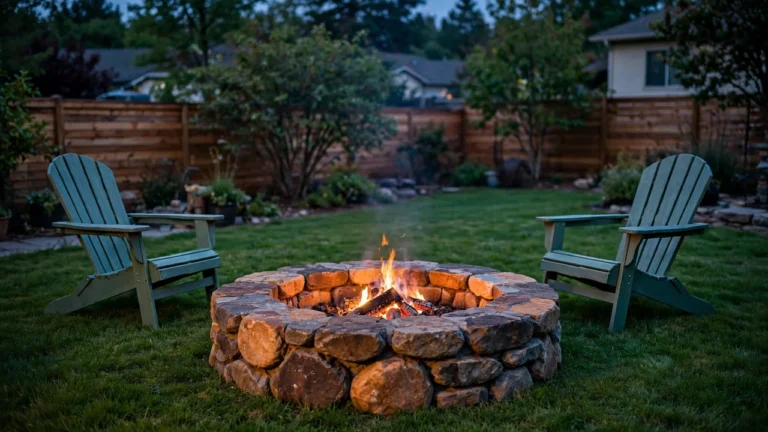
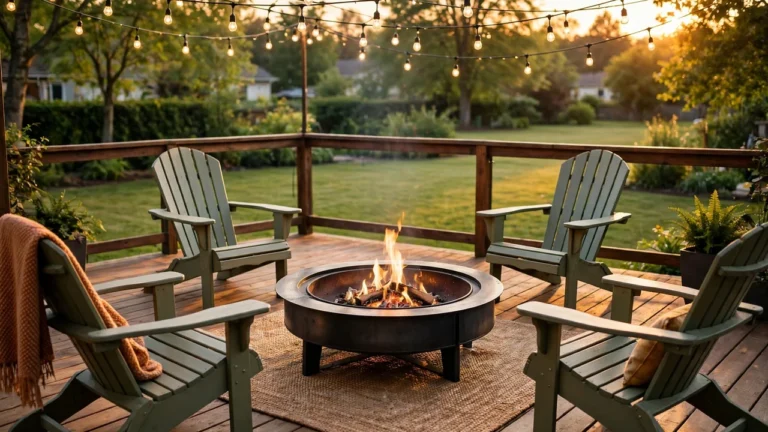
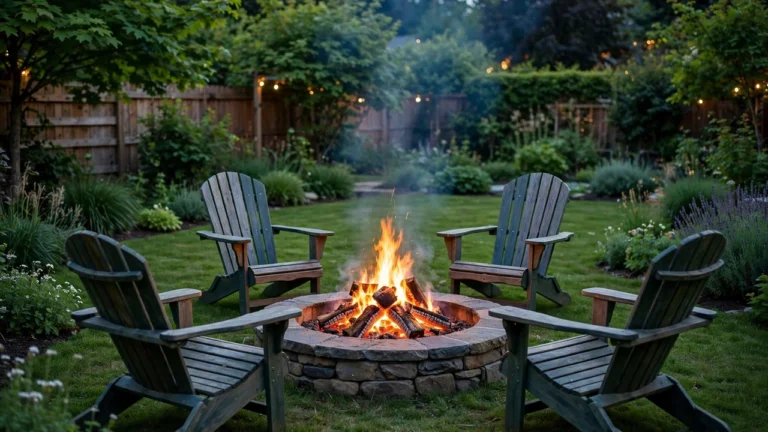
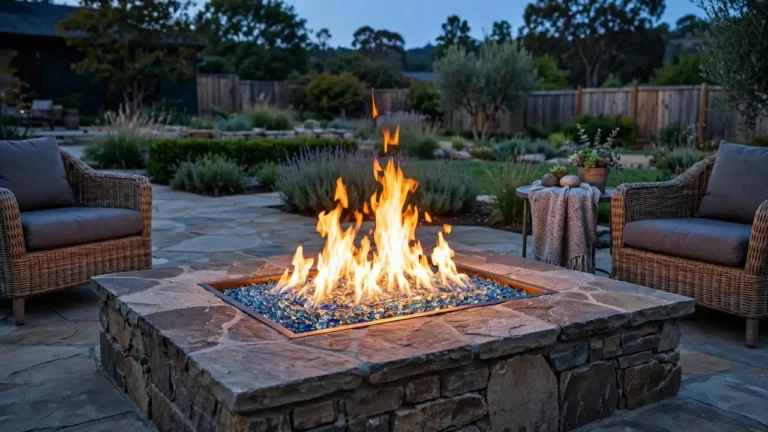
An outdoor fire pit belongs in open air. The same fire indoors traps smoke, heat, and carbon monoxide.
Carbon monoxide builds up where you cannot see it
Wood and propane fires make carbon monoxide as they burn. Outside, that gas drifts away in open air. Inside, it can collect in a room, a hallway, or a sleeping area, and you cannot see it or smell it. People may feel sick before they grasp what is wrong, which is why alarms and fresh air matter so much.
An open window does not fix this problem. Air moves in odd ways inside a home, and a gust can push smoke back into the room or leave a pocket of gas near the floor or ceiling. A fan can stir the air without clearing the gas. The only safe path is to keep fuel fires out of rooms that lack a proper vent.
Smoke, heat, and sparks harm people and homes
Smoke irritates eyes, throats, and lungs, and it stains walls and ceilings. Heat from an open fire can scorch a floor, warp nearby furniture, or catch curtains and rugs alight. Sparks and popping embers can land on carpet, bedding, or clothing in seconds. A screen on a fire pit cuts some sparks, but it does not remove the smoke, gas, or heat risk.
Ceilings add a further problem. Heat rises and pools under a ceiling, and a low ceiling or a beam can sit far closer to the flame than the maker planned for. Outdoor fire pits assume open sky above them. A roof, even a high one, changes that math in a bad way.
A garage, porch, or tent is still indoors for this rule
Many readers hope a garage with the door open counts as outside. It does not. Walls and a roof still trap gases, and wind can shift and push smoke back inside.
A screened porch has the same flaw: screens block bugs, not gases. A tent, shed, or basement traps gases even faster, since air has few ways out.
Partial cover counts as a risk too. A fire under a pergola roof, a carport, or an awning sits closer to burnable material than an open-sky fire. Keep the pit fully in the open, away from roofs, overhangs, and low branches, and follow the clearance rules in your manual.
Check the Label Before You Trust a Claim
Labels beat ads, videos, and guesswork. A product page may call a pit “portable” or “cozy,” but those words do not make it indoor-safe. Portable means you can carry it, not that you can burn it in a living room. Read the manual and the rating plate on the unit itself.
Search the manual for three phrases: “outdoor use only,” “indoor use,” and “ventilation.” If the manual says outdoor use only, stop there. If a unit claims indoor use, read the full section on ventilation, clearance, fuel, and room size, and check whether your local code allows that type of unit in your home.
Watch for a second trap: a burner sold on its own. A tabletop burner, a fire bowl insert, or a gas ring may lack the full safety guidance of a complete unit. Do not drop an outdoor burner into a homemade indoor frame. A frame built from brick, tile, or metal does not turn an outdoor burner into a vented indoor fireplace.
What About Smokeless, Tabletop, Gel, and Ethanol Units?
Newer fire products raise fair questions, since some burn cleaner or look small and tame. Size and smoke level do not change the core rule. Any unit that burns fuel makes combustion gases, and the unit is safe indoors only when the maker rates it for indoor use and you follow its manual to the letter.
Smokeless fire pits
A smokeless fire pit burns wood with less visible smoke, which helps your eyes and your neighbors outside. Less smoke does not mean no carbon monoxide, and it does not mean the pit can move inside. Smokeless pits carry an outdoor-only rating, and they still need open air, clearance, and a watchful eye. Read more on whether they are worth buying in our guide to smokeless fire pits before you buy one for outdoor use.
Tabletop fire pits and fire bowls
Small tabletop pits look harmless, and that look misleads people. A small flame still burns fuel, still makes carbon monoxide, and still sits close to hands, sleeves, tablecloths, and paper. Use tabletop pits outside only, unless the maker rates that exact model for indoor use and you meet every condition in its manual. Keep fuel, matches, and lighters away from the table, and never leave a tabletop flame alone.
Gel and ethanol units
Gel and ethanol units are the one group where indoor-rated models truly exist. Some tabletop and wall units are built and tested for indoor use, and those models can work in a home when you follow the manual exactly. Check the rating, use only the fuel the maker names, keep the room vented as the manual directs, and keep the unit clear of curtains, bedding, and foot traffic.
Even an indoor-rated gel or ethanol unit needs care. Never refill a unit while it burns or while it stays hot, and never pour fuel near an open flame. Store fuel in its sealed container, away from heat and out of reach of kids and pets. If your local code bans these units, or your building rules forbid them, the code and the building rules win.
Carbon Monoxide Safety Checklist
- Fit carbon monoxide alarms and test them as the maker directs.
- Never burn fuel in a room with no proper vent.
- Move everyone to fresh air if an alarm sounds or anyone feels ill.
- Call emergency services from fresh air, and stay out until help clears the home.
- Smell gas? Leave at once and call the utility or 911 from outside.
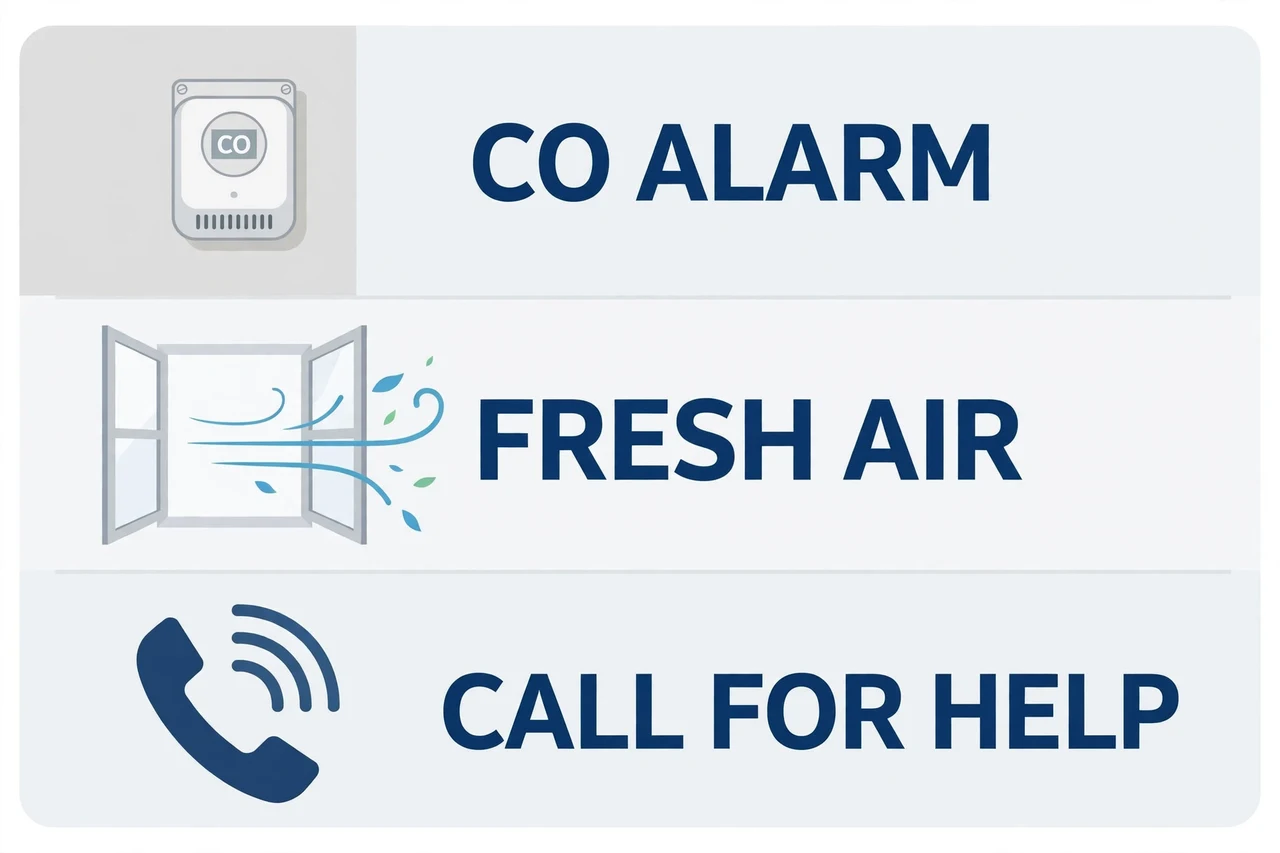
Alarms, fresh air, and a fast call for help form the core of carbon monoxide safety at home.
Pick a Safe Indoor Option Instead
You can still enjoy flame and warmth inside. The trick is to pick a product built for indoor use, with a vent or a design that suits a closed room. Three choices cover most homes, and each one suits a different budget and room.
Vented indoor fireplaces
A vented wood or gas fireplace sends smoke and gases up a chimney or vent pipe. That vent is the whole point: it gives gases a planned path out of the home. A vented fireplace needs correct install, regular checks, and a chimney or vent kept clear and in good repair.
Ask a licensed professional before you add or change a vented fireplace. Gas lines, vent runs, and chimney work are not do-it-yourself jobs. A pro can confirm the right vent type, check local code, and spot problems like a blocked flue or a cracked liner. For gas questions, our guide on whether gas fireplaces need a chimney explains venting choices in plain terms.
Electric fireplaces
An electric fireplace gives flame looks and heat with no fuel, no smoke, and no carbon monoxide from combustion. That makes it the lowest-risk choice for most rooms, including rentals and small spaces. Plug it into a sound outlet, follow the maker’s clearance rules, and keep cords clear of walkways and heat.
Electric models vary in size, from wall units to stove-style heaters. Pick a size that fits your room and your outlet, and read the manual for cord, clearance, and cleaning rules. An electric fireplace will not replace a vented fireplace for every home, but it gives a warm focal point with far fewer safety worries.
Indoor-rated gel or ethanol units, used exactly as directed
An indoor-rated gel or ethanol unit gives a real flame in a small, contained burner. Buy only a model rated for indoor use, and read its manual cover to cover before the first burn. Use the exact fuel named, respect the burn time limit, and keep the room vented as the manual directs.
Place the unit on a stable, heat-safe surface, clear of drafts, curtains, and paths where someone could bump it. Never move a lit unit, never refill a hot unit, and put the unit fully out before you leave the room or go to sleep. When any part of the manual seems unclear, contact the maker or a licensed professional before you light it.
Use Your Fire Pit Outside, the Safe Way
Your outdoor fire pit still has a fine role: warm nights in the yard, with friends, food, and open sky. These five steps keep that role safe. Treat them as a habit, not a one-time chore.
Check burn bans and local rules first
Look up burn bans, fire rules, and any neighborhood rules before you light a fire. A ban may apply on dry, windy days even when the sky looks calm. Respect the ban and wait for a clear day. Rules vary by place, so check your town or county source rather than guessing.
Pick a clear outdoor spot
Set the pit on a level, non-burnable surface in open air, well clear of the house, fences, sheds, trees, and overhangs. Follow the clearance rules in your manual for every side of the pit. If you plan to build a permanent pit, our guide to building a stone fire pit walks through siting and layers for outdoor use.
Burn dry wood only
Burn dry, seasoned wood cut for fire use. Never burn treated or painted wood, plywood, trash, plastics, or glossy coated paper, since these can give off harmful fumes and leave toxic ash. Our guide on what you can burn in a fire pit lists safe fuels and items to keep out of the fire.
Keep the fire small and watched
Build a small fire and feed it a little at a time. A small fire is warmer to sit near than a roaring pile, and it throws fewer sparks. Keep kids and pets at a safe distance, keep a hose or bucket of water close, and stay with the fire the whole time it burns. For gas pits, follow the lighting steps in our guide on how to light a gas fire pit rather than guessing at the controls.
Put the fire fully out before you leave
Let the fire burn down, stir the ashes, and douse them with water until cold to the touch. A fire that looks out can still hold heat deep in the ash. Check the pit again before bed, and store ash in a metal container with a lid, away from the house, until you know it is cold.
Common Mistakes to Avoid
Most indoor fire pit accidents start with a small shortcut that seems harmless. Watch for these mistakes in your own home, and speak up when you see a friend or family member make one.
- Moving the pit into the garage “for one night.” One night is enough for gases to build up, and a garage traps them well.
- Trusting an open door or window. Air flow shifts with wind, and a draft can push smoke back inside instead of clearing it.
- Calling a smokeless pit indoor-safe. Less smoke still means fuel burning in a closed room, with carbon monoxide as a byproduct.
- Burning treated wood to get rid of scraps. Treated and painted wood can give off harmful fumes, so keep it out of every fire.
- Leaving a fire to “burn itself out.” A fire left alone can flare up, throw sparks, or smolder long past bedtime.
- Skipping alarm checks. An alarm with a dead battery guards no one, so test alarms as the maker directs.
- Refilling a gel or ethanol burner while hot. Hot burners can ignite spilled fuel, so wait until the unit is fully cool.
Frequently Asked Questions
Can I use a fire pit in my garage with the door open?
No. A garage with the door open still has walls and a roof that trap smoke and carbon monoxide, and wind can push gases back inside. Keep the fire pit fully outdoors.
Is a smokeless fire pit safe indoors?
No. A smokeless pit burns wood with less visible smoke, but it still makes carbon monoxide and heat that need open air. Smokeless pits are outdoor-only products.
Can I use a propane fire pit indoors?
No. Outdoor propane fire pits are not rated for indoor use, and propane fires make carbon monoxide and moisture that build up in a closed room. Use a vented gas fireplace or an electric fireplace inside instead.
What indoor option gives a real flame?
A vented wood or gas fireplace gives a real flame with a planned vent path, and an indoor-rated gel or ethanol unit gives a small real flame when you follow its manual exactly. Check local codes and ask a licensed professional for vented or gas installs.
What should I do if my carbon monoxide alarm sounds?
Get everyone into fresh air at once and call emergency services. Do not go back inside to open windows or find the source, and stay out until help clears the home.
Quick Reference Card
Outdoor fire pit indoors? No — wood, propane, and smokeless pits stay outside.
Garage, porch, tent, or shed? Still indoors for this rule. Open doors and screens do not make it safe.
Safe indoor choices: Vented fireplace, electric fireplace, or an indoor-rated gel/ethanol unit used exactly per its manual.
Never burn: Treated or painted wood, trash, or plastics.
Emergency rule: Alarm sounds or anyone feels ill — fresh air at once, call emergency services. Smell gas — leave at once, call the utility or 911 from outside.
Conclusion
Can you use a fire pit indoors? The safe answer stays no. Outdoor pits need open air, and no open window, garage door, or smokeless design changes that fact. Keep the pit outside, where it can shine, and bring the warmth inside with a vented fireplace, an electric fireplace, or an indoor-rated gel or ethanol unit used exactly as its maker directs.
Check your manual, test your alarms, respect burn bans, and ask a licensed professional when a question stays unclear. Those few habits guard your home far better than any shortcut, and they leave you free to enjoy the fire where it belongs: outside, under open sky, with people you like.