How to Light a Gas Fire Pit: Push-Button, Match-Lit, and Standing Pilot Models
⚠ Read this safety warning first
If you smell gas, do not try to light the fire pit. Do not flip light switches or use a phone near the fire pit. Leave the area right away and call your gas utility or 911 from a safe distance outside. Do not return until a professional says the area is safe.
Never try to repair a gas line, fix a gas leak, or bypass a safety device yourself. Call a licensed professional for gas-line or valve work. Always follow the manual for your exact model, because controls and lighting steps differ by brand and model.
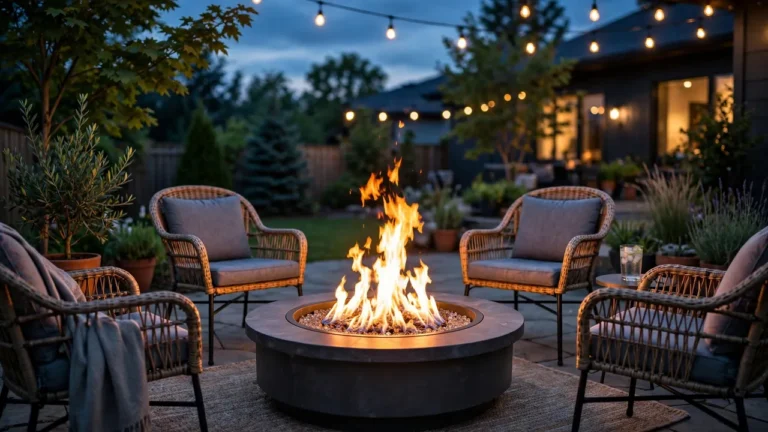
Lighting a gas fire pit is a short outdoor task once you know which ignition type you own. The steps differ for a push-button electronic igniter, a match-lit key valve, and a standing pilot model, and mixing up those steps is one of the most common reasons a fire pit will not light.
This guide covers an outdoor gas fire pit only. It is not a guide for an indoor gas fireplace. An indoor gas fireplace is a different appliance, with different venting, clearances, and controls, so do not use fireplace instructions for a fire pit or fire pit instructions for a fireplace.
Work through the checks in order, light the burner with the method that matches your model, and shut the fire pit down the same careful way every time. When any step does not match your manual, stop and follow your manual instead.
What you need before you start
- Your fire pit manual, for the lighting steps and control locations for your exact model
- A long fireplace lighter or long matches, for match-lit models
- A dry cloth, for wiping rain or debris from the burner area
- A clear patio or yard space, with children and pets kept well back from the fire pit
- A working gas supply: a connected propane tank with gas in it, or a turned-on natural gas supply line
Keep a fire extinguisher or a garden hose nearby when you use any open flame outdoors. Check local burn bans and fire rules before you light, because a ban can apply even when your fire pit is ready to use.
At a glance: the lighting sequence
- Check the area, clearances, burner, hose, and connections.
- Identify your ignition type and your gas supply.
- Open the gas supply in the order your manual states.
- Light the burner with the method for your model.
- Adjust the flame to a steady height.
- Turn the gas off fully when you finish.
Read the full steps below the first time you light a new fire pit. After that, the sequence above works as a quick reminder.
Step 1: Check the area around the fire pit
Walk around the fire pit before you touch any control. Remove dry leaves, paper, cushions, and other items that could blow into the flame. Move chairs and side tables back so people do not need to reach across the burner.
Check the clearance rules in your manual and follow local codes for your setup. For help thinking through placement, read fire pit clearance from a house, trees, and a fence. Never light a fire pit indoors, in a garage, or under a covered structure unless the manufacturer and local code expressly allow that exact setup.
Step 2: Inspect the burner, media, and connections
Lift or open the access cover if your model has one, and look at the burner, fire glass or lava rock, and the area around the igniter. Clear leaves, dirt, spider webs, and standing water from the burner area, and spread the media so it does not bury the burner ports or the igniter.
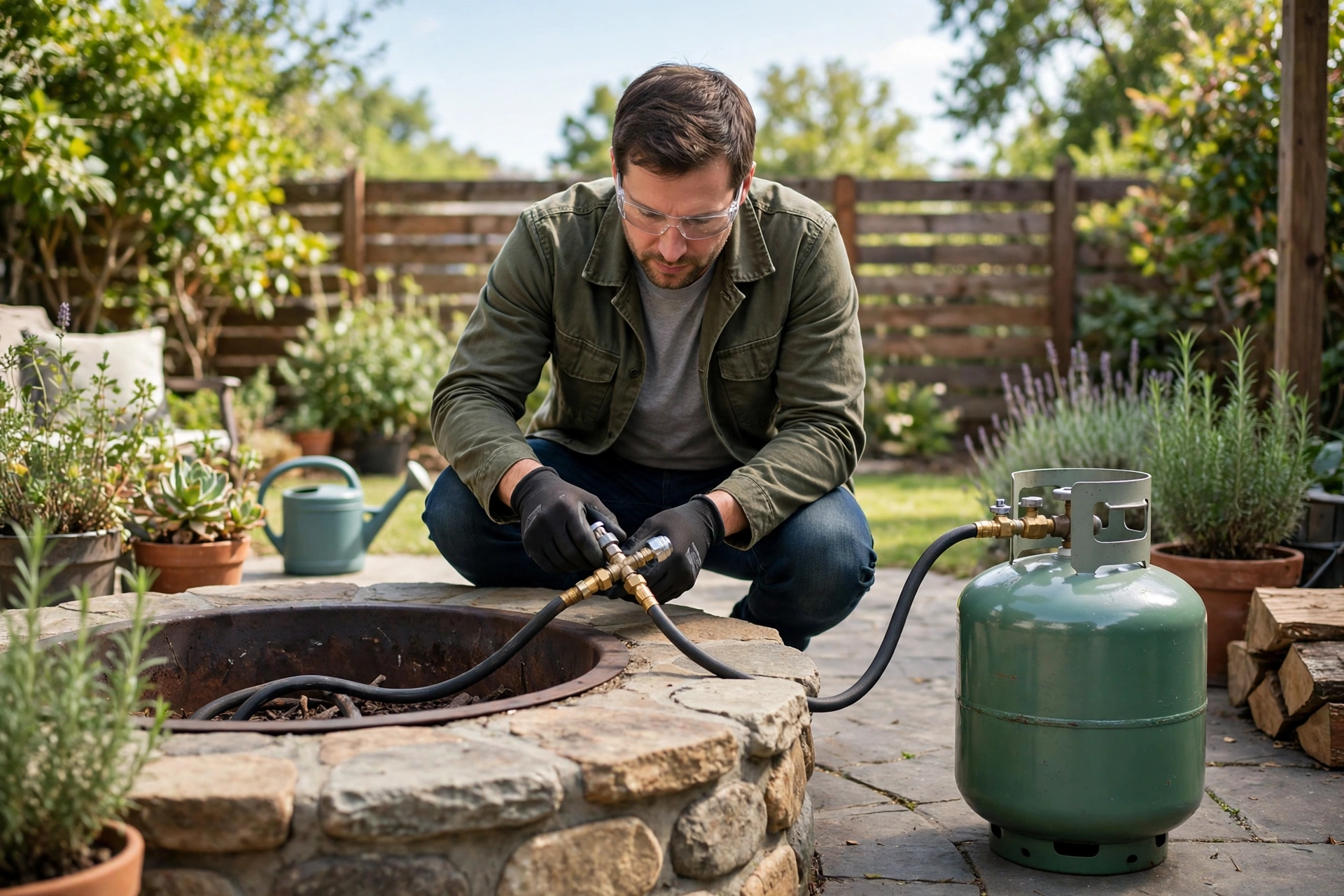
Look at the hose and connections for cracks, wear, kinks, or damage. If a hose looks damaged, do not light the fire pit. Replace the part with the part your manufacturer specifies, or ask a licensed professional to check it.
Step 3: Identify your ignition type
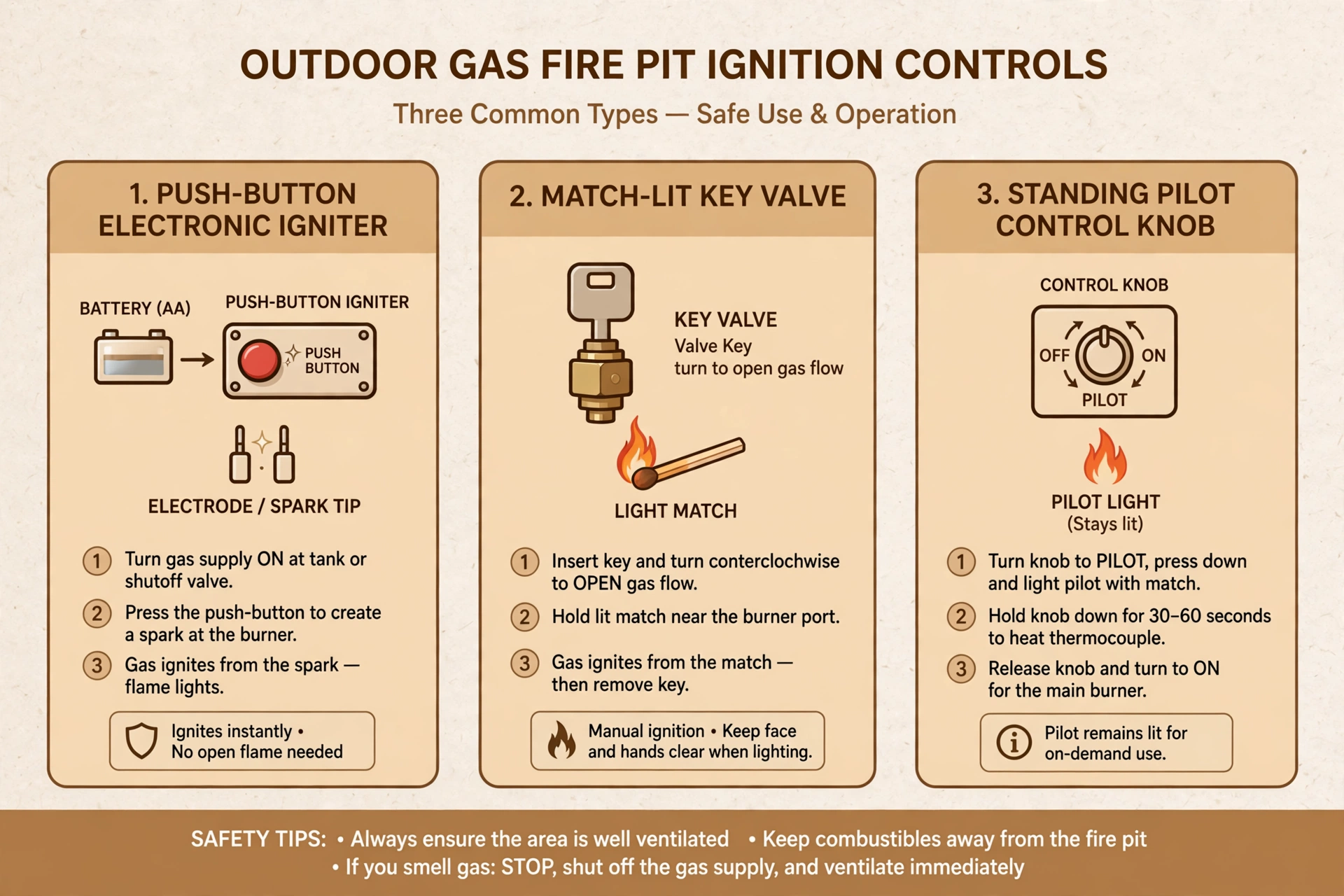
Find the control panel, key valve, or igniter button on your fire pit and match it to one of the three types below. If you cannot tell which type you have, check the manual or the model label before you proceed.
- Push-button electronic ignition: You press or turn a control and press an igniter button that creates a spark. Many of these models need a battery for the igniter, so a dead battery is a common cause of a no-spark problem.
- Match-lit ignition: You open a key valve by hand and light the burner with a long lighter or long match. There is no push-button spark on this type.
- Standing pilot ignition: A small pilot flame stays lit or is lit first, and the main burner lights from that pilot when you turn the control. Some models use a key valve plus a pilot control knob.
Step 4: Confirm your gas supply
A gas fire pit runs on propane or natural gas, and the supply steps differ. A propane fire pit uses a tank, while a natural gas fire pit connects to a fixed gas line. Do not swap fuels or connect a tank to a natural gas model, or a natural gas line to a propane model.
For a propane model, confirm the tank valve is closed before you connect or check the hose, then open it slowly when you are ready to light, following your manual. Check that the tank has gas in it, and read how long a propane tank lasts on a fire pit if you are unsure whether a low tank is your problem. For a natural gas model, confirm the supply valve is in the position your manual states, and leave any line, valve, or fitting work to a licensed professional.
To compare the two fuels before you buy or convert, read propane vs. natural gas fire pits. Conversion, when a manufacturer allows it at all, needs the correct conversion kit and, in most cases, a licensed professional.
Step 5: Light a push-button electronic ignition fire pit
Turn the control knob to the lighting position shown in your manual. Press the igniter button at the same time, or in the order your manual states, and watch the burner for a flame.
Hold the control in the lighting position for the time your manual states, then release it slowly. If the burner lights, move to the flame adjustment step below. If it does not light, turn the gas off, wait at least five minutes for gas to clear, and try once more. After two failed attempts, stop and work through the troubleshooting table below instead of repeating the same attempt.
Step 6: Light a match-lit fire pit
Hold a lit long lighter or long match near the burner, close to a burner port but clear of the media. With the flame in place, turn the key valve slowly to open the gas, following the direction and amount your manual states.
Keep your hand, face, and clothing clear of the burner while the gas opens. The burner should catch from the lighter flame. If it does not catch, close the key valve at once, wait at least five minutes for gas to clear, and try once more with a fresh match or lighter flame already in place before you open the valve again.
Never open the gas first and then search for a lighter. Gas that builds up before ignition is a burn and flash risk, and it is the main mistake to avoid on a match-lit model.
Step 7: Light a standing pilot fire pit
Turn the pilot control to the pilot or lighting position shown in your manual. Hold a lighter flame at the pilot assembly, or press the igniter if your model has one for the pilot, until the pilot flame holds on its own.
Once the pilot is steady, turn the control to the burner or “on” position to light the main burner. If the pilot goes out when you release the control, turn the gas off, wait at least five minutes, and light the pilot again. A pilot that will not stay lit after repeated careful attempts points to a thermocouple, control, or gas supply problem that needs a licensed professional.
Step 8: Adjust the flame to a steady height
Turn the control knob or key valve slowly to raise or lower the flame. Aim for a steady flame that stays on the burner, without tall, lifting, or sputtering flames and without a strong yellow, sooty look that your manual does not describe as normal.
Wind can push a fire pit flame sideways, so adjust the height down on a breezy evening and keep the area around the burner clear. Do not leave a lit fire pit unattended, and keep children and pets at a safe distance at all times.
Pro tip: light on a calm evening first
Learn your controls on a calm evening, when wind is low and daylight makes the flame easy to see. You will learn the normal flame shape and the feel of the valve, so later lighting in wind or low light feels familiar rather than rushed.
Step 9: Shut the fire pit down safely
Turn the control knob or key valve to the off position, then close the propane tank valve or the natural gas supply valve as your manual directs. Check that the flame is fully out before you walk away.
Let the fire pit, media, and surround cool fully before you cover it or touch the burner area. Never pour water on hot fire glass or lava rock to speed cooling, and never cover a fire pit while it is still hot or lit. Store a propane tank outdoors in an upright position, away from heat and living spaces, following the tank label and local rules.
Heads-up: a fire pit is not a wood fire
Do not add wood, paper, charcoal, or other fuel to a gas fire pit, and do not use it as a trash burner. Extra fuel can block burner ports, damage the burner, and create smoke and soot the unit was not made to handle. For wood-burning rules, read what you can burn in a fire pit, and keep gas and wood rules separate.
Troubleshooting: when a gas fire pit will not light
Work through this table from the top, and stop at the first fix that matches your problem. If a problem involves a gas smell, a damaged hose, or a valve that will not turn, stop and call a licensed professional.
| Problem | Likely cause | What to do |
|---|---|---|
| No spark from push-button igniter | Dead igniter battery, loose wire, or wet igniter | Replace the battery with the type your manual states, dry the igniter area, and check visible wires for damage. |
| Burner will not light at all | Gas supply closed, empty propane tank, or blocked burner ports | Confirm the supply valve is open, check the tank level, clear debris from burner ports, then retry after a five-minute wait. |
| Flame lights, then goes out | Control released too soon, wind, or a pilot or thermocouple fault | Hold the control for the time your manual states, shield the burner from wind, and call a professional if the flame still will not hold. |
| Weak or uneven flame | Low tank, kinked hose, or media blocking burner ports | Check the tank and hose, spread media clear of the ports, and stop if the hose or valve looks damaged. |
| Gas smell at any point | Possible leak or unburned gas buildup | Do not light the fire pit. Leave the area and call your gas utility or 911 from outside. Do not attempt a repair yourself. |
Gas fire pit lighting vs. wood fire pit lighting
A gas fire pit lights from a valve and an igniter, while a wood fire pit lights from kindling, firewood, and airflow. The two methods share only the outdoor safety basics: clear space, no burn ban, and full attention while the fire is lit.
If you also use a wood-burning fire pit, read how to start a fire in a fire pit for that method. Keep the two sets of steps separate, and never use lighter fluid, gasoline, or accelerants on either type.
Quick reference card
Gas fire pit lighting, in short
- Smell gas? Do not light. Leave and call the gas utility or 911 from outside.
- Check first: Area clear, burner and media clear, hose undamaged, supply on.
- Push-button: Control to light position, press igniter, hold as the manual states.
- Match-lit: Flame in place first, then open the key valve slowly.
- Standing pilot: Light and hold the pilot, then turn the control to the burner.
- Failed attempt: Gas off, wait at least five minutes, then retry once.
- Shut down: Control off, supply valve closed, flame fully out, cool before covering.
Frequently asked questions
Can I light a gas fire pit with a regular lighter?
Use a long fireplace lighter or long matches, not a short pocket lighter. A long lighter keeps your hand clear of the burner when the gas opens and the flame catches.
Why does my gas fire pit click but not light?
A clicking igniter with no flame often means the gas supply is closed, the propane tank is empty, or the burner ports are blocked. Check the supply valve, the tank level, and the burner area, then retry after a five-minute wait if the gas was left on during a failed attempt.
Should I open the gas valve before I light a match-lit fire pit?
No. Hold a lit long lighter or long match at the burner first, then open the key valve slowly. Opening the gas first lets gas build up before ignition, which is a burn risk.
How long should I wait after a failed lighting attempt?
Turn the gas off and wait at least five minutes before you try again. The wait lets unburned gas clear from the burner area. If the fire pit fails twice, stop and check the troubleshooting table or call a licensed professional.
Can I leave a gas fire pit burning unattended?
No. Stay with a lit fire pit, keep children and pets well back, and turn it fully off before you go inside or go to sleep. A lit fire pit left alone is a burn and fire risk even on a calm evening.
Can I use a gas fire pit under a covered patio?
Only if the manufacturer and local code expressly allow that exact setup, with the clearances your manual states. Many gas fire pits are rated for open-air use only, so check your manual and local rules before you light under any roof, pergola cover, or overhang.
When in doubt about any control, valve, or gas connection on your fire pit, stop and check your manual or call a licensed professional. A short wait for the right answer is always safer than a rushed lighting attempt.