What Can You Burn in a Fire Pit? (And What Never To Burn)
A backyard fire pit is one of the easiest ways to spend an evening outside. The fire feels better, smells better, and stays safer when the fuel going into it is the right kind.
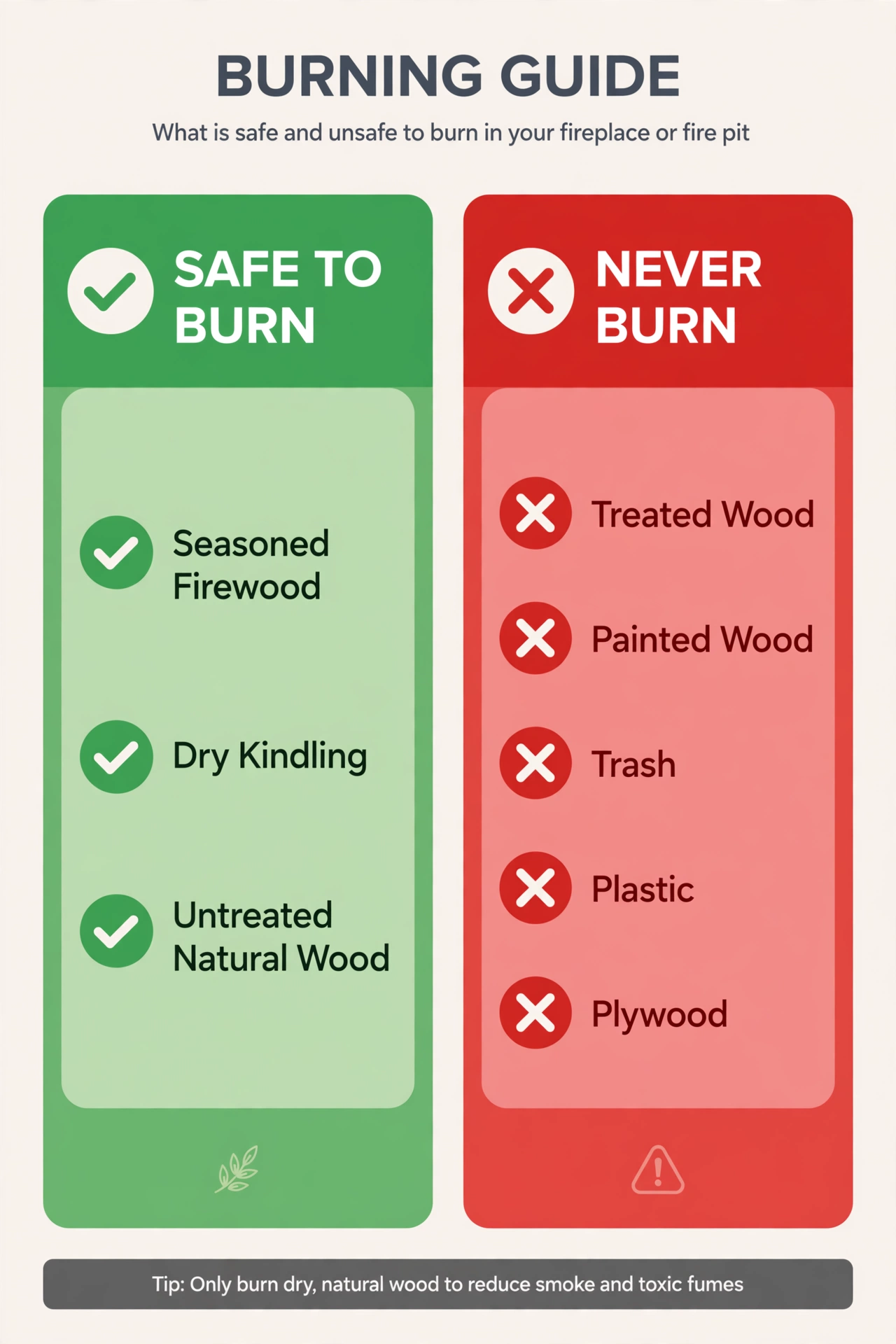
The short rule is easy to remember: burn clean, dry, untreated wood, and nothing else, unless your fire pit maker says otherwise. This guide walks through what that means in practice, what to avoid, and how to check your wood before you light it.
⚠ Safety note — read before you light a fire
Never burn treated, painted, or stained wood, plywood, MDF, particleboard, or household trash. Burning these materials can release toxic fumes that are harmful to breathe. Respect local burn bans and air-quality rules, check your local rules before burning, keep every fire attended, and put it out fully before you walk away. This article gives general guidance only and does not replace your local fire code or your fire pit maker’s manual.
The Quick Answer
If you want a clean fire with less smoke, the fuel list is short. Dry, seasoned, untreated firewood is the best choice for a wood-burning fire pit. Dry kindling and a small amount of plain newspaper help you get it started.
Everything else needs a second thought. Painted or treated wood, trash, plastic, and glued wood products do not belong in a fire pit, even in small amounts. The smoke they make can carry chemicals you do not want in your lungs or drifting over your neighbor’s yard.
| ✓ Safe to burn | ✗ Never burn |
|---|---|
| Seasoned, dry, untreated firewood (under 20% moisture) | Pressure-treated, painted, or stained wood |
| Dry kindling and plain newspaper for starting | Plywood, MDF, particleboard, and glued or laminated wood |
| Natural fire starters (wax and sawdust, or similar) | Household trash, plastic, rubber, and foam |
| Maker-approved logs for your specific fire pit | Wet, green, rotted, moldy, or diseased wood |
| Propane or natural gas in a gas fire pit, per the manual | Gasoline, kerosene, or lighter fluid as a starter |
What Is Safe to Burn in a Wood Fire Pit?
1. Seasoned hardwood
Seasoned hardwood is the backbone of a good fire pit fire. Oak, maple, ash, and hickory are common choices, and they tend to burn longer and steadier than softwood once the fire is going. “Seasoned” means the wood was split, stacked, and left to dry for at least six months, following the U.S. Environmental Protection Agency’s guidance for firewood.
Hardwood takes longer to catch, so it works best after you have a hot bed of kindling and flame. Add one or two logs at a time rather than piling the pit full. A smaller, hotter fire burns cleaner than a large, smoldering one.
2. Softwood kindling
Pine, fir, and cedar catch fire fast, which makes them useful for starting. Use small, dry pieces to build your first flames, then switch to hardwood for the main fire. Softwood can pop and throw sparks more than hardwood, so a spark screen is a smart addition, especially on dry evenings.
Some people avoid pine for long burns because it can build up creosote in chimneys. In an open fire pit there is no chimney to coat, but pine still burns faster and smokier than hardwood. Treat it as a starter, not the main event.
3. Dry kindling and plain newspaper
Small, dry twigs and split pieces of untreated wood make the best kindling. You can gather fallen branches from your own yard, as long as they have had time to dry out. A few sheets of plain, black-and-white newspaper also work well for lighting.
Skip glossy magazines, colored inserts, and coated paper. The inks and coatings on those can add chemicals to the smoke. The EPA advises starting fires with clean newspaper or dry kindling only.
4. Natural fire starters
Wax-and-sawdust starters, wood-wool starters, and similar products are made for lighting fires and are a fine choice. Read the package and follow its directions. Avoid starters that list unknown chemicals, and never use a starter as a reason to burn something unsafe on top of it.
5. Manufactured logs — with a check first
Manufactured logs made from compressed sawdust are sold for fireplaces and, in some cases, fire pits. The EPA notes that many wax and sawdust logs are made for open-hearth fireplaces only. Before you use one in a fire pit, check both the log package and your fire pit manual. If either one says no, leave it out.
6. Charcoal — only if your fire pit allows it
Some metal fire pits are rated for charcoal, and some are not. Check your manual before you try it. If charcoal is allowed, lump charcoal is the cleaner option, since briquettes often contain binders and lighter-fluid additives. Never use lighter fluid to start charcoal in a fire pit, and never burn charcoal in a fire pit designed for wood only.
How Dry Should Firewood Be?
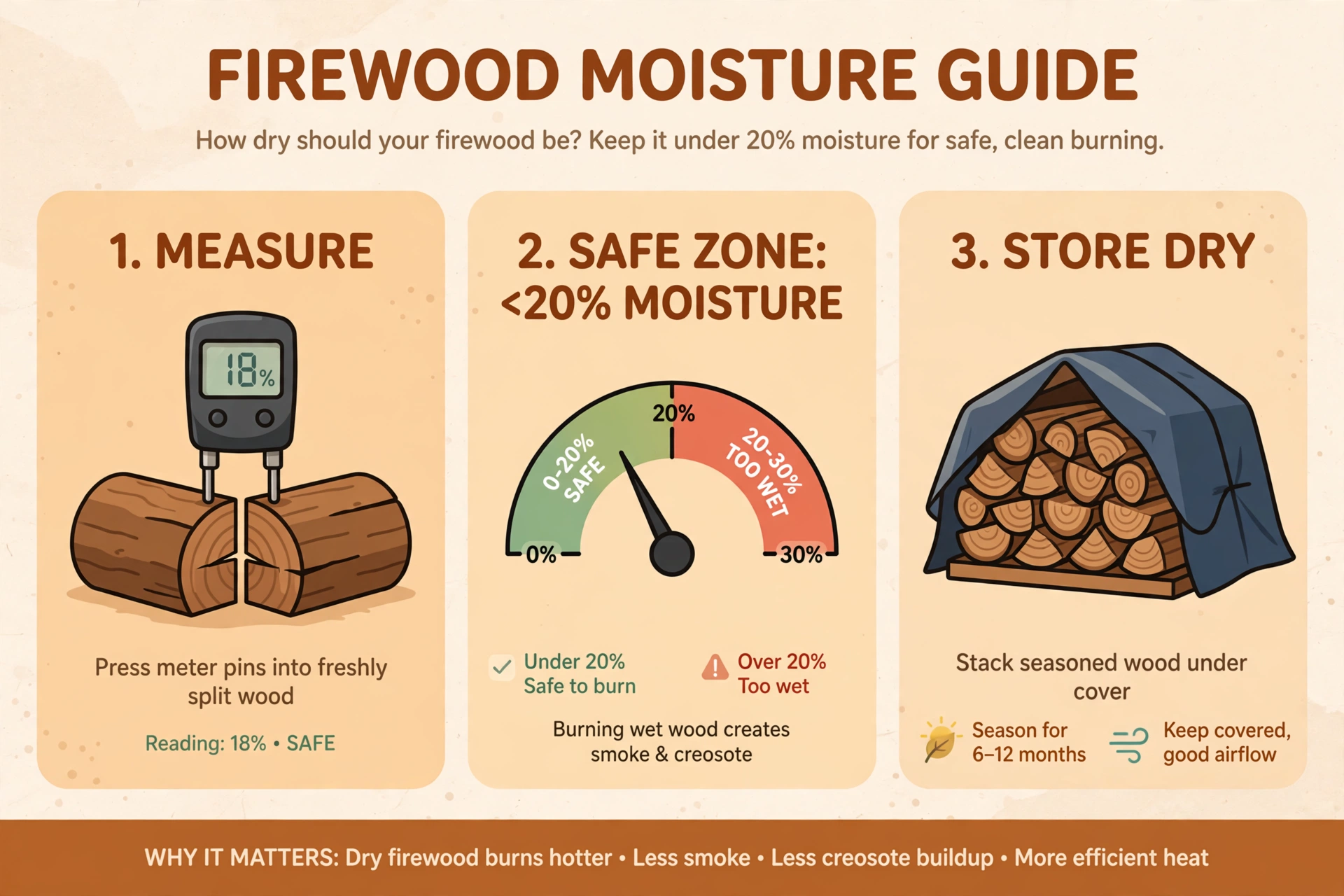
This is the single biggest factor in how your fire behaves. The EPA recommends burning wood with a moisture content of about 20 percent or less. Wood above that level is still wet inside, even if the outside feels dry.
Wet wood hisses, smokes heavily, and struggles to stay lit. It also gives off far less heat, because much of the fire’s energy goes into boiling water out of the log. If your fire smokes a lot and your neighbors can smell it from down the street, damp wood is the most likely cause. Our guide to burning wet firewood and why you should not explains the signs in more detail.
A wood moisture meter costs little and takes the guesswork out of the question. Press the pins into a freshly split face of a log, not the weathered outside, and read the number. Under 20 percent means the wood is ready. Over 20 percent means it needs more time in the stack.
Hardwood vs. Softwood: What Burns Differently?
Both have a place at the fire pit, but they behave differently. Hardwood is denser, so it burns longer and throws steadier heat. Softwood is lighter and resinous, so it lights fast and burns out fast.
| Wood type | Best use | Watch out for |
|---|---|---|
| Oak, maple, ash, hickory | Main fire, long steady heat | Slow to catch; needs good kindling |
| Pine, fir, cedar | Kindling and quick flames | Pops and sparks; burns out fast |
| Fruit woods (apple, cherry) | Pleasant-smelling fires | Hard to find and often pricey |
| Birch | Easy lighting, bright flame | Burns faster than oak or maple |
Buying local firewood has a second benefit beyond price. It lowers the chance of moving invasive insects and tree diseases to a new area, a point the EPA raises in its firewood guidance. If you buy bundled wood, ask the seller how long it was seasoned.
What You Should Never Burn in a Fire Pit
Some of these items look like wood, and that is what makes them risky. A painted board, a broken pallet, or an old shelf can seem like free firewood. The smoke they give off tells a different story.
Pressure-treated wood
Pressure-treated lumber is soaked with preservatives to resist rot and insects. Older treated wood may contain arsenic compounds, and newer formulas still contain chemicals that are not meant to be inhaled. The EPA lists treated wood among the materials that should never be burned. Send it to the trash or a proper disposal site instead.
Painted, stained, or varnished wood
Paint, stain, and varnish are coatings, and coatings turn into smoke chemicals when heated. Even one painted board can fill a yard with fumes. This includes old fence boards, trim, and decking that were ever painted or sealed. If you cannot tell whether a board was treated or coated, do not burn it.
Plywood, MDF, and particleboard
These boards are held together with glues and resins. When burned, those glues release formaldehyde and other irritants. The EPA names plywood and particleboard directly in its list of materials not to burn. Offcuts from a building project belong in the bin, not the fire pit.
Household trash and plastic
Burning trash is illegal in many areas, and for good reason. Plastic, packaging, food wrappers, and mixed garbage release dioxins and other toxic pollutants when burned, according to the EPA. A fire pit is not a trash burner, and using it as one can also draw complaints from neighbors and fines from local authorities.
Rubber, tires, and foam
Rubber and foam produce thick, black, foul-smelling smoke and leave a sticky residue. They can also damage a metal fire pit. Keep them out of the fire entirely.
Ocean driftwood
Driftwood from a salty beach or lake absorbs salt as it dries. Burning it releases salt and, per the EPA, toxic chemicals, and the salt can corrode metal fire pits. Pretty as it looks, leave driftwood on the beach.
Wet, green, rotted, or moldy wood
Green wood is freshly cut and full of water. Rotted and moldy wood breaks down into soft, damp material that smolders rather than burns. Diseased wood can also carry pests. None of it makes a good fire, and moldy wood can add spores to the smoke. Stack it for compost or disposal instead.
Yard waste — check your local rules first
Leaves, brush, and garden waste are a gray area that depends on where you live. Many towns ban open burning of yard waste, or allow it only on certain days with a permit. Even where it is allowed, leaves burn fast, smoke heavily, and throw embers. If your area allows it, burn small amounts of dry brush only, and never on a windy day.
Accelerants: gasoline, kerosene, and lighter fluid
Never pour an accelerant on a fire or on wood you plan to light. Liquid fuels can flash back and cause severe burns, and their fumes linger in the pit. If a fire will not start, the fuel is usually damp or the airflow is poor. Fix the fuel and the airflow instead of reaching for a can.
Gray Areas: Pallets, Old Furniture, and Christmas Trees
These three come up in almost every fire pit conversation, and each one needs care.
Pallets: Some pallets are safe to burn, and some are not. A pallet stamped “HT” was heat-treated, which is a drying process, not a chemical one. A pallet stamped “MB” was treated with methyl bromide fumigant and should never be burned. Painted, stained, or unmarked pallets are also off the list. If you cannot read a clear HT stamp, skip it.
Old furniture: Most furniture is finished, glued, or made from engineered wood, which puts it in the never-burn group. Even a plain-looking wooden chair may carry varnish or glue joints. Break it down for disposal or donation instead.
Christmas trees: A dried-out tree burns extremely fast and hot, with resin that pops and throws sparks. Many fire departments advise against burning trees in small backyard pits. Check your local rules, and if burning is allowed, feed in small branches a few at a time rather than the whole tree. When in doubt, use a municipal tree-recycling program instead.
Gas and Propane Fire Pits Follow Different Rules
A gas fire pit burns gas, not wood. Never put logs, kindling, or paper into a gas fire pit unless the maker states clearly that the model converts to wood. Doing so can damage the burner and create a fire risk.
For gas models, use the fuel the manual names, keep the burner and vents clear, and follow the maker’s lighting steps. If you are weighing gas against wood, our look at whether smokeless fire pits are worth it can help you compare the trade-offs. A gas pit is also the option most likely to stay legal on air-quality no-burn days, though some fire-safety bans cover all open flames, so read your local ban notice carefully.
Check the Rules Before You Light the Fire
Rules for backyard fires vary a lot by city, county, and neighborhood. Some places limit fire pit size, distance from buildings, or the hours you can burn. Some require a permit. Others ban recreational fires during dry or smoky periods.
Before your first fire of the season, check with your local fire department or city office, and read any homeowners association rules that apply to you. Our guide to whether backyard fire pits are legal explains the common restrictions and where to look them up. A two-minute check can save you a fine and a visit from the fire department.
Two kinds of bans matter here. Air-quality bans target smoke on days when pollution is already high. Fire-safety bans target wildfire risk during dry or windy weather. A gas fire pit may be allowed during an air-quality ban but banned during a fire-safety ban, or the other way around, depending on the notice. Read the notice itself rather than guessing.
How to Build a Safe Fire, Step by Step
Good fuel plus good technique is what keeps a fire hot, clean, and under control. If you are new to fire pits, our step-by-step guide on how to start a fire in a fire pit covers the layout in detail. The short version:
- Clear the area. Move leaves, dry grass, and flammable items away from the pit, and place the pit on a non-flammable surface, away from overhanging branches and structures. If you are thinking about a deck, read whether you can put a fire pit on a wood deck first.
- Check the wind and the rules. Skip the fire on very windy days or during a burn ban.
- Build small. Start with crumpled plain newspaper and dry kindling, then add small split pieces. Let each layer catch before you add the next.
- Add hardwood slowly. Once the kindling is burning well, add one or two seasoned logs. Keep the fire modest. A pit piled high with wood is harder to control and smokes more.
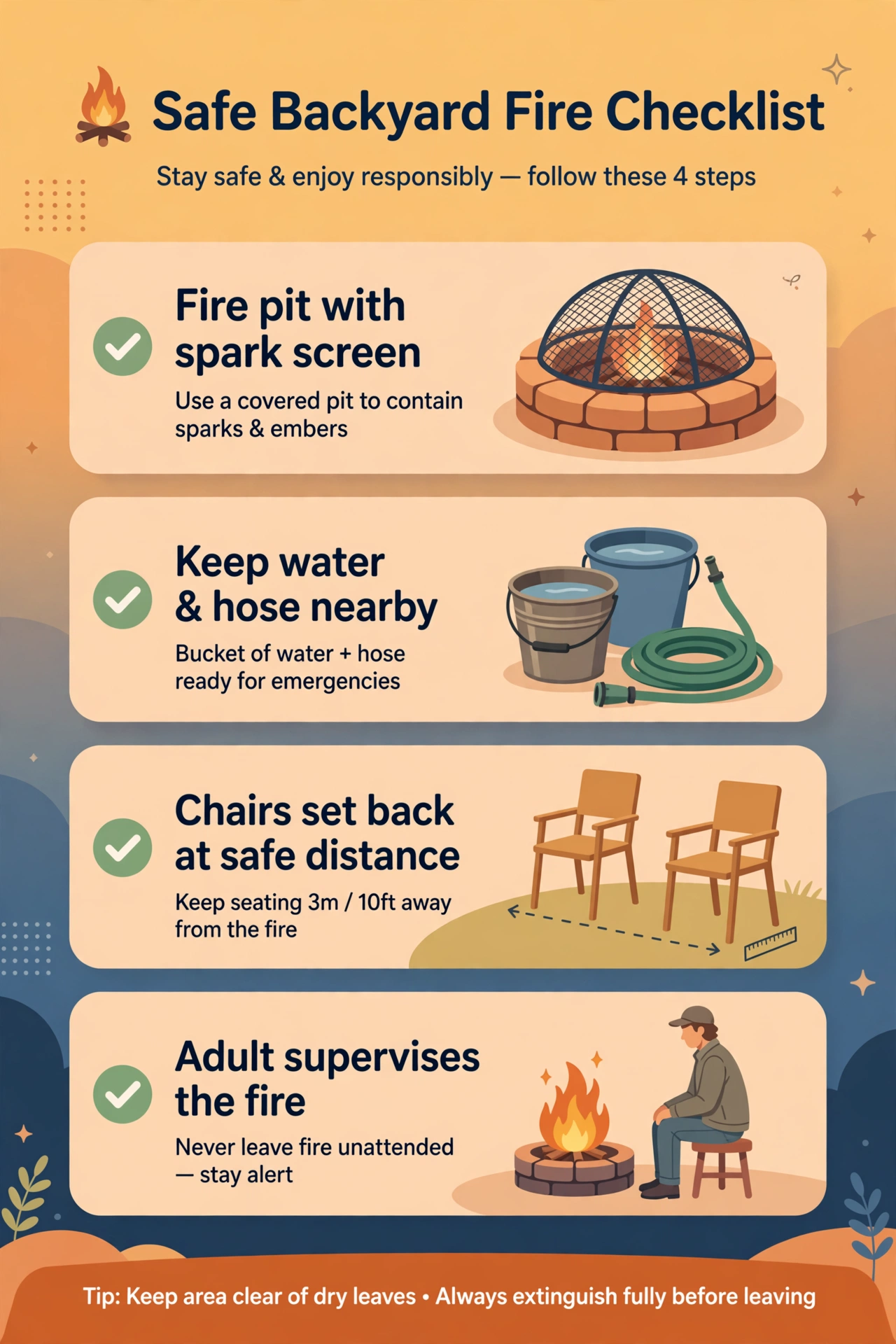
- Stay with it. Keep a bucket of water or a hose nearby, use a spark screen if you have one, and keep children and pets at a safe distance.
Putting the Fire Out — Fully
A fire is not out when the flames die down. Embers can stay hot for hours and can restart in wind. When you are done, stop adding wood and let the fire burn down. Then drown the ashes with water, stir them with a long tool, and drown them again.
Feel for heat by holding your hand near the ashes, not in them. If anything still feels warm, repeat the water and stirring. Only when the ashes are cool to the touch is the fire truly out. Never leave a fire pit to “burn itself out” overnight.
What to Do With the Ashes
Let ashes cool for at least a day, and longer if you are unsure. Store them in a metal container with a tight lid, away from anything flammable. Wood ash from clean, untreated wood can go into garden soil in small amounts in many areas, but ash from anything treated, painted, or glued should go in the trash. If you are unsure what went into the fire, treat the ash as trash.
Wait several days before putting cooled ash in a bin, since a hidden ember can smolder for a long time. This is one of the most common causes of fires linked to fire pits and fireplaces, and it is easy to prevent with patience.
Common Mistakes That Cause Smoky Fires
- Burning wood that looks dry on the outside but is still wet inside. Test with a moisture meter.
- Overloading the pit. Too much wood at once chokes airflow and makes smoke.
- Letting the fire smolder. A hot, active flame burns cleaner than a dull, smoking pile.
- Burning scraps from a project. Paint, glue, and finishes turn a cheap fire into a toxic one.
- Lighting up during a burn ban or on a high-wind day.
If you are building a permanent setup, our guide to building a stone fire pit covers placement, drainage, and materials that hold up to heat.
Frequently Asked Questions
Can you burn pine in a fire pit?
Yes, dry pine works well as kindling because it lights fast. It burns faster and pops more than hardwood, so use it to start the fire and switch to seasoned hardwood for the main burn.
Can you burn cardboard in a fire pit?
Plain, uncoated cardboard can help start a fire, but the EPA advises against burning cardboard as a fuel, and colored or glossy cardboard should not be burned at all. Use a small amount of plain newspaper instead, and keep cardboard out of the regular fuel pile.
Can you burn leaves in a fire pit?
Only if your local rules allow it. Many towns ban leaf burning, and leaves smoke heavily and throw embers. Check your local rules first, and burn small amounts of dry material only.
How can you tell if firewood is seasoned?
Seasoned wood feels lighter than green wood, has cracks at the ends, sounds hollow when two pieces are knocked together, and reads under 20 percent on a moisture meter pressed into a freshly split face.
Can you burn a pallet in a fire pit?
Only a pallet clearly stamped HT for heat-treated, with no paint, stain, or spills on it. Never burn a pallet stamped MB, and skip any pallet you cannot identify.
Is it safe to burn wood during a burn ban?
No. During a burn ban, do not light a wood fire, even in a fire pit. Some gas fire pits may still be allowed, but that depends on the ban notice, so read it before you light anything.
The Bottom Line
When you are not sure about a fuel, the safest choice is to leave it out. Clean, dry, untreated wood, a little kindling, and a hot, attended fire will give you the evening you wanted, with far less smoke and no toxic fumes.
Check your local rules, test your wood’s moisture, and keep water close. A fire pit is at its best when the fire is clean, the company is good, and nothing in the pit was ever painted, glued, or pulled from the trash.