Heated Outdoor Furniture vs Patio Heaters: Which Keeps Your Patio Warm?
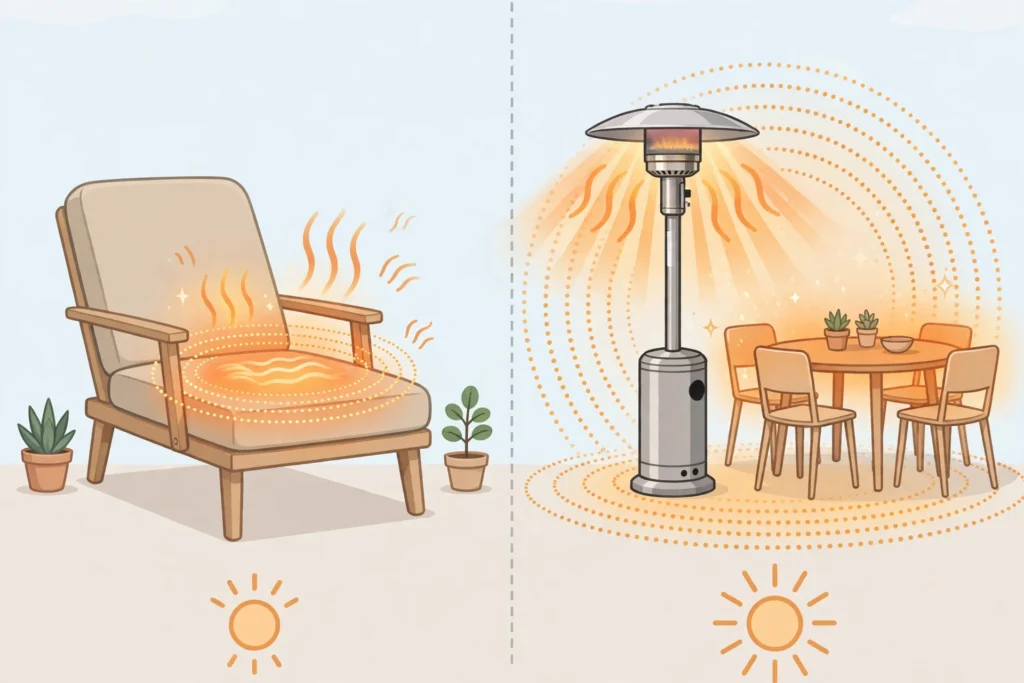
Heated outdoor furniture warms the seat you sit on. A patio heater warms the air and surfaces around a table or seating area. Both can stretch patio season into cooler evenings, but they solve different problems, and the better pick depends on how you use your patio.
This guide compares how each option works, what it costs to run, how it holds up outdoors, and what to check before you buy. It does not rank one option above the other for every home, because patio size, seating style, power access, and local weather change the answer.
Safety first — please read before you buy or plug anything in
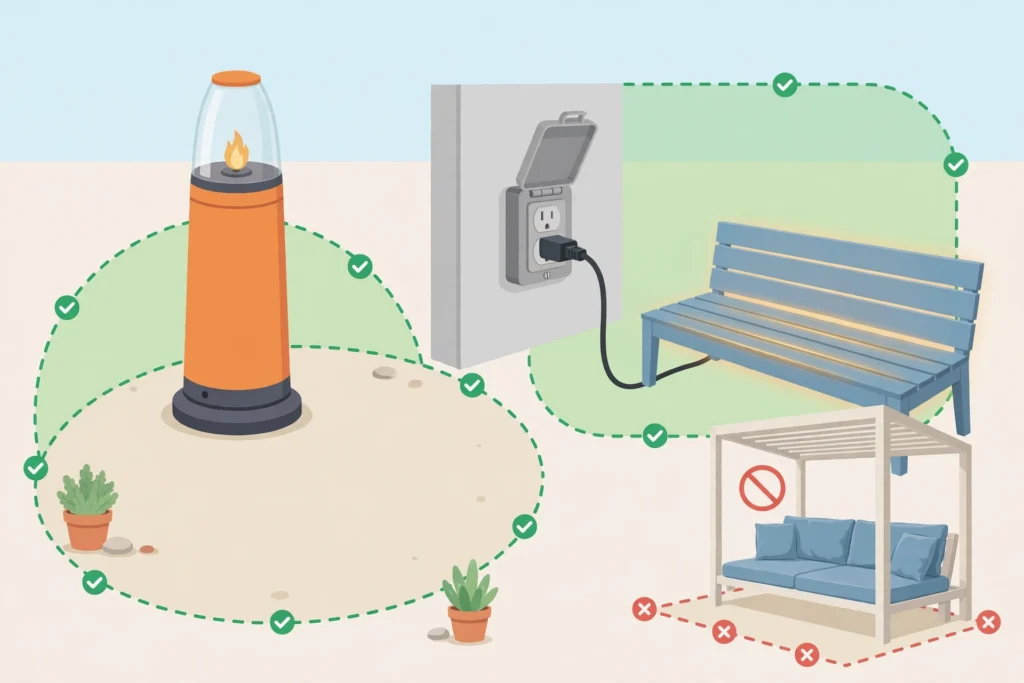
Use outdoor-rated outlets and cords only, and plug heated furniture into a GFCI-protected outlet. Keep cords out of walkways and puddles, and never use a damaged cord, cushion, or heating element. Keep heaters and heated furniture clear of cushions, curtains, umbrellas, and overhead cover by the distances in the maker manual. Never use a fuel-burning patio heater in an enclosed or unvented space, and fit working carbon-monoxide alarms in the home. Always follow the maker manual and local codes, and call a licensed professional for electrical or gas work.
How Heated Outdoor Furniture Works
Heated outdoor furniture has heating elements built into seats, and sometimes into backrests or armrests. You sit down, switch the heat on, and warmth reaches you through the cushion. Many models offer more than one heat setting, so you can turn the level up or down during the evening.
Most heated seating runs on mains power, while some chairs and cushions use rechargeable batteries. Battery models give you freedom from cords, but run time depends on the battery, the heat setting, and the outdoor temperature. Check the maker manual for run time and charging guidance for the exact model you are looking at.
Heated furniture suits people who sit in one spot for a long stretch. It warms you directly, even on a breezy evening when warm air would drift away. It does not warm the whole patio, so guests standing nearby or sitting on unheated chairs will feel less benefit.
How Patio Heaters Work
Patio heaters warm a wider area. Electric models give off radiant heat, while propane and natural gas models burn fuel to produce heat. Freestanding mushroom-style heaters, tabletop heaters, wall-mounted heaters, and hanging heaters all work on the same broad idea: heat spreads out from the unit to the people near it.
A patio heater suits groups and dining tables, because one unit can serve several seats at once. Wind, open sides, and high ceilings reduce how far that warmth reaches, so placement matters a great deal. If you are new to these units, start with how to use a patio heater before your first evening outdoors.
At a glance: seat warmth vs area warmth
- Heated furniture: warms the person sitting on it, seat by seat.
- Patio heater: warms a zone around the unit, for several people at once.
- Best of both: some patios pair a heater for the table with heated seats for long evening sits.
Side-by-Side Comparison
The table below sums up the main trade-offs. Use it as a starting point, then check the specs and manual for any model you plan to buy, because designs differ a lot within each group.
| Feature | Heated Outdoor Furniture | Patio Heater |
|---|---|---|
| What it warms | The seated person, through the cushion | A zone around the unit, for several people |
| Best for | Long sits, reading, and quiet evenings | Dining, groups, and shared seating areas |
| Power or fuel | Mains power or rechargeable battery | Electric, propane, or natural gas, by model |
| Wind sensitivity | Low, because heat reaches you by contact | Higher, because warm air can drift away |
| Running cost driver | Wattage, heat setting, and hours used | Wattage or fuel use, and hours used |
| Main safety check | Outdoor-rated GFCI outlet, cords, and weather cover | Clearances, ventilation, and fuel handling |
Warmth, Comfort, and Wind
Seat heat feels direct and steady. Once you sit down, warmth builds in the cushion and stays close to your body. That direct contact is why heated seating can feel pleasant even when the air around you stays cool.
Patio heaters feel different. Radiant heat warms your skin and nearby surfaces, while warm air rises and spreads. On a calm evening, that spread feels generous around a table. On a windy evening, much of the warm air moves off, and people at the edge of the zone may feel little change.
For a breezy, open patio, heated seating often gives a more reliable result for one or two people. For a sheltered patio with a dining set, a heater often serves the group better. A windbreak, such as a fence, screen, or wall, helps a heater hold its zone, but it must not block ventilation for a fuel-burning unit.
Running Costs: What Actually Drives the Bill
No single cost figure fits every model, because wattage, fuel type, heat setting, and hours of use all vary. A maker spec sheet gives the rated power or fuel use for that model, and your electricity rate or fuel price gives the rest of the picture. If a seller does not publish those figures, treat cost claims with care and ask for the spec sheet before you buy.
Heated seating tends to use less power per seat than a large area heater, because it warms a small area: you. A heater that serves six people may use more energy in total, but less per person than six heated chairs running at once. Work out the cost for your normal group size and session length, not for a single chair in isolation.
Battery heated cushions add a charging cost and a replacement cost over time, because batteries wear out with use and age. Mains-powered heated furniture avoids battery replacement but ties each seat to an outlet. For a fuller breakdown of heater running costs, see how much it costs to run a patio heater.
Setup and Placement
1. Map your seating and power first
Sketch where people sit, where the table goes, and where outlets sit. Heated furniture needs an outlet near each seat, or a charged battery for each cushion. A heater needs a clear, level spot with room around it, plus a safe route for its cord or fuel line that no one trips over.
2. Check clearances before you buy
Read the clearance figures in the maker manual for the exact model, including distance from walls, ceilings, umbrellas, and soft furnishings. Do not guess these distances, and do not place a heater under a low cover unless the manual allows it. Our guide to patio heater clearance explains what to measure and why it matters.
3. Plan for weather and storage
Outdoor cushions and heating elements need protection from rain, snow, and long damp spells. Covers, a dry store, or a sheltered spot extend their life. Heaters need a dry, stable store in harsh weather too, and fuel cylinders need storage that follows the maker guidance and local rules.
4. Test the setup on a normal evening
Run your chosen setup at your normal seating layout, with your normal group size, before a big gathering. Note cold spots, cord routes, and if guests at the ends of the table feel the same warmth as those in the middle. Small moves, such as shifting a heater closer to the table or adding a heated cushion to an end seat, often fix a cold spot.
If you are still sizing a heater, read what size patio heater you need and how to assemble and install a patio heater before you order.
Electric vs Fuel: A Short Safety Note
Electric heated furniture and electric heaters avoid open flame and fuel storage, but they still need care with water, cords, and outlets. Use outdoor-rated gear, keep connections dry, and switch power off at the outlet before you move, clean, or cover heated seating.
Fuel-burning patio heaters need fresh air and strict clearance. Never use a fuel-burning patio heater indoors, in a garage, or in any enclosed or unvented space, even with a door or window open, because carbon monoxide can build up without warning. Fit working carbon-monoxide alarms in the home, and learn the signs of trouble in the manual. If you are unsure about indoor use, read can you use a patio heater indoors before you decide.
For the choice between power types, electric vs propane patio heater lays out the trade-offs in plain terms. Do not attempt gas-line work, conversions, or repairs yourself. Call a licensed professional for any gas or fixed electrical work.
Care, Durability, and Lifespan
Heated furniture has two parts that wear: the outdoor fabric and the heating parts inside it. Fabric fades and stains with sun and rain, while heating elements, controllers, and batteries can fail with age or water damage. Follow the maker washing and care steps, and keep cushions dry when they are not in use.
Patio heaters wear in different places. Burners, igniters, reflectors, and cords need checks each season, and rust can form on metal parts left out in wet weather. A cover and a dry store help, but check the unit before first use each season, and follow the manual for cleaning and service.
Ask about spare parts and repair before you buy, for either option. A heated chair with no replacement cushion or controller can become an ordinary chair after one fault. A heater with no spare igniter or burner parts can sit unused for a whole season.
Common Mistakes to Avoid
Five mistakes that waste money or create risk
- Buying for looks before warmth: check heat output, coverage, and controls, not the photo alone.
- Ignoring wind: an open, windy patio needs seat heat, a sheltered spot, or both.
- Forgetting outlets: count outlets and cord routes before you order heated seating.
- Skipping clearances: a heater squeezed under a cover or near curtains is a fire risk.
- Using fuel heat indoors: fuel heaters belong outdoors with fresh air, every time.
Which Option Fits Your Patio?
Choose heated outdoor furniture if you sit outdoors for long periods, often alone or as a pair, and you have outlets or charged batteries near your seats. It gives steady, personal warmth and works well on breezy patios. It also suits reading corners, lounge chairs, and quiet corners where one or two people linger.
Choose a patio heater if you host groups, dine outdoors, or want one unit to serve a table. It warms several people at once and moves with the gathering, from dining set to lounge area. It suits sheltered patios best, and it pairs well with a windbreak that still allows fresh air.
Choose both if your budget and patio allow it. A heater for the shared zone plus heated cushions for the coldest seats covers both needs. Start with the option that fixes your main problem, then add the other later if cold spots remain.
Quick decision card
- One or two people, long sits: heated seating first.
- Groups and dining: patio heater first.
- Windy and open: heated seating, plus shelter if you can add it.
- Cold spots remain: add the other option, one piece at a time.
Frequently Asked Questions
Is heated outdoor furniture safe in rain?
Heated outdoor furniture is made for outdoor use, but it still needs care in wet weather. Use outdoor-rated, GFCI-protected outlets, keep connections dry, and follow the maker manual for rain, covers, and storage. Switch power off before you move or clean heated seating, and do not use a cushion with a damaged cord or heating element.
Can a patio heater warm a whole patio?
A patio heater warms a zone around the unit, not a whole open patio. Wind, open sides, and distance all reduce the warmth at the edge of that zone. For a large patio, you may need more than one unit, or a mix of a heater for the table and heated seating for the coldest spots.
Do heated chairs use a lot of electricity?
It depends on the model, the heat setting, and how long you run it. Check the wattage on the spec sheet for the exact model, and work out cost from your electricity rate and your normal session length. Heated seating warms a small area, so it often uses less power per seat than a large area heater.
Can I use a patio heater under a covered patio?
Only if the maker manual for that exact model allows it, and only with the clearances it states. Some heaters suit covered areas, while others need open air above and around them. Never use a fuel-burning heater in an enclosed or unvented space, and check local codes before you install a fixed unit.
Which lasts longer: heated furniture or a patio heater?
Neither option has a fixed lifespan that fits every model. Heated furniture can fail at the cushion, controller, or battery, while heaters can fail at the burner, igniter, or reflector. Covers, dry storage, and seasonal checks help both last longer, and spare-parts availability matters for repairs.
Heated seating and patio heaters both earn their place outdoors, but they warm in different ways. Pick the one that matches how you sit, how many people you host, and what power or fuel access you have. Then check the manual, measure your clearances, and test the setup on a normal evening before you rely on it for a gathering.