Are Oil-Filled Heaters Safe to Leave Unattended?
Are oil-filled heaters safe to leave unattended? For a short time out of the room, the answer is often yes, as long as the heater is in good shape and set up the right way. For an overnight run or a full day away from home, the answer needs more care. This guide walks through when it is fine, when it is not, and the checks that keep your home safe.
An oil-filled heater warms sealed oil with an electric element, and the warm metal fins then give off steady heat. There is no flame and no fuel burning, so it works in a different way from a gas or wood heater. That design lowers some risks and leaves others that still matter, mostly around cords, heat build-up, and placement.
⚠️ Safety note: This guide gives general safety advice, not advice for one single model. Your heater’s manual has the final word on clearance, cord use, and run time. If your heater is damaged, smells odd, or has been recalled, turn it off and unplug it. When in doubt, turn it off.
Learn How an Oil-Filled Heater Works
An oil-filled radiator heater is a sealed unit. Electric current heats oil inside the fins, and the fins pass that warmth into the room. The oil never burns and never needs refilling. Once the heater reaches the set temperature, its thermostat switches the element off, then back on as the room cools.
That on-and-off cycle is why these heaters feel so steady. The fins stay warm for a while after the element switches off, so the room does not swing hot and cold. If you want the full picture of the heating cycle, read how oil heaters work before you change any settings.
Clear Up the Carbon Monoxide Question
Oil-filled heaters do not give off carbon monoxide. Carbon monoxide comes from burning fuel, and these heaters burn nothing. The oil stays sealed inside, and the heat comes from electricity alone.
That fact does not remove the need for alarms in your home. Fuel-burning gear such as gas furnaces, wood stoves, and generators can give off carbon monoxide, so homes with that kind of gear still need working carbon monoxide alarms. Smoke alarms matter in every home, with or without a space heater. The heater itself is not the source of carbon monoxide risk, but good alarms are still part of a safe home.
Know the Real Risks
The real risks with oil-filled heaters are electrical and heat-based. A cord that is pinched, frayed, or run under a rug can overheat. A power strip or extension cord can overload, since these heaters draw a strong, steady current. A heater that is covered or pushed against bedding can trap heat until fabric scorches.
Tip-over is another risk, mainly in homes with small children, pets, or busy walkways. Most modern heaters have tip-over protection that switches the unit off if it falls, but older or cheaper models may lack it. Hot fins can also burn skin on contact, so the heater needs a spot where no one brushes past it by accident.
Decide Based on How Long You Will Be Gone
There is no single yes-or-no answer that fits every absence. A quick trip to another room is not the same as a night of sleep, and a night of sleep is not the same as a weekend away. Use the length of your absence as your guide.
Stepping Out of the Room for a Few Minutes
A short absence is the lowest-risk case. If the heater is plugged into a wall outlet, has clear space around it, and shows no cord damage, leaving it on while you step into the kitchen or take a shower is normally fine. Keep the door open so you can hear or smell a problem, and keep the run time short.
Are Oil-Filled Heaters Safe to Leave Unattended Overnight?
Overnight use is where most people ask the hardest questions. Many makers build these heaters for long runs, and the thermostat plus tip-over protection help a lot. Even so, overnight means hours with no one awake to catch a problem, so the safety check matters far more.
If you run one overnight, use a lower heat setting and the timer or thermostat so the heater cycles off on its own. Place it where bedding, curtains, and clothes cannot fall onto it during the night. Never run a damaged heater overnight, and never cover it to dry laundry. If your model lacks tip-over protection, or your smoke alarm is not working, turn the heater off before bed.
Leaving the House for Hours or Days
Leaving the house with the heater running is the highest-risk case, and the safest choice is to turn it off. No one is home to notice a tripped breaker, a fallen heater, or a cord that starts to smell hot. The money saved by heating an empty home is small next to that risk, and you can learn more about running costs in our guide to whether oil-filled heaters use a lot of electricity.
For a trip away, unplug the heater as well as switching it off. A plug left in the outlet can still draw a small standby current on some models. Coming home to a cold house is a small price for removing the risk while you are away.

Check These 7 Things Before You Leave the Heater On
Run through this check each time you plan to leave the heater on without watching it. It takes about five minutes, and it catches most problems before they start.
🧰 What You Need
- Your heater’s manual (for its clearance and cord rules)
- A free wall outlet on its own circuit, if possible
- Clear floor space around the heater
- A working smoke alarm in the room
- The heater’s thermostat and timer, if fitted
1. Plug It Straight Into a Wall Outlet
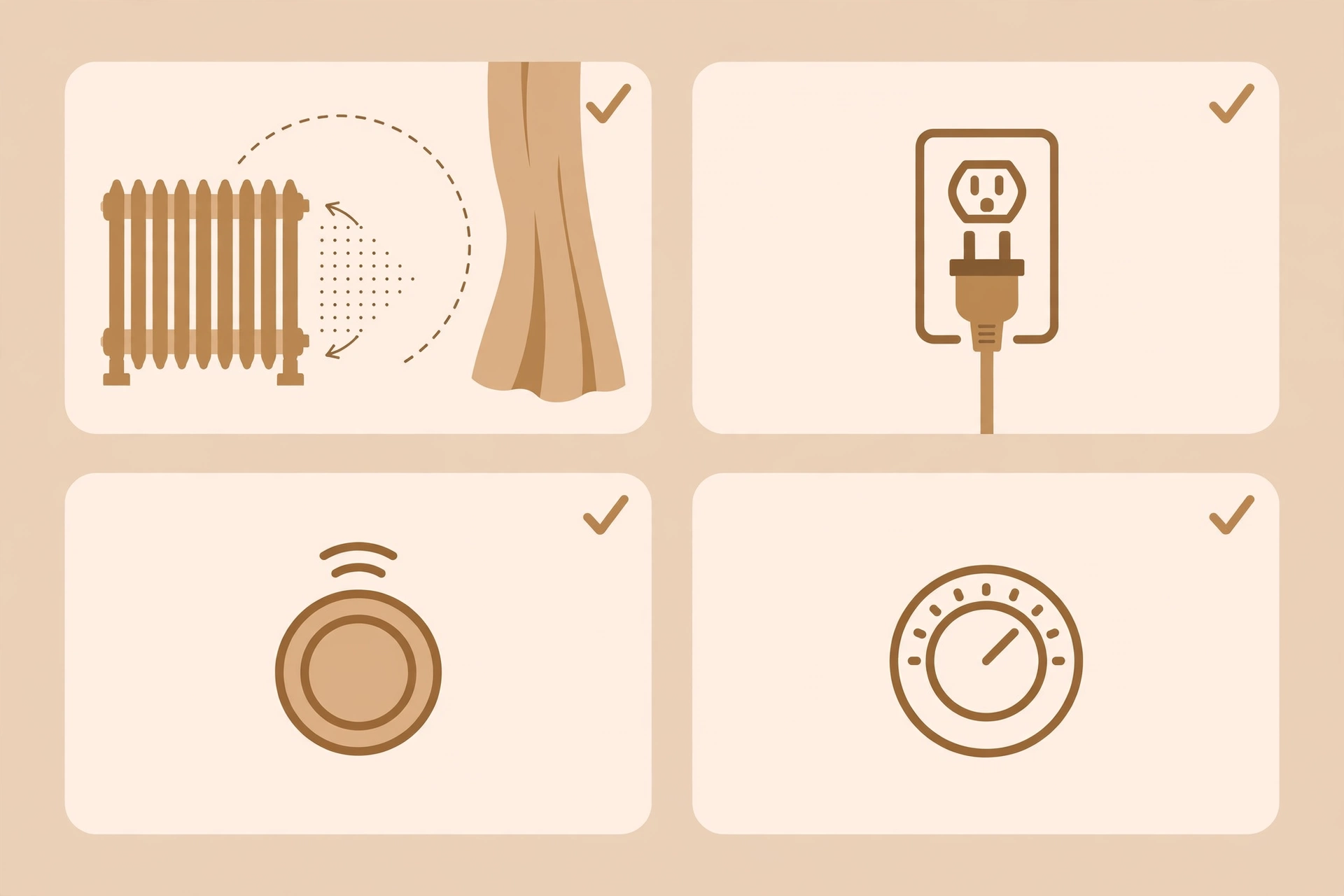
Plug the heater directly into a wall outlet. Never use an extension cord or a power strip, even a heavy-duty one. These heaters pull high current for hours, and cords and strips can overheat under that load. If the only outlet is too far away, move the heater instead of extending the cord.
2. Clear Space Around the Heater
Give the heater open air on all sides. Many makers ask for about 3 feet (around 1 metre) of clear space, but your manual may give a different number, so follow the number in your manual. Move curtains, bedding, laundry, papers, and furniture out of that zone. Never place the heater under a hanging curtain or next to a bed where bedding can slip onto it.
3. Check the Cord and Plug for Damage or Heat
Look over the full cord for cuts, frays, kinks, or flattened spots. Check the plug for cracks, bent prongs, or dark marks. After the heater has run for 30 minutes, feel the plug: it may feel warm, but it should never feel hot. A hot plug, a smell of burning plastic, or any cord damage means turn the heater off and unplug it at once.
4. Set the Thermostat and Timer
Use the thermostat to hold a steady, moderate temperature instead of running the heater on full power nonstop. If your heater has a timer, set it so the heater switches off after a set time or before you would normally wake. A heater that cycles off on its own spends less time at full heat, and that lowers risk during long runs.
5. Keep It Away From Water
Never place the heater near a bath, shower, sink, or pool of water. Do not touch it with wet hands, and never use it in a bathroom unless the manual states it is rated for that use. Water and high-current electric heat are a dangerous mix, and a heater that has been splashed or soaked should be unplugged and checked before any further use.
6. Keep Children and Pets Clear
Place the heater where children and pets cannot knock it over or press against the hot fins. A safety gate or a spot behind furniture can help in a busy room, as long as air still flows freely around the unit. Teach children that the heater is hot and not a toy, and watch pets that like to sleep against warm objects.
7. Test Your Smoke Alarm
Press the test button on the smoke alarm in the room before a long or overnight run. Change weak batteries at once. A working alarm is your backup if a fault starts while you sleep or while you are in another room. If your home also has fuel-burning appliances, check the carbon monoxide alarm at the same time.
📌 At a Glance: The 7-Point Check
- Plug straight into a wall outlet — no extension cord, no power strip
- Clear about 3 feet of space on all sides (follow your manual’s number)
- Check the cord and plug for damage; a hot plug means switch off
- Set the thermostat and timer so the heater cycles off on its own
- Keep the heater away from water and wet hands
- Keep children and pets clear of the hot fins
- Test the smoke alarm before long or overnight runs
💡 Pro Tip: Run the heater for an hour while you are home and awake before you trust it overnight. Watch how hot the plug gets, check that the thermostat cycles off, and confirm the tip-over switch works if your model has one. A one-hour trial run catches faults while you are there to act.
⚠️ Heads Up: Never drape clothes, towels, or blankets over an oil-filled heater to dry them. Covering the fins traps heat, and trapped heat can scorch fabric or start a fire. Use a drying rack placed well away from the heater instead.
Avoid These Common Mistakes
Using a power strip. Power strips are built for low-power gear, not for heaters that draw high current for hours. A strip can overheat even when it feels fine at first.
Pushing the heater against a wall or curtain. Heat needs room to spread. A heater boxed in by fabric or furniture runs hotter than its design allows.
Ignoring a warm plug. A plug that feels hot, a cord that smells, or a breaker that trips often are warning signs. Turn the heater off and stop using it until you find the cause.
Running a damaged or recalled heater. Dents, leaks, cracked plugs, and recall notices all mean the same thing: retire the heater. Sealed oil should never leak, and any sign of oil means the unit is done.
Buying on heat output alone. Safety features matter as much as watts. Tip-over protection, overheat shut-off, and a good thermostat are worth more than a higher watt number. For a wider view of how these heaters stack up, see whether oil-filled heaters beat other electric heaters on efficiency.
Frequently Asked Questions About Leaving Oil-Filled Heaters Unattended
Are oil-filled heaters safe to leave unattended overnight?
They can be, if the heater is in good shape, plugged into a wall outlet, given clear space, and fitted with tip-over protection and a working thermostat. Run the full 7-point check first, use a lower setting and a timer, and test your smoke alarm. If any check fails, turn the heater off before bed.
Can I leave an oil-filled heater on while I am at work?
It is safer to turn it off when you leave the house. No one is home to catch a fallen heater, a hot plug, or a tripped breaker. If you must heat the home before you return, use a timer so the heater starts shortly before you get back, rather than running all day.
Do oil-filled heaters give off carbon monoxide?
No. Oil-filled heaters are electric and burn no fuel, so they do not produce carbon monoxide. Carbon monoxide risk comes from fuel-burning appliances such as gas furnaces, wood stoves, and generators, not from this heater type.
Can I plug an oil-filled heater into an extension cord?
No. Plug it directly into a wall outlet. Extension cords and power strips can overheat under the steady, high current these heaters draw. If the outlet is too far away, move the heater closer to the outlet.
How far should an oil-filled heater be from curtains and furniture?
Many makers ask for about 3 feet (around 1 metre) of clear space on all sides, but the exact number varies by model. Check your manual for the number that applies to your heater, and keep curtains, bedding, and furniture outside that zone.
📇 Quick Reference Card
- Short absence (minutes): Fine if the heater passes the 7-point check.
- Overnight: OK only with a full check, lower setting, timer, and working smoke alarm.
- Leaving the house: Turn it off and unplug it.
- Power: Wall outlet only — never an extension cord or power strip.
- Clearance: About 3 feet on all sides, or your manual’s number.
- Carbon monoxide: None from this heater type — it burns no fuel.
- Stop and unplug if: The plug feels hot, the cord is damaged, oil leaks, or the heater smells odd.
Final Word
An oil-filled heater is one of the safer space heaters to leave running for a short time, thanks to its sealed design and steady thermostat. That safety still rests on the setup: a wall outlet, clear space, a sound cord, and working alarms. Skip any of those, and the risk climbs fast.
When you are unsure, choose the safer move and turn it off. A cold room warms up again in an hour. A fire does not undo itself. Keep the 7-point check in mind, follow your manual, and let the length of your absence decide.