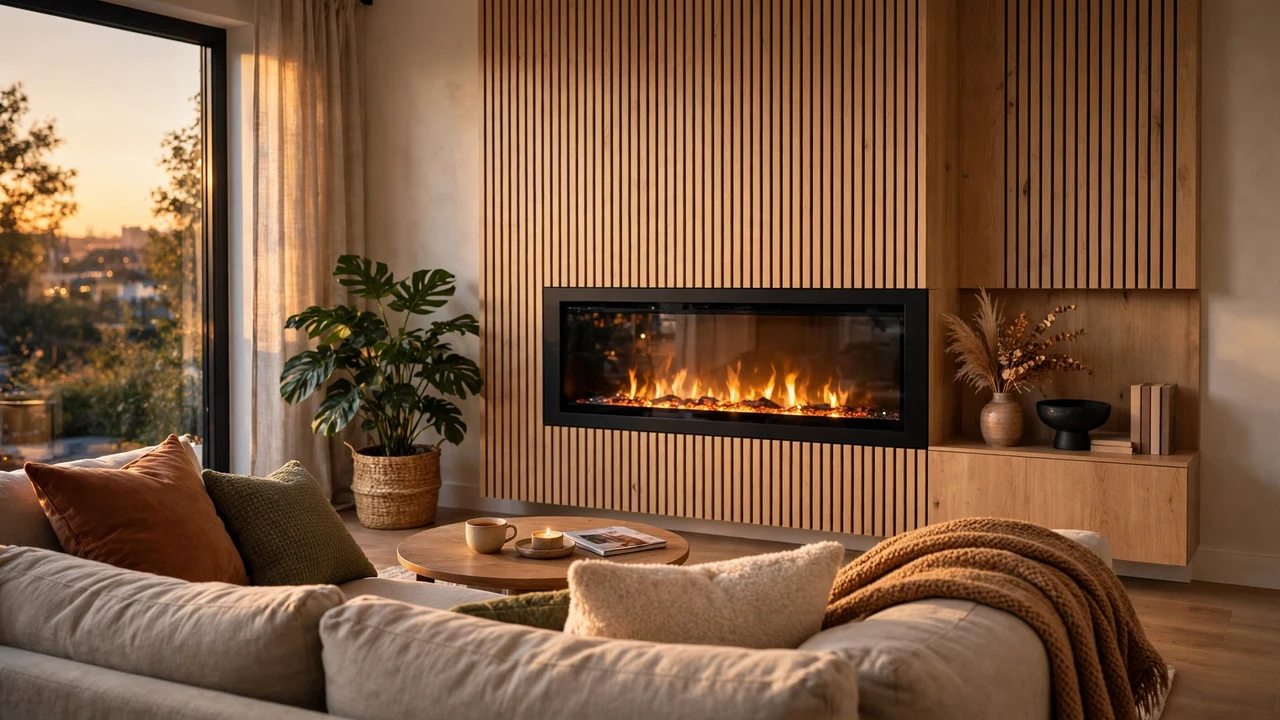
Are Electric Fireplaces Safer Than Space Heaters? A Room-by-Room Safety Comparison
Safety disclaimer: This article is general information only, not professional advice. Always follow your heater’s manufacturer manual for clearances, cord rules, and maintenance. Plug heaters directly into a wall outlet, never into a power strip or extension cord. Never leave a portable heater running unattended or while sleeping. Keep children and pets away from hot surfaces, and call a licensed electrician for outlet, wiring, or breaker problems.
Both electric fireplaces and portable space heaters warm a room with electricity, and both can be used safely when handled with care. The safety difference between them comes down to design: one is usually fixed in place with its heating parts enclosed, while the other is small, portable, and easy to knock over or push against furniture.
Neither type is risk-free. Every electric heater draws a large amount of power, and every heater can start a fire if it is covered, placed against fabric, or plugged into an overloaded circuit. The question is not which heater is perfectly safe, but which one leaves less room for the everyday mistakes that cause most heater accidents.
The Short Answer
For most homes, an electric fireplace is the safer choice of the two. Its heating element sits behind a fixed housing, the unit stays in one place, and many models have cool-touch glass and automatic shut-off features. A portable space heater, by contrast, can be tipped over, moved too close to bedding or curtains, and forgotten in a room where no one is watching it.
That said, a good-quality space heater with tip-over protection, overheat shut-off, and a thermostat can be a safe tool for short, attended use. The gap between the two narrows a lot when the space heater is modern, certified, and used exactly as its manual directs. The gap widens when the heater is old, damaged, or used overnight.
Bottom line: An electric fireplace wins on built-in safety because it cannot tip over and its hot parts stay enclosed. A space heater can still be safe for attended, short-term heating, but it demands more care from the person using it.
How an Electric Fireplace Heats a Room
An electric fireplace uses a heating element and a fan to push warm air into the room, while LED lights and a screen create the flame effect. The flame is light, not fire, so there is no real combustion, no smoke, and no combustion byproducts. That is one clear safety advantage over fuel-burning heaters: nothing is burning, so there is no open flame and no exhaust to vent.
Most electric fireplaces are wall-mounted, built into a wall or mantel, or sold as a heavy freestanding stove-style unit. Even the freestanding models are large and heavy compared with a portable heater, which makes them far harder to tip over by accident. Many models also let you run the flame effect with the heater turned off, so you get the look of a fire with no heat at all.
If you want a fuller picture of how these units work before you compare them with heaters, see what an electric fireplace is and how its heating and flame systems differ. The same enclosed design that makes the flame effect possible is also what keeps fingers, paws, and fabric away from the heating element.
How a Portable Space Heater Heats a Room
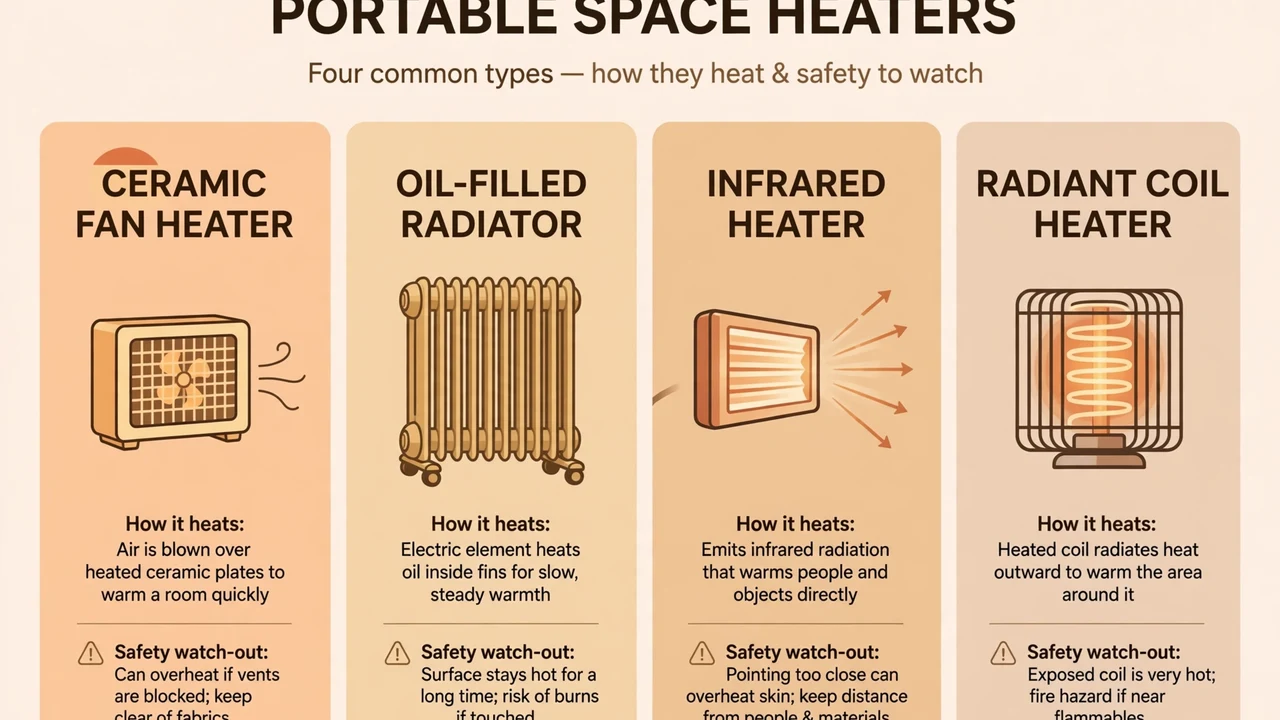
A portable space heater is a small, movable unit made to warm one room or one part of a room. Common types include ceramic fan heaters, oil-filled radiators, infrared heaters, and radiant heaters with exposed or partly exposed coils. Each type heats differently, and each carries its own watch-outs, which is why a single safety verdict for “space heaters” needs care.
Ceramic fan heaters blow air across a heated ceramic plate, so they warm a room fast but can feel hot to the touch near the outlet grille. Oil-filled radiators heat oil sealed inside metal fins, so the surface stays warm for a while after the unit is switched off. Infrared heaters warm objects and people in their path rather than the air itself. Radiant coil heaters expose a glowing element, which makes them the type most likely to ignite nearby fabric.
For a plain-language breakdown of each type, read what space heaters are. Knowing which type you own matters, because the safety steps for an oil-filled radiator and a radiant coil heater are not identical.
Safety Comparison at a Glance
| Risk or feature | Electric fireplace | Portable space heater |
|---|---|---|
| Open flame | None — flame effect is light only | None for electric models, but radiant coils glow hot |
| Combustion byproducts | None — no fuel is burned | None for electric models |
| Tip-over risk | Very low — fixed or heavy unit | Higher — light, portable, easy to knock over |
| Exposed hot surface | Usually enclosed; many models have cool-touch glass | Varies — radiant types have hot exposed parts |
| Risk of being placed too close to fabric | Low — installed in a fixed spot | Higher — moved often, can end up near beds and curtains |
| Unattended use | Still not advised, but fixed placement lowers the risk | Not advised — never leave running while asleep or away |
| Electrical load | High — needs its own outlet and circuit capacity | High — same outlet and circuit rules apply |
| Child and pet safety | Better — hot parts enclosed, unit cannot be carried off | Needs more supervision — unit moves and tips easily |
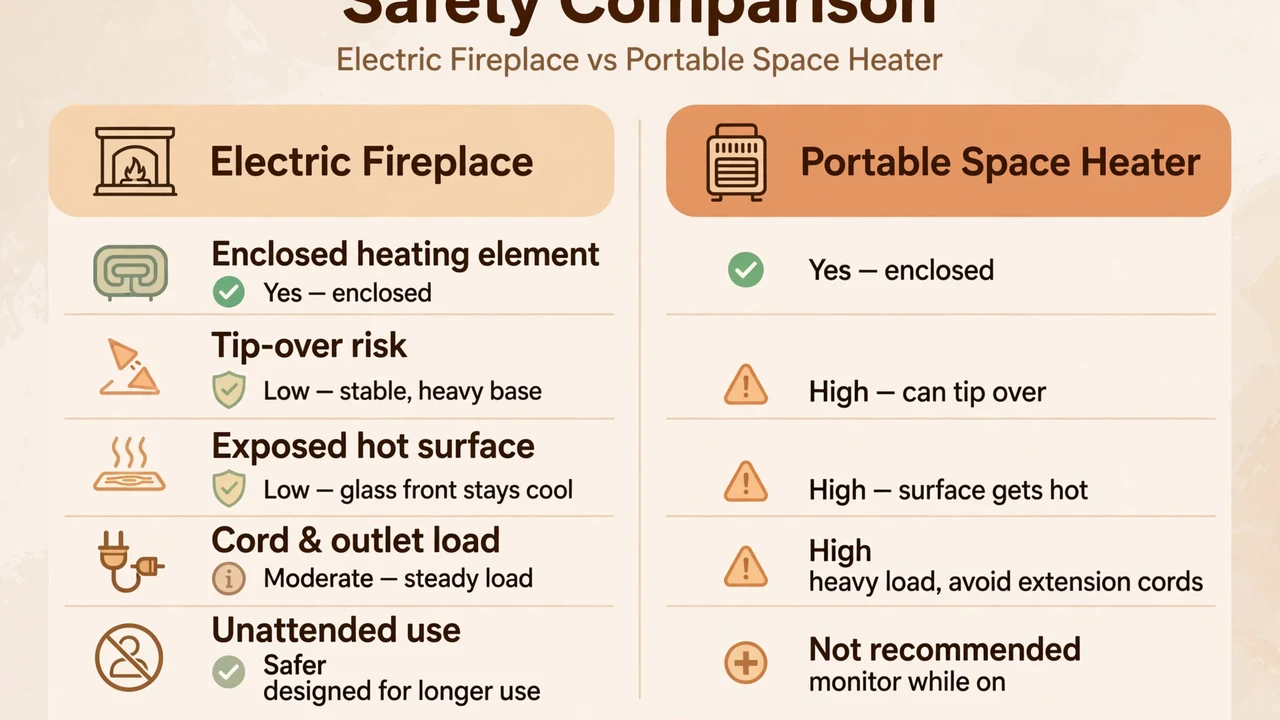
The table shows why the answer leans toward electric fireplaces without making them sound risk-free. Both heaters draw serious power, and both need clear space and a sound outlet. The difference is that the fireplace’s design removes two of the most common space heater hazards: tipping over and being shoved against something flammable.
The Risks, One by One
Fire risk from nearby items
Most heater fires start the same way: something flammable sits too close to a hot surface for too long. Bedding, curtains, towels, paper, and clothing are the usual items. Fire safety guidance commonly recommends keeping at least 3 feet of clear space around a heater on all sides, and that rule applies to both types.
An electric fireplace makes this rule easier to keep, because it stays where it was installed and the area around it is usually kept clear by design. A space heater is carried from room to room, which means it can end up beside a bed, under a desk, or behind a chair without anyone planning it that way. If you use a space heater, pick its spot with care every single time you move it.
Tip-over danger
A tipped-over heater can land face-down on carpet, bedding, or a rug and keep heating that spot. Modern space heaters should have a tip-over switch that cuts power when the unit falls, but older or cheaper models may lack one. Check your model before you rely on it.
Electric fireplaces largely avoid this problem. A wall-mounted or built-in unit cannot tip over at all, and a freestanding stove-style model is heavy enough that a bump from a child or pet is unlikely to topple it. This is the single biggest structural safety advantage an electric fireplace holds.
Burns from hot surfaces
Radiant and coil space heaters can cause contact burns, and even fan heaters get hot near the air outlet. Children and pets are most at risk because they may touch a heater out of curiosity. Oil-filled radiators stay hot after switch-off, so the danger lasts after the heater stops running.
Many electric fireplaces have glass fronts that stay cool enough to touch, though the warm air outlet itself still gets hot. Check the manual for your model, and teach children that the fireplace is not a toy. A fixed unit also lets you add a hearth gate or barrier in a way that is harder to arrange around a heater that moves daily.
Electrical and cord hazards
Both types draw a large current, often up to the full rating of a standard household circuit. That is why both should be plugged directly into a wall outlet, never into a power strip, extension cord, or multi-outlet adapter. A warm plug, a scorched outlet, or a breaker that trips often are warning signs that the circuit is overloaded or the outlet is worn.
Space heaters add a cord-trip hazard that fireplaces mostly avoid, since their cords run across floors where people walk. Keep the cord flat, out of walkways, and never run it under a rug, where heat can build up unseen. If you need an electrician, call one: repeated breaker trips, buzzing outlets, or a burning smell are jobs for a licensed electrician, not a do-it-yourself fix. For more on the fireplace side of this topic, see are electric fireplaces safe.
Unattended and overnight use
Manufacturers and fire safety bodies advise against leaving a portable space heater running while you sleep or while no one is home. A heater that no one is watching cannot be moved away from a fallen blanket or switched off if it malfunctions. The same caution applies to an electric fireplace, but the fixed position and enclosed design lower the chance of a problem developing unnoticed.
For overnight warmth, a better plan is to heat the room before bed, switch the heater off, and rely on bedding and a warm room. If you need heat all night, a central heating system or a thermostat-controlled system designed for continuous use is the safer route. Never use a portable heater as a substitute for a broken furnace without a plan to fix the furnace.
Air quality and dry air
Neither electric fireplaces nor electric space heaters burn fuel, so neither one produces smoke or combustion byproducts inside the home. Both can dry the air in a small room, which some people notice as dry skin or a scratchy throat. A bowl of water near the heater does little; a humidifier or lower heat setting helps more, and opening the room layout so warm air can spread avoids hot, dry pockets.
Dust is the more practical air concern. A heater that has sat unused can smell when dust on the element burns off at the start of the season. Vacuum vents and grilles while the unit is unplugged and cool, and stop using the heater if the smell persists or smoke appears.
Safety Features Worth Looking For
Whether you buy an electric fireplace or a space heater, look for certification from a recognized testing lab, such as UL, ETL, or CSA. Certification means a sample of the product passed safety tests; it does not make a misused heater safe, but it is a sound starting filter. Avoid unbranded heaters with no certification mark at all.
Tip-over protection matters most for portable heaters, while overheat shut-off matters for both types. A thermostat keeps the room at a set temperature instead of running at full power nonstop, which cuts both fire risk and energy waste. A timer or auto-off function adds a backup for forgetfulness, though it is not a substitute for switching the heater off yourself.
Cool-touch housing, a sturdy base, and a cord that is thick and undamaged round out the checklist. A heater that wobbles, has a cracked housing, or smells of burning plastic belongs in the bin, not in a bedroom. When in doubt, replace it rather than keep using it.
Decision Guide: Which Heater Fits Your Situation?
Choose an electric fireplace if you want a permanent or semi-permanent heat source in a living room, bedroom, or den. It suits households with children or pets, rooms where a heater would otherwise sit near furniture, and anyone who wants the look of a fire without real flames. It also suits people who tend to forget to switch heaters off, since its fixed position removes the tip-over and placement risks.
Choose a portable space heater if you need heat in one room for a short, attended period — a home office during the workday, for example, or a chilly corner while you read. It suits renters who cannot install a fixed unit and anyone who needs heat in different rooms at different times. In that case, buy a certified model with tip-over and overheat protection, and treat its placement rules as non-negotiable.
Consider a different solution if you need heat overnight, in a room with no sound outlet, or on a circuit that already trips. In those cases, neither a fireplace nor a space heater is the right answer until the electrical issue is fixed. A licensed electrician can check whether your circuit can carry a heater safely and whether a dedicated outlet is needed.
Quick decision rule: Fixed room + kids or pets + daily use = electric fireplace. Short, attended use + moving between rooms = certified space heater. Overnight or unattended = neither; heat the room first, then switch off.
Safety Checklist for Either Heater
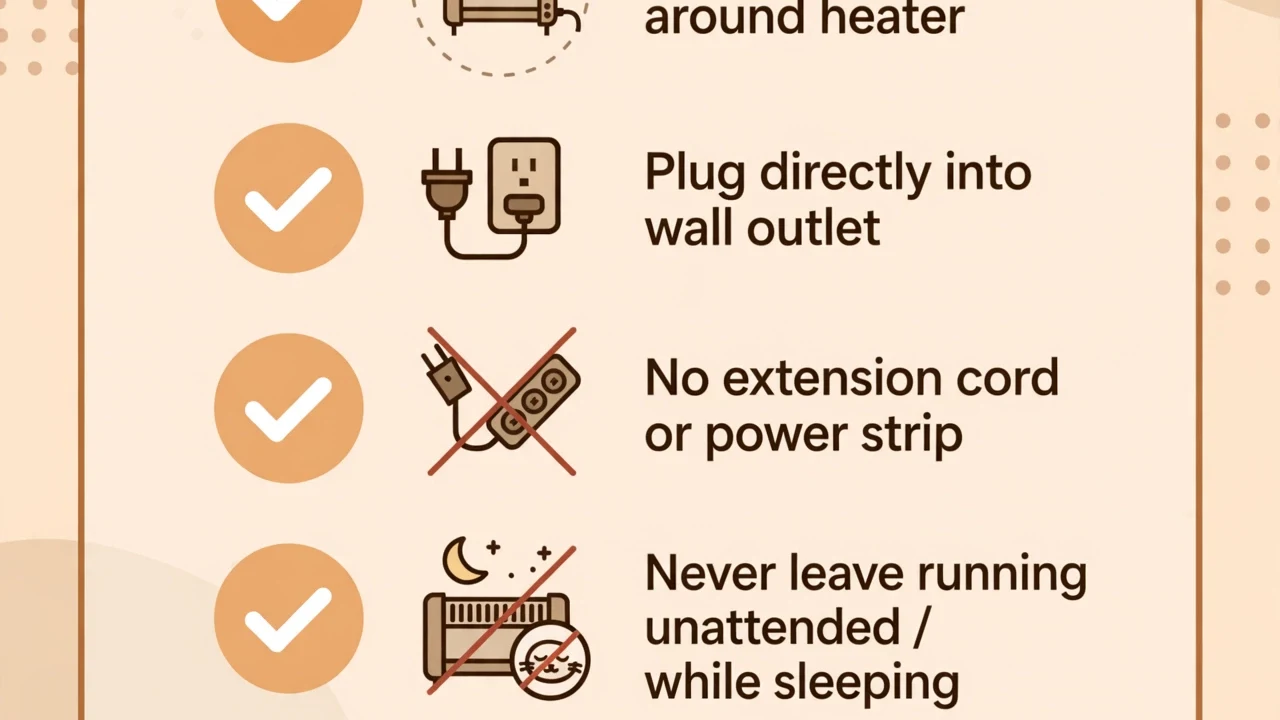
- Keep at least 3 feet of clear space around the heater on all sides.
- Plug the heater directly into a wall outlet — no power strips, extension cords, or adapters.
- Place the heater on a flat, stable surface, away from walkways and water.
- Never leave a heater running while you sleep or while no one is home.
- Keep children and pets away from hot surfaces and cords.
- Check the cord and plug for fraying, cracks, or heat before each season.
- Vacuum vents and grilles while the unit is unplugged and cool.
- Switch the heater off and unplug it when you leave the room for a long stretch.
- Fit working smoke alarms in the home and test them monthly.
- Call a licensed electrician for tripping breakers, buzzing outlets, or burning smells.
Common Mistakes That Undo Good Safety Design
The most common mistake is plugging a heater into a power strip shared with other devices. Power strips are not built for the sustained high current a heater draws, and the strip can overheat even when it feels fine at first. A second common mistake is drying clothes or towels over or near a heater, which puts fabric directly against a heat source.
Other frequent errors include running the cord under a rug, pushing a space heater against a bed or sofa, and using a heater with a damaged cord because it “still works.” Heaters also get tucked into corners where airflow is blocked, which can trip the overheat shut-off or, in an older model without one, cause damage. Each of these mistakes can turn a certified, well-made heater into a hazard.
A quieter mistake is ignoring the manual. Clearance distances, room-size guidance, and cleaning instructions vary by model, and the manual is the only source that states the rules for your exact unit. If you bought a used heater with no manual, look up the model number on the maker’s site before using it.
Troubleshooting: Warning Signs and What to Do
If the breaker trips when the heater runs, switch the heater off, unplug it, and move it to a different circuit only if the manual allows it. Repeated trips mean the circuit is overloaded or faulty — call a licensed electrician rather than resetting the breaker again and again. Never replace a breaker with a higher-rated one yourself.
A burning smell at the start of the season is often dust on the element, and it should fade within minutes. If the smell persists, if you see smoke, or if the housing is discolored or warped, switch the heater off, unplug it, and stop using it. A heater that shuts off on its own may be doing its job through overheat protection — check for blocked vents and clearance before restarting it, and retire the unit if the shut-offs keep happening.
A plug or outlet that feels warm needs attention. Unplug the heater, let the outlet cool, and have the outlet checked before using it again. Warm outlets can signal loose wiring, which is a fire risk on its own. For running-cost context alongside these safety points, see are electric fireplaces energy efficient.
Frequently Asked Questions
Are electric fireplaces safer than space heaters?
Yes, in most homes. An electric fireplace is fixed in place with its heating parts enclosed, so it cannot tip over and is harder to push against fabric. A space heater can be safe for short, attended use, but it needs more care and supervision.
Can I leave an electric fireplace on overnight?
Manufacturers advise against leaving any heater running unattended, including an electric fireplace. Heat the room before bed, then switch the heater off. Use a thermostat-controlled central system if you need heat all night.
Can I leave a space heater on while I sleep?
No. Portable space heaters should never run while you sleep or while no one is home. An unwatched heater cannot be moved away from fallen fabric or switched off if it malfunctions.
Is it safe to plug a space heater into a power strip?
No. Heaters draw a large current and should be plugged directly into a wall outlet. Power strips and extension cords can overheat under a heater’s sustained load.
Do electric fireplaces or space heaters produce carbon monoxide?
No. Electric models burn no fuel, so they produce no carbon monoxide or other combustion byproducts. Fuel-burning heaters are a different category and carry different risks.
Which type is safer around children and pets?
An electric fireplace is generally safer around children and pets because it stays in place, its hot parts are enclosed, and many models have cool-touch glass. A portable heater still needs close supervision in a home with children or pets.
Conclusion
An electric fireplace is the safer pick for most households, not because space heaters are inherently dangerous, but because the fireplace’s design removes the two hazards that cause the most trouble: tipping over and being placed too close to something flammable. Its enclosed heating parts, fixed position, and cool-touch options give it a real edge.
A portable space heater still has a place in a careful home. Used for short, attended periods, plugged directly into a wall outlet, and kept clear of fabric, a certified model can heat one room well. The safety of a space heater rests more on the person using it, which is why its rules deserve respect every time it is switched on.
Whichever heater you choose, follow the manual, keep the 3-foot clear zone, and switch it off when you leave the room or go to bed. Those three habits do more for your safety than any single feature on the box.