How Do Oil Heaters Work? A Simple Guide to How They Heat Your Room
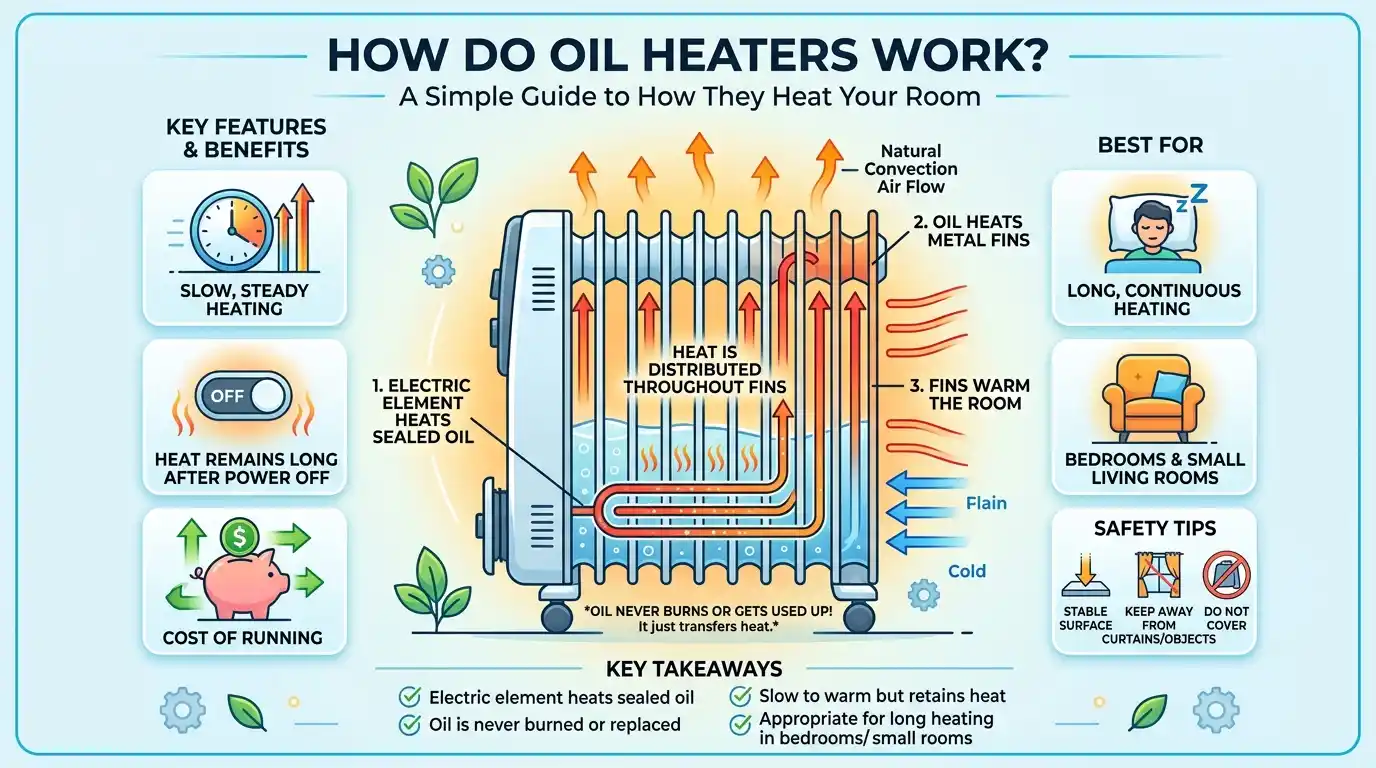
You turn on an oil heater, and you can even think that nothing is going on. Then the metal fins heat up, the cold is gone out of the room, and the heat remains a long time after you switch it off. It is that slow, steady action that makes oil heaters different, and that all boils down to the way they are constructed.
This guide describes the operation of oil heaters in simple language, what is occurring in the metal, the cost of running one, and how to use one safely.
Key takeaways
- An oil heater involves an electric element that heats sealed oil and the oil heats your room by heating metal fins.
- The oil is never burned or used up. It merely stores and transfers heat.
- Oil heaters are slow to warm but continue to heat after they are turned off.
- They are not more efficient than other electric heaters, but they are appropriate in long and continuous heating in bedrooms and small living rooms.
The working principle of oil heaters?
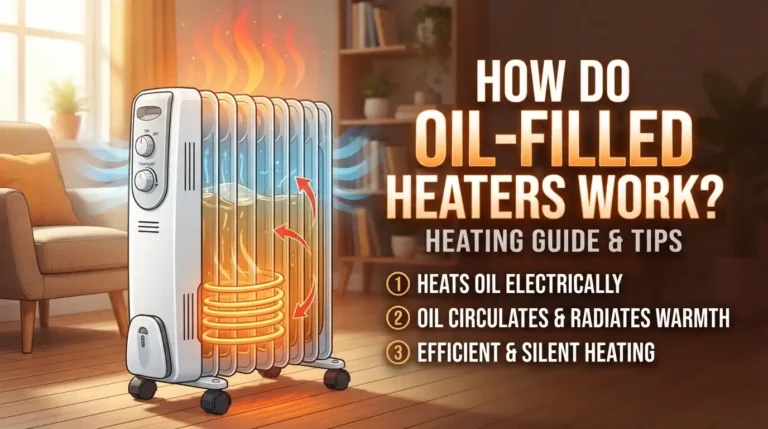
An oil heater consists of a heated electric element at the bottom of a hermetically sealed metal container of thermal oil. The oil is heated by the element. The hot oil ascends up through the metal columns and transfers its heat to the metal walls. The warm air in the room is then heated by the hot metal by the process of radiant heating and natural air circulation known as convection.
The oil is not a fuel, but a heat carrier. It is permanently closed and does not require refilling.
What is an Oil Heater?
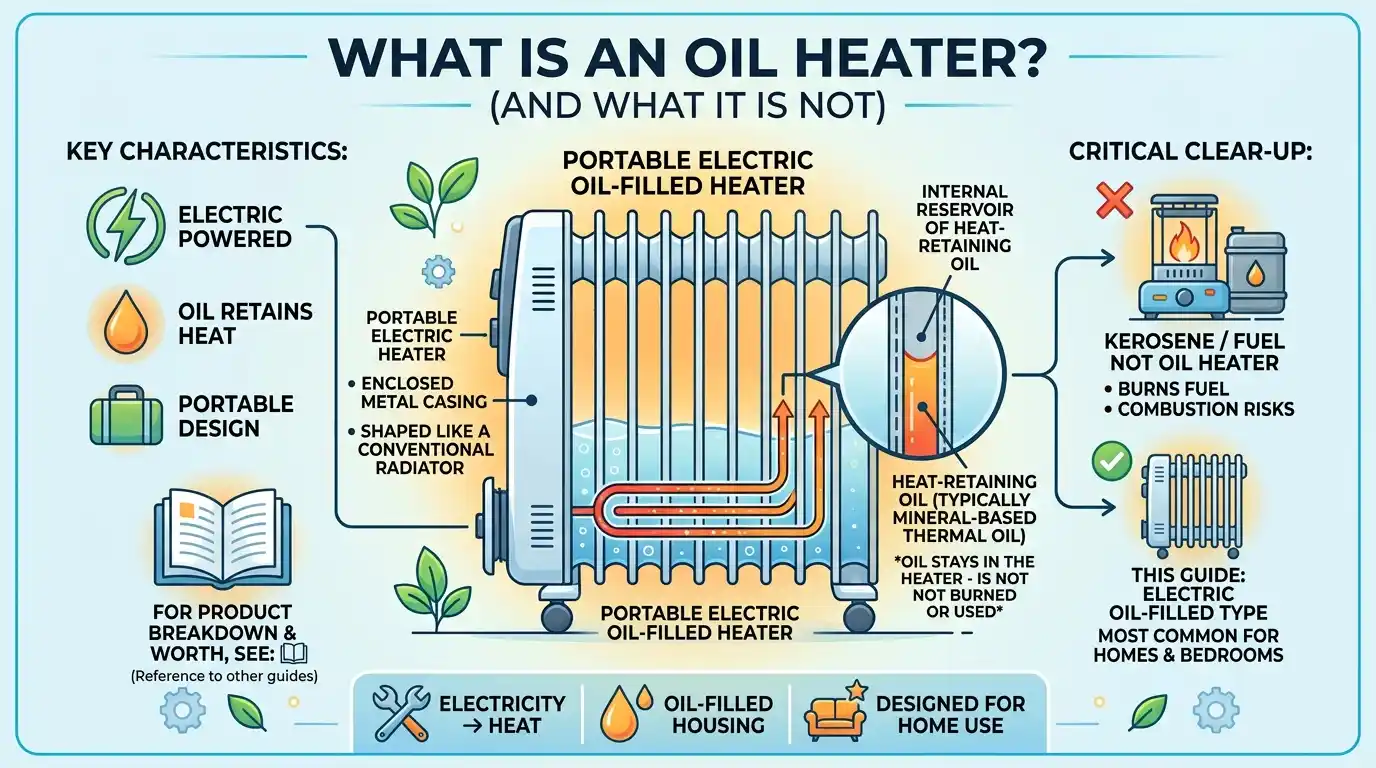
An oil heater, also known as an oil filled radiator or oil filled space heater, is a portable electric heater with an enclosed metal casing that is in the shape of a conventional radiator. Within is a special heat retaining oil, generally a mineral based thermal oil. If you want a product level breakdown of this type, this overview of oil filled space heaters and when they are worth buying is a helpful companion read.
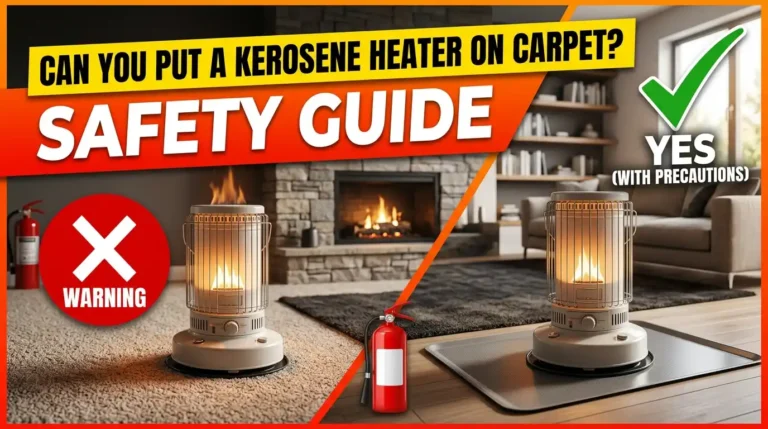
To clear up one point: the term oil heater is occasionally applied to another device, a kerosene or fuel oil heater. If that is what you are researching, see how kerosene heaters burn fuel and where the risks lie. This guide includes the electric, oil filled type, the most commonly purchased by the majority of people to use in their homes and bedrooms.
How Do Oil Heaters Work? Step by Step
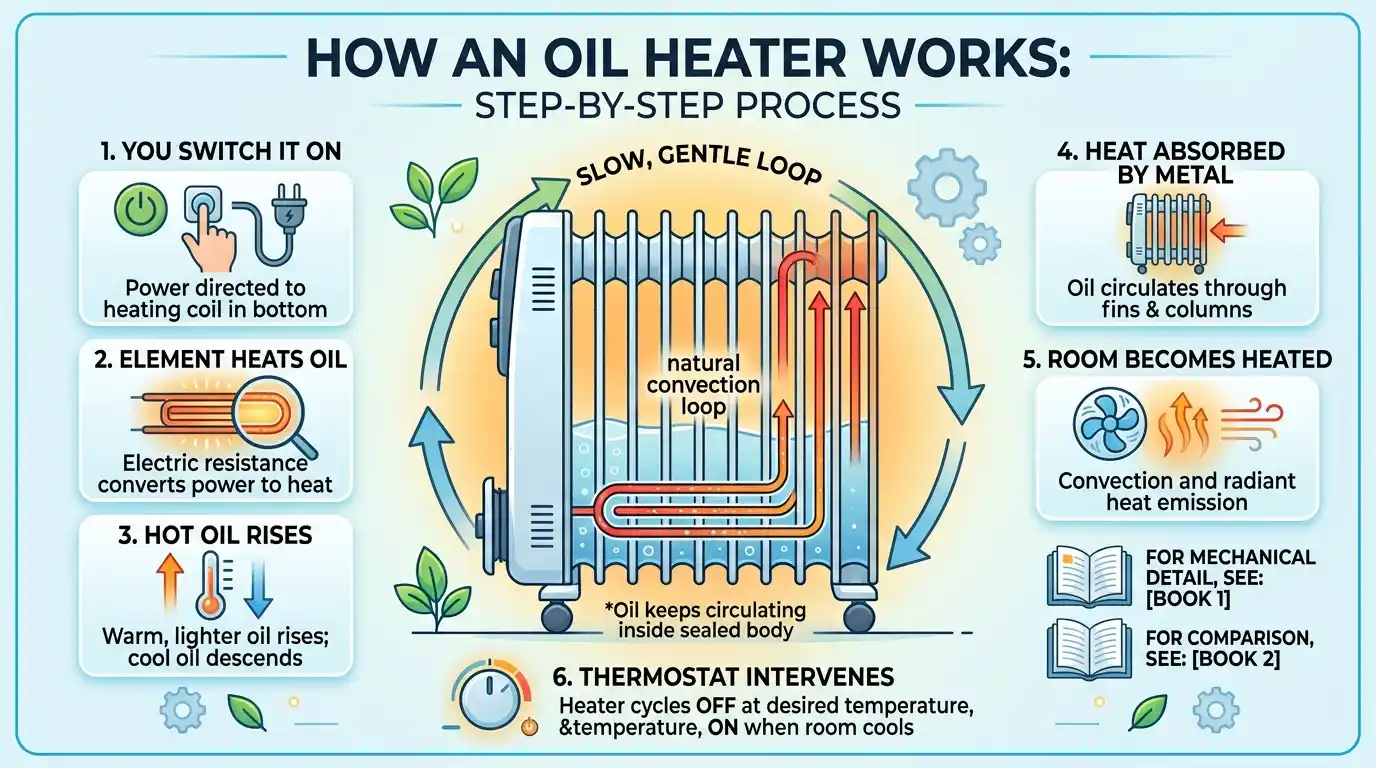
- You switch it on. Power is directed to a heating coil that is located in the bottom.
- The element heats the oil surrounding it. Power is converted to heat by electric resistance.
- The hot oil increases. Warm oil is lighter and, thus, it rises up the columns as the cooler oil descends to the bottom to be heated.
- The heat is absorbed by the metal. The oil circulates through the fins and columns, heating them.
- The room becomes heated. The hot surface not only radiates heat into the air through convection, but also emits radiant heat that you can feel when sitting close to it.
- The thermostat intervenes. When the room is heated to the desired temperature, the heater will switch off and will switch on again when the room is cooled.
The oil keeps circulating inside the sealed body, and the whole system works as a slow, gentle loop. For a longer look at the mechanics, this practical walkthrough of sealed oil heating goes deeper. If you are curious how this compares with other portable units, this explainer on the science behind space heaters covers the main types.
What Is Inside an Oil Heater?
| Part | What it does |
|---|---|
| Heating element | Converts electricity into heat |
| Thermal oil | Absorbs, stores and carries the heat |
| Metal fins or columns | Give a large surface to release heat into the room |
| Thermostat | Keeps the room at your chosen temperature |
| Tip over switch | Cuts power if the heater is knocked over |
| Overheat protection | Shuts the unit off if it gets too hot |
| Power selector | Lets you pick low, medium or high wattage |
Why Oil Heaters Heat Slowly and Cool Slowly
Metal and oil are good thermal storage (thermal mass) sources. It takes a long time to heat a lot of oil and metal, and therefore the first part is slow. It can take 15 to 30 minutes before a real difference is felt depending on the heater and size of the room.
The upside appears when the heater has been switched off. The stored heat continues to pour into the room and hence the temperature does not fall immediately but rather decreases slowly. This is why the oil heaters are smooth and stable as opposed to a fan heater that blows hot air and halts.
Does the Oil Ever Run Out?
No. The oil is contained and does not burn, evaporate or get used in the normal use. When you see the oil leaking, turn off the heater and do not open it on your own, but do as the manufacturer advises. Do not dispose of the oil in an irresponsible manner since the disposal regulations of such units differ depending on the location.
Are Oil Heaters Energy Efficient?
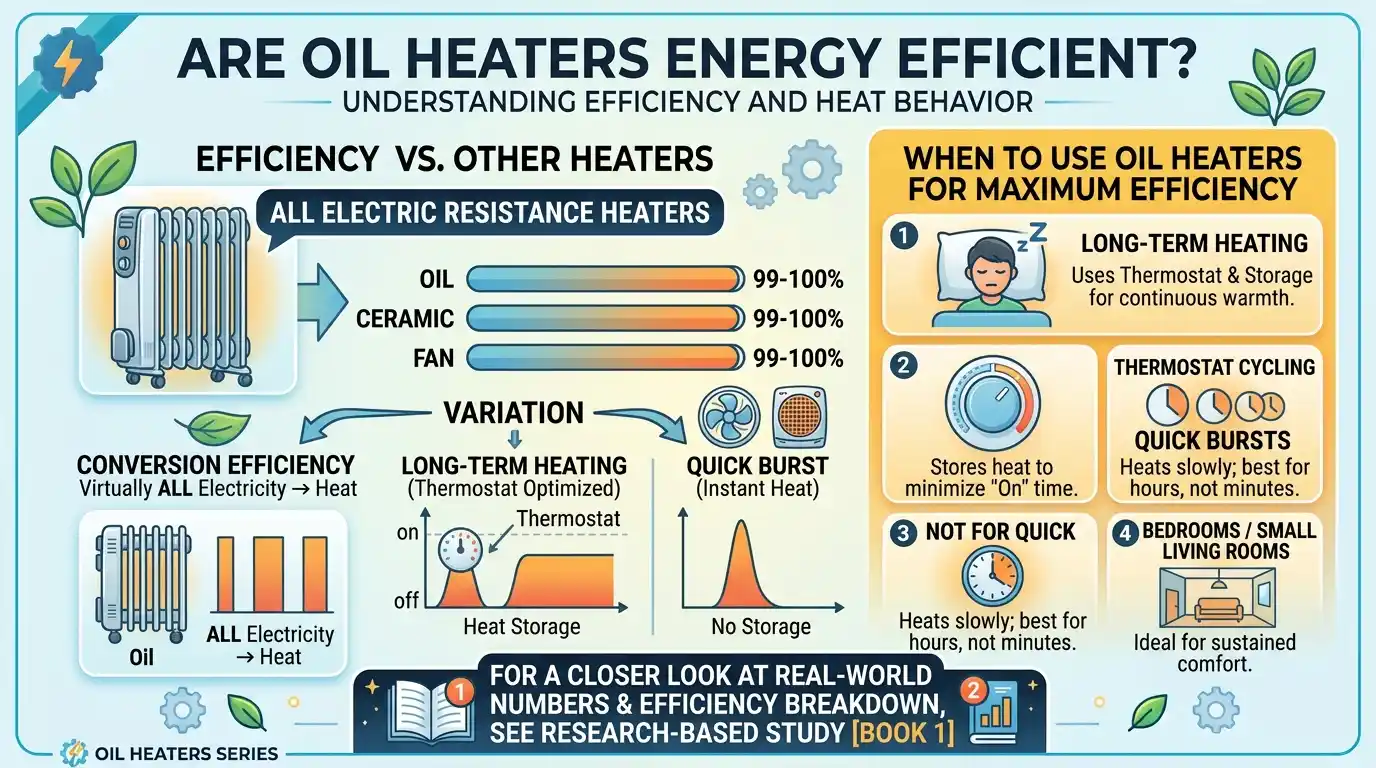
All electric resistance heaters convert virtually all the electricity consumed to heat, therefore an oil heater is not more efficient than a fan or ceramic heater in that respect. The variation lies in the behavior of the heat. Oil heaters can be used in long-term heating due to their ability to store heat and to be on and off with the thermostat. They are not a good option when you just require a quick burst of warmth.
For a closer look at the numbers, this research based look at oil filled heater efficiency breaks down what real world use shows.
How to work out running cost
Running cost = kilowatts × hours used × your electricity price per kilowatt hour.
As an illustration, a 1.5 kW heater that operates at full load during one hour consumes 1.5 kWh. Add your local tariff to that to obtain the cost. Practically, the thermostat switches off the heater a portion of the day, so actual consumption is typically less than full power throughout the day. Precise savings are based on your house, insulation and settings, and therefore, apply this formula instead of relying on a single number.
If you want examples by wattage, see this cost breakdown of how much power an oil filled radiator draws and this guide on what oil heaters cost to run at different wattages.
Oil Heater vs Fan Heater vs Ceramic Heater
| Feature | Oil heater | Fan heater | Ceramic heater |
|---|---|---|---|
| Warm up speed | Slow | Very fast | Fast |
| Heat after switching off | Yes, for a while | No | Little |
| Noise | Very quiet | Fan noise | Some fan noise |
| Air feel | Gentle, not drying as much | Can feel dry | Can feel dry |
| Best for | Bedrooms, long use | Quick top ups | Small rooms, desks |
| Portability | Heavier | Light | Light |
How to Choose the Right Size
One of the general guidelines is approximately 100 watts per square meter of floor space of a room with average ceiling, or approximately 10 watts per square foot. Ineffective insulation, high ceilings or wide windows require greater power. Most heaters have three levels, and it allows you to turn it high and reduce to lower when the room is heated.
Always consult the instructions of your model manufacturer, as the correct size varies depending on your home.
Is It Safe to Leave an Oil Heater On Overnight?
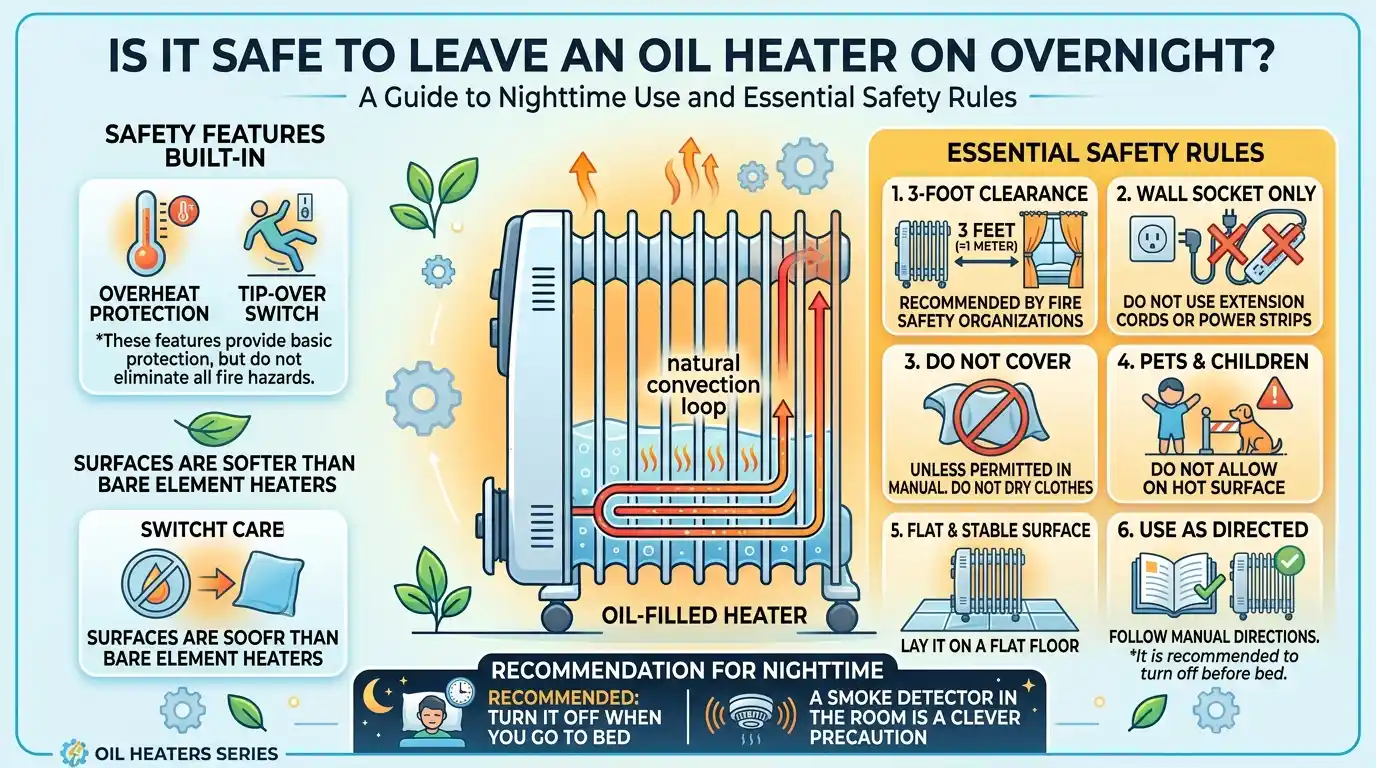
Safety features of oil heaters include overheat protection and a tip over switch and the surfaces are often softer than a bare element heater. Nevertheless, the surface becomes hot, and any portable heaters have some fire hazards. Follow these rules:
- Maintain a distance of at least 3 feet (approximately 1 meter) between the heater and curtains, bedding and furniture, as recommended by fire safety organizations.
- Simply plug it into a wall socket. Use no extension cords, power strips.
- Do not cover it or use it to dry clothes unless it is explicitly permitted in the manual.
- Do not allow children and pets on the hot surface.
- Lay it on a flat and stable floor.
- Use your model as directed by the manual. It is recommended to turn it off when you go to bed and a smoke detector in the room is a clever precaution.
Common Mistakes to Avoid
- Making judgment on heater within the first five minutes. It takes time to heat up.
- Purchasing one that is too small to fit a large or drafty room.
- Having windows open during heating.
- Turning the thermostat to full and leaving it.
- With an extension cord.
- Moving the heater while it is hot.
Pros and Cons
| Pros | Cons |
|---|---|
| Quiet operation | Slow to warm up |
| Steady, even warmth | Heavier and bulkier |
| Keeps warming after switching off | Not ideal for quick heating |
| No fan dust movement | Surface gets hot |
| Long working life | Can cost more upfront |
Why Is My Oil Heater Not Heating?
First check: the plug and socket, the thermostat dial (turn up full) and the power selection. When the unit is turned on and it remains cold, the overheat cutoff might have tripped, hence turn it off, allow it to cool and re-try. In case it still does not work, discontinue its use and call the manufacturer or an electrician.
Expert Tips
- Switch it on in the morning and leave it to run rather than turn it on at the end of the day.
- Close the door of the room you are heating.
- Keep it close to the coolest area like under a window, and free of curtains.
- Use the timer in case your model has it.
FAQs
What are the simple words of how the oil heaters work?
One of the elements warms sealed oil, the oil warms the metal body and the metal warms the room.
Is an oil heater very energy consuming?
It consumes power according to its wattage, e.g., 1.5 kW full power. The thermostat minimizes consumption after the room has been heated.
What makes an oil heater remain warm even after it is switched off?
It is slowly released and heated in the oil and metal store.
What is the time of an oil heater to heat a room?
Takes 15-30 minutes to notice a difference, depending on the size of the room and the strength of the heater.
Are oil heaters to be filled?
No. The oil is not used and is sealed in.
Which is safer, an oil heater or a fan heater?
It does not have any exposed part and has a smoother surface, yet it is also hot and requires the same attention.
Is it okay to leave an oil heater on overnight?
Check your manual. It is not recommended by many makers, safe distances and a smoke alarm are significant.
Will I be able to dry clothes on an oil heater?
The majority of manuals indicate no, as it is possible to overheat when a heater is covered.
Can oil heaters be used in bedrooms?
Yes, they are silent and provide constant warmth.
What is the size of oil heater I require?
A typical starting point is around 100 watts per square meter, but it is adjusted to insulation and to ceiling height.
Do oil heaters cost less to operate than other heaters?
Not by default. The power is converted to heat at similar rates in all electric resistance heaters, and hence cost varies with usage.
What is the clicking noise of my oil heater?
It is normal that metal expands and contracts as it warms and cools down. Unusual noises or loud noises are worth investigating.
What is the oil in a heater?
A closed thermal oil, typically mineral in nature, selected to retain heat.
Will an oil heater warm an entire house?
No. It is intended to fit in small rooms.
Final Thoughts
Simple idea well done. A heated electric component heats a closed oil, the oil conducts heat to your room and it is released by the metal. It is slow to boot, silent to operate and continues to provide warmth even after it is switched off.
A fan or a ceramic heater might be more appropriate to you in case you want to heat up quickly. When you need constant, warm coziness in a bedroom or a small living room, an oil heater is difficult to resist. Adjust the wattage to your room, make sure it is well out of the way of anything that can burn, and have it operate in intervals.