How Does a Space Heater Work? The Science, Types, and Safety Tips Explained
Space heater is nearly a magic when you turn it on and the room is heated in minutes. No magic is involved but electricity, a resisting element and some basic physics making it do what it is supposed to do. As soon as you realise how that process works, you will be able to choose the appropriate type and operate it safely throughout the winter.
What is a Space Heater?
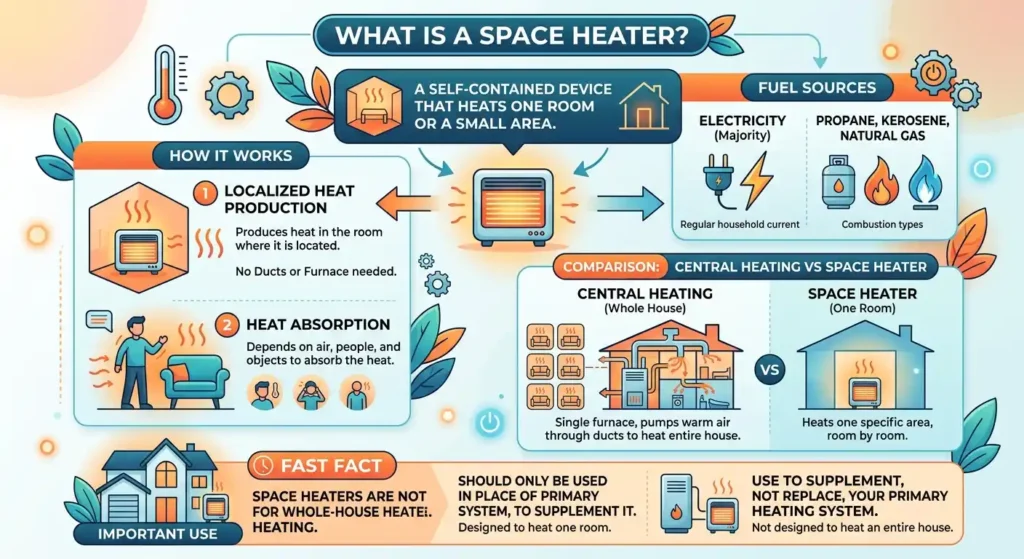
Space heater is a self-contained device that heats one room or a small area instead of a whole house. The majority of them operate on regular household electricity, but some of them use propane, kerosene, or natural gas instead. A space heater, unlike central heating, does not force warm air through ducts, pumped out of a single furnace, but rather produces heat in the room where it is located and depends on the air (or people and objects) of that room to absorb the heat.
Fast fact: Space heaters should not be used in place of your primary heating system, but to supplement it. They are not constructed to heat an entire house, but only one room.
How Does a Space Heater Work? (The Core Science)
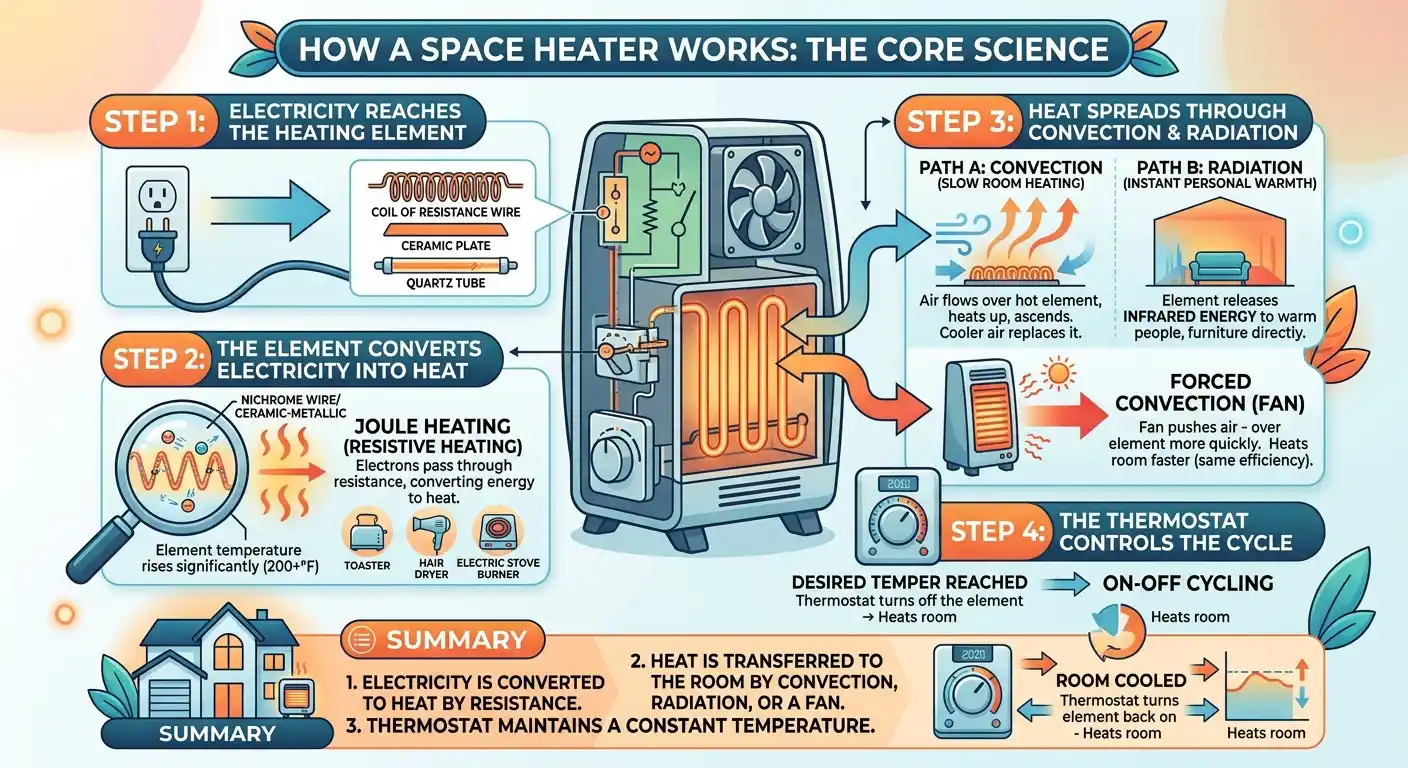
The principle of an electric space heater is that electrical energy is converted to heat by resistance, and the heat is transferred to the room by convection, radiation, or a fan. The following is the process in four steps.
Step 1: Electricity Reaches the Heating Element
When you plug in a space heater, and switch it on, the electric current passes through the outlet and along the cord into the internal circuit of the heater. That current is then passed through a component known as the heating element typically a coil of resistance wire, a ceramic plate, or a quartz tube, depending on the model.
Step 2: The Element Converts Electricity Into Heat
The actual science occurs here. The heating component consists of a substance, usually nichrome wire or a ceramic-metallic combination, that is resistant to the passage of electricity. When the electrons pass through that resistance, part of their energy is directly converted into heat.
This is referred to as Joule heating (or resistive heating), and the same fundamental idea as a toaster, a hair dryer, or an electric stove burner. The element becomes heated or glowing and sometimes it rises to a couple of hundreds of degrees Fahrenheit within a few seconds.
Step 3: Heat Spreads Through Convection, Radiation, or Both
Once the element is hot, the heater has to get that warmth out into the room. It does it in one of two ways, and this is what makes the various types of space heaters different:
- Convection: Air flows over or around the hot element, heats up and ascends. The cooler air comes in to replace it, is heated itself, and the process is repeated until the entire room is heated up slowly.
- Radiation: The element releases infrared energy, which penetrates the air and warms people, furniture, and walls directly in touch, just like the sun warms your skin on a cold day.
Other types of heaters operate with a fan to push air over the element more rapidly (forced convection), which will heat a room more quickly but does not necessarily affect efficiency of the unit in terms of electricity consumption.
Step 4: The Thermostat Controls the Cycle
An inbuilt thermostat controls the air temperature in the room. When it reaches your desired temperature, the thermostat turns off the heating coil, and the heater enters standby. Once the room is cooled below that point the thermostat switches the element back on. It is this on-off cycling that maintains a constant temperature in a room rather than overheating it.
Convection vs Radiant Heat: What’s the Difference?
This is among the most mixed issues in space heater shopping, thus this is the straight answer.
Convection heaters warm the air in a room but it takes longer time and heats the entire room evenly. Radiant heaters heat people and objects directly, and this is warm almost immediately but only in the direct line of the heat.
| Factor | Convection Heat | Radiant Heat |
|---|---|---|
| What it heats first | The air | People and objects |
| Speed of comfort | Slower to feel, but even | Feels warm almost instantly |
| Best for | Whole small rooms, closed spaces | Spot heating, garages, workspaces |
| Heat after shutoff | Room stays warm longer | Cools quickly once you step away |
| Common types | Oil-filled, ceramic (fan), baseboard | Infrared, quartz |
Types of Space Heaters (And How Each One Works)
Ceramic Space Heaters
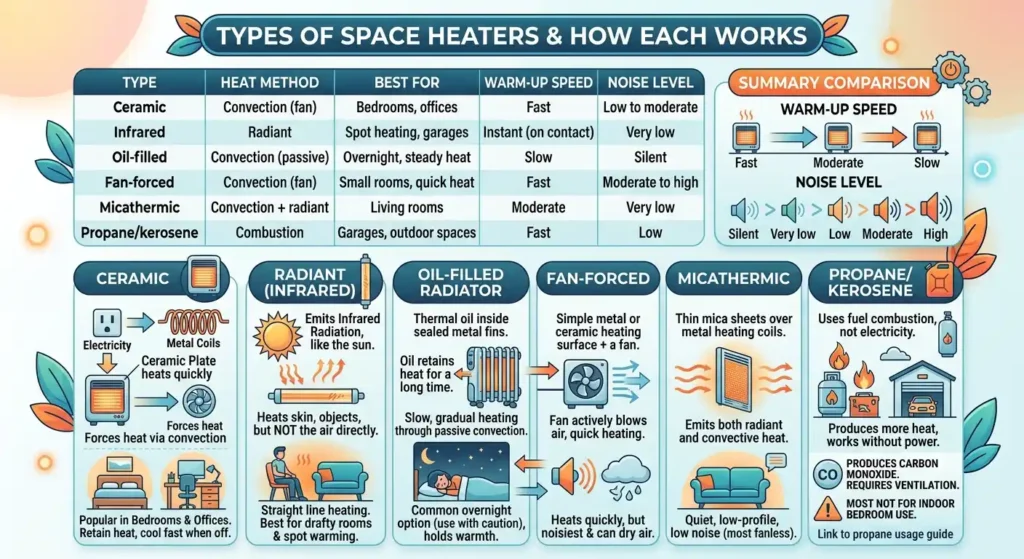
Ceramic heaters have a heating plate that is bonded to metal coils. Electricity is delivered through the coils, the ceramic plate heats quickly, and a fan (in most models) forces the heat into the room via convection. Part of the reason why they are a popular choice in bedrooms and offices is that ceramic elements retain heat and cool fast when off.
Radiant (Infrared) Space Heaters
IR heaters have a quartz tube or metal coil that emits infrared radiation, the same energy that you feel when you are in the sun. This radiation does not heat the air; instead it travels in a straight line and heats anything it contacts, your skin, a desk, a couch. They are good options in rooms that are drafty or in rooms where you want to warm someone, rather than the entire room.
Oil-Filled Radiator Heaters
These heaters have sealed metal fins filled with thermal oil. An electric element inside heats the oil, and the oil retains that heat for a long time, radiating it slowly through the metal fins even after the unit cycles off. They heat a room gradually but hold warmth longer than most other types, which makes them a common overnight option, though no space heater should ever be left running unattended. For a deeper look at the internal mechanics, see this breakdown of what happens inside the unit as it warms up. If you already own one, this settings and safety walkthrough covers how to get the most out of it.
Fan-Forced Heaters
They use a simple metal or ceramic heating surface in combination with a fan that actively blows air over it. They heat a room more quickly than passive convection heaters since the fan maintains the air in motion, but are also more likely to be noisier and to dry out the air more visibly.
Micathermic Heaters
Micathermic heaters are constructed with thin mica sheets over metal heating coils. They emit both radiant and convective heat, which heats the air and surrounding items, and are usually low-profile and quiet because most of them do not use a fan.
Space Heaters (Propane and Kerosene)
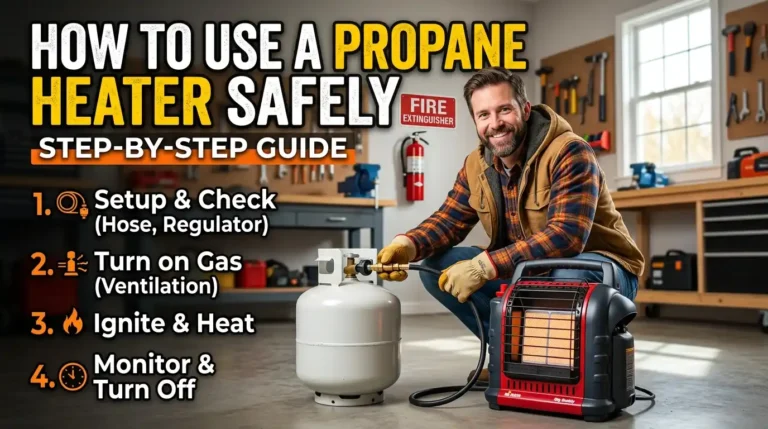
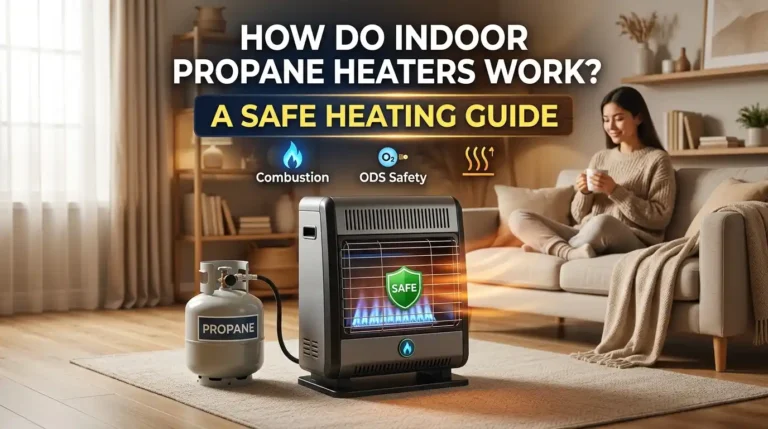
Fuel-burning heaters generate heat by combustion rather than electricity. They tend to produce more heat per unit and work without power, which makes them popular for garages, job sites, and outdoor spaces. They also produce carbon monoxide and require proper ventilation, so most models are not rated for indoor bedroom use unless specifically labeled for it. Before running one, it’s worth reading this step-by-step guide to using a propane unit without the hazards.
Space Heater Types Compared
| Type | Heat Method | Best For | Warm-Up Speed | Noise Level |
|---|---|---|---|---|
| Ceramic | Convection (fan) | Bedrooms, offices | Fast | Low to moderate |
| Infrared | Radiant | Spot heating, garages | Instant (on contact) | Very low |
| Oil-filled | Convection (passive) | Overnight, steady heat | Slow | Silent |
| Fan-forced | Convection (fan) | Small rooms, quick heat | Fast | Moderate to high |
| Micathermic | Convection + radiant | Living rooms | Moderate | Very low |
| Propane/kerosene | Combustion | Garages, outdoor spaces | Fast | Low |
How Much Electricity Does a Space Heater Use?
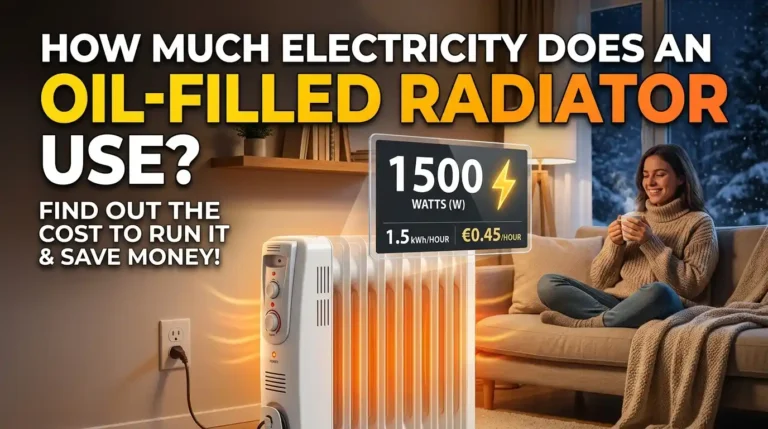
The majority of electric space heaters operate between 750 and 1,500 watts with 1,500 watts being the standard maximum power of a heater when plugged into a standard household outlet. A 1,500-watt heater running 8 hours with the U.S. average residential electric rate as a rough guide consumes approximately 12 kilowatt-hours, or a few dollars a day at your local utility rate.
It is nearly always less expensive to run one heater in a single room than to turn up your whole-house thermostat, one of the reasons why space heaters are popular as a supplemental heating method.
Note: The precise electricity charges depend on the area and utility company. Before estimating running costs, check your current utility bill and see what your actual per-kWh rate is.
What Size Space Heater Do You Need? (Wattage by Room Size)
An easy formula: you require about 10 watts of heating capacity per square foot of room area, which is modified by ceiling height and insulation.
| Room Size | Recommended Wattage |
|---|---|
| 100 sq ft (small bedroom) | 1,000 watts |
| 150 sq ft (home office) | 1,500 watts |
| 200 sq ft (large bedroom) | 1,500-2,000 watts |
| 300+ sq ft (living room) | 2,000+ watts, or central heating supplement |
Uninsulated rooms, high ceilings, and old-fashioned windows will all increase your real wattage requirement above this base.
Space Heater Safety Tips
Home heating fires are one of the most common causes of fire, and space heaters are not the place to compromise on safety. The U.S. Consumer Product Safety Commission estimates that an average of approximately 1,600 fires annually, resulting in approximately 70 deaths and 150 injuries annually, are caused by portable heaters, including electric space heaters, based on 2020 to 2022 statistics.
It has also been discovered by the National Fire Protection Association that space heaters contribute to approximately a third of all home heating fires, yet contribute to approximately 80 percent of home heating fire fatalities, as one device too near combustible substances can quickly get out of control.
Before You Buy
- Check the label to find a UL (or other nationally recognized testing lab) safety certification.
- Select a model that has automatic tip-off shutoff and inbuilt overheat protection.
- Select a wattage that corresponds to your room size, over-sized heaters are a waste of energy and under-sized heaters overload the unit.
While It’s Running
- Place the heater at least three feet away bedding, curtains, furniture and other flammable items.
- Directly plug it into a wall. Never use an extension cord or power strip.
- Lay it on hard, flat, nonflammable surface, not on carpet or rugs.
- Turn it off and unplug it when you leave the room or go to sleep.
- Monthly test smoke alarms and place one on each level of your house.
Common Mistakes to Avoid
- Leaving a heater running overnight, even those that are labeled as being overnight safe, should be monitored occasionally.
- Operating an indoor fuel-burning heater without a carbon monoxide detector or adequate ventilation.
- Leaving a heater close to a water source such as a bathroom without a GFCI-protected outlet.
- Laying clothes on a heater to dry them, and this is one of the most frequent reasons of home heater fires.
Myth vs Fact: Space Heaters
| Myth | Fact |
|---|---|
| “Newer space heaters can’t start fires.” | Even certified heaters can ignite nearby fabric or furniture if placed too close. Distance matters more than the model. |
| “Oil-filled heaters are safe to leave on all night.” | No space heater type is officially rated for unattended overnight use without monitoring, regardless of the heat method. |
| “A bigger wattage heater is always better.” | Oversized heaters for a small room waste electricity and can trip breakers; matching wattage to square footage is more efficient. |
| “Space heaters are cheaper than central heat no matter what.” | They’re only cheaper when heating one room instead of the whole house. Running several space heaters at once can cost more than central heating. |
FAQs
What is a space heater used for?
A space heater heats one room or a small space, typically as an addition to central heating and not as an alternative to it.
So, how does an electric space heater work to produce heat?
The electric current is sent through a resistive heating element, and the resistance directly transforms electrical energy into heat, a phenomenon known as Joule heating.
Are space heaters energy consuming?
Most run between 750 and 1,500 watts. Operating one in a single room is usually cheaper than warming up a whole house, but using multiple heaters in parallel is costly.
Is it safe to leave a space heater on overnight?
Even models with tip-over and overheat protection, manufacturers and safety agencies generally suggest that you turn off your heaters when you leave the room or go to sleep.
What’s the difference between a ceramic and an infrared space heater?
Ceramic heaters rely on convection to warm air inside a room, whereas infrared heaters rely on radiant energy to warm people and objects directly, but not always warm the surrounding air.
What is the proximity of a wall or furniture to a space heater?
Place space heaters at least three feet away from walls, furniture, bedding, curtains, and other inflammable substances.
Is it possible to be poisoned by carbon monoxide by using a space heater?
Carbon monoxide cannot be produced by electric space heaters. Heaters that burn fuel (propane, kerosene, natural gas) can, so they need to be well ventilated and have a carbon monoxide alarm.
Why is not my space heater heating the entire room?
The majority of space heaters are set up to warm one enclosed room of a certain square feet, not an open floor plan or an open room with the door open. Make sure that the wattage of your model fits your room size.
How big a space heater should I have in a bedroom?
The average 100-150 square foot bedroom typically requires a 1,000-1,500 watt heater, with insulation and ceiling height also affecting the requirement.
Does it require a special outlet on space heaters?
No special outlet is necessary, but they must always be directly plugged into a wall outlet, not into an extension cord or power strip, so as not to overload the circuit.
Are oil filled heaters more energy efficient than others?
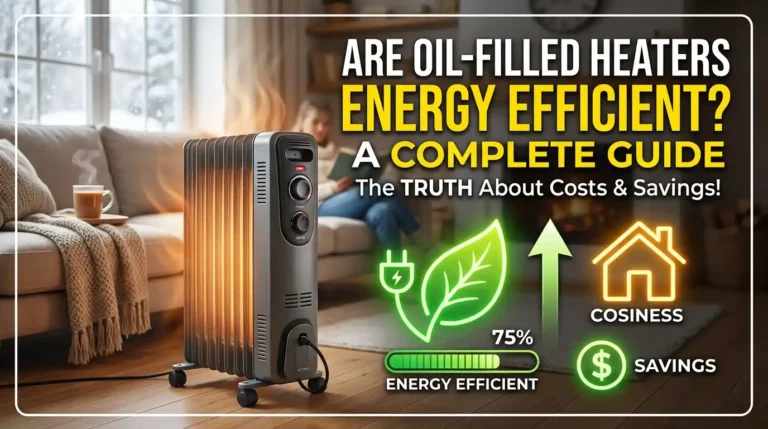
Oil-filled heaters hold heat longer after cycling off, which can reduce how often the element needs to run, but overall efficiency still depends on wattage, room insulation, and thermostat settings. For a closer look at the real numbers, see this analysis of oil-filled heater running costs and efficiency.
What is the use of a tip-over switch?
A tip-over switch is a device that automatically disconnects the heater when knocked over, or tilted beyond a predetermined angle, minimizing the risk of fire due to an overturned unit.
Is it possible to use a space heater in a bathroom?
It can only be used in a GFCI-protected outlet and stored far away from water supplies; most manufacturers recommend not to use it in the bathroom at all, so refer to the instructions of your particular model.
Key Takeaways
- A space heater converts electricity into heat by resistance in its heating element, and disperses the heat by convection, radiation or both.
- Convection heaters warm the air; radiant (infrared) heaters warm people and objects directly.
The most common ones are ceramic, infrared, oil-filled, fan-forced, micathermic, and fuel-burning heaters which are applicable in various rooms and requirements. - Adjust wattage to room size: Start with about 10 watts per square foot.
- Space heaters are the number one cause of home heating fires; the two most important safety habits are to keep space heaters three feet away from anything flammable and never leave them unattended.
Final Thoughts
It is not that complex when you dissect a space heater: electricity encounters resistance, and resistance heats, and the heat disseminates throughout the room either by convection or radiation or both. The kind you buy, whether it is ceramic, infrared, oil-filled, or any other, largely depends on how quickly you want the room to warm up and whether you are warming a room or only yourself.
The common factors in any kind are the necessity of simple precautionary measures: sufficient space between flammable substances, direct outlet connection, and never leaving one running unattended. Get the two of those correct, the type and the safety habits, and one of the easiest, most useful methods of keeping warm during the colder months is a space heater.