Do Propane Heaters Create Moisture? Here’s the Science, the Risks, and the Fix
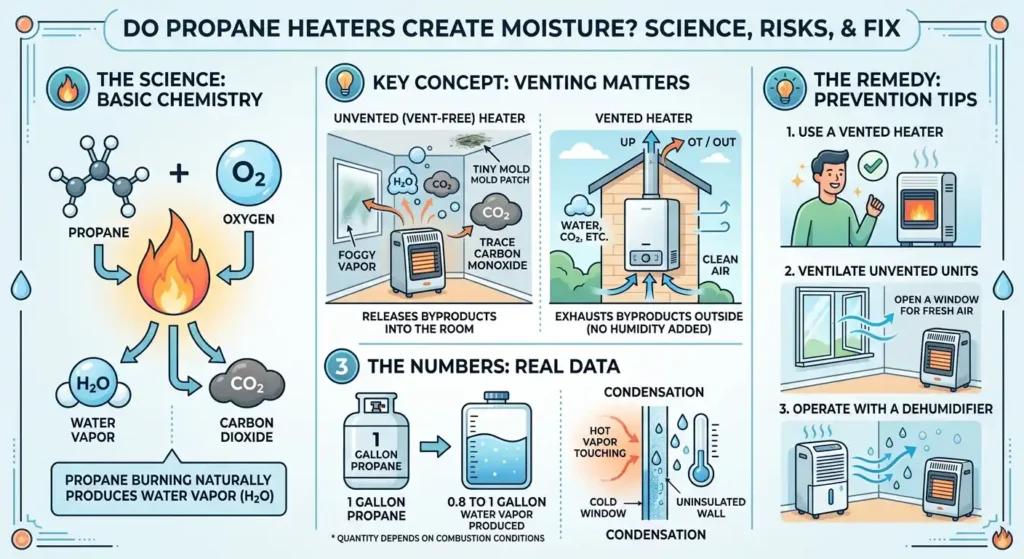
When your windows are fogging up or your walls are damp because you began using a propane heater, you are not dreaming. Yes, propane heaters do produce moisture and it is not a malfunction. It’s basic chemistry. Water vapor is a natural byproduct of propane burning, as well as heat and carbon dioxide.
The amount of moisture that you actually have to deal with, however, all depends on one thing: whether or not you have a heater that is vented to the outside or not. That one fact is the difference between a heater that is safe enough to be left on all winter, and one that can fog your windows, wet your walls, and develop mold in just a few weeks.
This is all you need to know: the chemistry, the real numbers, what heaters are the worst culprits, and how to prevent the condensation.
Key Takeaways
- The chemical reaction of propane produces water vapor. It’s unavoidable, not a defect.
- Unvented (vent-free) propane heaters put that water vapor right into your room, together with carbon dioxide and trace levels of carbon monoxide.
Vented propane heaters exhaust the byproducts of combustion, including the moisture, outside into a flue, which means that they do not humidify your space. - One gallon of propane burning yields approximately 0.8 to 1 gallon of water vapor, depending upon the combustion chemistry.
- Condensation occurs when the vapor of that water comes in contact with a cold surface (a window, a metal wall, an uninsulated ceiling) and changes back into liquid.
- The remedy is not difficult: indoor vented heater, open a window to get air in unvented units, or operate a heater with a dehumidifier.
What “Creating Moisture” Actually Means
When individuals pose the question of whether a propane heater produces moisture, they are in fact posing two questions, and it is worth disentangling them:
- Does propane burn chemically to give water? No, no, no exceptions.
- Is that water getting into the air you breathe? That is all a matter of whether the heater is venting or not.
A vented furnace burns propane and gives off water vapor as well, but a flue pipe directs it (along with the carbon dioxide and any carbon monoxide) directly out. It never enters your indoor air. A heater without a flue is unvented. All the products of the flame heat, CO2, water vapor, and trace CO are emitted directly into the room. This is why when people ask this question they are referring to an unvented propane heater.
The Chemistry: Why Burning Propane Makes Water
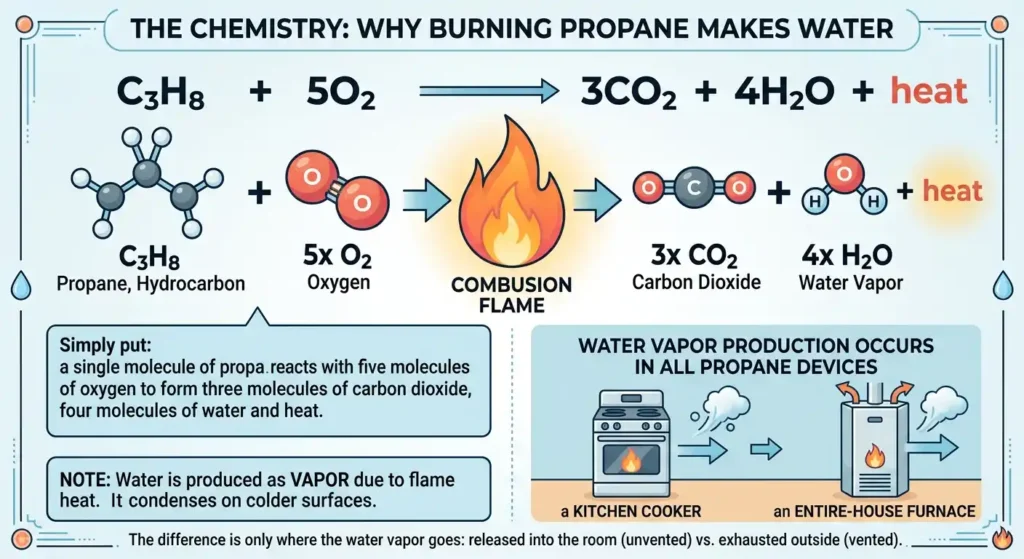
Propane (C3H8) is a hydrocarbon, i.e. molecules of propane are composed of carbon and hydrogen. A complete combustion of propane in the presence of sufficient oxygen will appear as follows:
C3H8 + 5O2 → 3CO2 + 4H2O + heat
Simply put: a single molecule of propane reacts with five molecules of oxygen to form three molecules of carbon dioxide, four molecules of water and the heat that warms your space. The reason why water is not liquid but vapor is due to the heat of the flame. It is only when it cools down and condenses on something colder than the air around that you can see it as a liquid.
This response occurs in all propane devices, such as a kitchen cooker or an entire-house furnace. The difference is in the location of the water vapor subsequently.
Do Propane Heaters Create Moisture? How Much Water Are We Talking About?
According to the stoichiometry of the above reaction, 1 pound of propane will yield approximately 1.6 pounds of water on burning. In more familiar units, that translates to about 0.8 to 1 gallon of water vapor to each gallon of propane burnt, depending on the source and the efficiency of the combustion method applied in the computation. A little unvented heater that burns a 20-pound cylinder over the weekend is actually introducing a significant quantity of water vapor to the air of a tiny space, and that is precisely why it is noticed so rapidly by campers, van dwellers, and workshop owners.
Quick fact: A 100,000 BTU/hour natural gas or propane heater has the potential to produce more than a gallon of water an hour of the time it is on, based on estimates of the byproducts of combustion used in the HVAC and inspection industry.
Vented vs. Unvented Propane Heaters: The Real Difference
It is the one most significant difference in the whole subject, and thus deserves an individual comparison.
| Feature | Vented Propane Heater | Unvented (Vent-Free) Propane Heater |
|---|---|---|
| Where combustion byproducts go | Outside, through a flue or chimney | Directly into the room |
| Moisture released indoors | Minimal to none | Significant, especially in small or sealed spaces |
| Carbon monoxide risk | Very low when properly installed | Higher; requires a working oxygen depletion sensor and fresh air |
| Typical uses | Home furnaces, wall furnaces, RV furnaces with exterior venting | Portable heaters, catalytic heaters, “blue flame” and radiant space heaters, construction heaters |
| Installation | Requires a flue, chimney, or direct-vent kit | Portable, no venting required |
| Best practice | Safe for continuous indoor use when installed correctly | Needs a cracked window or active ventilation, and shouldn’t run unattended |
When you have ever encountered a construction crew operating a portable “torpedo” or glowing propane heater in a framed building, or a van-lifer operating a Mr. Buddy-style heater overnight, it is an unvented heater. Those are the heaters that cause the condensation complaints you will see in forums and social media.
Why You’re Seeing Condensation (Even If You Didn’t Expect It)
Water vapor in itself does not lead to visible condensation. One more ingredient you require is a cold surface. Hot and humid air is able to retain more water than cool air. As soon as the air comes into contact with something colder than it, such as a single-pane window, an uninsulated metal wall, or a cold ceiling in an attic space, it can no longer retain all its moisture, and the surplus condenses to liquid water.
This is what makes a cold glass of water sweat on a hot and humid day. The propane heater is heating the air and adding additional moisture to it in the process, and the first cold surface it comes in contact with is the place where the moisture appears.
Common places people notice it:
- Window glass and metal window frames.
- Van or trailer walls that are not insulated.
- Framing and metal roofing in the job sites.
- Bathroom mirrors and tile in insufficiently insulated rooms.
- Tent walls and RV skylights.
Is This Actually a Problem? (Risks of Propane Heater Moisture)
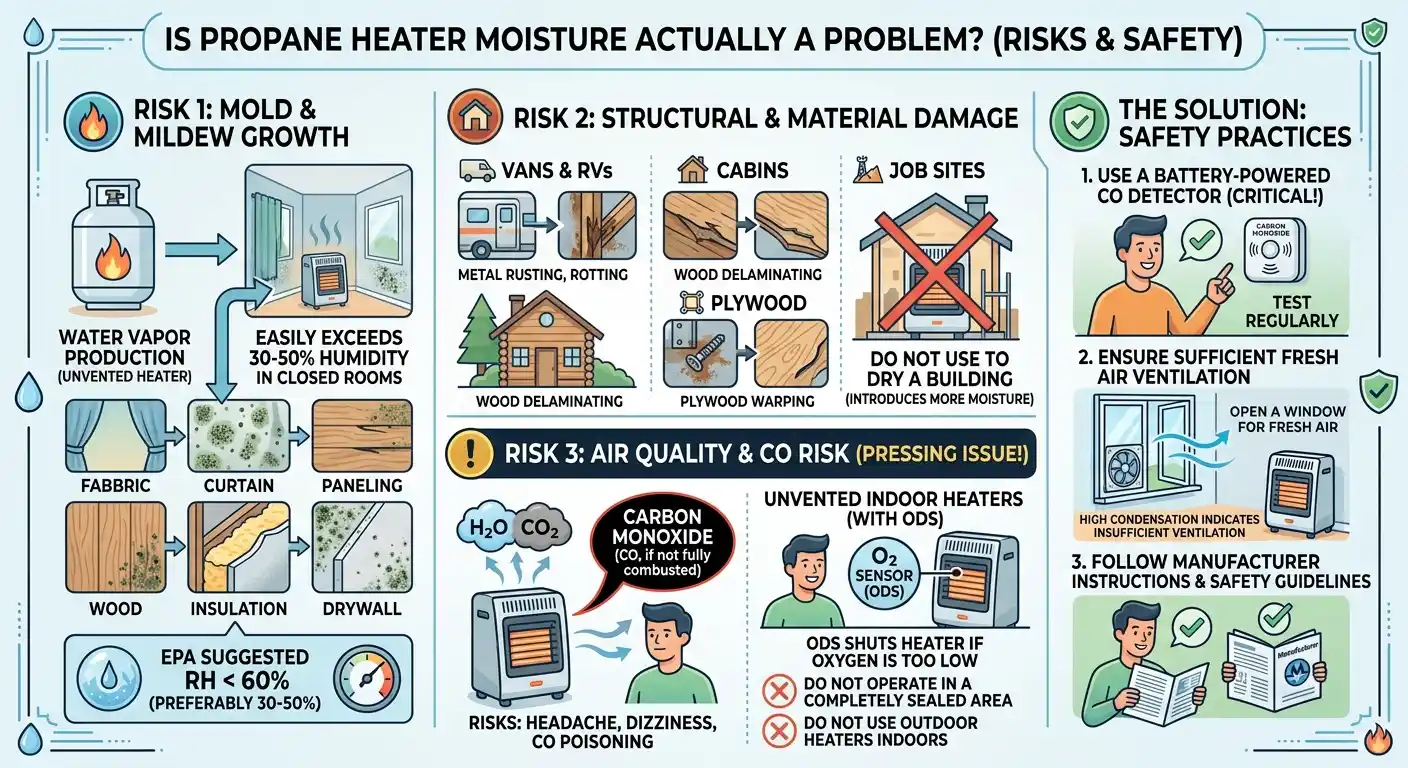
A small amount of condensation on a window is not harmful in itself, but it is something to consider with three reasons in mind.
1. Mold and Mildew Growth
Mold does not require much moisture to grow. The EPA suggests maintaining the indoor relative humidity at less than 60, preferably 30 to 50. A propane heater that operates unvented in a closed area may easily exceed the humidity within that range, particularly during the night when windows and vents are usually closed. That moisture may seep into fabric, wood, insulation and drywall over days or weeks, providing a habitat in which mold and mildew establish themselves.
2. Structural and Material Damage
In vans, RVs, cabins, and job sites, the repeated cycles of condensation can rot wood framing, rust metal fasteners, delaminate plywood and OSB, and warp trim. This has been a long-established construction problem: constructors are particularly cautioned not to use unvented propane heaters to dry a building during construction, as the heater may introduce more moisture to the building than it is removing.
3. Air Quality and Carbon Monoxide Risk
This is the more pressing issue. Unvented propane heaters emit carbon dioxide, and, when not fully combusted, carbon monoxide along with water vapor. The CDC has followed health risks associated with the use of unvented space heaters over decades and the current unvented heaters sold to be used indoors must have an oxygen depletion sensor (ODS) that switches off the heater in case oxygen levels become too low. Do not operate an unvented propane heater in a completely sealed area and do not use one not designed to be used indoors.
Safety note: This article is on moisture, yet moisture and air quality are interconnected. When an unvented heater condenses a lot, that is also an indication that the space is not receiving sufficient fresh air, which is also important in carbon monoxide safety. Always use a battery-powered carbon monoxide detector any time you’re running an unvented propane appliance indoors.
Myth vs. Fact
| Myth | Fact |
|---|---|
| “Propane heaters dry out the air.” | The opposite is often true for unvented models. Combustion chemically adds water vapor to the air; it doesn’t remove it. |
| “Only cheap or old heaters cause condensation.” | Even brand-new, well-maintained unvented heaters produce the same water vapor. It’s chemistry, not a defect. |
| “A little condensation means my heater is broken.” | Some condensation with an unvented heater is expected. It’s a sign you need more ventilation, not that the unit is malfunctioning. |
| “Vented and unvented heaters are basically the same, just different price points.” | They behave completely differently for indoor moisture and air quality. This is the most important factor in choosing a heater. |
| “You can just wipe up the condensation and move on.” | Wiping up surface moisture doesn’t address moisture that’s already soaked into insulation, wood, or fabric, which is where mold actually starts. |
How to Reduce or Prevent Propane Heater Moisture
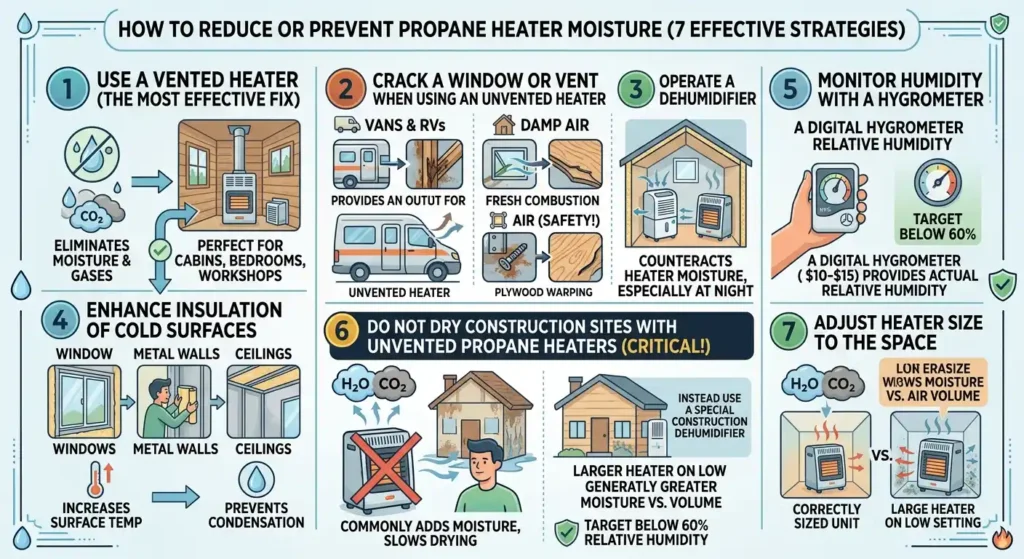
You don’t have to give up propane heat to solve this. The following are what actually works in descending order of effectiveness.
- Replace any space you spend much time with a vented heater. When you are heating a cabin, a bedroom, or a permanent workshop, a well-vented furnace or heater eliminates moisture and gases of combustion off the equation altogether.
- Crack a window or vent when using an unvented heater. This is the general recommendation of RV and van-life groups, and it is effective in that it provides damp air an outlet rather than letting it accumulate inside. It also provides fresh combustion air, which is of importance in terms of safety.
- Operate a small dehumidifier with the heater. A small dehumidifier can counteract the moisture that a heater introduces, particularly at night, in a small insulated area such as a van, tiny home, or workshop.
- Enhance insulation of cold surfaces. At the interface of warm and damp air and a cold surface, condensation occurs. The insulation of windows, metal walls and ceilings increases the surface temperature to a point where moisture will not easily condense on surfaces.
- Monitor the humidity in the house with a hygrometer. You are not guessing because a $10 to 15-dollar digital hygrometer tells you your actual relative humidity. Target to remain below 60%.
- Do not dry out a recently-built or water-damaged building with an unvented propane heater. It is a typical and expensive construction error. A propane heater will add moisture when it is warming the area, which may slow down drying or introduce new moisture to previously-wet materials. Instead, use a special dehumidifier or a vented direct-fired heater intended to be used in construction drying.
- Adjust the heater to size to the space. A large unvented heater with low settings in a small enclosed space generates greater moisture compared to the amount of air in the room when compared to a correctly sized unit that is not always on to maintain temperature.
Propane Heaters vs. Other Heat Sources: Moisture Comparison
| Heat Source | Adds Moisture Indoors? | Notes |
|---|---|---|
| Unvented propane heater | Yes, significantly | Combustion byproducts, including water vapor, released directly into the room |
| Vented propane furnace | No | Byproducts exhausted outside through a flue |
| Electric space heater | No | No combustion, so no water vapor produced |
| Kerosene heater (unvented) | Yes, significantly | Similar combustion chemistry to propane |
| Wood stove (properly vented) | Minimal | Combustion gases vented through a chimney, though wood itself can add some ambient humidity as it dries |
| Heat pump | No, and can reduce humidity | Some models actively dehumidify air as a side effect of heating/cooling |
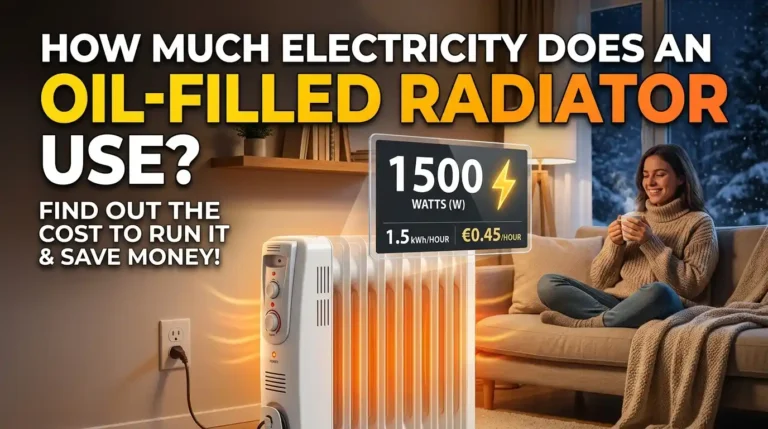
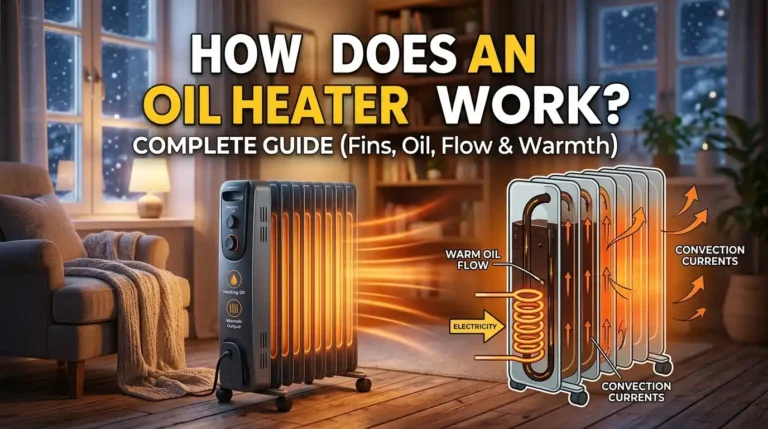
If moisture control is your top priority and venting isn’t an option, a moisture-free electric alternative is the most straightforward way to avoid the issue entirely, though it comes with its own trade-offs in cost and heating capacity, particularly for large or drafty spaces. For a slower, steadier heat with the same lack of moisture output, an oil-filled radiator is another option worth comparing, and it’s helpful to understand how these radiators generate heat in the first place before deciding between the two. If running costs matter as much as moisture control, it’s also worth checking whether they’re actually worth the running cost compared to what you’re spending on propane.
FAQs
Are propane heaters humidifying?
Yes. Water vapor is a byproduct of the chemical combustion of propane. It all depends on whether the heater is vented or not, whether the moisture will be in your indoor air or not.
What is the amount of moisture a propane heater emits?
Depending on the combustion chemistry (C3H8 + 5O2 → 3CO2 + 4H2O), approximately 0.8 to 1 gallon of water vapor is generated per gallon of propane burned.
Why does my propane heater condense windows?
The heater introduces warm air that is full of moisture to the room. As that air collides with a cold surface such as the glass of the window, it can no longer retain all its moisture and the surplus is condensed into liquid water.
Will a propane heater result in mold?
Yes, when it is an unvented model that is operating in a poorly ventilated area with time. The increased humidity may put indoor environments within the zone where mould and mildew thrive, particularly in closed areas such as vans, RVs and small rooms.
Is the same moisture problem with vented propane heaters?
No. Vented heaters release combustion byproducts, such as water vapor, out of the house via a flue, and therefore do not contribute significant humidity to the air in your home.
Can I leave an unvented propane heater on overnight?
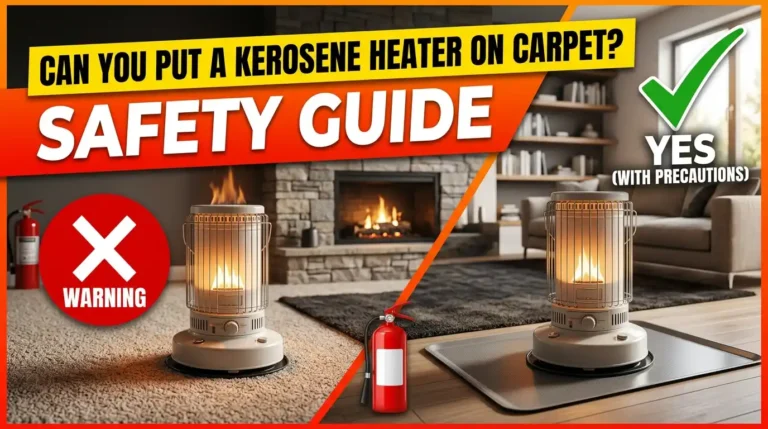
Only if it’s specifically rated for indoor use, includes an oxygen depletion sensor, and you provide fresh air (like a cracked window). Many manufacturers advise against unattended overnight use. If you’re going to run one at all, it’s worth reviewing the full guide to running one safely indoors before you start, and always use a carbon monoxide detector.
Does propane dry or moisten the air?
In the case of unvented heaters, it contributes to moisture. This comes as a surprise to many, as the use of electric heat can make a room feel dry, by reducing the relative humidity as the air is warmed, yet propane combustion is taking on the reverse effect, actively adding water vapor.
What is the reason why construction crews do not use propane heaters to dry buildings?
Since an unvented propane heater may introduce as much or more moisture into the air as it removes by heating the space, it may slow down the drying process and in some instances introduce moisture to already wet lumber, drywall and insulation.
Is it possible to prevent the condensation without purchasing a new heater?
Yes. Ventilation can be achieved by cracking a window, a small dehumidifier can be used, and cold surfaces can be insulated, without necessarily replacing the heater itself.
Are catalytic propane heaters less moist than blue-flame heaters?
They are both unvented and both use propane, meaning that they both make water vapor by the same combustion chemistry. Nor is either significantly drier than the other, the quantity of moisture produced depends on the amount of propane burned, not the type of flame used by the heater.
Does a propane heater condense when there is a gas leak or malfunction?
Not by itself. A certain amount of condensation with an unvented heater is normal. Nevertheless, a powerful smell of gas, the presence of soot, or a yellow (instead of blue) flame may indicate an incomplete combustion process and must be inspected by a professional as soon as possible, as this is also a predisposing factor to carbon monoxide.
What is the ideal humidity level that I should maintain in a room when I use propane heater?
EPA suggests that the relative humidity in the indoor environment should not exceed 60, and 30-50 is the most comfortable and safe level to avoid moulds. It can be easily monitored with a basic hygrometer.
Do RV furnaces resemble portable propane heaters to use in moisture?
No. The majority of the built-in RV furnaces are vented to the exterior via the sidewall of the RV, thus they do not contribute to the moisture indoors like a portable unvented heater. Unvented portable buddy-type heaters that are used in an RV are different.
Final Thoughts
Propane heaters do not have a defect where they fog up your windows, they are simply doing what the chemistry says they will do. Propane is always burned, and the only question is whether the vapor escapes outdoors via a vent or directly into the room with you.
You do not have to drop propane heat completely, in case you are working with condensation at the moment. Begin with the simple: open a window, place a small dehumidifier, and monitor your indoor humidity with a low-priced hygrometer. When you are warming up an area that you spend much of your time in, particularly at night, you should seriously consider an option with venting. It not only eliminates the moisture problem but also eliminates a layer of carbon monoxide danger.
The conclusion: know what kind of heater you are using, provide it with the ventilation it requires, and have a carbon monoxide detector running any time you are using propane heat in the house.