How to Choose a Gas Fireplace: Size, BTU & Features
Safety First: Read This Before You Shop
Gas fireplaces burn fuel, so they carry a risk of carbon monoxide (CO). Carbon monoxide is colorless and odorless, and you cannot see it or smell it. Put a working CO alarm on every level of your home and near sleeping areas, test alarms each month, and replace them as the maker directs.
Pets can be more sensitive to poor indoor air than people, and birds are known to be extra sensitive. If a CO alarm sounds, leave the home with people and pets and call for help from outside.
If you smell gas: do not touch light switches, flames, or appliances. Leave at once with people and pets, and call your gas utility emergency line or 911 from outside. Do not go back inside to look for a leak, open a gas line, or relight a fireplace after a strong gas smell.
Never open a gas line, adjust a gas valve past the normal user controls in the manual, bypass a safety device such as a thermocouple, oxygen depletion sensor, or spill switch, block a vent, or turn off a CO alarm. Gas line work, installation, venting changes, and fuel conversions belong with a licensed gas professional.
A gas fireplace can warm a room, anchor a living space, and give you heat at the push of a button. The right choice still depends on your room, your venting options, and how much heat you need. This guide walks through each choice in order, so you can compare models with a clear plan in hand.
Start with fit and heat, then move to venting and fuel. Features come last, because a good looking fireplace that does not fit your opening or your venting plan will cause trouble. Keep the safety box above in mind through the whole process, and bring a licensed gas professional into any step that touches gas, venting, or installation.
Pick Your Fireplace Type First
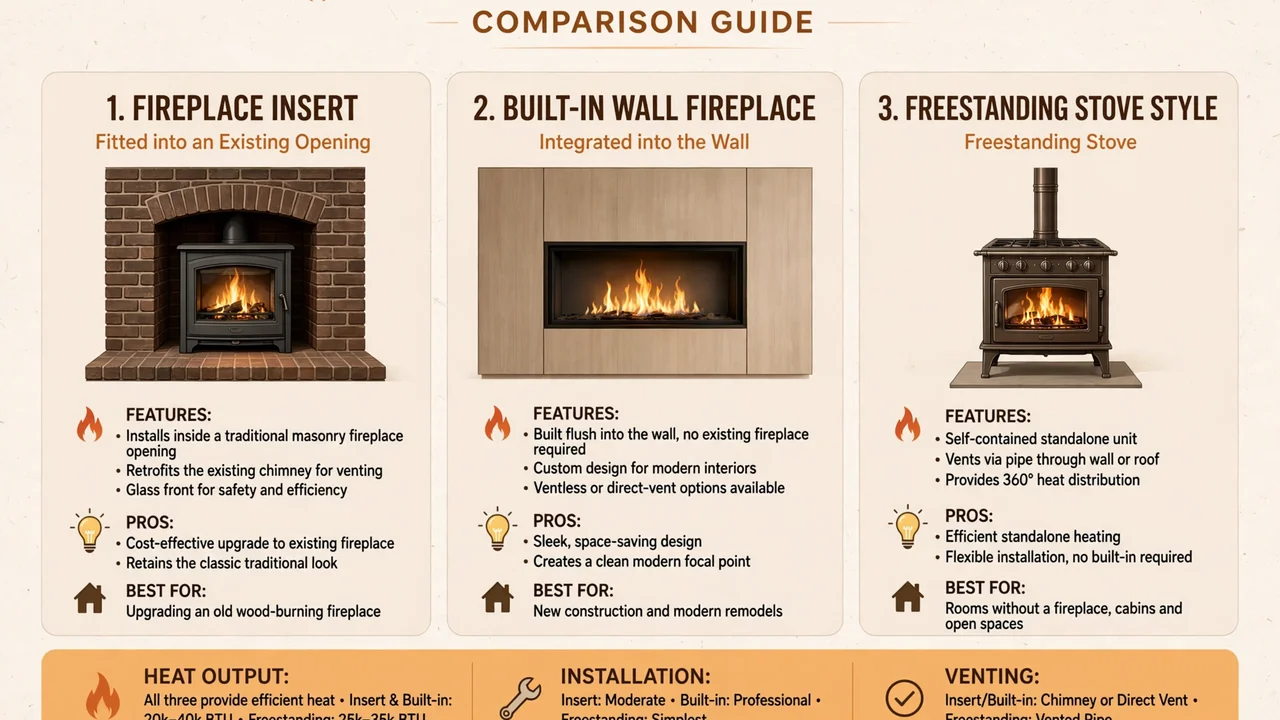
Gas fireplaces come in a few main forms, and each one suits a different home. An insert slides into an existing masonry fireplace opening and seals it with a new firebox and glass front. A built in unit goes into a framed wall opening, which makes it a good pick for a remodel or a new build. A freestanding gas stove stands on the floor and vents through a wall or roof, which can work well in a room with no existing fireplace.
A gas log set is a different product. It places gas logs and a burner inside an existing open fireplace, and it keeps the open chimney draft of that fireplace. Log sets can look warm and open, but they often send more heat up the chimney than a sealed insert or built in unit. If you want steady room heat, compare a log set with an insert side by side before you decide.
Compare the Main Types at a Glance
| Type | Best for | What to check first |
|---|---|---|
| Gas insert | An existing fireplace you want to upgrade | Opening width, height, depth, and vent route |
| Built in gas fireplace | A remodel or new build with a framed wall | Wall depth, framing space, and vent path |
| Freestanding gas stove | A room with no fireplace opening | Floor space, clearances, and vent route |
| Gas log set | An open fireplace kept for looks and light heat | Chimney condition and damper fit |
Your existing fireplace, if you have one, narrows the choice fast. Measure the opening before you fall for a model, and check the maker install manual for the exact fit range. If you have no fireplace at all, a built in unit or a freestanding stove gives you more freedom on placement. Either way, venting and clearances will shape the final short list.
If you are weighing an insert against a log set, read our comparison of a gas fireplace insert vs a gas log set for a closer look at heat, looks, and install needs. That comparison can help you see which form matches how you plan to use the room.
Measure the Opening and the Room
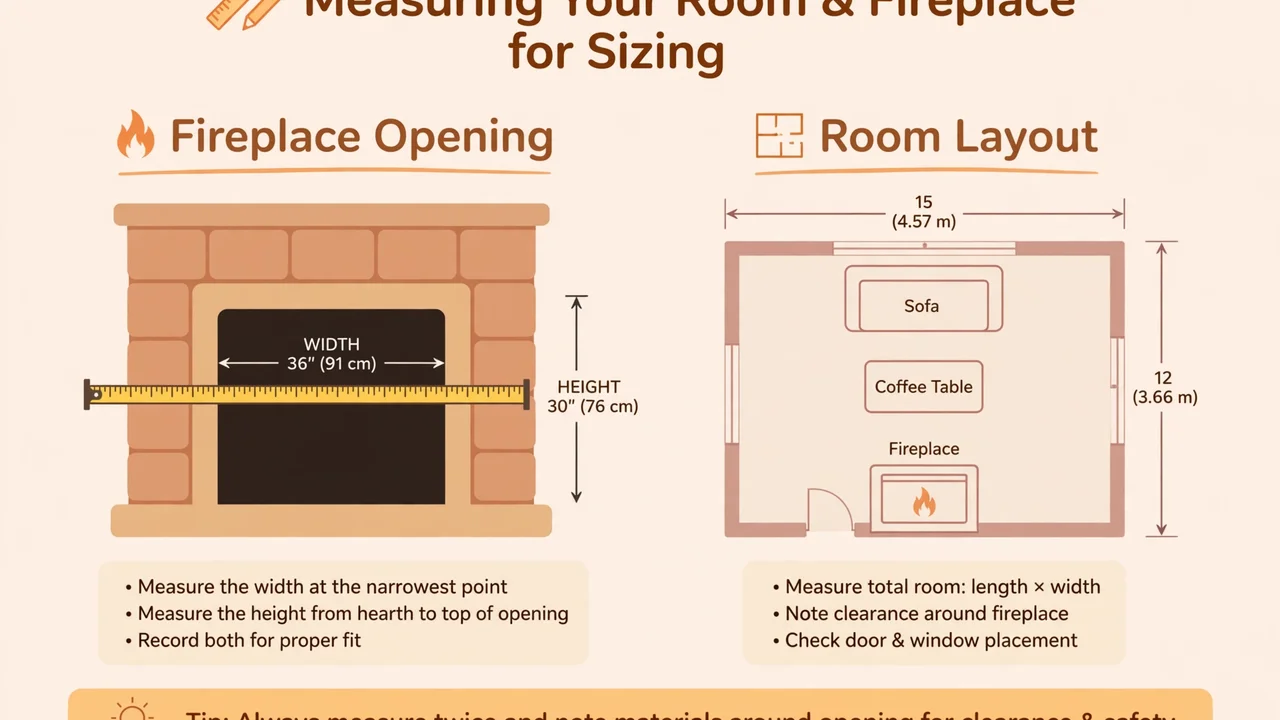
Good sizing starts with a tape measure, not a catalog photo. For an insert or a log set, measure the front opening width at the top and the bottom, the height at the center and at each side, and the depth from the front face to the back wall. Openings can taper, so the smallest measurement often decides whether a unit fits. Write down each number and keep the list with you while you shop.
For a built in unit or a freestanding stove, measure the wall or floor area where the unit will sit. Note the width of the wall, the depth you can spare, and the distance to windows, doors, and walkways. Also note ceiling height, since tall ceilings and open floor plans spread heat over a larger volume. A room that opens into a hall or a second room will need more heat than a closed room of the same floor size.
Do a Quick Room Check
- Length times width gives you floor area in square feet. A room that is 15 feet by 20 feet is 300 square feet.
- Note insulation, window size, and drafty doors. Poor insulation and large windows raise heat need.
- Note ceiling height. A room with a 12 foot ceiling holds more air than the same room with an 8 foot ceiling.
- Note how the room connects to other rooms. Open plans share heat, but they also spread it thin.
- Note the vent path. A straight, short vent route is often simpler than a long route with many turns.
Take photos of the opening, the wall, and the vent route if you can. Photos help a dealer or a licensed gas professional spot fit problems early, and they save a second trip. Bring your measurements, your room size, and your vent notes to every quote, so each quote rests on the same facts.
Size the Heat: BTU Planning Ranges
BTU stands for British Thermal Unit, and it is a measure of heat output. A higher BTU rating means a unit can put out more heat, but a higher rating is not always better. A unit that is far too large for a room can cycle on and off, overheat a small space, and feel hard to control. A unit that is too small will run flat out and still leave the room cool.
The table below gives general planning ranges only. These are broad estimates for planning, not maker specs for a given model, and they are not a substitute for the maker rating or a professional sizing check. Insulation, ceiling height, climate, window area, and room layout all shift real heat need, so treat the ranges as a starting point for talks with a dealer or a licensed gas professional.
BTU Planning Ranges for Common Room Sizes
General planning estimates only (2026). Use them to narrow choices, then confirm sizing with the maker rating and a licensed gas professional.
| Room size | Planning BTU range | Good fit notes |
|---|---|---|
| Under 200 sq ft | 10,000 to 20,000 BTU | Small bedrooms, dens, and offices |
| 200 to 400 sq ft | 20,000 to 30,000 BTU | Typical living rooms and family rooms |
| 400 to 600 sq ft | 25,000 to 40,000 BTU | Large living rooms and open plan spaces |
| Over 600 sq ft | 30,000 to 50,000 BTU | Great rooms and wide open plans, check venting and layout first |
Ranges overlap on purpose. A well insulated, closed room can sit at the low end, while a drafty or tall room can need the high end.
Work Through One Example
Picture a living room that is 15 feet by 20 feet, which is 300 square feet. A common rule of thumb uses about 20 BTU per square foot as a rough starting point for heat need. For this room, that rule gives 300 times 20, which is 6,000 BTU as a rough baseline in a well insulated room.
That baseline is not the same as the fireplace rating you shop for. Fireplace input ratings often run higher than delivered room heat, since venting and efficiency change how much heat stays in the room. That is why the table above shows a planning range of 20,000 to 30,000 BTU for a 200 to 400 square foot room, rather than the 6,000 BTU baseline alone. Use the baseline to sense scale, use the table to narrow models, and ask a licensed gas professional to confirm the final size for your insulation, ceiling height, and climate.
Also ask whether the rating you see is input or output. Input is the fuel energy going in, while output is the heat that reaches the room. Two models with the same input can give different room heat if their efficiency and venting differ. Compare output and efficiency on the same basis, and check the maker spec sheet for each model you short list.
Turndown matters too. Turndown is how low a fireplace can run while still burning well. A wide turndown range lets you enjoy a low flame on a mild night without overheating the room. If you plan to run the fireplace often in spring and fall, ask about low flame output as well as full output.
Choose How It Vents
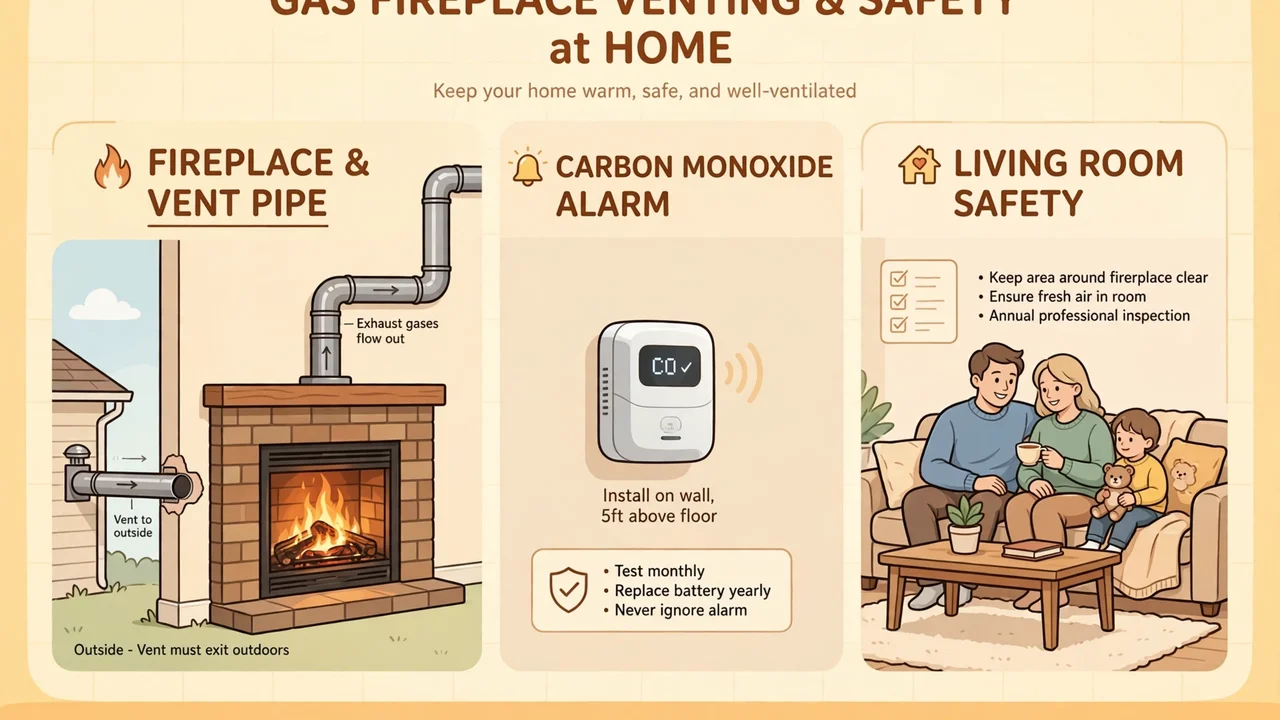
Venting carries combustion gases outside, and it is one of the biggest limits on placement. Direct vent units use a sealed pipe that pulls in outside air and sends exhaust outside through a wall or roof. They are a common choice for inserts and built in units, and they keep room air separate from combustion air. B vent, also called natural vent, uses room air and an existing chimney or vent, and it is often seen with log sets and some older installs.
Vent free, also called ventless, units have no vent pipe. Combustion byproducts, including carbon monoxide and water vapor, enter the room. Vent free units are restricted or banned in some states, cities, and building types, and they are often barred from bedrooms and bathrooms.
If you consider a vent free unit, check local codes first, confirm the oxygen depletion sensor is part of the design, and keep a working CO alarm in the room. Never treat a vent free unit as risk free.
Match the Vent to Your Home
- Direct vent suits many inserts and built in units, and it works through a wall or roof.
- B vent suits an existing chimney in good shape, but it needs a chimney check first.
- Vent free needs no pipe, but it needs a code check, a working oxygen depletion sensor, and a CO alarm.
- Long vent runs, many bends, and high roofs can add cost and limits, so get the vent route checked early.
Your vent choice also affects where the fireplace can sit. A direct vent unit needs a clear path to an outside wall or roof, with clearances from windows, doors, and air intakes. A licensed gas professional can check the route, the clearances, and the local code rules before you buy. For a closer look at these choices, read our guide to vented vs ventless gas fireplaces and our answer to whether gas fireplaces need a chimney.
Pick Your Fuel: Natural Gas or Propane
Most gas fireplaces run on natural gas or propane, and the right fuel often depends on what your home already has. Natural gas comes through a utility line, so it suits homes with a gas line near the fireplace spot. Propane comes in a tank, so it suits homes past the gas main or in rural areas. Each fuel needs its own burner setup, and a unit made for one fuel must not be run on the other without a maker approved conversion by a licensed gas professional.
Fuel affects install cost and daily use in different ways. A natural gas hookup may need a new line run, while propane needs tank space, tank access for fills, and a plan for cold weather use. Ask your utility or propane supplier about line size, tank size, and fill access before you pick a model. Our guide to natural gas vs propane fireplaces lays out the trade offs in more detail.
Never plan a fuel switch as a do it yourself job. Fuel conversion, gas line work, and venting changes belong with a licensed gas professional, and the work must match the maker manual and local codes. Get that scope in writing with your quote, so fuel, line, venting, and permits are all clear before work starts.
Compare Efficiency, Controls, and Flame Features
Efficiency tells you how much of the fuel energy becomes room heat. Check the maker spec sheet for the efficiency rating and for input and output BTU, and compare models on the same basis. A sealed glass front and direct venting often keep more heat in the room than an open log set, but the exact result depends on the model and the install. Ask for the spec sheet, not a sales claim alone.
Controls shape daily use more than most buyers expect. A basic on off control is fine if you want heat on demand. A remote control adds flame height and blower control from your chair.
A wall switch or smart thermostat link can tie the fireplace to room temperature, which helps in a room you heat often. Check that the control works from where you sit, and check battery needs for remotes and receivers.
Flame and look features deserve a live look when you can get one. Flame height adjustment, ember bed style, log style, and glass size all change the look of the fire. A blower can push warm air farther into the room, but it also adds fan noise, so listen to it at low and high speed. Interior panels in brick, stone, or plain black change the firebox look, and they are worth seeing in person if a showroom is near you.
Think about noise, light, and heat near the unit as well. Glass fronts get hot during use, so homes with small kids or pets may want a safety screen or barrier. Some units offer a heat management kit that moves warm air to another spot, which can help with hot walls or a TV above the fireplace. Ask about clearances for a TV, art, and wood trim before you place the unit.
Check Clearances and Safety Before You Buy
Clearances are the minimum safe distances from the fireplace to walls, mantels, trim, and furniture, and they come from the maker manual. Do not guess them from a photo. Measure your mantel height, side wall distance, and hearth depth, then compare each number with the manual for the model you want. A model that fits the opening can still fail on mantel clearance, so check both.
Safety screens and barriers matter in homes with kids and pets. A mesh screen or glass barrier keeps hands and paws off hot glass, and many new units include one. Check whether the screen is part of the price or an add on, and check how it affects the look of the fire. Keep furniture, curtains, and rugs outside the clearance zone, even if the room feels tight.
Plan for alarms and upkeep at the same time you plan the purchase. Put CO alarms on every level and near sleeping areas, test them each month, and replace them as the maker directs. Plan a yearly check by a licensed gas professional, with glass cleaning, burner checks, and vent checks in the scope. If you want to know what that yearly visit covers, see our guide to lighting a gas fireplace for a sense of normal controls and pilot care, and ask your pro about a maintenance plan.
Pull It Together: A Short Buying Checklist
Use This Checklist Before You Order
- Type picked: insert, built in, freestanding stove, or log set, matched to your opening or wall.
- Opening and room measured, with the smallest opening number and the room size on paper.
- BTU range narrowed with the table above, then confirmed with a licensed gas professional.
- Vent route checked, with direct vent, B vent, or vent free chosen to fit local codes.
- Fuel picked, with natural gas or propane matched to your home and supplier.
- Clearances checked against the maker manual for mantel, side walls, and furniture.
- CO alarms planned for every level and near sleeping areas, with monthly testing in mind.
- Written quote in hand covering the unit, venting, gas line work, labor, and permits.
Cost is the last piece to pin down, and it varies too much by region, vent route, and gas line work to quote here as a single number. Get at least two written quotes for the same scope, and compare what each quote includes. If one quote is far lower than the others, check whether it leaves out venting, gas line work, permits, or the safety screen. Our guide to how much it costs to install a gas fireplace can help you read those quotes line by line.
Ask each bidder about install time, permit needs, and who handles the final safety check. A clear scope in writing protects you if the vent route changes or the opening needs trim work. Keep the maker manual, the warranty terms, and the installer contact in one folder after the job, so future service visits start from solid facts.
Frequently Asked Questions
What size gas fireplace do I need for my room?
Start with your room size and opening measurements, then use a general BTU planning range as a starting point. A 200 to 400 square foot living room often falls in a 20,000 to 30,000 BTU planning range, but insulation, ceiling height, climate, and layout shift real need. Ask a licensed gas professional to confirm the final size for your home.
How many BTU do I need per square foot?
A common rule of thumb uses about 20 BTU per square foot as a rough starting point for heat need in a well insulated room. That rule gives a baseline only, not a final fireplace rating, since venting and efficiency change how much heat reaches the room. Use the rule to sense scale, then check the maker rating and get a professional sizing check.
Is a gas insert better than a gas log set?
A sealed gas insert often gives more steady room heat than an open gas log set, since less heat escapes up the chimney. A log set can still suit a home that values an open flame look and light heat. Compare heat, venting, and install needs for your opening before you choose.
Do I need a chimney for a gas fireplace?
Not always. Direct vent units vent through a wall or roof with a sealed pipe, and vent free units have no vent pipe at all. B vent units and log sets often use an existing chimney. Your vent choice depends on your home, your model, and local codes.
Can a gas fireplace heat a whole house?
Most gas fireplaces are made to heat one room or one zone, not a whole house on their own. A large unit in an open plan space can warm nearby rooms, but closed doors and long halls limit how far heat travels. Treat a gas fireplace as zone heat unless a professional sizes it for a wider role.
Are ventless gas fireplaces safe?
Ventless units send combustion byproducts, including carbon monoxide and water vapor, into the room, so they need care. They are restricted or banned in some places, they need a working oxygen depletion sensor, and they need a working CO alarm in the room. Check local codes and talk with a licensed gas professional before you choose a ventless unit.
Should I pick natural gas or propane?
Pick the fuel your home can supply well. Natural gas suits homes with a utility line near the fireplace, while propane suits homes with tank space and fill access. Never switch fuels without a maker approved conversion by a licensed gas professional.
How often should a gas fireplace be serviced?
Plan a yearly check by a licensed gas professional, with burner, glass, vent, and safety device checks in the scope. Test CO alarms each month and replace them as the maker directs. Yearly service also gives a pro a chance to spot vent or burner problems early.
The Bottom Line
Choose the type that fits your opening, size the heat with a planning range and a professional check, and pick venting and fuel that fit your home and local codes. Features matter, but they work best after fit, heat, and safety are settled. With measurements in hand and a written quote for the full scope, you can shop with confidence and end up with a fireplace that warms the room you actually live in.