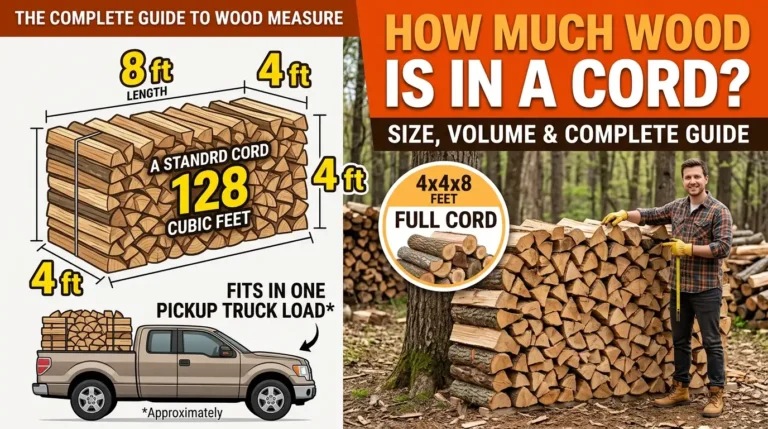
Firewood Bundles: Cost and How Long They Last
Firewood bundles are the small, ready-to-burn packs of split logs you see at grocery stores, gas stations, campgrounds, and home centers. They cost more per log than a bulk delivery, but they save you from buying a full cord when you need wood for a few fires. If you have ever stood in a store aisle wondering whether one bundle will last the evening, this guide answers that question in plain terms.
In this guide, you will learn what a typical firewood bundle holds, how long one bundle lasts for an occasional fire versus nightly fires, and how bundle prices compare with bulk wood. You will also learn how to check wood quality before you pay, how to store bundles so they stay dry, and how to plan how many bundles you need for a week or a holiday weekend. Every price and burn time here is a planning estimate for 2026, not a fixed promise, because real costs and burn times change with your region, the wood species, and how you build your fire.
By the end, you will be able to walk into a store, size up a bundle with confidence, and know whether bundles or bulk wood make better sense for your home. Keep this page handy the first few times you buy, and the math will soon feel like second nature.
Safety First: Read This Before You Burn
Install working carbon monoxide (CO) detectors in your home and test them each month. CO has no smell and no color, so a detector is your warning system.
Burn only clean, untreated wood. Never burn painted wood, stained wood, pressure-treated lumber, plywood, or particleboard. These materials can release harmful chemicals into your home and damage your chimney.
Have your chimney inspected and swept by a qualified chimney sweep before the burning season, and check local burn bans before lighting a fire. Follow your state and local rules on moving firewood, since moving wood can spread tree pests to new areas. Store bundles off the ground, away from your house walls, and under cover.
TIME TO READ
About 12 minutes
DIFFICULTY
Easy, no tools needed
BEST FOR
Occasional fires and campers
What You Need
- A tape measure or a ruler, so you can check log length against your firebox
- A phone calculator for the cost math in Step 3
- A dry storage spot, such as a covered rack, a garage corner away from walls, or a tarp-covered stack
- A moisture meter (optional, but handy if you buy bundles often)
- Working CO detectors and a clean, inspected chimney
Understand What a Firewood Bundle Really Is
A firewood bundle is a small pack of split logs, usually wrapped in plastic or netting with a handle. Most store bundles hold about 5 to 8 pieces of split wood, and the logs are often cut to about 14 to 16 inches long. That length fits most standard fireplaces and many campfire rings.
Bundle sizes are not standard across sellers, so two bundles with the same price can hold different amounts of wood. One store may sell a bundle by piece count, while another sells by volume. Always compare the piece count and the log size, not the price tag alone. A bundle that looks like a deal can hold shorter or thinner pieces than the bundle next to it.
Bundles also differ in wood type. Hardwoods such as oak, maple, and hickory tend to burn longer and leave more coals than softwoods such as pine. Softwood lights fast and works well for kindling or a short campfire, but you will feed the fire more often. If the label does not name the species, ask the seller or treat the bundle as mixed wood.
Step 1: Measure How Much Wood You Actually Burn
Count the logs you use in one normal fire. For most home fireplaces, one evening fire of 2 to 3 hours uses about 4 to 7 pieces of split hardwood. A small fire with two logs burns for a shorter time, while a large fire that you feed all evening can use 8 or more pieces.
Track your next three fires on paper or in your phone. Write down the number of pieces, the start time, and the time the fire died down to coals. After three fires, you will have a personal average that beats any general chart. Your average is the key number for every step that follows.
Note the fire size you like, too. A low, cozy fire for background warmth uses far less wood than a roaring fire meant to heat a room. When you plan bundle needs, plan for your usual fire, not the biggest fire you ever build.
Step 2: Pick the Right Bundle Size for Your Fireplace
Match the log length to your firebox before you buy. Measure the inside width of your firebox, then subtract at least 3 inches so air can move around the logs. Logs that are too long will not sit flat, and logs that are too short will burn faster because they leave more gaps.
Small bundles suit campers and people who want a single short fire. Medium bundles, the kind most grocery and home stores carry, suit one evening fire in a home fireplace. Large bundles, sold at some lumber yards and farm stands, suit a long evening or two shorter fires. The table below gives planning ranges, not exact promises, since species, log thickness, and airflow change burn time.
| Bundle type | Typical pieces | One evening fire (2 to 3 hours) | Occasional use (1 fire per week) | Nightly use (1 fire per night) |
|---|---|---|---|---|
| Small campfire bundle | 4 to 5 | About 1 short fire | About 1 week per bundle | About 1 bundle per night |
| Standard store bundle | 5 to 8 | About 1 evening fire | About 1 week per bundle | About 1 bundle per night |
| Large bundle or half-armload | 9 to 12 | 1 to 2 evening fires | About 2 weeks per bundle | About 1 bundle every 1 to 2 nights |
Table notes: Ranges are planning estimates for seasoned hardwood in a home fireplace. Softwood, wet wood, and large fires shorten these times. Your own three-fire average from Step 1 is more accurate than any table.
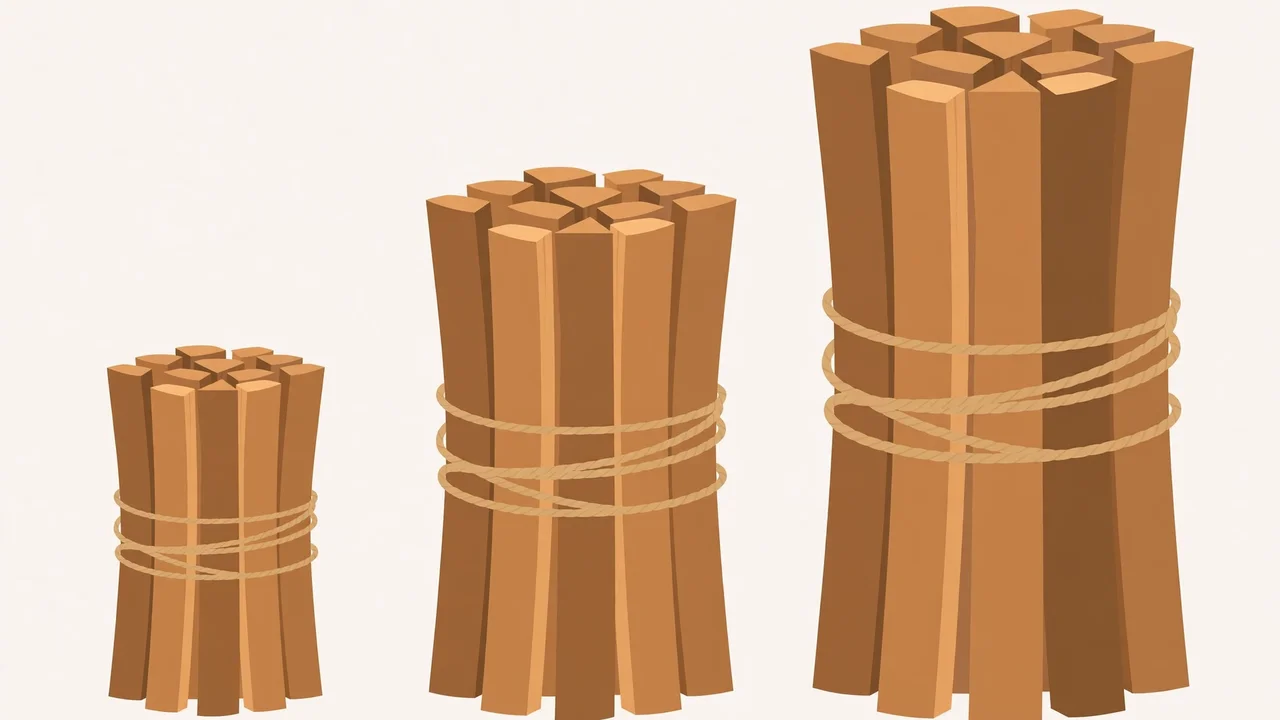
When you are torn between two bundle sizes, pick the one with longer, thicker pieces if your firebox fits them. Thick hardwood splits burn slower than thin splits, so they stretch one bundle across a longer evening. Thin pieces catch fast, which helps when you are starting a fire, but they burn down sooner.
Step 3: Compare Bundle Prices to Bulk Prices
Bundles cost more per piece than bulk wood, and that is normal. You pay for the cutting, the wrapping, the transport, and the convenience of buying a small amount. The question is not whether bundles cost more, but whether the extra cost is worth it for how often you burn.
Work out the price per piece before you compare two sellers. Divide the bundle price by the number of pieces. For example, a $7 bundle with 7 pieces costs $1 per piece, while a $6 bundle with 4 pieces costs $1.50 per piece. The cheaper bundle on the shelf can be the worse deal once you count the wood inside.
Next, compare bundles with bulk wood using your weekly fire count. If you burn one fire a week and one bundle covers that fire, your weekly cost is the price of one bundle. Over a 12-week burning season, that is 12 bundles.
If a bulk delivery of a quarter cord costs less than those 12 bundles and you have dry storage, bulk wood may save you money. If you burn only a few fires a year, bundles win on simplicity, since you avoid storing a large pile.
As a rough 2026 planning guide, store bundles in many US regions run about $5 to $10 per bundle, with campgrounds, convenience stores, and resort areas often at the higher end. Bulk prices vary far more by region and species, so get a local quote before you decide. Treat any price you see online as an estimate until a local seller confirms it. To find sellers near you, see our guide on where to buy firewood.
Step 4: Check the Wood Before You Pay
Good bundle wood is seasoned, which means it was cut, split, and dried for months until most of the moisture left the wood. Seasoned wood feels lighter than fresh wood, sounds hollow when you knock two pieces together, and shows cracks at the cut ends. Wet wood feels heavy, smells damp, and hisses or steams in the fire.
Look through the wrapping when you can. Skip bundles with green or damp-looking bark, mold spots, or logs that feel wet to the touch. Skip bundles that include painted, stained, or treated pieces.
If the bundle is sealed and you cannot inspect it, buy one bundle first and test it before you stock up. Our guide on what seasoned firewood is explains the drying process and the signs in more detail.
Watch out for wood that is too dry as well. Wood stored for years in a hot, dry spot can burn very fast and give off more heat than you expect, which can overheat a stove or fireplace. If your fires burn down far faster than usual, read our guide on whether firewood can be too dry before you change how you load the firebox.
Step 5: Store Your Bundles So They Stay Dry
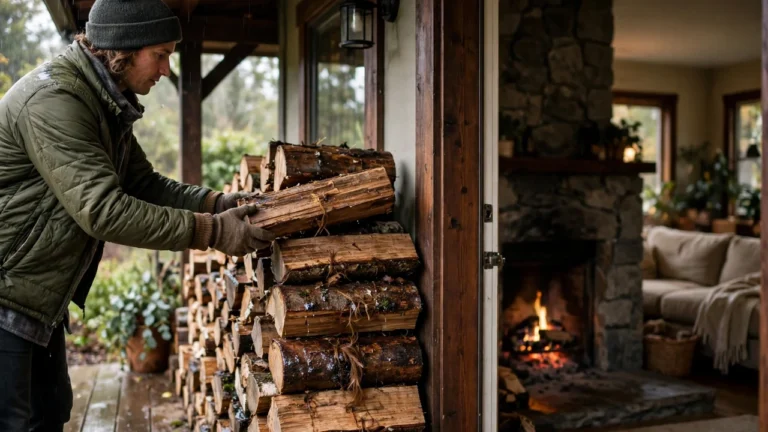
Take bundles out of sealed plastic once you get home if you plan to store them for more than a few days. Plastic traps moisture, and trapped moisture leads to mold. Keep the wood in a spot with airflow, such as a rack with open sides or a stack with gaps between rows.
Raise the wood at least 4 to 6 inches off the ground on a rack, pallet, or scrap lumber. Ground contact pulls moisture into the bottom logs and invites insects. Cover only the top of the stack with a tarp or a roof overhang, and leave the sides open so wind can dry the wood. A fully wrapped stack stays damp longer than an open-sided stack.
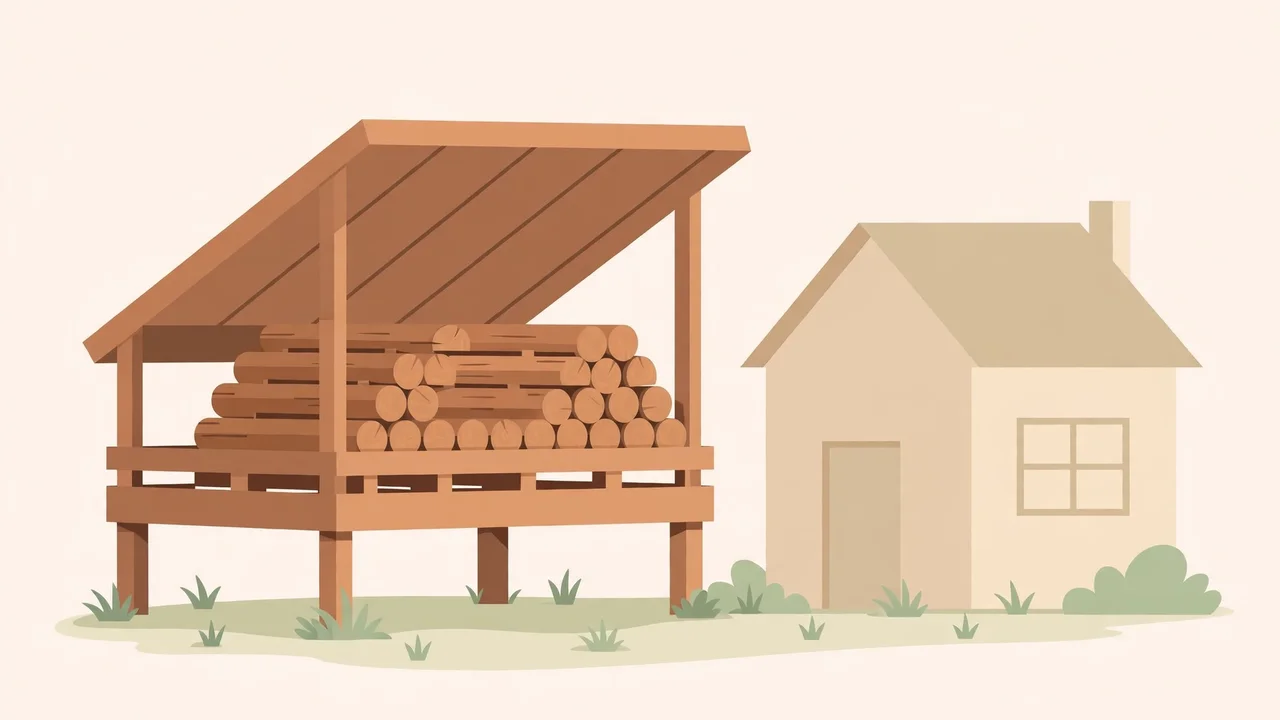
Keep stored wood away from your house walls by a few feet when you can. Wood piles can shelter insects, and a pile pressed against siding can trap dampness against the wall. Bring in only the wood you plan to burn that day, and keep it in a dry spot near the fireplace, away from the firebox opening.
Step 6: Plan How Many Bundles Your Week Needs
Multiply your fires per week by the bundles each fire needs. If you burn 3 fires a week and each fire uses about 1 bundle, you need 3 bundles a week. For a month, that is about 12 to 13 bundles. Add one extra bundle as a buffer for colder weeks or guests who want a longer fire.
For nightly fires, the math grows fast. One bundle per night means 7 bundles a week and about 30 bundles a month. At that pace, compare bundle costs with a bulk delivery before the season starts. Many nightly burners save money with bulk wood, even after paying a delivery fee, because the per-piece cost drops sharply.
Holiday weekends deserve their own plan, since guests and long evenings raise wood use. If you are hosting over a long weekend, read our guide on how much firewood you need for Thanksgiving weekend and adjust the same math for your own guest count and fire schedule.
Common Mistakes to Avoid
- Buying by price alone. A cheap bundle with 4 thin pieces can cost more per fire than a pricier bundle with 8 thick pieces. Count the pieces and check the length.
- Burning wet wood. Wet wood smokes, gives less heat, and coats your chimney with creosote. Test one bundle before you buy a large batch.
- Storing bundles in sealed plastic for months. Plastic traps moisture and grows mold. Open the wrapping and stack the wood with airflow.
- Stacking wood on bare soil. Ground contact soaks the bottom logs and invites pests. Raise every stack off the ground.
- Buying a season of bundles for nightly fires without comparing bulk prices. Nightly burning at bundle prices adds up fast, so run the bulk comparison in Step 3 first.
- Moving firewood across long distances. Transport rules exist to slow tree pests. Buy wood near where you will burn it and follow local rules.
Frequently Asked Questions
How long does one bundle of firewood last?
For most home fireplaces, one standard store bundle lasts about one evening fire of 2 to 3 hours. A small bundle may last only a short fire, while a large bundle can stretch across two shorter fires.
How much does a bundle of firewood cost?
As a 2026 planning estimate, store bundles in many US regions run about $5 to $10 per bundle. Prices vary by region, species, season, and seller, so check local prices before you budget for a season.
Are firewood bundles cheaper than buying in bulk?
No, bundles almost always cost more per piece than bulk wood. Bundles make sense for occasional fires, camping, or small storage spaces, while bulk wood usually wins for nightly burning.
How many bundles do I need for one week?
Multiply your fires per week by the bundles each fire uses. Three fires a week at one bundle per fire means three bundles a week, plus one spare bundle for colder nights.
Can I store firewood bundles outside?
Yes, if you raise them off the ground, cover only the top, and leave the sides open for airflow. Avoid sealed plastic for long storage, since trapped moisture leads to mold.
Is it safe to burn a bundle I bought at a gas station?
Yes, if the wood is clean, seasoned, and untreated, and your chimney has been inspected. Skip any bundle with painted, stained, or treated pieces, and never burn wood that smells of chemicals.
Quick Reference Card: Firewood Bundles
- Standard bundle: about 5 to 8 pieces, logs about 14 to 16 inches long
- One evening fire: about 1 standard bundle for a 2 to 3 hour fire
- Occasional use: about 1 bundle per week for one fire a week
- Nightly use: about 7 bundles per week, so compare bulk prices
- 2026 price estimate: about $5 to $10 per store bundle, varies by region and seller
- Storage: off the ground, top covered, sides open for airflow
- Never burn: painted, stained, treated, or chemical-smelling wood
- Before the season: test CO detectors, inspect and sweep the chimney
Conclusion
Firewood bundles are a smart buy when you burn now and then, need wood for a trip, or lack space for a large pile. One standard bundle covers about one evening fire, and a few bundles a week cover most occasional burners through the season. The trick is to count pieces, check the wood, and do the per-piece math before you pay.
If you burn every night, run the bulk comparison before winter. A bulk delivery takes more storage and more planning, but it can cut your cost per fire by a wide margin. Either way, keep your wood dry, your chimney clean, and your CO detectors working, and every bundle you buy will burn the way it should.