How Much Firewood Do You Need for Thanksgiving Weekend? A Simple Planning Guide
Thanksgiving weekend is almost here, and you can already picture it: guests on the couch, the smell of pie, and a fire crackling in the fireplace. The one thing that can spoil that picture is running out of wood on Friday night, with a house full of people and every supplier closed for the holiday.
Figuring out how much firewood you need for Thanksgiving weekend takes a little planning, but it beats a last-minute scramble for overpriced bundles at the gas station. This guide gives you a firewood math method you can finish in under an hour. You will map out your weekend fires, measure your own burn rate with one test fire, and turn those numbers into a shopping list. You will also see how wood species and seasoning change the answer, so you buy enough without guessing. By the end, you will know your number — and you will have a buffer sitting next to it.
Safety note before you start: burn only in a properly vented fireplace or wood stove, have your chimney inspected and swept annually by a certified sweep, and keep working smoke and carbon monoxide detectors in the house. Never burn treated, painted, or stained wood, plywood, MDF, or household trash — the fumes are toxic. If you feel dizzy, get a headache near the fire, or smell anything unusual, leave the room, get fresh air, and call emergency services.
- A notebook or the notes app on your phone
- A tape measure
- A timer or clock
- Your fireplace or wood stove, ready to burn
- A few dry, seasoned firewood logs for a test fire
- Access to your woodpile or a local firewood seller
Count the Fires You Will Actually Light
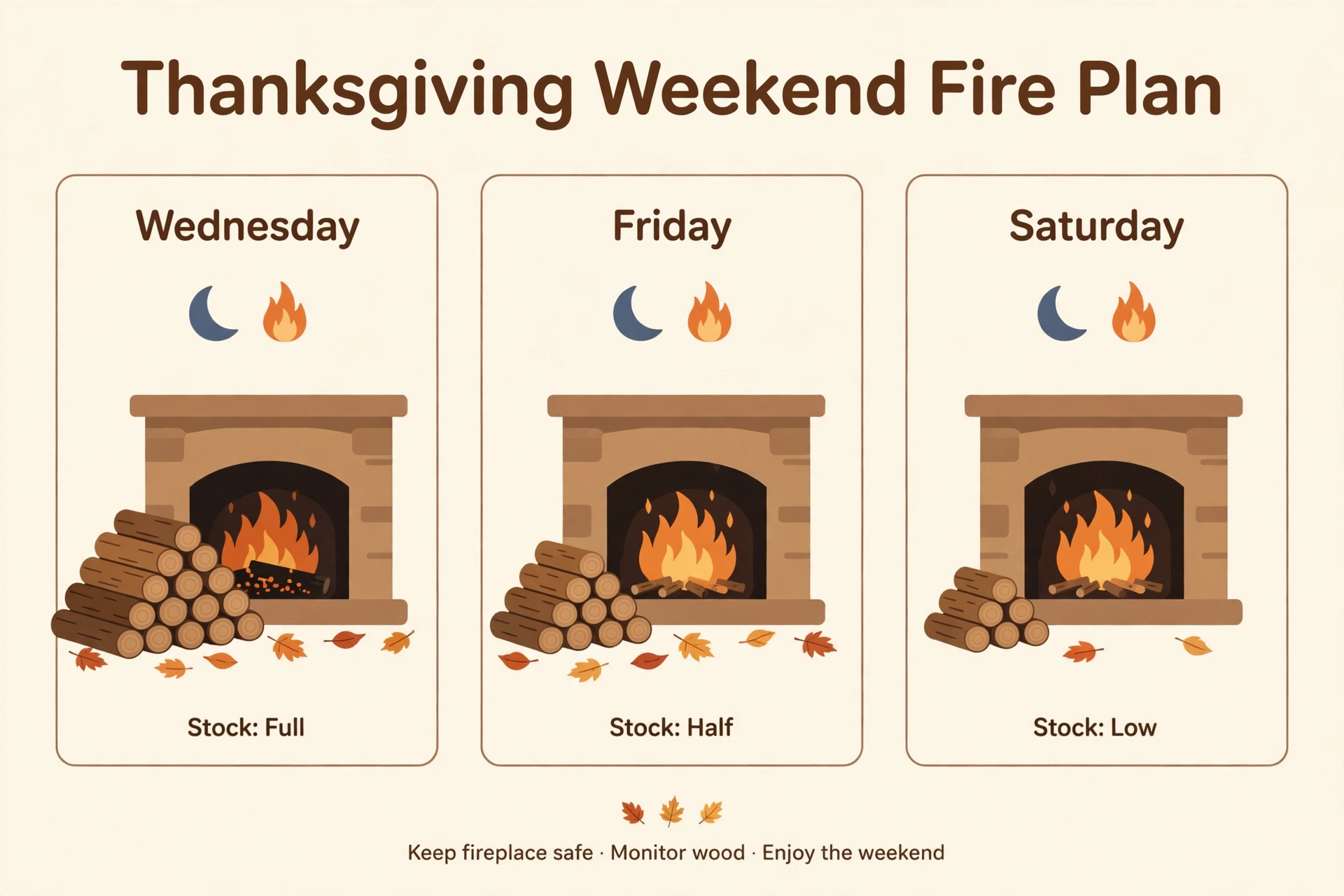
Pull out your phone and walk through the long weekend, day by day. Wednesday night when early guests arrive, Thursday after dinner, Friday night with the football game on, Saturday morning coffee by the hearth — each of those is one burn session.
Be honest with yourself: a fire you wish you had is not a fire you will light. Most holiday sessions run 2–4 hours. Write down your real count — the example below uses 4 sessions, and you will swap in your own number.
Time One Real Fire Before the Holiday
A test fire this week gives you a burn rate no chart can. Light a normal fire tonight or tomorrow, the way you would for guests, and keep a running tally. Jot down the start time, then add one tick mark every time you add a log or two to the fire.
When the evening winds down, note the stop time and your log total. That gives you your logs per session. If the fire ran 3 hours and took 10 logs, your personal burn rate is about 3–4 logs per hour in your fireplace. No two setups burn the same, which is exactly why measuring beats guessing.
Do the Firewood Math
Now multiply: sessions × logs per session. Four sessions at 10 logs each means 40 logs for the weekend. Then add a buffer of one quarter on top for guests who linger and nights that run longer than planned: 40 × 1.25 = 50 logs.
That buffer is the difference between a relaxed Saturday and a frantic hunt for an open wood seller. Always round up, never down — leftover logs keep fine until Christmas.
Adjust for Your Wood Species and Seasoning
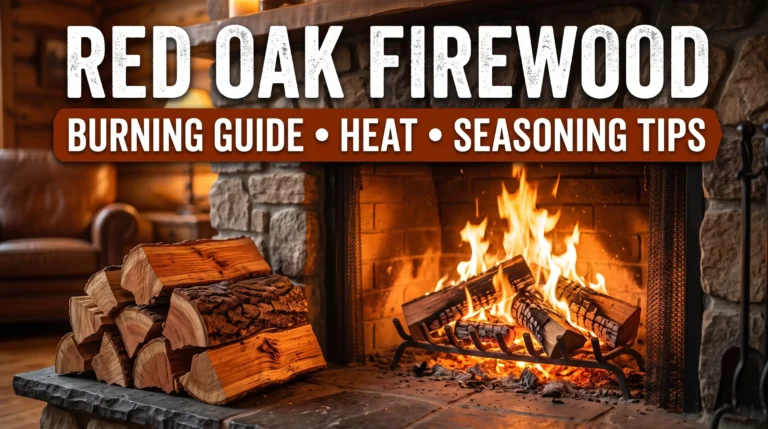
Not all logs last the same amount of time. Dense hardwoods like oak, hickory, and maple burn slower and steadier, so a pile of seasoned hardwood stretches further than the same pile of pine. Softwoods catch fast and smell great, but they disappear quickly — fine for a short morning fire, costly as your main weekend supply.
Seasoning matters even more than species. Green or damp wood burns poorly, smokes up the room, and lays down creosote inside your chimney, which raises chimney-fire risk. Use only dry wood with cracks at the ends and a hollow knock when two pieces hit each other. If you are unsure about your pile, check whether your firewood is seasoned before you count on it for the holiday.
Buy One Size Up From Your Estimate
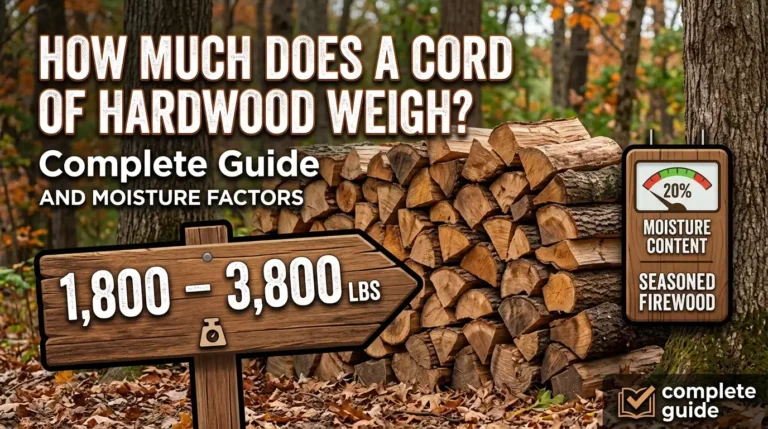
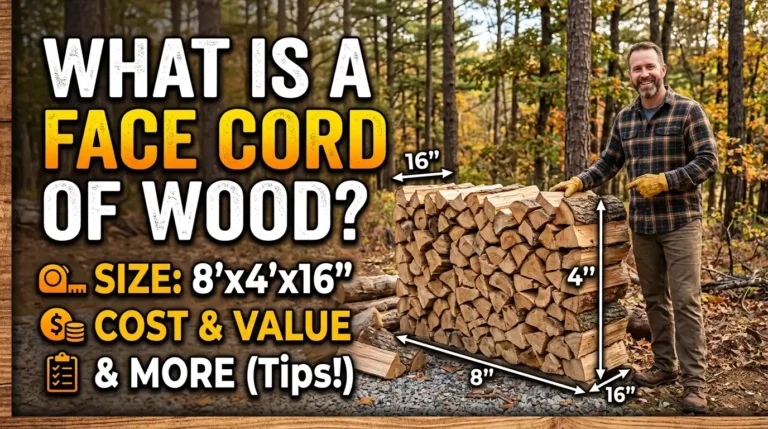
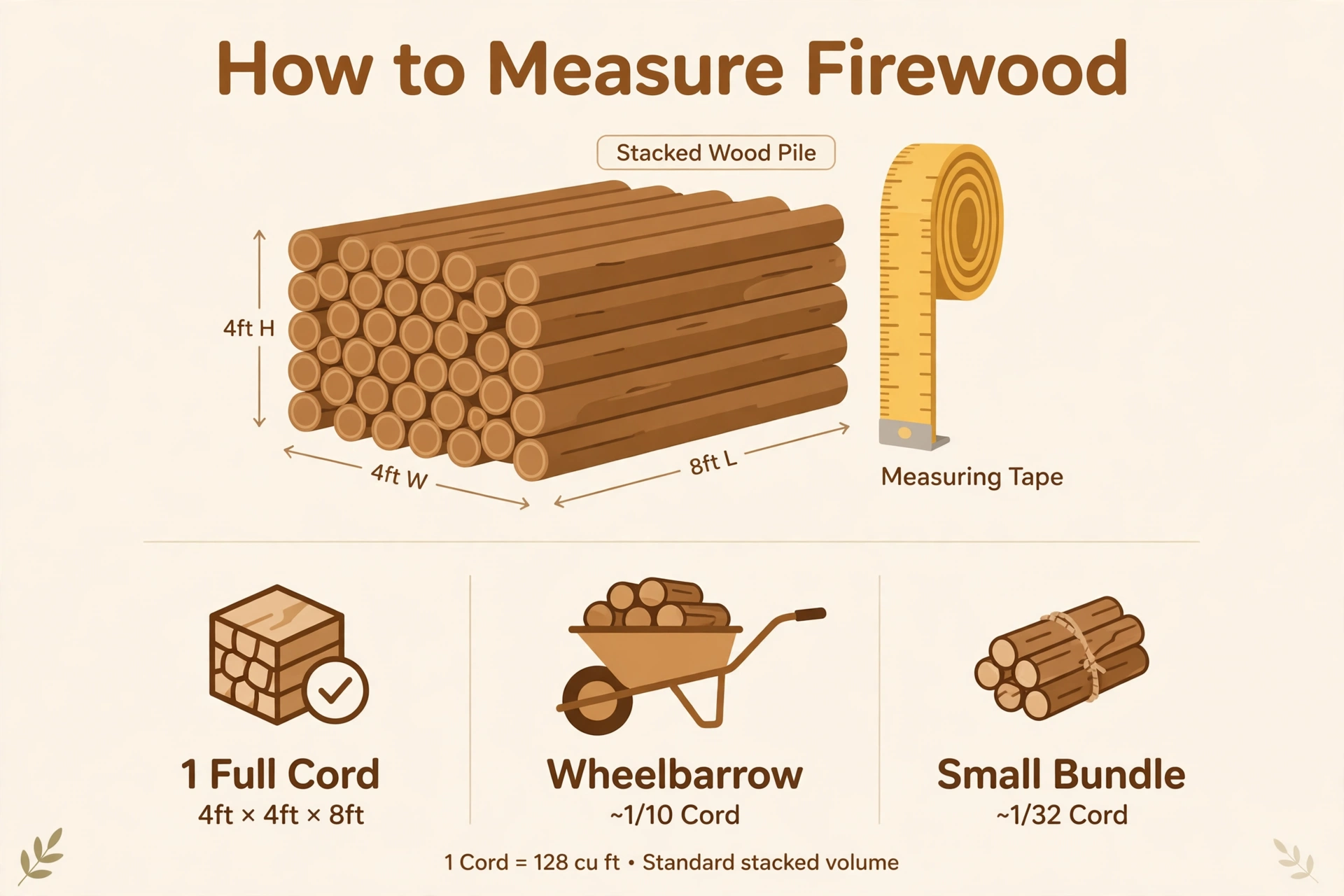
Match your log count to the way firewood is actually sold. A full cord is 128 cubic feet of stacked wood (4 × 4 × 8 feet) — far more than one weekend needs for most homes. Sellers also offer half cords, quarter cords, face cords (sometimes called ricks), wheelbarrow loads, and small store bundles. If you are new to the terms, see what a full cord of wood really means before you order.
If your math says roughly 50 logs, a quarter cord or a generous face cord of split logs usually covers the weekend with buffer — but ask the seller for the stack’s actual dimensions before you pay, since a face cord’s depth varies. Buy from a local supplier close to home; many states restrict moving firewood across regions to slow the spread of tree-killing pests, so check your local rules.
Stage the Pile Where It Stays Dry
Wood that soaks up rain the week of Thanksgiving is wood you cannot burn on Thursday. Stack your supply off the ground on a rack or pallets, cover only the top with a tarp, and leave the sides open so air keeps moving through the stack. Our guide to storing firewood outside walks through the setup in more detail.
Keep a day’s worth of logs by the door in a basket or log holder so you are not hauling armloads in the cold, and keep the main pile a few feet from the house wall — stacked wood attracts insects. Dry, handy, and close is the whole goal.
- Buying wet or green wood the week of. It hisses, smokes, and barely heats. Seasoned wood — or wood from a trusted seller — is the whole plan.
- Skipping the buffer. Holiday evenings run long. That extra quarter of wood is cheap insurance against a cold house and closed stores.
- Guessing instead of counting. One timed test fire beats every rule of thumb you will find online. Your fireplace, your logs, your number.
- Piling wood against the house. Stacks pressed against siding trap moisture and invite termites and carpenter ants. Keep a gap of a few feet.
It varies with fireplace size, draft, and wood type, but most open fireplaces go through several logs per hour. The test fire in Step 2 gives you your own number, which is more useful than any average.
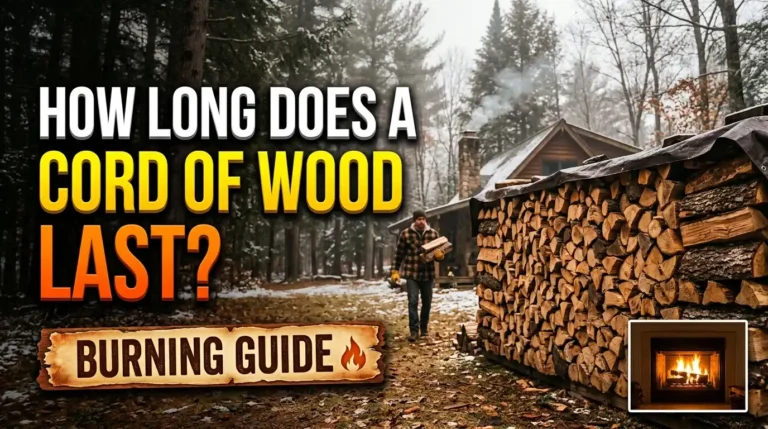
For a single weekend, a full cord is usually far more than you need — it is 128 cubic feet of stacked wood. Most households get by on a quarter cord or less for Thanksgiving, plus the buffer.
Buy it at least a week or two before the holiday. Suppliers sell out, delivery slots fill up, and wet fall weather makes last-minute drying impossible.
Yes, as long as it is dry, untreated hardwood or softwood — the rules are the same indoors and out. If you are choosing between species, our best-firewood roundup breaks down which burn longest and cleanest.
Burn only dry, untreated wood — never trash, cardboard bundles, or scrap lumber as a substitute. Keep an electric heater or the furnace as your backup heat plan so a shortage stays a small problem.
Steps: 1) Count your weekend burn sessions. 2) Time one test fire and count the logs. 3) Multiply sessions × logs, then add a quarter as buffer. 4) Adjust up for softwood or down for dense hardwood. 5) Buy one size up in the sales unit (quarter cord, face cord). 6) Stack off the ground, top-covered, away from the house.
Remember: dry wood only, annual chimney sweep, working CO detectors.
Now you know exactly how much firewood you need for Thanksgiving weekend — not a guess, but a number built from your own fireplace and your own plans. Count the sessions, time the fire, add the buffer, and the holiday stays warm all the way through Saturday night.
Your natural next step: make sure that wood is actually ready to burn. Check your firewood’s seasoning now, while there is still time to swap a damp pile for a dry one before the guests arrive. Have a warm, safe Thanksgiving.