Is It Safe to Leave a Gas Fireplace On During Thanksgiving Dinner?
Is It Safe to Leave a Gas Fireplace On During Thanksgiving Dinner? The short answer is yes, with clear limits: keep it on only while you are awake, at home, and able to check on it, and turn it off before bed or before you leave the house. A gas fireplace can add warmth and a welcoming glow to a holiday meal, but it is still a fuel-burning appliance, and it needs the same attention you would give a stove burner or an oven on a busy cooking day.
Thanksgiving adds a few extra risks that a normal evening does not. Guests come and go, children and pets move through the room, dishes pile up near heat sources, and hosts get pulled into the kitchen for long stretches. That is why a short plan made before dinner matters more than any single safety device. This guide walks through that plan, step by step, so you can enjoy the fire during the meal and shut it down with confidence when the evening winds down.
⚠️ Gas Safety Disclaimer — Read Before You Light the Fireplace
Carbon monoxide (CO) is colorless and odorless. A gas fireplace can produce carbon monoxide, and a leak or a blocked vent can allow it to build up without any visible warning. Install working CO alarms on every level of your home and near sleeping areas, test them monthly, and replace them as directed by the manufacturer.
If you smell gas — a rotten-egg odor — do not touch light switches, flames, or appliances. Leave the home at once with everyone in the household, including pets, and call the gas utility emergency line or 911 from outside. Do not go back inside until emergency responders or the utility say it is safe.
Never try to find or fix a gas leak, open a gas line, relight a fireplace after a strong gas smell, bypass a safety device such as a thermocouple, oxygen-depletion sensor, or spill switch, block a vent, or disable a CO alarm. Installation, venting changes, and repairs beyond basic user controls belong to a licensed gas professional. Pets, especially birds, are more sensitive to carbon monoxide and fumes than people are, so keep birds well away from the fireplace room and watch all pets for signs of distress.
If your fireplace is ventless or vent-free, it releases combustion byproducts, including carbon monoxide and water vapor, into the room. Such models may be restricted or banned in some jurisdictions, so check local codes, and make sure a working oxygen-depletion sensor and a working CO alarm are in place before use.
⏱ Time: A short set of checks before dinner, plus attention during the meal
📋 Difficulty: Basic user checks only — no tools, no gas-line work
👥 Best for: Hosts who will be awake, at home, and in or near the fireplace room
What You Need
- Working CO alarms on every level and near sleeping areas
- Your fireplace manual, for the lighting and shut-off controls for your model
- A clear area around the fireplace, free of wrapping paper, blankets, and decorations
- A shut-off plan agreed before dinner: who turns the fireplace off, and when
- A phone you can use from outside, in case you ever need to call for help
Check Your Carbon Monoxide Alarms Before Guests Arrive
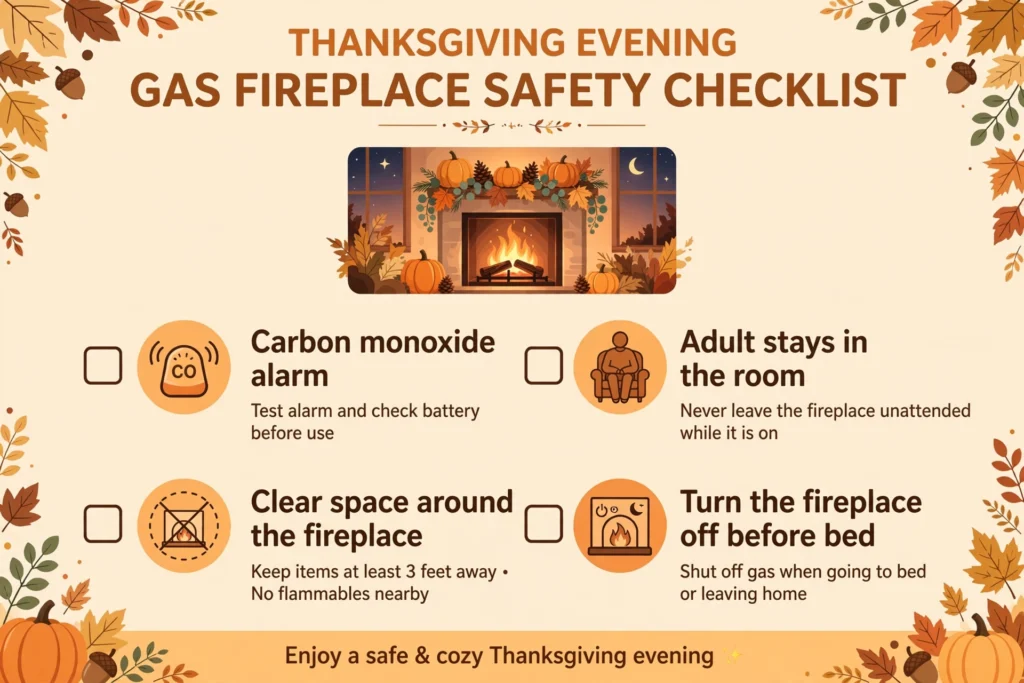
Press the test button on each CO alarm before dinner, and check that alarms are in place on every level of the home and near sleeping areas. Replace batteries or an alarm that fails its test, and follow the manufacturer directions for replacement timing. If an alarm sounds during the evening, treat it as a real warning: turn the fireplace off if it is safe to reach the control, move everyone, including pets, to fresh air, and call emergency services or your gas utility for advice. Do not silence an alarm and carry on with dinner as if nothing happened.
Clear the Space Around the Fireplace
Walk around the fireplace and move away anything that could catch heat or block air flow, such as gift wrap, table runners, blankets, cushions, and holiday decorations. Keep the area in front of the glass clear so guests do not lean on it or place items against it by accident. Remind children that the glass and nearby surfaces can stay hot after the fire is turned off, and keep pets from resting against the unit. A clear space also makes it easier to reach the controls when it is time to shut the fireplace down.
Check the Vent, Glass, and Controls Using the Manual Only
Use your manual to confirm the normal lighting and shut-off steps, and look for problems such as a blocked vent opening, soot marks, or a glass panel that is cracked or loose. Do not open panels, change gas parts, or attempt repairs beyond the basic user controls in the manual. If anything looks damaged, smells odd, or does not light normally, leave the fireplace off and contact a licensed gas professional. Do not light it for guests while you wait for help.
Stay in the Room While the Fireplace Is On
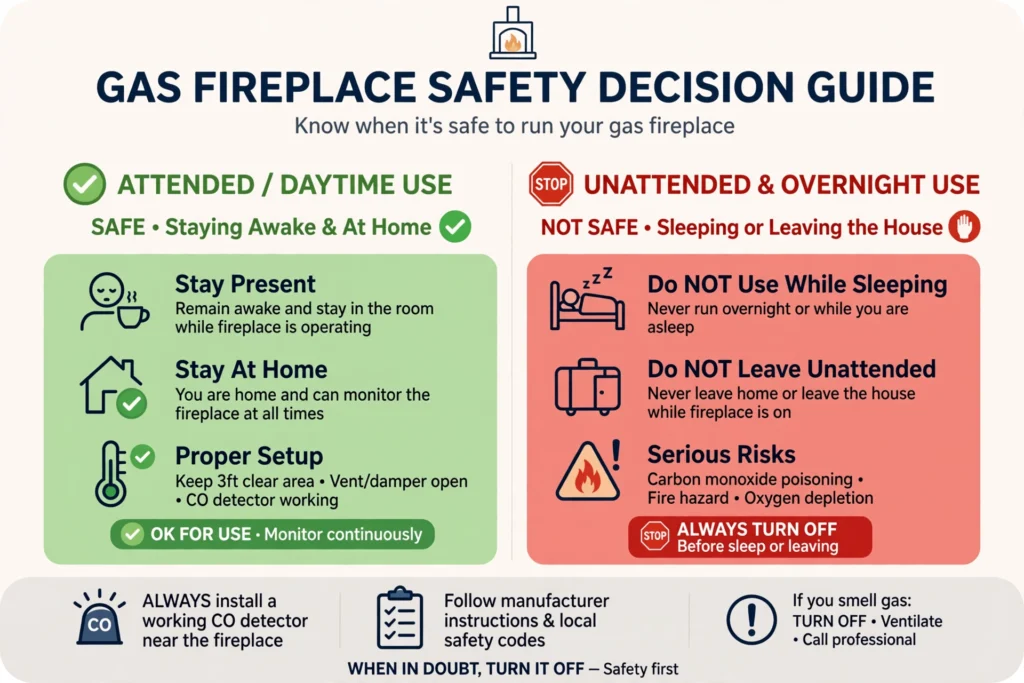
Plan your evening so an adult is in or near the fireplace room while the fire is lit, even if that means stepping out of the kitchen between courses. Check the flame and the room from time to time, and watch for a strange smell, a headache, dizziness, or pets acting unwell. If anyone feels unwell, move them to fresh air and seek medical advice, and do not relight the fireplace until a professional has checked it. A fireplace no one is watching is a risk.
Agree a Shut-Off Time Before Dessert
Pick a shut-off point before the meal, such as when dessert is served or when the first guests begin to leave, and name the person who will turn the fireplace off. Write it down, or set a phone reminder, so the task does not get lost between clearing plates and saying goodbye. Turning the fireplace off while guests are still awake avoids the temptation to leave it running after everyone has gone to bed. Once the decision is made, stick to it, even if the room still feels cool.
Turn the Fireplace Off Before Bed and Before Leaving the House
Turn the fireplace fully off, using the controls in your manual, before bed and before leaving the house, no matter how calm the evening has been. Do not leave it running overnight, while you sleep, or while the house is empty, because no one would notice a problem in time to act. After shut-off, check that the flame is out and the glass is cooling, and keep the area clear while it cools down. This single habit is the clearest line between a safe Thanksgiving evening and a risk that carries on after everyone has stopped paying attention.
Common Mistakes to Avoid
- Leaving the fireplace on overnight. Sleep removes your ability to notice a smell, an alarm, or a change in the flame, so shut it off before bed.
- Leaving it on while the house is empty. A quick trip out can stretch longer than planned, and an empty house has no one to respond to a warning.
- Covering or blocking vents and air openings. Decorations, furniture, and stored items can block air flow, so keep vents clear at all times.
- Silencing a CO alarm without acting. An alarm is a call to get fresh air and get help, not a nuisance to switch off and ignore.
- Letting children or pets play near hot glass. Glass stays hot after shut-off, so keep the area clear and supervised until it cools.
- Attempting a repair during the holiday. Anything beyond basic user controls belongs to a licensed gas professional, not a Thanksgiving evening fix.
For related background, see how a gas fireplace behaves when the power goes out in Can a Gas Fireplace Run Without Electricity?, and compare models in Gas vs Electric Fireplace. If you are unsure which venting style you have, the guides to Vented vs Ventless Gas Fireplace and What Is a Direct Vent Gas Fireplace? explain the terms without changing the safety rules in this article.
Frequently Asked Questions
Can I leave a gas fireplace on while we eat Thanksgiving dinner?
Yes, while you are awake, at home, and in or near the room, and while your CO alarms are working. Turn it off before bed or before you leave the house, and never leave it running overnight.
Should I leave a gas fireplace on overnight after Thanksgiving?
No. Turn the fireplace off before bed, even if the evening went well and the room still feels cool. No one can respond to an alarm, a smell, or a change in the flame while asleep.
What should I do if I smell gas during Thanksgiving dinner?
Do not touch light switches, flames, or appliances. Leave the home at once with everyone, including pets, and call the gas utility emergency line or 911 from outside. Do not go back inside until emergency responders or the utility say it is safe.
Do I need a carbon monoxide alarm if I have a gas fireplace?
Yes. Install working CO alarms on every level of your home and near sleeping areas, test them monthly, and replace them as directed by the manufacturer. CO is colorless and odorless, so an alarm is your warning when you cannot see or smell a problem.
Is a ventless gas fireplace different on Thanksgiving?
Yes. A ventless or vent-free fireplace releases combustion byproducts, including carbon monoxide and water vapor, into the room. Such models may be restricted or banned in some jurisdictions, so check local codes, and make sure a working oxygen-depletion sensor and a working CO alarm are in place before use.
Quick Reference Card
- During dinner: On only while awake, at home, and supervised
- CO alarms: Every level and near sleeping areas, tested monthly
- Gas smell: Leave at once, call the utility or 911 from outside
- Before bed: Turn the fireplace fully off
- Before leaving: Turn the fireplace fully off
- Repairs: Licensed gas professional only, beyond basic user controls
Conclusion
A gas fireplace can stay on during Thanksgiving dinner, while you are awake and watching it.
Check your CO alarms, keep the space clear, and agree a shut-off time before the meal.
Turn it off before bed, and turn it off before you leave the house.
That simple boundary keeps a warm holiday evening safe for guests, children, and pets.