Patio Heater Clearance: How Much Space Your Heater Really Needs
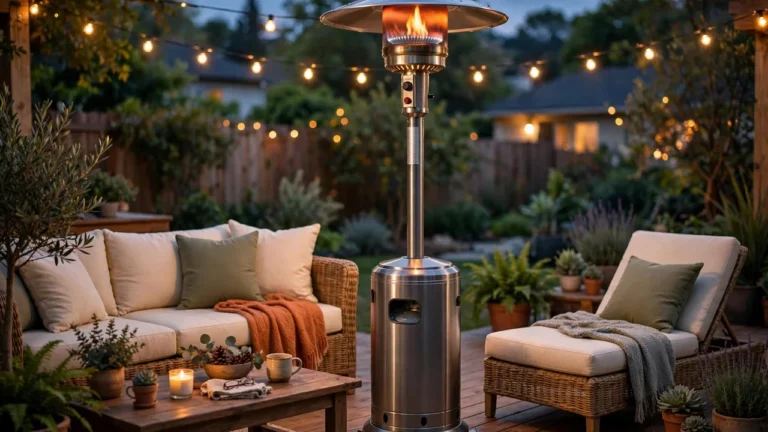
Patio heater clearance is the empty space your heater needs around and above it so heat never reaches anything that can burn. Most propane patio heaters need about 3 feet (36 inches) of clear space on the sides and 2 to 5 feet above the heat source, but the exact numbers change from one model to the next. Your owner’s manual has the final word, and this guide shows you how to find those numbers and measure them on your own patio.
By the end of this guide, you will know your heater’s required clearances, you will have marked a safe zone around it, and you will have checked the overhead space for low ceilings, awnings, and umbrellas. The whole process takes about 20 minutes and needs no special tools beyond a tape measure.
The tricky part is that there is no single number that fits every heater. One manual says 3 feet on the sides, another says 2 feet — and both are right for their own model. That is why this guide starts with your manual and treats the popular 3-foot rule as a starting point, never as the answer.
Safety note: patio heaters burn fuel and get hot enough to start fires. Never use a fuel-burning patio heater indoors, in a garage, or in any enclosed space — carbon monoxide can build up even with a door open. If you ever smell gas near a propane heater, shut the tank valve if it is safe to do so, leave the area, and call a professional. When in doubt, call a licensed professional before you light up.
What You Need
- Tape measure (25 feet or longer)
- Your heater’s owner’s manual (paper or online)
- Painter’s tape or chalk for marking the floor
- A step stool or ladder for checking overhead space
- A helper to hold the tape on long measurements
Read Your Manual’s Clearance Numbers First
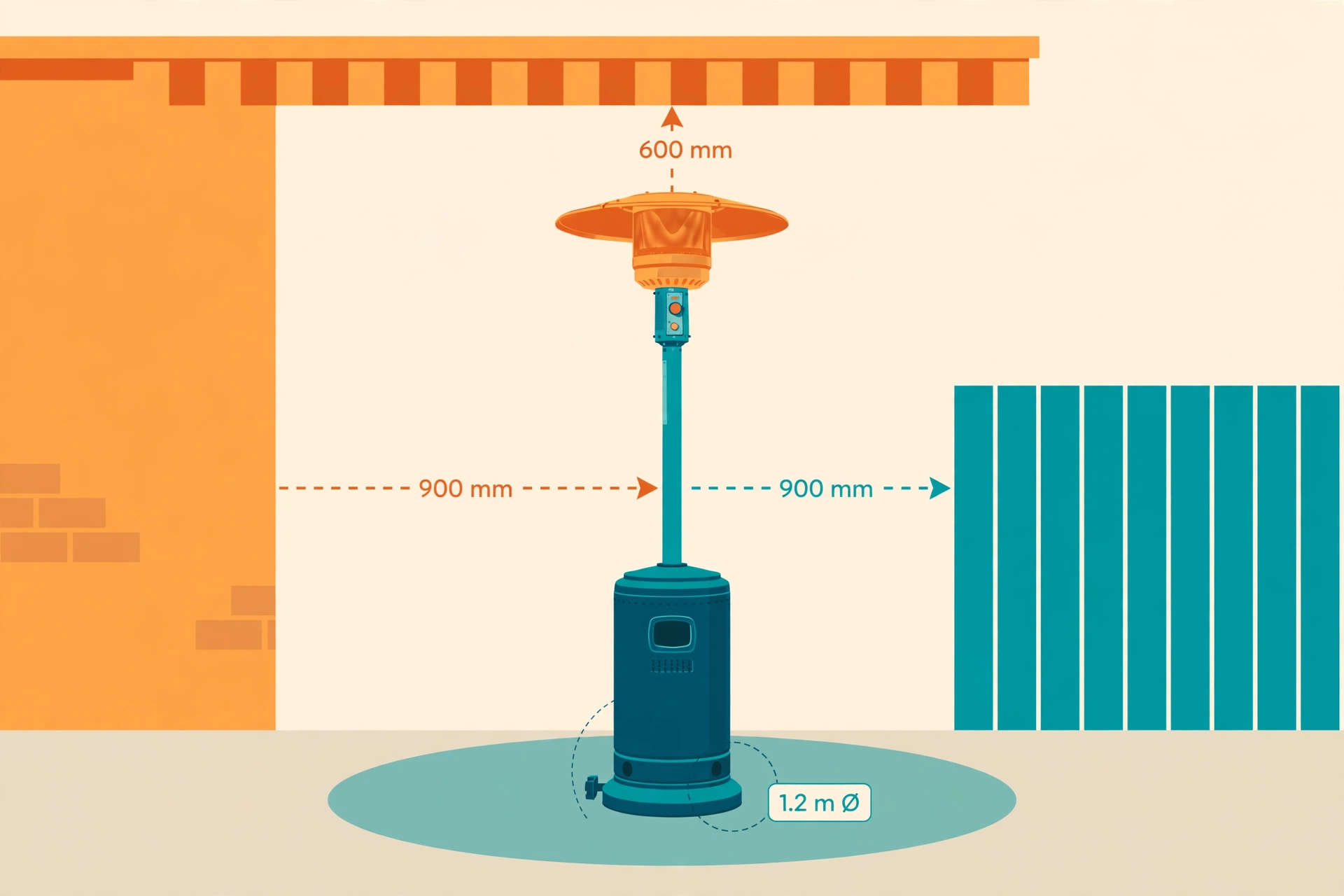
Grab the owner’s manual and look for a section called “clearances,” “minimum clearances,” or “safety information.” Write down two numbers: the minimum distance from the sides of the heater to anything that can burn, and the minimum distance above the heat source or reflector.
Expect the numbers to differ from the 3-foot rule you read online. Some manuals ask for 3 feet on the sides and 2 feet above; others ask for 2 feet on the sides and 3 feet above; a few ask for as much as 5 feet overhead. If you cannot find your manual, search the manufacturer’s name plus your model number online — most brands post free PDFs.
Mark a Side Clearance Zone on the Ground
Stand your heater in the spot you plan to use it and set the tank in place, since the tank counts as part of the heater. Hook the tape on the heater’s pole and measure out the side clearance number from your manual in four directions — toward the house wall, toward the fence or railing, and toward any furniture.
Mark each point on the ground with painter’s tape. Then look at what falls inside the zone: chairs, planters, the grill’s spare propane tank, curtains, and hanging plants all need to move outside the marks. Keep this tape in place for a week or two until the safe spot becomes habit.
Clearance Reference: Common Manual Requirements
| Area around heater | What manuals commonly ask for |
|---|---|
| Sides (walls, fences, furniture, plants) | 24–36 inches from anything that can burn |
| Overhead (ceilings, awnings, umbrellas) | 24–60 inches above the heat source or reflector |
| Base and floor | Firm, level, non-burnable surface; keep leaves and debris swept away |
These are ranges seen across manufacturer manuals — your model may sit anywhere inside them, or outside them. Always follow your own manual’s numbers. For comparison, fire safety agencies such as the Scottish Fire and Rescue Service advise keeping standing heaters at least 3 feet from anything combustible.
Check the Space Above the Heater
Heat rises, so the overhead check matters most. Climb your step stool and measure from the top of the heater’s reflector straight up to the ceiling, awning, pergola beams, tree branches, or patio umbrella. Compare that number to the overhead clearance in your manual.
Low awnings and fabric canopies are the usual problem — they look high enough until you hold the tape up. If the overhead space is too tight, do not tilt the heater or remove the reflector to make it fit. Move the heater to open sky or pick a shorter heating option instead.
Set the Heater on a Safe, Level Spot
Move the heater to its marked spot and set it on a firm, level surface such as stone, concrete, or pavers. Rock it gently — if it wobbles, level the ground or choose a flatter spot. A heater that tips over is one of the most common causes of patio fires, and most models include a tip-over shutoff you should not rely on as your only protection.
Keep the spot clear of walkways where guests might bump the heater. Give it a full 3-foot buffer from where people sit and walk, and keep children and pets away from the hot reflector while it runs. If you are placing a heater on a wooden deck, learn how to use a patio heater safely first, and check your deck’s heat tolerance in the manual.
Do a Final Safety Walk-Around Before Lighting
With the heater in place, walk a slow circle around it at arm’s length. Look up, look down, and look at what moved into the zone since you marked it: a tablecloth someone draped over a chair, a hanging plant swaying in the wind, the dog’s bed. Move anything questionable out now, while the heater is cold.
Check the gas hose for cracks or wear, and sniff around the connections — any gas smell means stop and do not light it. Tighten fittings and re-test, or call a professional if the smell persists.
Heads Up: if you smell gas at any point — rotten-egg or sulfur smell — do not light the heater and do not hunt for the leak with a flame. Turn the tank valve off if you can reach it safely, get everyone away, and call a gas professional or your local emergency number. Propane is heavier than air and can pool in low spots.
Common Clearance Mistakes
- Pushing it against the house wall to block the wind. The wall is usually the closest combustible. Keep the full side clearance even when it is breezy — a windbreak of heavy outdoor furniture placed safely outside the zone works better.
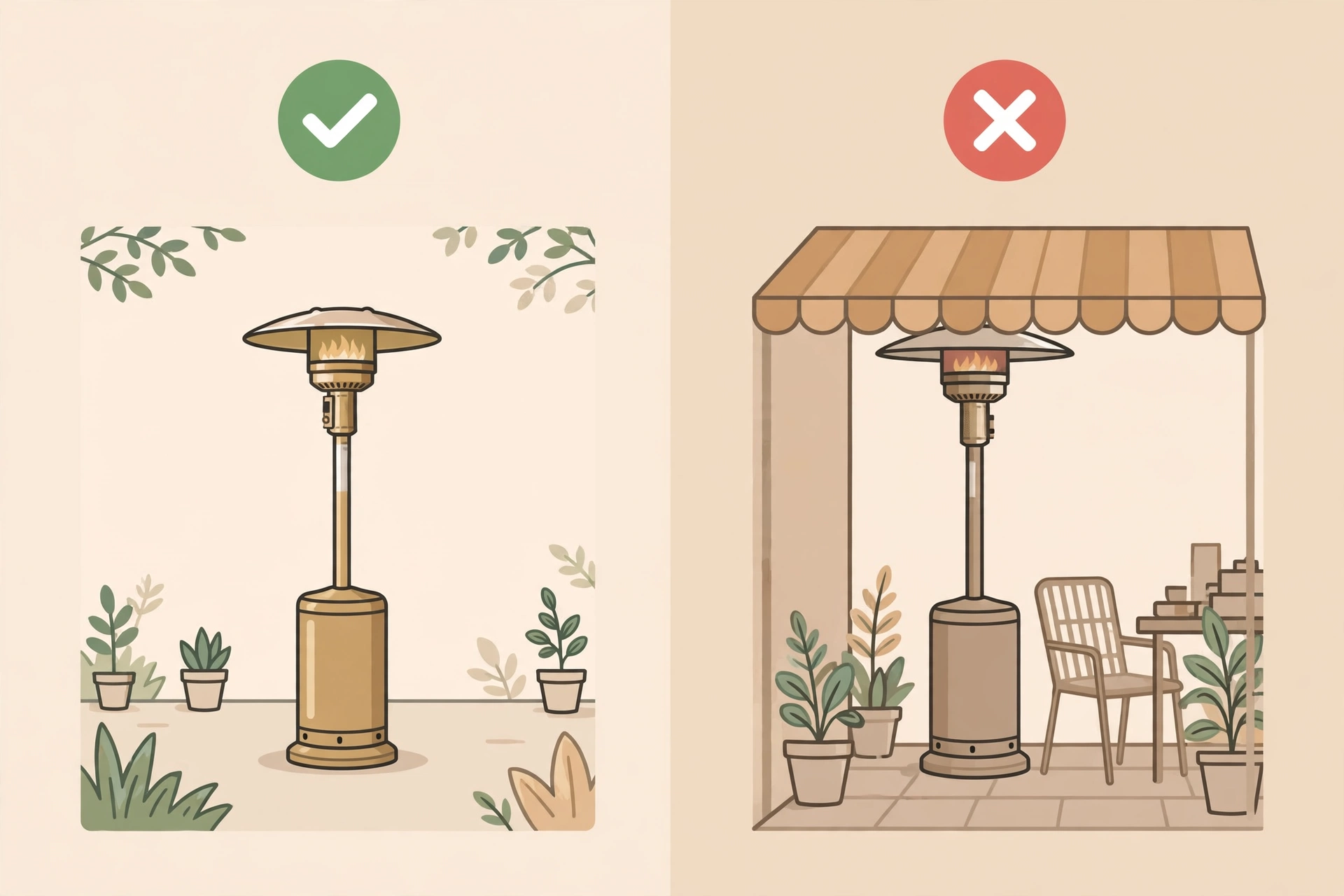
- Parking it under a patio umbrella. Umbrella fabric sits right in the heat plume and can scorch or catch. Close the umbrella or move the heater out from under it before lighting.
- Measuring from the base instead of the heat source. Clearance is measured from the pole and reflector, not the tank housing at the bottom. The widest, hottest part is what counts.
- Forgetting things that move. Curtains, hanging plants, tablecloths, and even tall ornamental grass sway into the zone on windy nights. Check clearances on a breezy evening, not only on a calm afternoon.
- Storing the spare propane tank beside the heater. Spare tanks belong well away from heat and out of direct sun — never inside the clearance zone. If you are unsure how long a propane tank lasts on a patio heater, plan refills ahead so you are not tempted to keep a spare within reach.
Frequently Asked Questions
How far should a patio heater be from a house wall?
Check your manual first, but most propane patio heaters ask for 2 to 3 feet of clear space from walls and other combustibles. Measure from the heater’s pole or reflector, not the base.
Can I put a patio heater under a covered patio or awning?
Only if the ceiling or awning is high enough to meet your manual’s overhead clearance — commonly 2 to 5 feet above the reflector — and the space is well ventilated. A low fabric awning is not safe. For enclosed or semi-enclosed spaces, read whether you can use a patio heater indoors before you decide.
How much overhead clearance does a patio heater need?
Manufacturer manuals vary widely: some ask for as little as 24 inches above the heat source, others as much as 60 inches. Measure from the top of the reflector straight up, and use your manual’s number — not a generic rule.
Can I use a patio heater on a wooden deck?
Many heaters are approved for decks, but the deck surface must be level and the full side and overhead clearances still apply. Sweep away leaves and debris first, and confirm deck use is allowed in your manual. The same spacing logic applies to open flames — see fire pit clearance from houses, trees, and fences for a related guide.
Do electric patio heaters need the same clearance?
Electric models usually need less — often around 18 inches on the sides and 12–24 inches overhead — but they still get hot enough to damage nearby surfaces. Always check the electric model’s manual. If you are still deciding between fuel types, compare electric vs propane patio heaters.
Quick Reference Card
You need: tape measure, owner’s manual, painter’s tape, step stool, helper.
- Read your manual’s side and overhead clearance numbers.
- Measure the side clearance in four directions; mark with tape.
- Measure from the reflector straight up to any ceiling or awning.
- Set the heater on a firm, level spot away from walkways.
- Walk a final circle, clear the zone, check the hose, then light.
You have measured your patio heater clearance, marked a safe zone, and checked the space above and below the heater. That 20-minute measuring session is the difference between a cozy evening and a close call.
Your natural next step is a safe first lighting — walk through how to use a patio heater step by step so startup, shutdown, and leak checks become second nature.