Is Klean-Heat the Same as Kerosene? Key Differences You Should Know Before You Buy
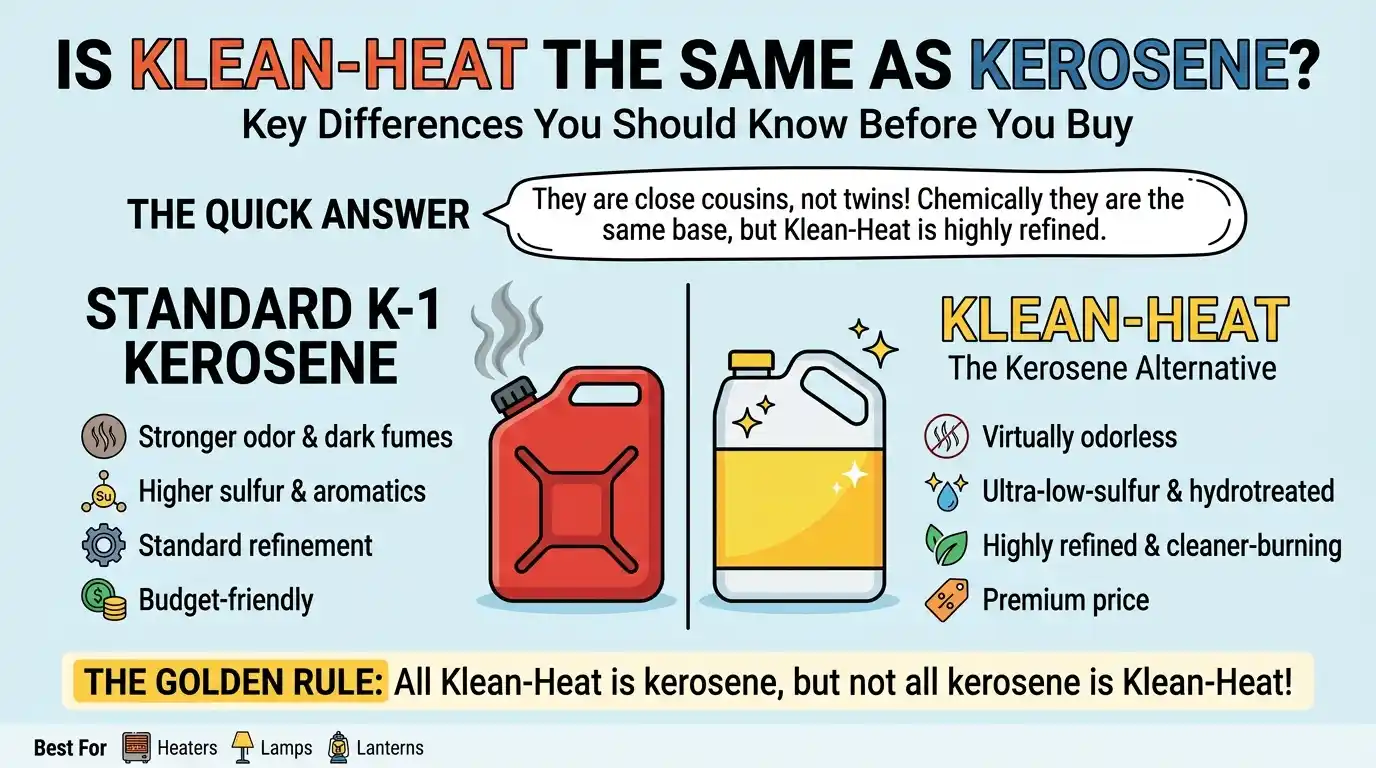
Klean-Heat is a practical, existing alternative to K-1 kerosene and there are too many who use the two terms interchangeably. However, when you take a peep at what is really in the bottle, how it burns and how much it costs, you will find that they are not twin brothers. They’re close cousins.
In this guide, you will find a breakdown of what makes Klean-Heat different than normal kerosene, where the two intersect, and which one makes more sense to your heater, lamp, or lantern.
Quick Answer: Is Klean-Heat the Same as Kerosene?
Chemically, yes. Klean-Heat is a hydrotreated, ultra-low-sulfur kerosene, made from the same petroleum distillate as regular K-1 kerosene (CAS number 64742-47-8). It is not ingredients, but refinement. Klean-Heat undergoes additional treatment to remove much of the sulfur and aromatic compounds that make regular kerosene so smelly and dark.
This is why the manufacturer, W.M. Barr, does not claim it to be kerosene, but instead sells it as a kerosene alternative, despite its own safety data sheet giving a hydrotreated kerosene distillate as essentially 100% of the formula.
So consider it thus: that all Klean-Heat is a kind of kerosene, but that not all kerosene is Klean-Heat.
What Is Klean-Heat, Exactly?
Who Makes It
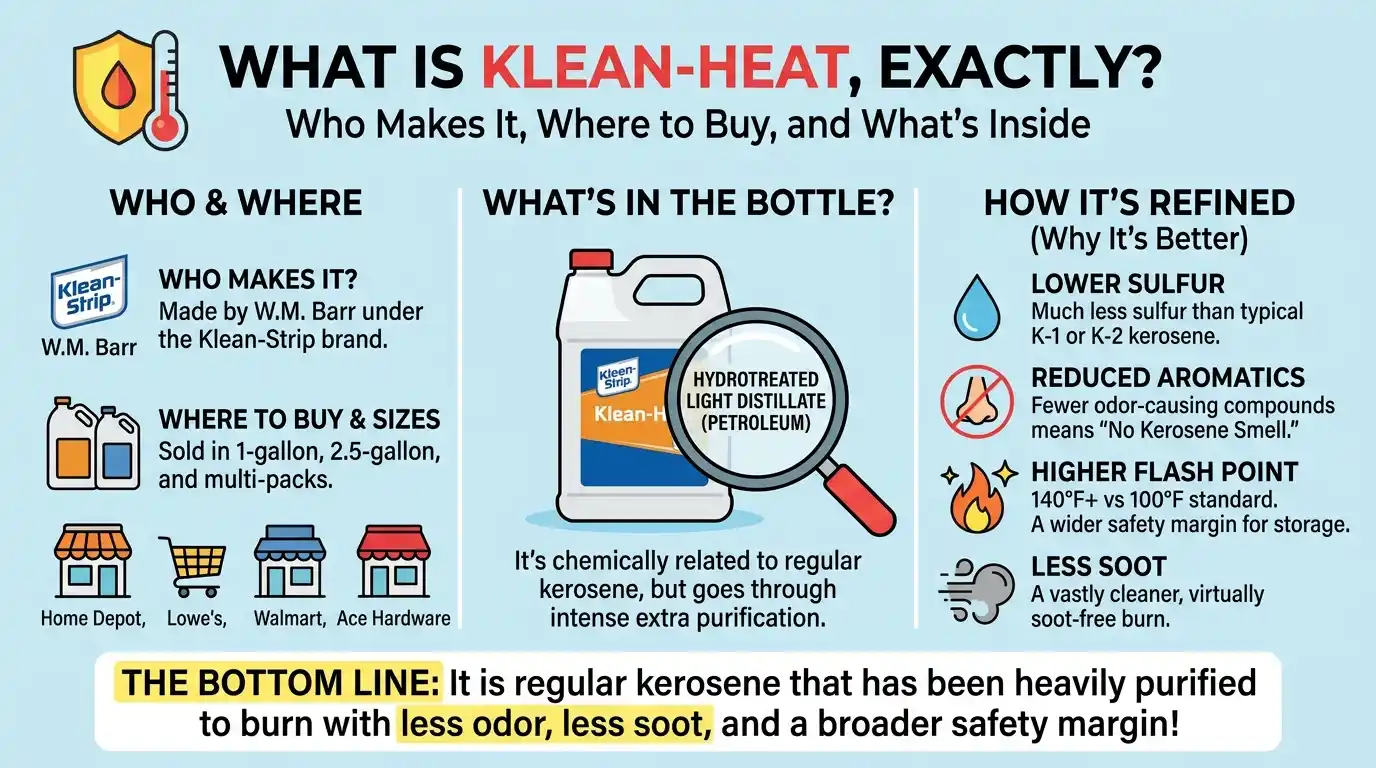
Klean-Heat is a brand of W.M. Barr under the brand Klean-Strip, which produces paint thinners, strippers and other solvents. It is sold at large retail stores such as Home Depot, Lowe, Walmart, and Ace Hardware in 1-gallon, 2.5-gallon, and multi-packs.
What’s Actually in the Bottle
The safety data sheet of the product shows that Klean-Heat is made of hydrotreated light distillate (petroleum), which belongs to the same chemical family as regular kerosene. It is distinguished by the degree of refining:
- Lower sulfur content than typical K-1 or K-2 kerosene
- Reduced aromatic hydrocarbons, the compounds that most contribute to the traditional “kerosene smell.
- Flash point of 140°F (or higher) versus a minimum of 100°F in standard K-1 kerosene under ASTM D3699.
In simple language, Klean-Heat is the same kerosene that has been purified to burn with less odor, less soot and with a broader safety margin when it is stored.
Klean-Heat vs Kerosene: Key Differences at a Glance
| Feature | Klean-Heat | Standard K-1 Kerosene |
|---|---|---|
| Base chemical | Hydrotreated kerosene distillate | Kerosene distillate (less refined) |
| Sulfur content | Very low | Up to 0.04% (K-1 grade) or 0.3% (K-2 grade) |
| Odor | Little to none, before or after burning | Noticeable kerosene smell |
| Flash point | Greater than 140°F | Minimum around 100°F (38°C) |
| Color | Clear | Clear to pale yellow |
| Smoke and soot | Lower | Higher, especially with a worn wick |
| Price per gallon | Typically $14 to $23 | Typically $4 to $8 at a pump, more in retail containers |
| Shelf life | About 3 years unopened, 6 months once opened | Similar, though quality can degrade with light and air exposure |
| Compatible appliances | Kerosene heaters, lamps, lanterns, stoves | Same appliances |
| Meets K-1 specification | Yes, manufacturer states it meets or exceeds K-1 specs | Depends on grade purchased |
6 Ways Klean-Heat and Kerosene Are Different
1. Sulfur and Aromatic Content
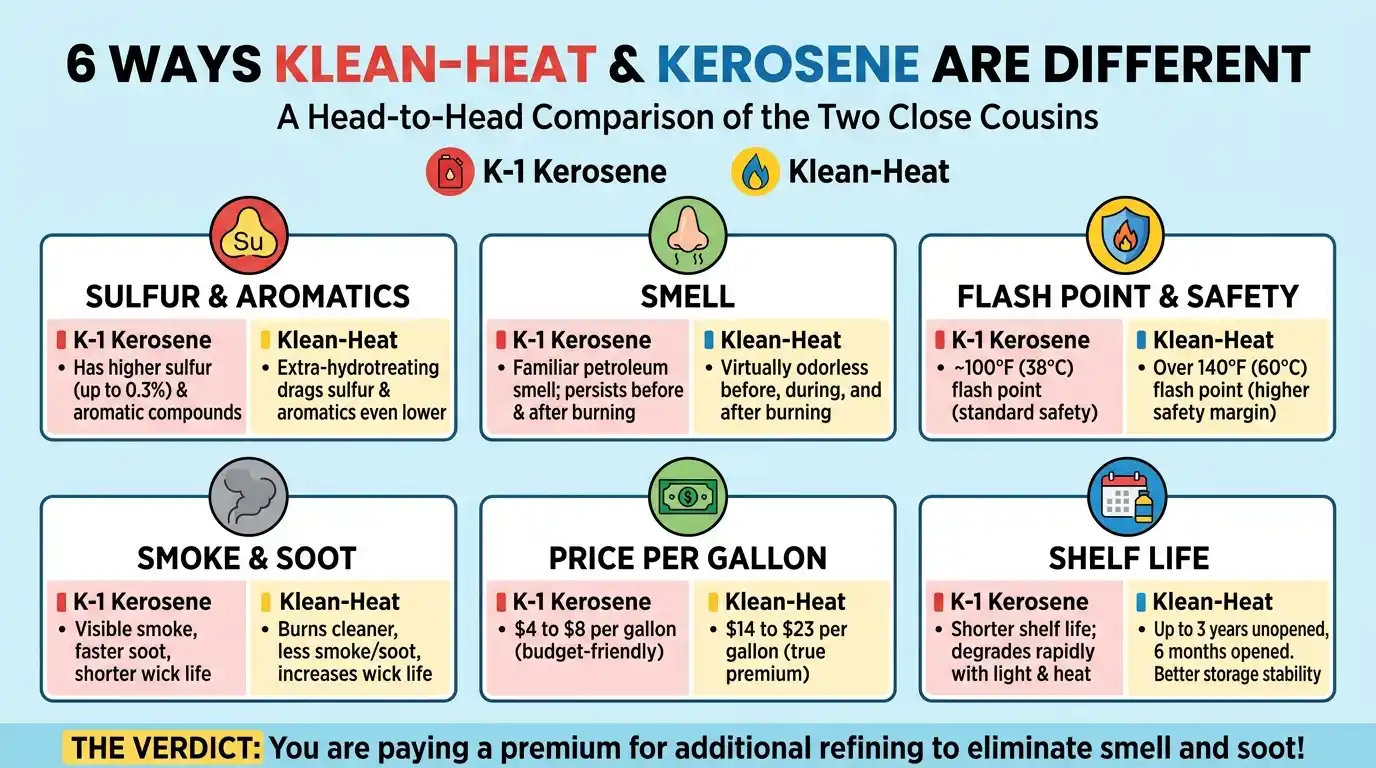
This is the essence of the difference. Under ASTM D3699, Standard K-1 kerosene already contains a sulfur limit of 0.04% and kerosene K-2 can contain up to 0.3%. Klean-Heat goes a step further and employs further hydrotreating to drag sulfur and aromatic hydrocarbons even lower. Reduced sulfur translates to reduced sulfurous odor and, in most cases, reduced nasty byproducts of combustion.
2. Smell, Before and After Burning
This is the difference that most buyers tend to notice. Kerosene has a familiar petroleum smell directly out of the can, and it persists during and after combustion. Klean-Heat is advertised as being odorless of kerosene before, during, or after use. In real life reviews, the majority of users testify to this, although some complain of a slight smell within the initial few minutes after lighting, particularly when an old, kerosene-impregnated wick is still in place.
3. Flash Point and Storage Safety
The lowest temperature at which the vapors of a liquid can be ignited is referred to as flash point. A greater flash point typically implies that a fuel is less susceptible to accidental ignition at room temperature, which is important to the safety with which it can be stored. Klean-Heat has a higher flash point of over 140 o C which is significantly higher than the standard 100 o C of normal K-1 kerosene. That is one of the reasons why Klean-Heat marketing calls it safer and more convenient to store than kerosene.
4. Smoke, Soot, and Wick Life
Since it burns cleaner, Klean-Heat is likely to result in less visible smoke and soot accumulation compared to regular kerosene, and this in turn can increase the life of a wick before it needs replacing. That being said, it is a difference of degree, and not a guarantee of zero soot. Any fuel of kerosene type will soot up a wick quicker when the appliance is not properly adjusted or the wick is old.
5. Price Per Gallon
This is the compromise of the cleaner burn. Klean-Heat is regularly sold at retail prices of $14 to 23 per gallon, and straight K-1 kerosene at a fuel pump or a hardware store is usually sold at 4 to 8 per gallon, sometimes less at a special kerosene outlet. You are paying a true premium, sometimes two to four times higher, the additional refining which eliminates the smell and sulfur.
6. Shelf Life
Both fuels have a moderate store life in a cool dark and closed container. The packaging of Klean-Heat says that its shelf life is approximately 3 years when unopened and approximately 6 months when opened as oxygen gradually decomposes the fuel. The same thing happens with standard kerosene, but quality may change more rapidly when it is exposed to light, heat or frequent opening.
Where Klean-Heat and Kerosene Are the Same
It’s not all differences. The two fuels are similar in a number of significant aspects:
- Same appliances. They are both intended to be used in kerosene heaters, oil lamps, lanterns, and kerosene-fueled stoves.
- Same base chemistry. They are both petroleum kerosene distillates, not some other type of fuel such as mineral spirits or lamp oil.
- Same hazard class. Both are flammable liquids and have the same core warnings: toxic when swallowed and aspirated into the lungs, an irritant to the skin and eyes, and a source of soot and carbon monoxide when burned, which the California Proposition 65 warning on the product specifically warns about.
- Same handling rules. They both should be kept out of heat and open flame, in a tightly closed container and should not be used without sufficient ventilation.
Is Klean-Heat Safe to Burn Indoors?
Klean-Heat can be used in the same indoor-rated kerosene appliances as ordinary kerosene and the reduced sulfur and aromatic content does imply less odor and generally less irritation to those who are sensitive to fumes. But “less odor” is not the same as “no risk.” If you’re new to this type of appliance, it helps to first understand how these heaters actually work before relying on one as a primary heat source.
Combustion byproducts of any type of kerosene-type fuel, such as Klean-Heat, are carbon monoxide and soot. This implies that the same fundamental safety regulations are used regardless of the type of fuel:
- Burn only in an appliance designed to use kerosene.
- Open the room to the air, when using a kerosene heater, open a window or door.
- Have a working carbon monoxide detector installed in any room you are burning it.
- Do not refuel a hot or running appliance.
- Clip and keep the wick trim as suggested by the manufacturer.
Even when you have an oil lamp or lantern rather than a heater, ventilation is also important, but not as urgent, as the flame is smaller.
Klean-Heat vs Kerosene: Which Burns Longer and Hotter?
This is one of the most controversial aspects of long-term users of kerosene heaters and lanterns, and the truth of the matter is that it will depend on the appliance, the wick, and the person you are talking to.
According to manufacturer literature, Klean-Heat produces great heat, and the company says that it conforms to or exceeds K-1 kerosene requirements. There are mixed but mostly positive independent user reports:
- A number of reviewers on retailer websites claim that the heat output of Klean-Heat compares well to that of kerosene, and that it burns significantly longer per fill in their heater.
Long time lantern collectors have indicated that Klean-Heat generated a bit less light and heat than straight K-1 kerosene in antique oil lamps, but that the difference was said to be hardly noticeable. - Fewer forum members, especially those operating vintage lanterns and lamps, report the reverse: that Klean-Heat clogged a wick or worse than kerosene or Jet A fuel in their particular system.
Conclusion: In the case of modern kerosene heaters, the majority of users consider Klean-Heat to be as effective as K-1 kerosene as far as heat output and burn time is concerned. With older wick materials in antique lamps and lanterns, the results are more random and it is worth trying a small batch first before investing a full tank.
Can You Use Klean-Heat in a Kerosene Heater, Lamp, or Lantern?
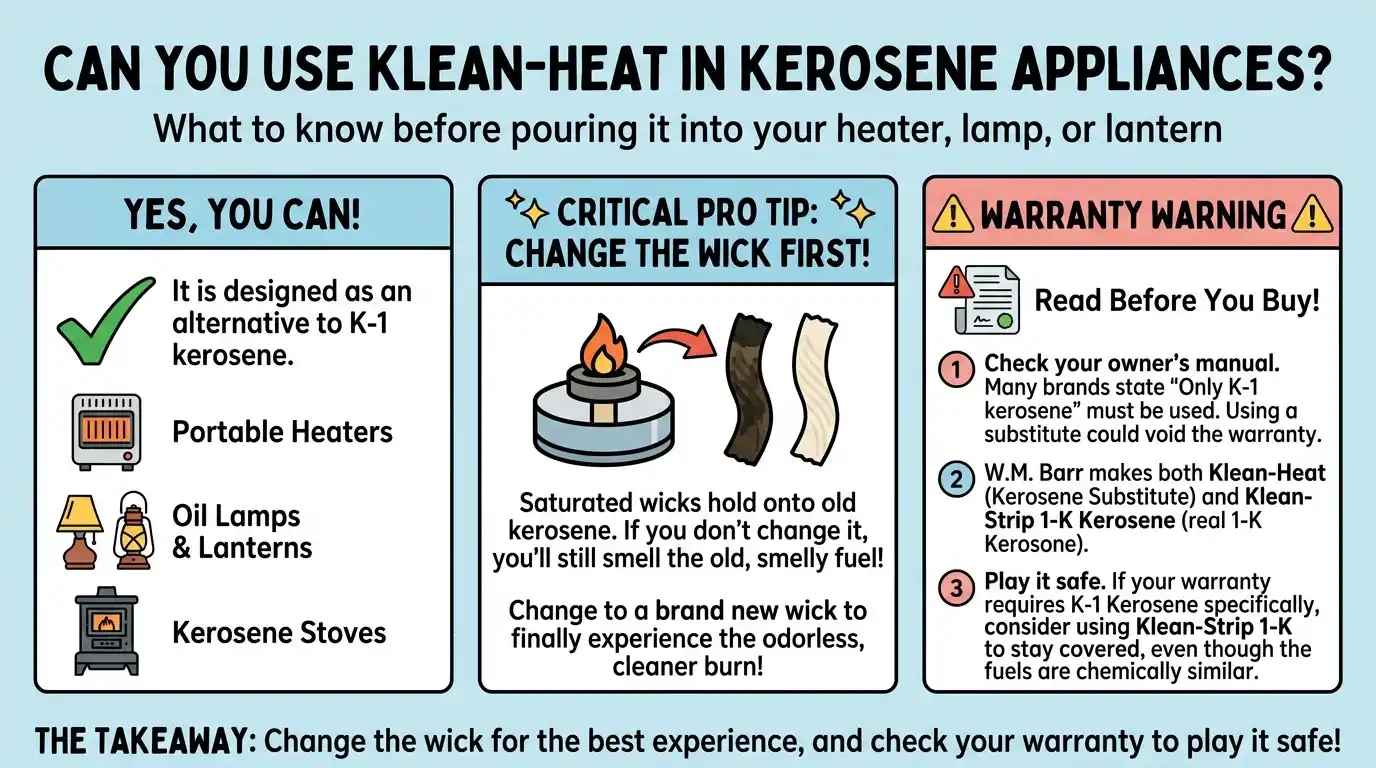
Yes. Klean-Heat is developed to be used as an alternative to K-1 kerosene in kerosene-burning appliances, such as portable heaters, oil lamps, lanterns, and kerosene stoves.
When you are changing the kerosene to Klean-Heat in the same appliance, one thing counts; first change the wick. An already saturated wick that has already burnt off all the standard kerosene will continue to give off a kerosene odor long after you change fuels, because the wick itself retains the remnant of the old fuel. A new wick allows you to observe the difference in odor. If you’ve never fueled or lit one of these units before, it’s worth reviewing a proper step-by-step lighting and setup walkthrough first.
Placement matters too, regardless of which fuel you choose. Certain flooring materials need extra precautions, so check safe placement guidance for indoor flooring before setting your heater up for the season.
A Warranty Warning Worth Reading
This is a fact that most buying guides omit. W.M. Barr markets two similar yet differentiated products: Klean-Heat (marked as a “kerosene substitute) and Klean-Strip 1-K Kerosene (marked as real K-1 kerosene). Other manufacturers of kerosene heaters include in their owner manuals that only kerosene of the K-1 grade can be used and that using an alternative fuel, even one that is chemically similar, will nullify the warranty of the appliance.
You should consult the manual or manufacturer instructions of your appliance before filling your heater with Klean-Heat. When it specifically states that it needs K-1 kerosene, you might consider using the Klean-Strip 1-K Kerosene product instead of the Klean-Heat “alternative” version, simply to remain within the warranty requirements, even though the two types of fuel are chemically virtually identical.
Can You Mix Klean-Heat and Kerosene?
Since they are both kerosene based distillates, there will be no chemical safety concern with mixing small quantities of leftover standard kerosene with Klean-Heat in the same tank as would occur with mixing incompatible fuels. With that said, mixing will reintroduce some of the odor and soot properties of typical kerosene, nullifying the primary purpose of most people to use Klean-Heat in the first place. To prevent odor, it is preferable to empty the tank and clean it before switching to the other fuel, as opposed to filling the tank with the other fuel.
Do not confuse any of the fuels with gasoline, diesel, or mineral spirits. Gasoline is much more volatile and poses a serious fire and explosion risk in an appliance that is intended to use kerosene with a higher flash point.
Klean-Heat vs Kerosene: Cost Breakdown
| Fuel | Typical Price Range | Where Found |
|---|---|---|
| Klean-Heat (1 gallon) | $14 to $23 | Home Depot, Lowe’s, Walmart, Ace Hardware, online retailers |
| K-1 kerosene (pump) | $4 to $6 | Dedicated kerosene pumps at gas stations or farm supply stores |
| K-1 kerosene (retail container) | $6 to $10 | Hardware stores, home improvement retailers |
The cost depends on location, time of year, and size of container, and purchasing in bulk (2.5-gallon jugs or 4-packs) may reduce the effective price-per-gallon of either fuel. As a guideline, you should pay about two to three times higher than Klean-Heat than pump kerosene, in exchange to the reduced odor and soot. Fuel is only part of the budget, though.
If you’re still shopping for the appliance itself, it helps to see current pricing for the heaters themselves so you can plan for both the upfront and ongoing costs together.
How to Switch From Kerosene to Klean-Heat
- Fill up your existing tank as much as possible without risking to fill it up to the brim, so that you are not mixing fuels.
- Change wick when changing a lamp, lantern or heater that has been using regular kerosene. The ancient wick retains kerosene remains and smell.
- Turn to the manual of your appliance and make sure that it does not need real K-1 kerosene in particular.
- Fill with Klean-Heat in the same fill line and safety precautions as you would with kerosene.
- Light and observe the first burn. The initial few minutes may have a very faint smell as long as there is any old fuel left in the appliance; this should clear away.
- Keep any remaining fuel in its original container, which is not opened, in a cool place, not in direct sunlight and intend to use it within approximately 6 months after opening.
Pros and Cons of Klean-Heat
Pros
- Little to no kerosene odor before, during, or after burning
- Reduced sulfur and aromatic content as compared to normal kerosene.
- Increased flash point, which is typically less hazardous to store.
- Reduced smoke and soot, which may increase wick life.
- Works in the same appliances as standard K-1 kerosene
- Opaque formula with 3-year shelf life indicated.
Cons
- Approximately 2 to 4 times as expensive as pump kerosene.
- May rescinds appliance warranty stating that it must use real K-1 kerosene.
- Conflicting user reports on older lamps and lanterns of heat output and wick gumming.
- Not always available or readily available locally, particularly out of season in winter.
- Still does not contain carbon monoxide and soot, thus it is not safe.
Which Should You Buy? A Quick Decision Guide
- You desire the least odor and are willing to pay a higher price: Select Klean-Heat.
- You have a tight budget or are fueling a heater frequently: Select ordinary K-1 kerosene.
- Your heater manual specifically stipulates the use of actual K-1 kerosene: Select Klean-Strip 1-K Kerosene (the regular kerosene product of the same brand) rather than the “alternative” one, to remain under warranty.
- You have an old oil lamp or lantern: Start with a small portion of Klean-Heat, as the amount of heat produced depends upon the type of wick and lamp construction.
- You are sensitive to kerosene or use the device in a crowded or small indoor area frequently: Select Klean-Heat because of the less odor and irritation.
FAQs
Is Klean-Heat kerosene per se?
Klean-Heat is a kerosene-type alternative fuel made primarily from hydrotreated light petroleum distillate. It is more heavily refined and deodorized than typical kerosene.
What is Klean-Heat composed of?
Klean-Heat is primarily composed of hydrotreated light distillate (petroleum), CAS number 64742-47-8. This petroleum distillate is in the same general chemical family as kerosene and is highly refined.
Is Klean-Heat aromatic of kerosene?
Klean-Heat is designed to have very little odor compared with conventional kerosene. A temporary smell may occur if the appliance wick was previously used with regular kerosene.
Is Klean-Heat safer than kerosene?
Klean-Heat may have handling and odor advantages because of its refining characteristics, including a higher flash point and lower sulfur content. However, it remains a flammable petroleum fuel and can produce carbon monoxide during combustion.
Is it possible to use Klean-Heat in my kerosene heater?
Klean-Heat is designed as an alternative fuel for compatible kerosene heaters, lamps, and stoves. Always check the manual for your specific appliance because some manufacturers require particular fuel specifications and may restrict alternative fuels.
What is the reason Klean-Heat is more costly than kerosene?
Klean-Heat undergoes additional refining and treatment intended to reduce odor and certain impurities. Those additional processing costs can make it more expensive than conventional kerosene.
Is Klean-Heat as hot as kerosene?
When used in a compatible appliance, Klean-Heat is intended to provide comparable heating performance to kerosene. Actual heat output can vary depending on the appliance, wick condition, fuel quality, and operating conditions.
Will mixing Klean-Heat with regular kerosene work?
Klean-Heat and kerosene are petroleum distillate fuels, but you should not mix them unless the appliance manufacturer specifically permits it. Mixing can also reduce some of the low-odor benefits of Klean-Heat.
Can Klean-Heat be safely burnt indoors?
Klean-Heat can be used in appliances specifically designed and rated for indoor use, but burning petroleum fuel can produce carbon monoxide. Follow the appliance manufacturer’s ventilation requirements and use a working carbon monoxide detector.
Does Klean-Heat void a kerosene heater’s warranty?
It can if the heater manufacturer specifies a particular fuel or prohibits alternative fuels. Check your heater’s owner’s manual and warranty terms before using Klean-Heat.
What is the shelf life of Klean-Heat?
Shelf life depends on storage conditions and the manufacturer’s recommendations. If using a specific shelf-life figure, follow the current product label or manufacturer guidance, and keep the container tightly sealed and stored appropriately.
Is it possible to use Klean-Heat in an oil lamp or lantern?
Klean-Heat may work in some oil lamps and lanterns designed for kerosene-type fuels, but compatibility varies by appliance and wick. Check the manufacturer’s instructions before use, particularly with older lamps and lanterns.
What’s the difference between Klean-Heat and Klean-Strip 1-K Kerosene?
Klean-Strip 1-K Kerosene is marketed as K-1 kerosene, while Klean-Heat is a more highly refined, low-odor alternative fuel. If an appliance specifically requires K-1 kerosene, use the fuel type specified by the appliance manufacturer.
Is Klean-Heat toxic?
Klean-Heat should be handled as a petroleum fuel. It can be harmful if swallowed or inhaled into the lungs and may irritate the skin or eyes. Keep it away from children, avoid ingestion and unnecessary skin contact, and follow the product’s safety instructions.
Final Thoughts
Kerosene and Klean-Heat are not two dissimilar fuels, but two ends of the same refining spectrum. Klean-Heat is further refined kerosene that has been refined to remove sulfur, aromatics and the odor that accompanies it, hence the higher price per gallon.
To the majority of users operating a modern kerosene heater who desire fewer odors and fewer soot, Klean-Heat is a solid, tested alternative that can do nearly as well as kerosene. To low-end customers, regular fuelers, or any whose heater manual specifically recommends the use of real K-1 kerosene, regular kerosene, or the branded 1-K kerosene product, is the more sensible and warranty-safe option.
Either way, handle it as carefully as you would any flammable fuel: good ventilation, a carbon monoxide detector, and keep it out of heat and open flame.