How Many Patio Heaters Do You Need for Outdoor Thanksgiving Dinner?
For most outdoor Thanksgiving dinners, start with one heater for each seating area, then add one more for the gathering spot. A table for six to eight guests often needs two heaters, one at each end. A larger patio with a dining table, a drinks area, and a lounge corner may need three or four.
Start Here: Think in Zones, Not Headcounts Alone
Guests feel warm when heat reaches the place where they sit, stand, and eat, so each distinct zone needs its own source of warmth. A dining table is one zone, a standing area near the drinks table is another, and a lounge corner is a third. Walk the patio at the time dinner will be served and note where people will actually spend time.
Check the heater you plan to use before you buy or borrow more. Coverage varies by model, so the manufacturer’s stated coverage for your exact heater is the number to trust for planning. Use the method below with that figure, and treat any general counts in this article as planning guidance only.
Safety First: Read This Before You Light a Heater
Safety notes for Thanksgiving day: Use propane and other fuel heaters outdoors only, in open air. Keep heaters clear of tablecloths, decorations, umbrellas, branches, and anything overhead that could catch heat. Place each heater on a flat, stable surface where it cannot be tipped over, and keep children and pets at a clear distance. Never leave a heater running unattended, and never use a fuel heater in a garage, a tent with closed sides, or any enclosed space, because carbon monoxide can build up where air cannot move freely.
Leave a clear walking path around each heater so guests do not brush against it while carrying plates or drinks. Follow the instructions that came with your heater for setup and shut-off. For more detail, see our guide to patio heater clearance.
The Sizing Method: Measure, Count, Then Match Coverage
This method takes about ten minutes. You need a tape measure, a rough sketch of the patio, and the stated coverage for your heater model. If you are borrowing heaters, ask for the model name first.
- Measure each seating area. Note the length and width of the dining, drinks, and lounge areas on your sketch.
- Count guests per area. Record how many people will sit or stand in each area while everyone is eating.
- Check your heater’s stated coverage. Use the manufacturer’s figure for your exact model, since models vary.
- Match one heater to each area it covers. Repeat this step for each separate area on your sketch.
- Round up for wind and gaps. Add one heater where wind crosses the patio or where two areas sit far apart.
Rounding up is better than leaving a cold corner, because guests will drift toward the warmest spot and crowd the table. If you are unsure between two counts, choose the higher count for the dining area and keep a spare heater ready, unlit, for the gathering area. You can light it only if guests say they feel cold.
Worked Example: A Typical Thanksgiving Table and Patio
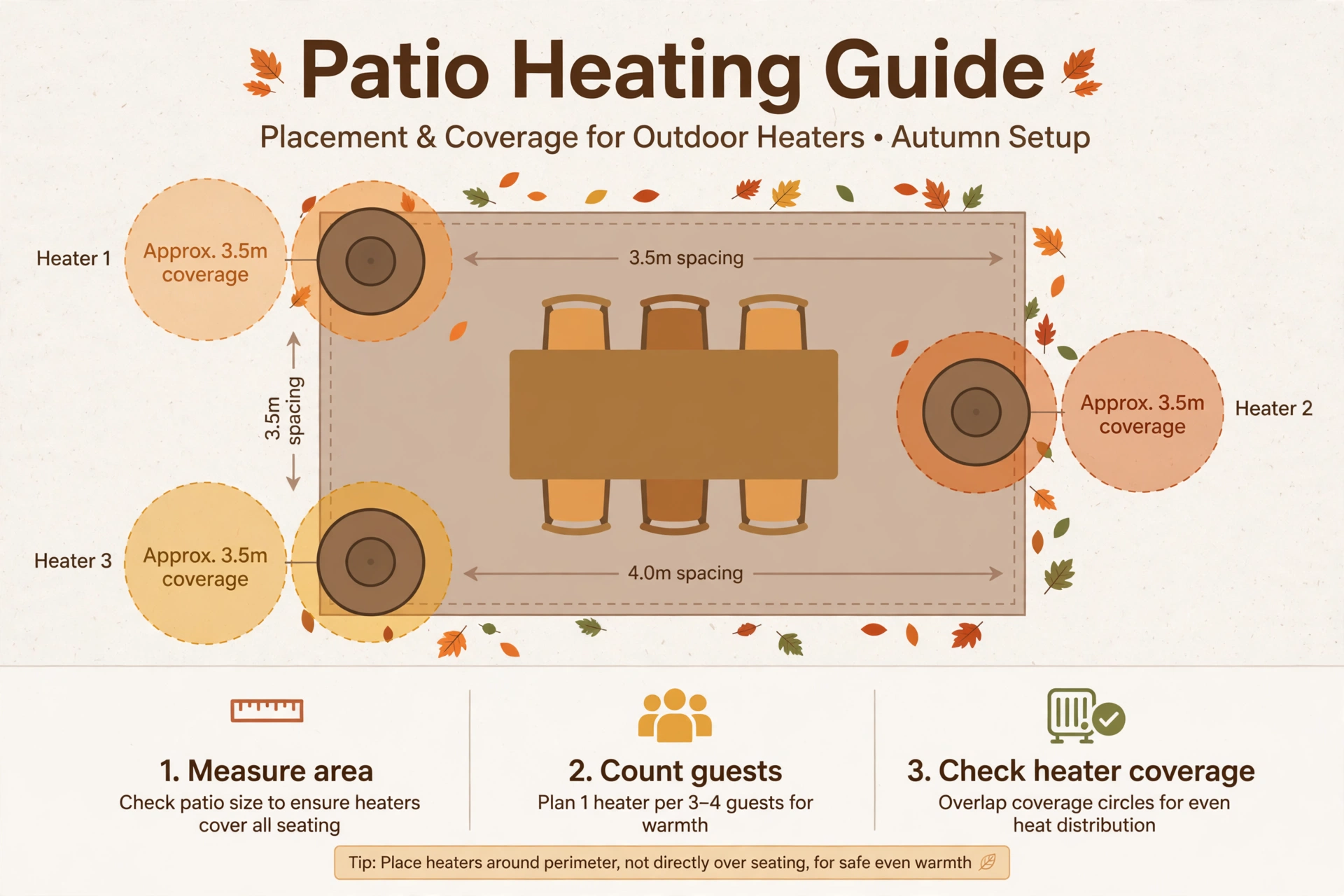
Picture a patio about 12 feet by 16 feet with one rectangular table for eight guests, a small drinks table near the door, and two lounge chairs in a corner. The dining table is the main zone, and the lounge chairs form a third, smaller zone. This patio needs a heater at each end of the dining table, plus one near the lounge chairs if guests sit there after dinner.
| Area | Guests | Planning count |
|---|---|---|
| Dining table | 8 | 2 heaters, one at each end |
| Drinks spot | 4 standing | Covered by the nearer dining heater, or 1 extra if apart |
| Lounge corner | 2 to 3 | 1 heater, or 1 tabletop heater for a small corner |
In this example, the total is three heaters for the full evening, or two if the lounge corner goes unused. That range is planning guidance for a patio of this size, not a promise for every model. See our guide to what size patio heater you need for more on size and coverage.
Wind and Cold: When to Add Another Heater
Wind is the main reason a count that looks right on paper feels cold in practice. It matters most on open patios with no fence or wall on the windward side. Check the forecast for wind direction as well as temperature.
- Light breeze, sheltered patio: Stay with the sizing-method count, and place heaters on the windward side.
- Steady breeze, partly open patio: Add one heater to the dining or gathering area facing the wind.
- Strong wind or a cold snap: Add one heater per exposed zone, plus a windbreak at a safe distance.
- Temperature drops after sunset: Plan for the coldest part of the evening and light heaters early.
Heater Types Change the Count
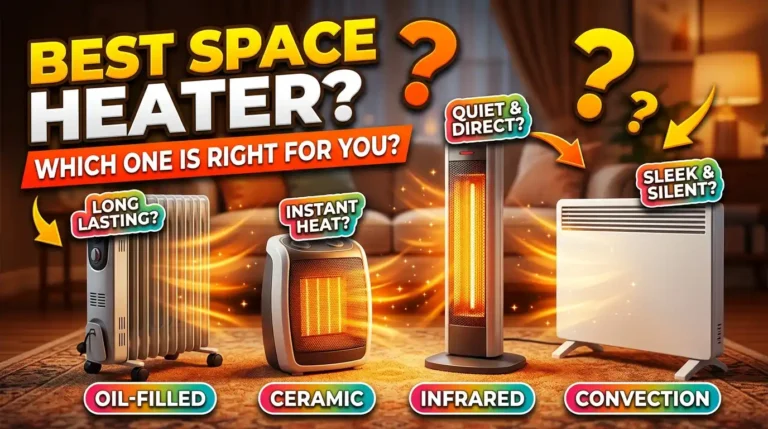
Not every heater warms a space in the same pattern, so the type you choose changes how many you need. A tall mushroom heater spreads warmth in a wide circle around its head, which suits a dining table with guests on all sides. A tabletop heater suits a small table or a pair of chairs, not a full Thanksgiving table on its own.
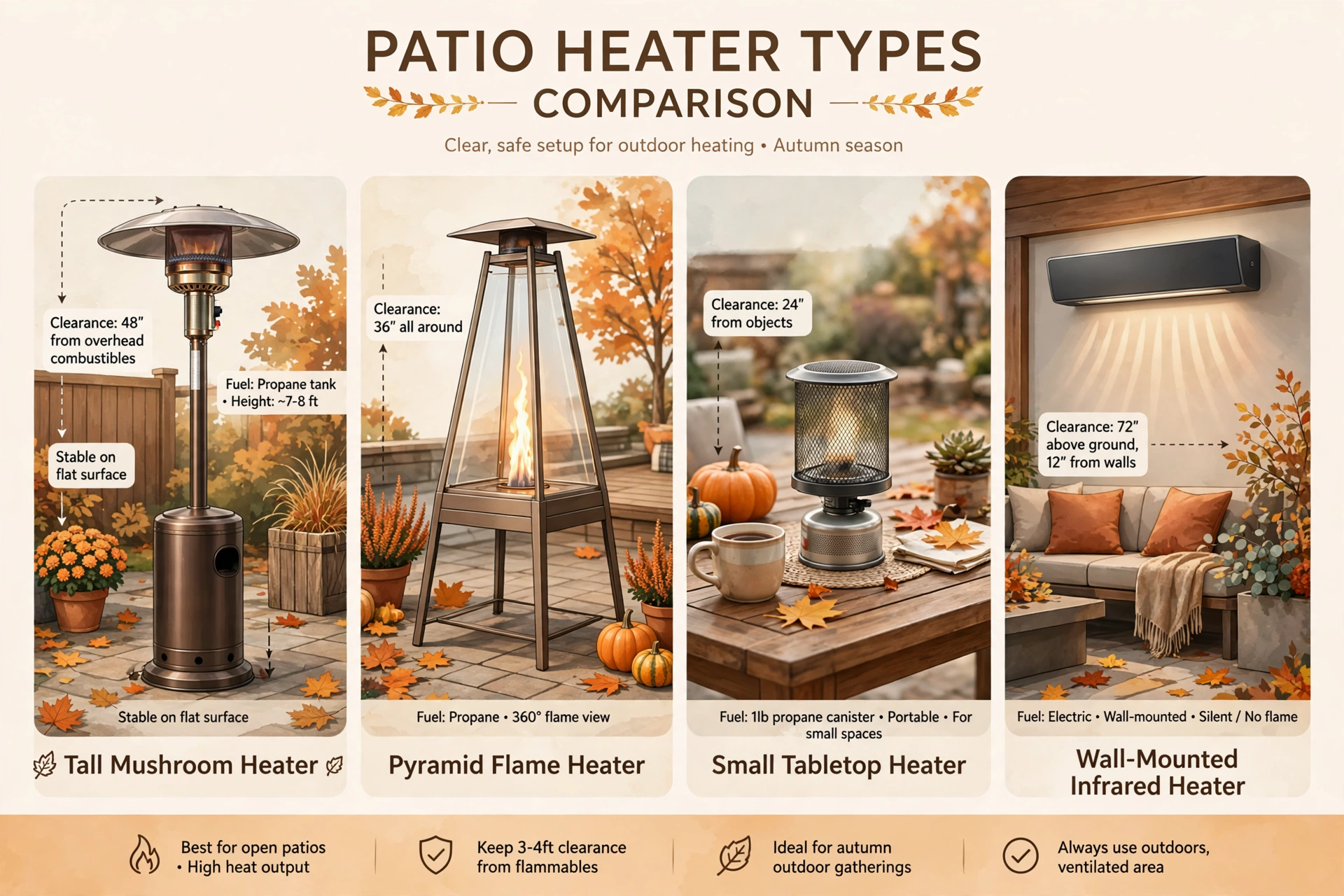
Wall-mounted infrared heaters warm people and surfaces in a fixed direction rather than warming the air around them. One wall-mounted heater may suit a fixed bench against a wall, but it will not warm a table in the middle of an open patio. To understand how each type produces heat, read how a patio heater works before you mix types.
Placement: Where Each Heater Should Go
For a rectangular table, one heater at each end usually works better than two on one side, because guests at both ends get warmth. For a round table, place heaters evenly around the outside, at the distance given in your heater’s instructions.
Check overhead clearance before you set an umbrella or canopy over a heater, and never place a heater under a low cover that the instructions do not allow. Keep the base on level ground, away from low tablecloths and decorations that could blow into it.
Running Costs and a Backup Plan
More heaters mean more fuel or electricity, so check each fuel cylinder or power supply in advance. Running costs vary by heater type, fuel, and local prices, so check current costs for your setup rather than relying on a single figure. Our guide to how much it costs to run a patio heater explains the factors that change the total.
Test every heater the day before Thanksgiving, and keep the instructions nearby on the day. If a heater will not stay lit, turn it off, let it cool, and check the basic steps in our guide to a patio heater that won’t stay lit, without opening fuel parts or attempting repairs you are not trained to do. Keep a spare heater ready so dinner can continue while you check the problem.
Frequently Asked Questions
How many patio heaters do I need for 8 guests at Thanksgiving?
For eight guests at one table, plan for two heaters, one at each end. Add a third for a separate lounge or gathering area, and one more if the patio is windy or exposed. Check your heater model’s stated coverage first, since coverage varies by model.
Is one patio heater enough for a Thanksgiving dinner?
One heater may suit a small table for two to four guests in a sheltered spot, but it rarely covers a full Thanksgiving table plus a gathering area. With one heater only, place it at the dining table and keep the gathering area close by.
Do I need more heaters if it is windy?
Yes, add at least one extra heater to the exposed zone, and one per exposed zone on a strongly windy evening. Place heaters on the windward side, add a windbreak at a safe distance, and plan for the coldest part of the evening.
Can a tabletop patio heater warm a Thanksgiving table?
A tabletop heater suits a small table or a pair of chairs, not a full Thanksgiving table on its own. Use it for a side table or small corner, alongside full-size heaters for the main table.
Where should I place patio heaters around a dinner table?
For a rectangular table, place one heater at each end. For a round table, space heaters evenly around the outside at the clearance distance in your heater’s instructions, on flat, stable ground with walking paths clear.
What should I do if a patio heater will not stay lit on Thanksgiving?
Turn the heater off, let it cool, and follow the basic checks in the manufacturer’s instructions and our guide to a patio heater that won’t stay lit. Do not open fuel parts or attempt repairs you are not trained to do.
Count zones first, check your heater’s stated coverage, and add one heater for wind or a separate gathering area. Test your heaters the day before, set them out with clear paths and safe clearances, and keep a spare ready.