Sycamore Firewood: How to Burn It Well
Sycamore firewood can heat a room well, but only when it is dry, split to a workable size, and burned in a hot fire. Wet sycamore smokes, hisses, and leaves more creosote in the flue. This Sycamore Firewood: Burning Guide walks you through picking the right logs, checking moisture, and building a fire that burns clean from the first match to the last coal.
By the end, you will know how to spot sycamore, test a split log, and tend a fire without fighting smoke or damp wood. The method below suits an open fireplace or a wood stove, and it takes no special tools beyond a moisture meter and basic fire tools.
Safety disclaimer
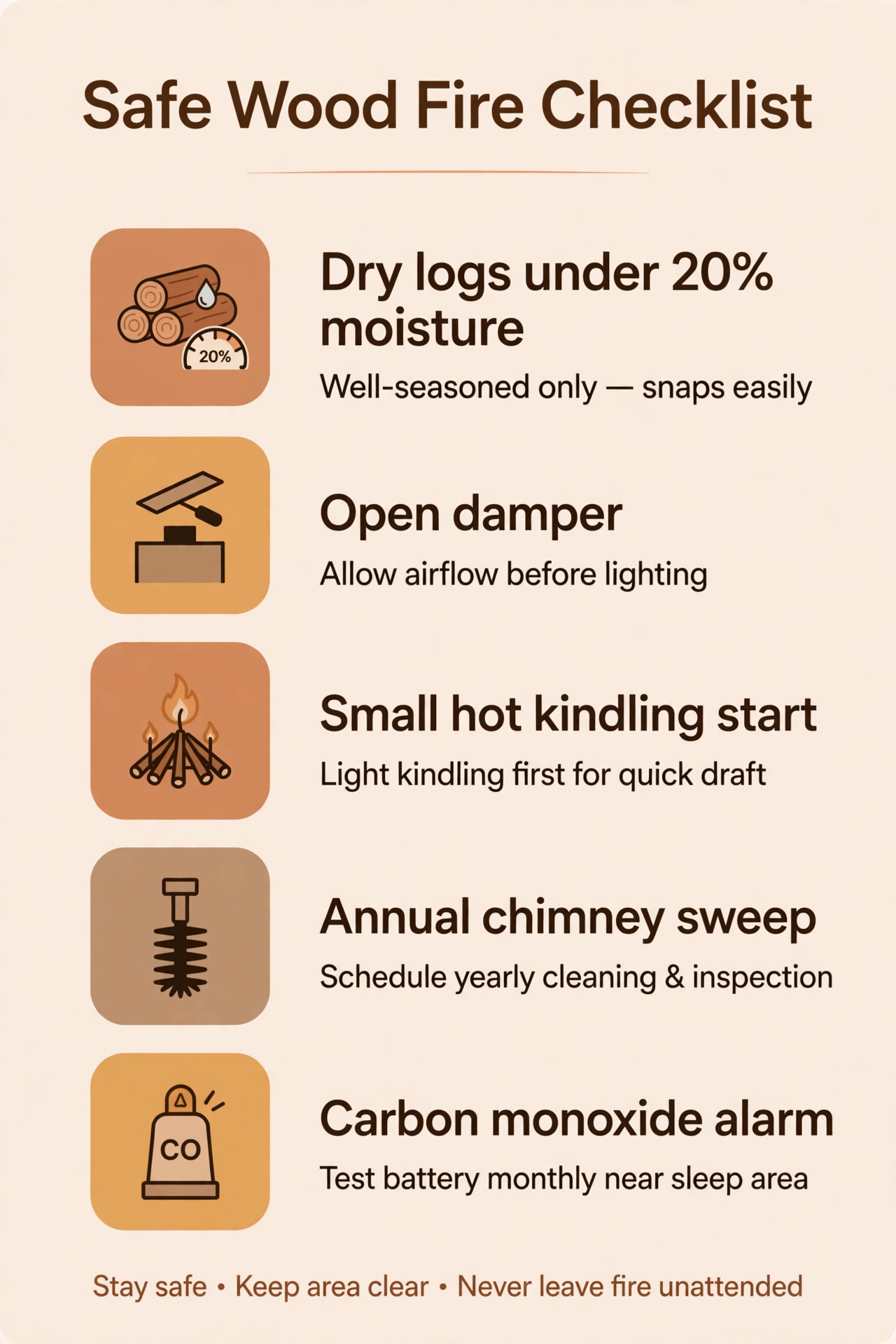
Burn wood only in a vented fireplace or stove, and never in an unvented indoor space. Keep working smoke and carbon monoxide alarms in place, have the chimney inspected and swept each year by a certified sweep, and never burn treated, painted, or stained wood. If you smell gas, see heavy smoke inside the home, or feel headache, dizziness, or nausea near a fire, leave the area and call emergency services.
One evening of burning, after seasoning
20 minutes to build and light
Beginner, with dry wood
What You Need
- Split, seasoned sycamore logs, 14 to 16 inches long for most fireplaces
- A pin moisture meter
- Dry kindling and a firelighter or newspaper
- Long matches or a long lighter
- A poker, tongs, and a metal ash bucket with a lid
- Leather work gloves and eye protection
- A covered log basket or indoor rack
- A working smoke alarm and carbon monoxide alarm
At a Glance
- Identify sycamore by its mottled bark and pale wood.
- Split logs to a size your firebox can hold.
- Test moisture on a fresh split face.
- Stack sycamore off the ground, in sun and wind.
- Build a small, hot fire with dry kindling.
- Tend the fire with air, not extra logs.
- Let coals cool fully before handling ash.
Identify Sycamore Before You Buy or Burn It
American sycamore, Platanus occidentalis, is easy to spot once you know its bark. The outer bark flakes away in patches, leaving a mottled mix of cream, tan, and gray. Freshly split sycamore wood looks pale, almost white, with a fine grain and a faint pink or tan tint in places.
Ask the seller what species is in the load, and check a few logs yourself before unloading. A mixed load is fine, but you want to know which logs are sycamore so you can watch how they burn. If the bark is smooth, dark, and deeply furrowed on every log, the load may be a different species.
Split Sycamore While It Is Still Green
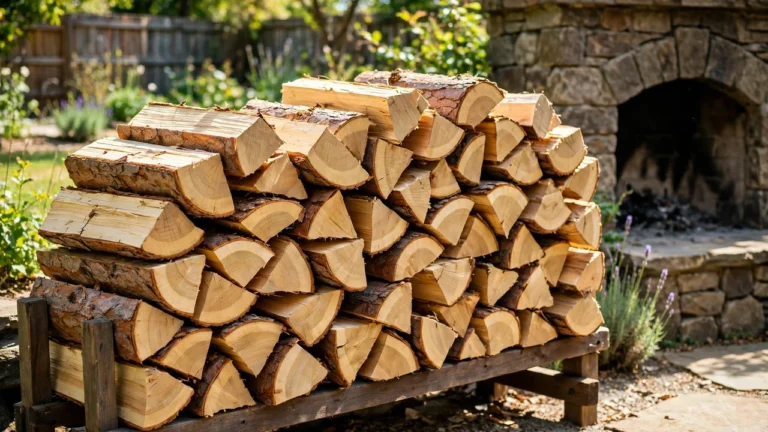
Sycamore has interlocking grain, which makes dry rounds hard to split by hand. Splitting soon after felling, while the wood is still green, takes far less force. Aim for pieces about 3 to 5 inches across at the thick end, so air can reach the wood and the pieces fit your firebox.
Use a maul or a hydraulic splitter, and work on a stable chopping block with clear footing. Wear gloves, eye protection, and sturdy boots, and keep children and pets well clear of the swing zone. Wedges help on knotty rounds, and a piece that keeps bouncing the maul is a good candidate for the splitter.
Heads Up: Never split wood on an uneven surface, and never hold a round steady with your foot. A glancing maul strike can cause a serious injury, so reposition the round with a tool, not your boot.
Test Moisture on a Fresh Split Face
Seasoned wood burns hotter and cleaner than green wood, and sycamore is no exception. Read our guide to what seasoned firewood means before you trust a seller’s claim that a load is ready to burn. A meter reading taken on the outside of a log can mislead you, because the surface dries first.
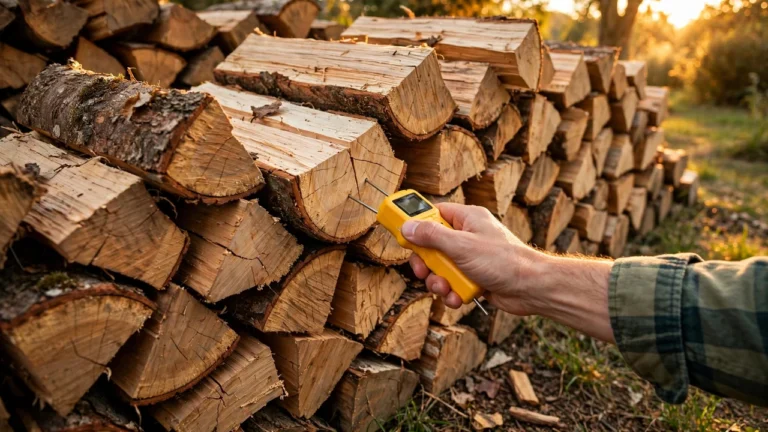
Split a log open, then press the meter pins into the fresh face, along the grain. You want a reading of 20% or less before burning. If you do not have a meter yet, see how to tell if firewood is seasoned for sound, weight, and crack checks that back up the meter reading.
Stack Sycamore for Sun, Wind, and Drainage
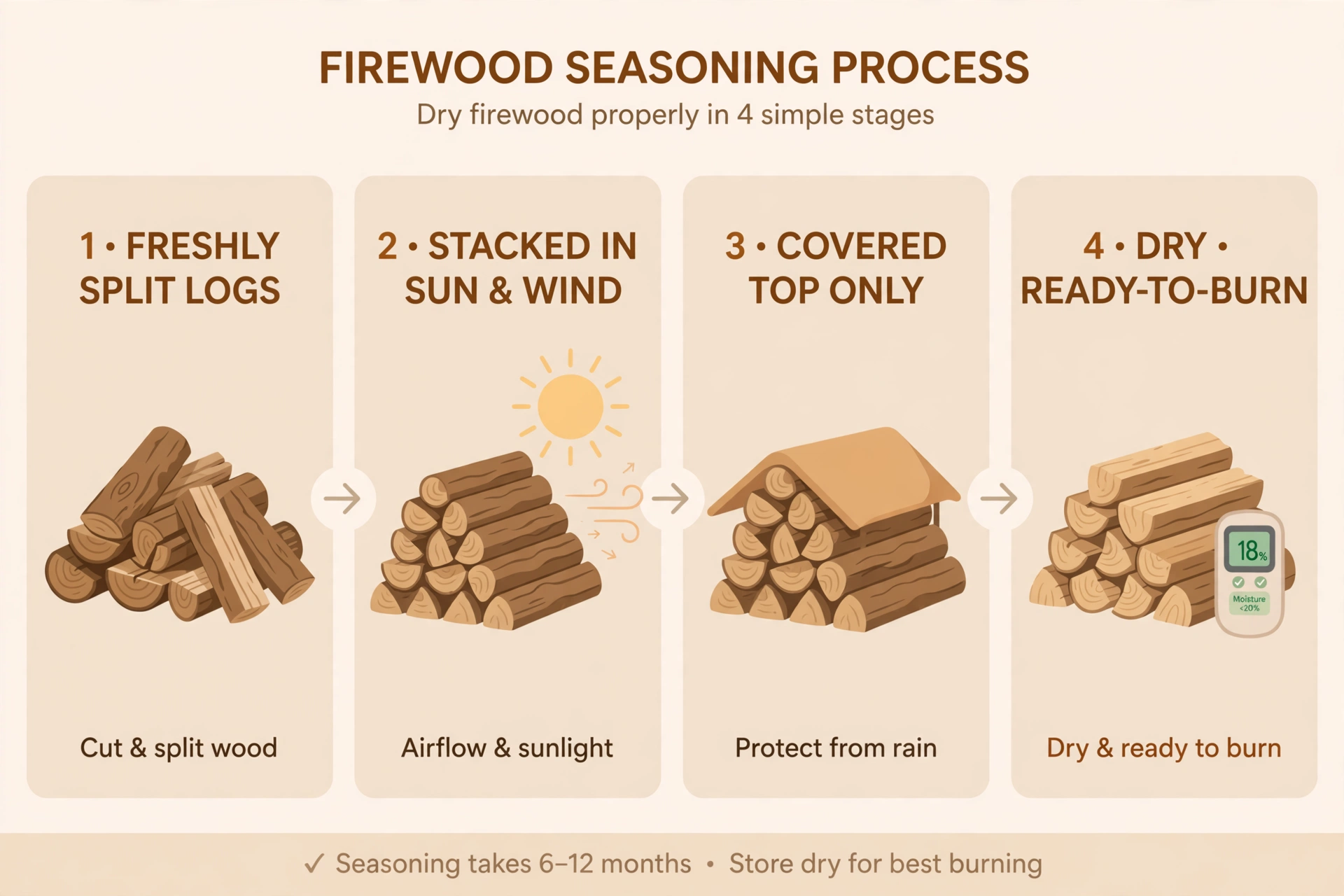
Good stacking does more for sycamore than any fire-starting trick. Raise the stack on pallets or rails, leave gaps between rows, and put the stack where sun and wind can reach it. Cover only the top, so rain stays off while damp air can still escape from the sides.
Sycamore seasons at a moderate pace, and a full summer of open-air drying suits most split stacks. Exact seasoning time varies with log size, climate, and airflow, so trust the meter over the calendar. For the full method, follow how to season firewood from stack building to the final moisture check.
Build a Small, Hot Fire First
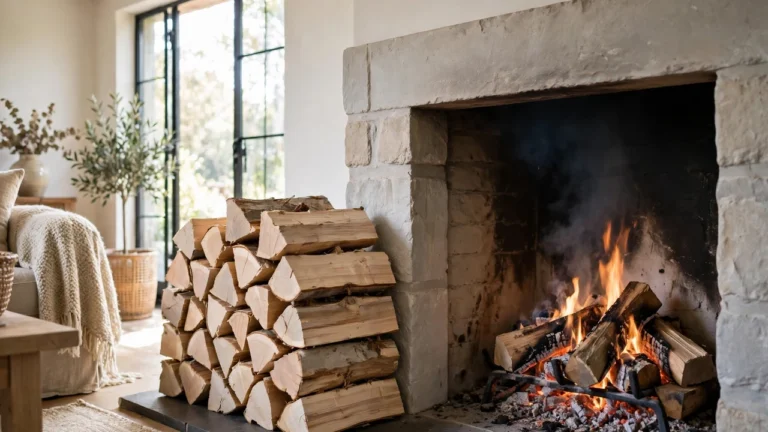
A hot start matters more with sycamore than with denser hardwoods, because a slow, smoky start wastes heat and coats the flue. Open the damper or air control fully, then lay two dry sycamore splits parallel, with a gap between them. Place crumpled newspaper or a firelighter and a loose bundle of kindling across the top, in a crisscross pattern.
Light the kindling in two places and leave the door or screen in its normal burning position. The kindling should catch fast and pull flame down into the splits within a few minutes. If the fire smolders and fills the room with smoke, the wood is likely still damp, or the flue is cold and needs a longer warm-up.
Tend the Fire With Air, Not Extra Logs
Once the first splits are burning with steady flame, add one or two sycamore logs at a time. Leave space between logs so air can flow around each piece. A crowded firebox starves the flame, drops the temperature, and sends more smoke up the flue.
Watch the flame color and the smoke from the chimney, when you can see it safely from outside. Bright, active flames and thin, pale exhaust point to a hot, clean burn. Heavy, dark smoke means the fire needs more air, drier wood, or fewer logs at once, and adding more wood will only make it worse.
Pro Tip: Mix one dense hardwood log, such as oak, into a sycamore fire when you want a longer coal bed. Sycamore lights well and burns at a moderate pace, while the denser log holds heat after the sycamore has burned down.
Burn Sycamore in the Right Appliance
Sycamore suits fireplaces and wood stoves that are rated for cordwood, and it also works in an outdoor fire pit with good airflow. It is a moderate hardwood, so it gives steady heat without the long, slow coal bed of oak or hickory. That trait makes it a strong shoulder-season wood, for mild evenings when a full load of dense hardwood would overheat the room.
Do not burn sycamore in an unvented heater, a cooking grill meant for charcoal only, or any appliance the maker does not rate for wood. Check your stove manual for approved fuels and log length before the first fire of the season. If you are comparing species for your next load, see the best firewood to burn to weigh heat, coaling, and smoke side by side.
Let Coals Cool Fully Before Handling Ash
When the fire burns down, close the air control partway and let the coals die back on their own. Do not stir a dying fire into a cloud of ash, and do not scoop ash while any ember still glows. Ash can hold heat for days, long after the fire looks cold.
Scoop cold ash into a metal bucket with a tight lid, and store that bucket outside, away from walls, decks, and wood piles. Wait at least 72 hours before disposal, and dampen the ash only outdoors, away from anything that can catch fire. This one habit prevents a large share of fireplace-related house fires.
What Sycamore Burns Like, Honestly
Sycamore gives moderate, steady heat and lights with less fuss than many dense hardwoods. It burns at a moderate pace rather than lasting all night, so plan to add logs through the evening on a cold night. Some loads leave more ash than oak, and the coal bed fades sooner, which is normal for this species.
No single BTU figure is quoted here, because published values for sycamore vary by source, test method, and moisture level. Treat any exact number from a seller or a forum post with caution, and judge a load by its moisture reading and its behavior in your fire. Dry sycamore that burns hot with thin smoke is doing its job, whatever a chart claims.
Before and After: Wet Sycamore vs Dry Sycamore
Hissing logs, heavy smoke, weak heat, and fast creosote buildup in the flue.
Quick lighting, bright flame, steady heat, thin exhaust, and a cleaner flue.
Troubleshooting
| If This Happens | Try This |
|---|---|
| Logs hiss and steam | Stop burning that batch. Split a log, test the fresh face, and season the rest until it reads 20% or less. |
| Smoke fills the room on lighting | Check that the damper is fully open, warm the flue with a small kindling fire, and check for a blocked cap or downdraft. |
| Fire dies after kindling burns out | Use smaller, drier splits for the first load, open the air control fully, and rebuild with more kindling before adding large logs. |
| Glass or flue blackens fast | Burn hotter with drier wood and more air, and book a chimney sweep if buildup is thick or shiny. |
| Fire burns out too fast overnight | Mix in a denser hardwood log for the coal bed, and accept that sycamore alone is a moderate-duration wood. |
Burning damp wood is the most common cause of these problems. See why you should not burn wet firewood for the creosote and health risks in full, and keep wet loads out of the firebox until they test dry.
Frequently Asked Questions
Is sycamore good firewood?
Yes, sycamore is good firewood when it is dry, with moderate, steady heat and fairly easy lighting. It does not hold a coal bed as long as oak or hickory, so it suits mild evenings and mixed loads best.
How long does sycamore take to season?
Most split sycamore needs a full summer of open-air drying, but the exact time varies with log size, climate, and airflow. Trust a moisture meter reading of 20% or less over any calendar estimate.
Does sycamore produce a lot of creosote?
Dry sycamore burned in a hot fire produces normal levels of creosote for a hardwood, while wet sycamore raises buildup sharply. Keep the fire hot, burn only dry wood, and have the chimney swept each year.
Is sycamore hard to split?
Yes, dry sycamore can be hard to split by hand because of its interlocking grain. Split it while green, or use a hydraulic splitter for dry rounds.
Can you burn sycamore in a wood stove?
Yes, sycamore burns well in a wood stove rated for cordwood, as long as the logs fit the firebox and test at 20% moisture or less. Follow your stove manual for approved fuels and log length.
Quick Reference Card
Need: Dry sycamore splits, moisture meter, kindling, firelighter, poker and tongs, metal ash bucket.
- Identify sycamore by mottled bark.
- Split while green to 3 to 5 inches across.
- Test a fresh split face for 20% or less.
- Stack off the ground, top covered only.
- Build a small, hot kindling fire.
- Add one or two logs at a time, with air gaps.
- Store cold ash in a lidded metal bucket outside.
Conclusion
You now have a clear path from a raw sycamore round to a clean, steady fire. Dry wood, a hot start, and steady air do most of the work, and the meter check keeps guesswork out of the process. This Sycamore Firewood: Burning Guide works best when you follow it in order, one fire at a time.
For your next load, compare sycamore with a denser hardwood and note which mix suits your stove and your evenings. A mixed stack often gives the best of both: quick light-up heat and a coal bed that lasts.