DIY Fire Pit Kits: Are They Worth It? A Buying Guide for Backyard Fires
A fire pit kit promises a shortcut: matched parts in one box, a weekend project, and a finished fire pit without hiring a mason or designing one from scratch. That promise holds up for many buyers, but it falls apart for others, and the difference usually comes down to what the kit leaves out. Some kits include nearly everything except the base and the fuel. Others include only a burner or a steel ring, leaving the surround, the base, and the gas hookup to you.
This guide sorts out that difference before you spend money. It covers what fire pit kits include, the four main kit types, the cost drivers that move the total, the skill and time a build really takes, and the safety and local-rule checks that come first. By the end, you will have a clear answer for your yard: buy a kit, build from scratch, or hire the work out.
At a Glance: Time, Skill, and Help Needed
- Decision time: One evening of reading and measuring, before you order.
- Build time: Most kit builds take one afternoon to one full weekend, depending on the surround.
- Skill level: Beginner to intermediate for wood and propane kits; natural gas kits need a licensed professional for the gas line.
- Biggest surprise cost: The surround, base materials, and fuel supply are often sold separately.
Check Safety and Local Rules Before You Buy Anything
A kit cannot make an illegal or unsafe fire pit legal or safe. Placement, fuel, and burn rules are set by your city or county fire code, your homeowners association, and sometimes your state air-quality rules, and those rules vary a lot from place to place. Check them before you order, because the fuel type you want may be restricted where you live.
Distance is the first check. The National Fire Protection Association advises keeping portable outdoor fire pits at least 10 feet from structures and combustible materials, while many local codes require 15 to 25 feet for wood-burning fires. The International Fire Code sets 25 feet for recreational fires and 15 feet for portable outdoor fireplaces, and local rules can be stricter. Measure from the pit to your house, fences, sheds, overhanging branches, and property lines, and use the largest distance your local code requires.
Burn bans are the second check. Many counties ban wood burning during dry or windy periods and on red-flag warning days, and some neighborhoods ban wood fires outright while allowing gas. Gas pits usually face fewer restrictions because they produce no embers, but that is not a guarantee: always confirm the distinction in your local code. Also confirm whether your HOA allows a fire pit at all, and which fuel types it permits.
Safety Basics for Every Fire Pit Kit
- Never burn treated, painted, or stained wood, plywood, trash, or yard waste. Burn only clean, dry, seasoned firewood in a wood pit.
- Never place a wood-burning pit on a wooden or composite deck, on dry grass, or under a roof, pergola, or low branches.
- Keep a hose, bucket of water, or fire extinguisher nearby, and never leave a fire unattended.
- For gas kits: if you smell gas, do not light the pit and do not try to find the leak with a flame. Turn off the gas supply if you can do so safely, leave the area, and call your gas utility or emergency services from outside.
- Gas-line work belongs to a licensed professional. A kit never makes gas-line installation a do-it-yourself task.
- Carbon monoxide is a risk with gas appliances in enclosed or poorly ventilated spaces. Gas fire pit kits are outdoor products; never use one indoors, in a garage, or under a low enclosed cover.
What a Fire Pit Kit Actually Is
The word “kit” covers three different products, and sellers do not always label them clearly. A complete kit bundles the fire-containing parts and the surround blocks, so the box holds most of what you need to finish the pit. A drop-in or insert kit bundles only the working parts, such as a burner, a burner pan, and an ignition system, and expects you to build or buy the enclosure around it. A surround-only kit supplies the stone or block ring and expects you to add a steel insert or burner yourself.
Reading the parts list matters more than reading the product name. A listing that says “everything you need” may still exclude the base gravel, the fire media, the propane tank, or the gas-line hookup. Open the included-parts list and the required-but-not-included list side by side before you compare prices, because two kits at very different prices may include very different things.
The Four Main Kit Types
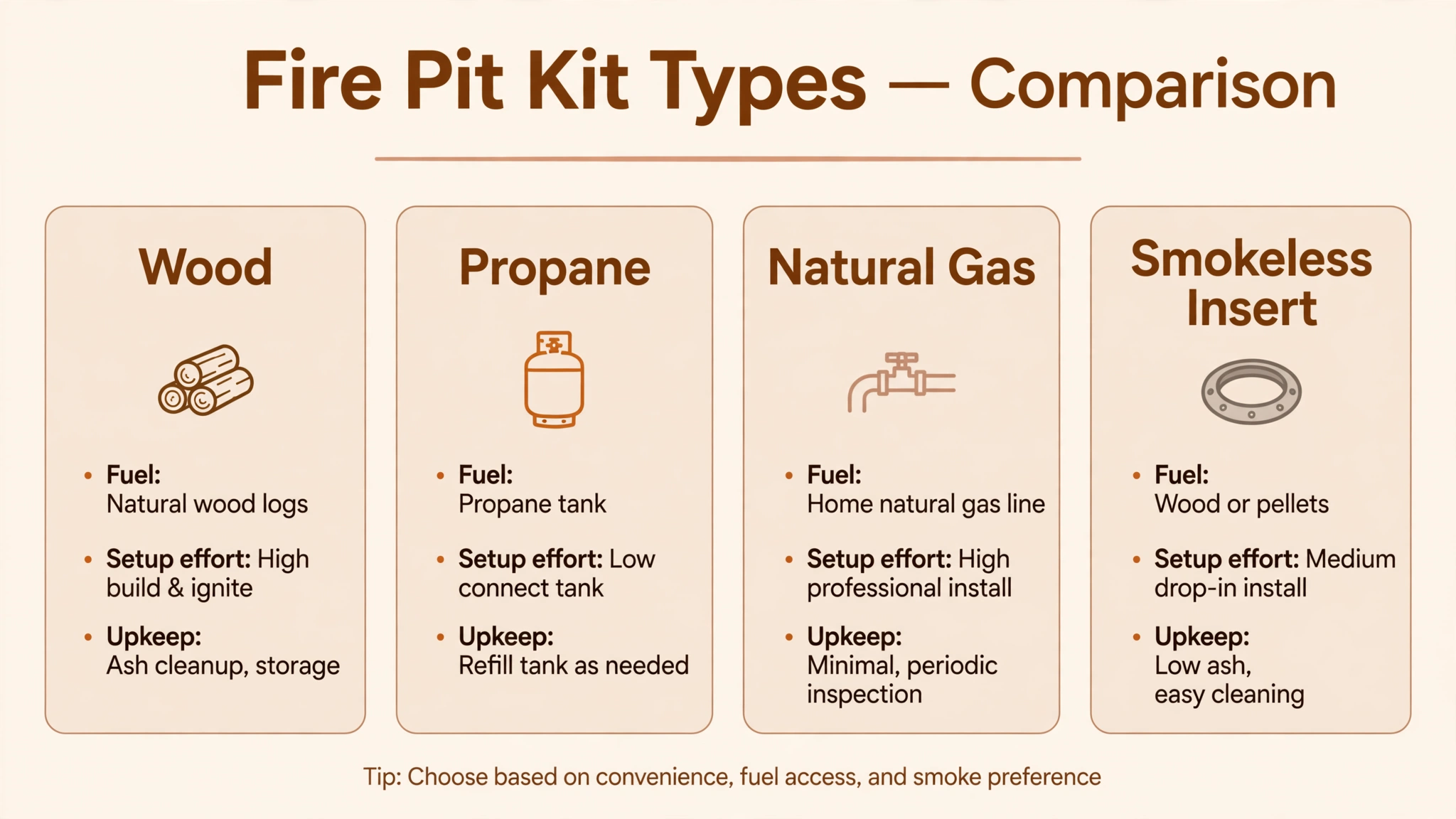
Fuel choice shapes almost everything else: the flame, the smoke, the cleanup, the running cost, and the rules that apply. Most kits fall into one of four groups, and each group suits a different kind of buyer.
Wood-Burning Kits
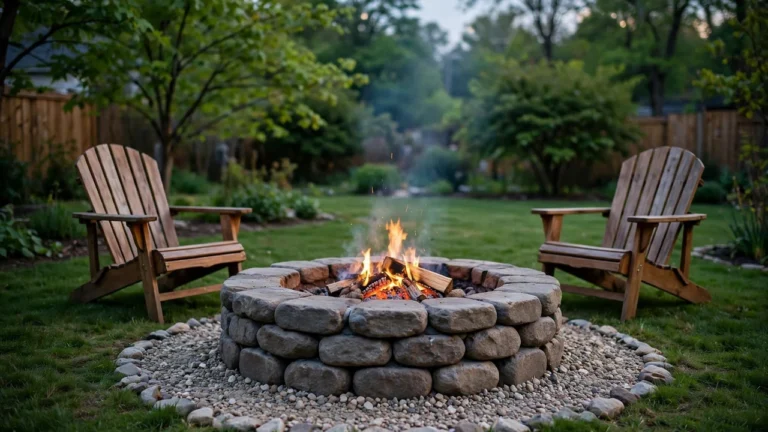
A wood kit usually pairs a steel fire ring or insert with stone, block, or metal surround pieces. You supply the firewood, the base gravel, and the labor of stacking and leveling. Wood gives the classic crackling fire and the strongest heat for open seating, but it also gives smoke, ash, sparks, and the strictest placement rules. Wood kits suit buyers who already have a firewood supply, have room for full clearances, and enjoy tending a fire.
Propane Kits
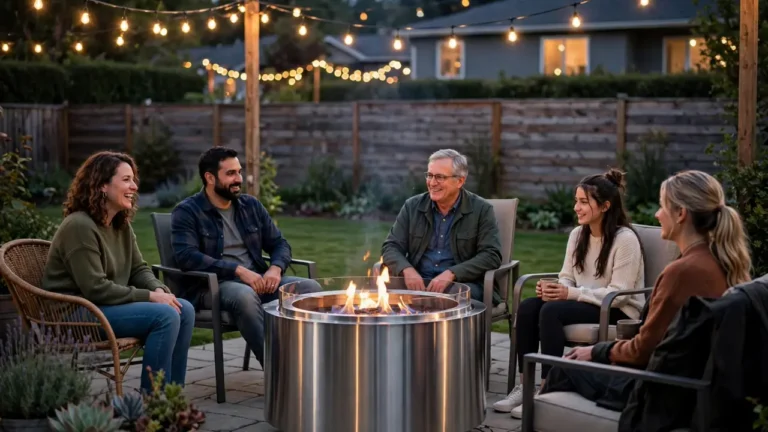
A propane kit centers on a burner, a control valve, and an ignition system, often sold as a drop-in unit for a table or surround you build. You connect a standard propane tank, which keeps the pit movable and avoids any gas-line work. Propane lights at the turn of a knob, burns without smoke or ash, and usually escapes the strictest burn-ban rules. The trade-off is ongoing tank refills and a tank that needs a safe, ventilated hiding spot inside or beside the surround.
Natural Gas Kits
A natural gas kit works like a propane kit, but it connects to your home’s gas line instead of a tank. Once it is hooked up, there is no tank to refill and no fuel to store, which makes it the most convenient option for a permanent patio feature. The catch is the hookup itself: running or extending a gas line requires a licensed professional, a permit in many areas, and an inspection. If your patio has no nearby gas line, the hookup cost can rival the kit cost, so get a quote before you buy.
Smokeless Insert Kits
A smokeless insert kit pairs a stone or block surround with a double-walled steel insert that pulls air through vents and burns off much of the smoke. You still burn wood, but with less smoke drifting toward seating and neighbors. These inserts are heavier and pricier than a plain steel ring, and they work best with dry, seasoned wood loaded in the way the maker describes. For a closer look at how these inserts perform, see our guide on are smokeless fire pits worth it.
What Kits Include, and What They Leave Out
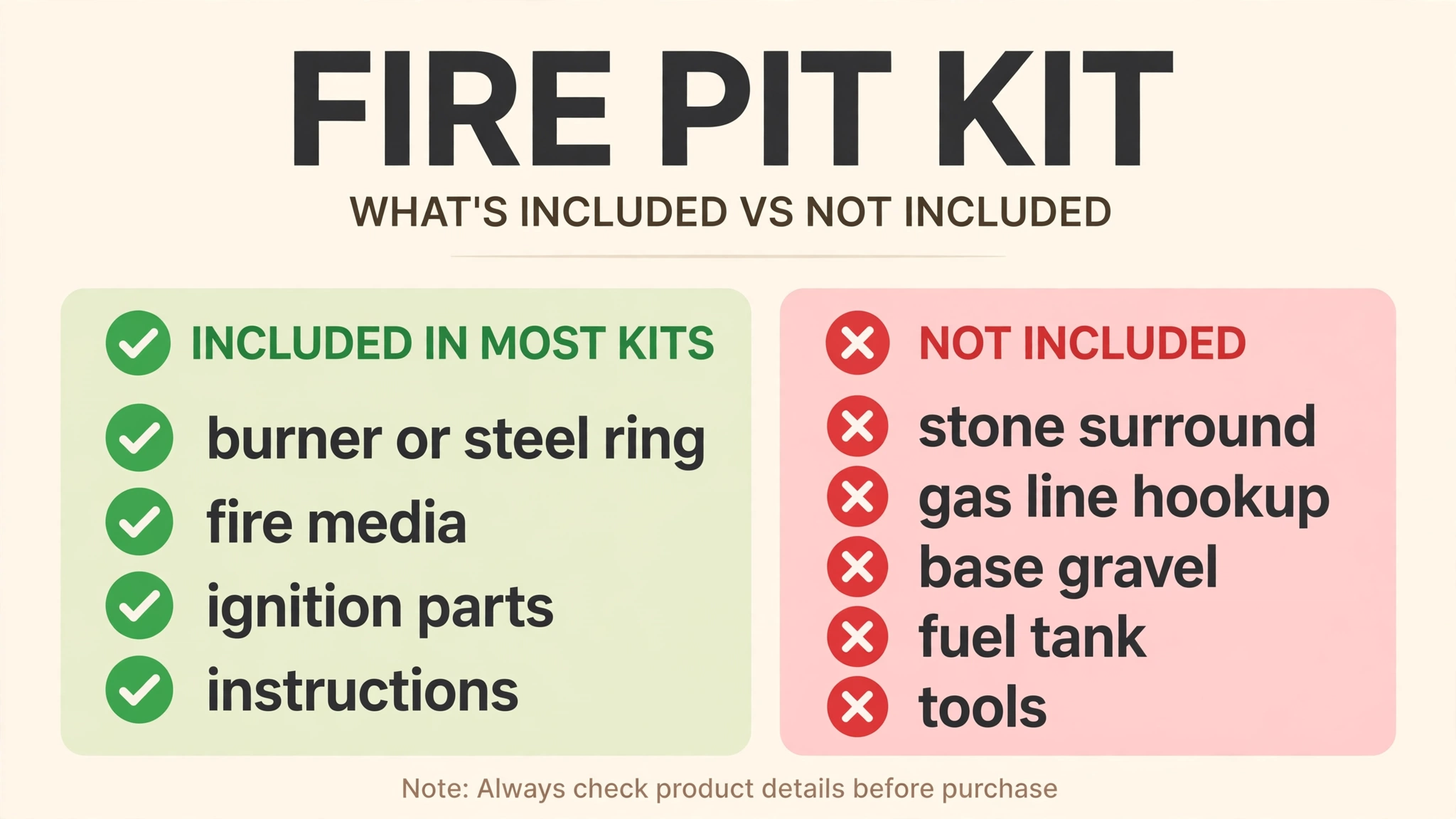
The parts list is where kit value is won or lost. Gas kits commonly include a burner, a burner pan, an ignition system, and sometimes a flex line, a valve, and a key. Wood kits commonly include a steel ring or insert and the surround blocks. Many kits also include fire media such as lava rock or fire glass for gas burners, plus a cover or a spark screen in some bundles.
The excluded items are where budgets break. Surround stone, base gravel or paver base, adhesive for block courses, a propane tank, fire media refills, tools, and the gas-line hookup are frequently sold separately. Delivery is another overlooked line: a stone kit can weigh over a thousand pounds, and curbside delivery may leave you moving that weight yourself. Ask the seller three questions before ordering: what is in the box, what must I buy separately, and how is it delivered.
Cost Factors Without the Guesswork
Kit prices vary widely by size, material, and fuel type, and they shift with region and season, so a single price figure would mislead more than it helps. What you can compare honestly is the set of cost drivers that push any kit’s total up or down. Start with the kit itself, then add the surround or enclosure, the base preparation, the fuel supply, and any professional labor.
A useful budgeting habit is to price the full project, not the kit. List the kit, the excluded parts, the base materials, the fuel setup, and delivery, then add a cushion of about 15 to 20 percent for the small items you will discover mid-build, such as extra adhesive or an additional bag of gravel. If that full-project total is close to a local contractor’s quote for a similar pit, the kit’s main advantage is no longer price; it is the satisfaction of building it yourself and control over the design.
Skill and Time: An Honest Picture
Most wood and propane kit builds are within reach of a careful beginner who can level ground, follow written steps in order, and lift heavy blocks with help. The work is physical rather than technical: digging, leveling, hauling, and stacking. A second person is close to essential for stone kits, both for lifting and for keeping courses level.
Time estimates from sellers tend to assume flat ground, all parts on hand, and no weather delays. Real builds run longer when the ground needs leveling, when a course goes out of level and must be redone, or when a missing part sends you back to the store. Plan a full weekend for a stone surround kit, and treat a one-afternoon finish as a bonus rather than a promise. Natural gas kits take longer overall because scheduling a licensed professional and any inspection adds days or weeks around the build itself.
Two skills deserve honest self-assessment. First, leveling: a pit that starts out of level stays out of level, and every course on top magnifies the error. Second, patience with instructions: gas burner kits include clearance, ventilation, and hose-routing requirements that must be followed exactly, not improvised. If either of those feels like a stretch, a simpler kit or professional help is the wiser pick.
When a Kit Is Worth It, and When It Is Not
A kit is worth it when you want a proven design without designing the fire-containing parts yourself. The burner sizing, ventilation, and clearances inside the kit have already been worked out by the maker, which removes the riskiest guesswork from a DIY build. Kits also shine when your yard is fairly flat, your fuel choice is settled, and you enjoy hands-on weekend work.
Building from scratch makes more sense when you want a shape, size, or material no kit offers, or when you already own the skills and tools for masonry work. Scratch building can cost less in materials, but it shifts all design decisions onto you, including burner sizing and airflow for gas builds, where a wrong choice creates a poor flame or a safety problem. Scratch building is a poor choice for a first gas project.
Hiring out is the right call when the project involves a gas line, a large or complex structure, a retaining wall, or a patio rebuild at the same time. A contractor also makes sense when your ground is steeply sloped, when drainage is a problem, or when you do not have a free weekend. Compare the contractor’s quote against your full-project kit total, not against the kit price alone, and ask what warranty each option carries.
Common Mistakes That Spoil a Kit Build
If you are leaning toward a stone surround build rather than a kit, our step-by-step guide on how to build a stone fire pit walks through the base, courses, and finishing details. For gas kits, read how to light a gas fire pit before your first burn so the ignition sequence and safety checks are familiar.
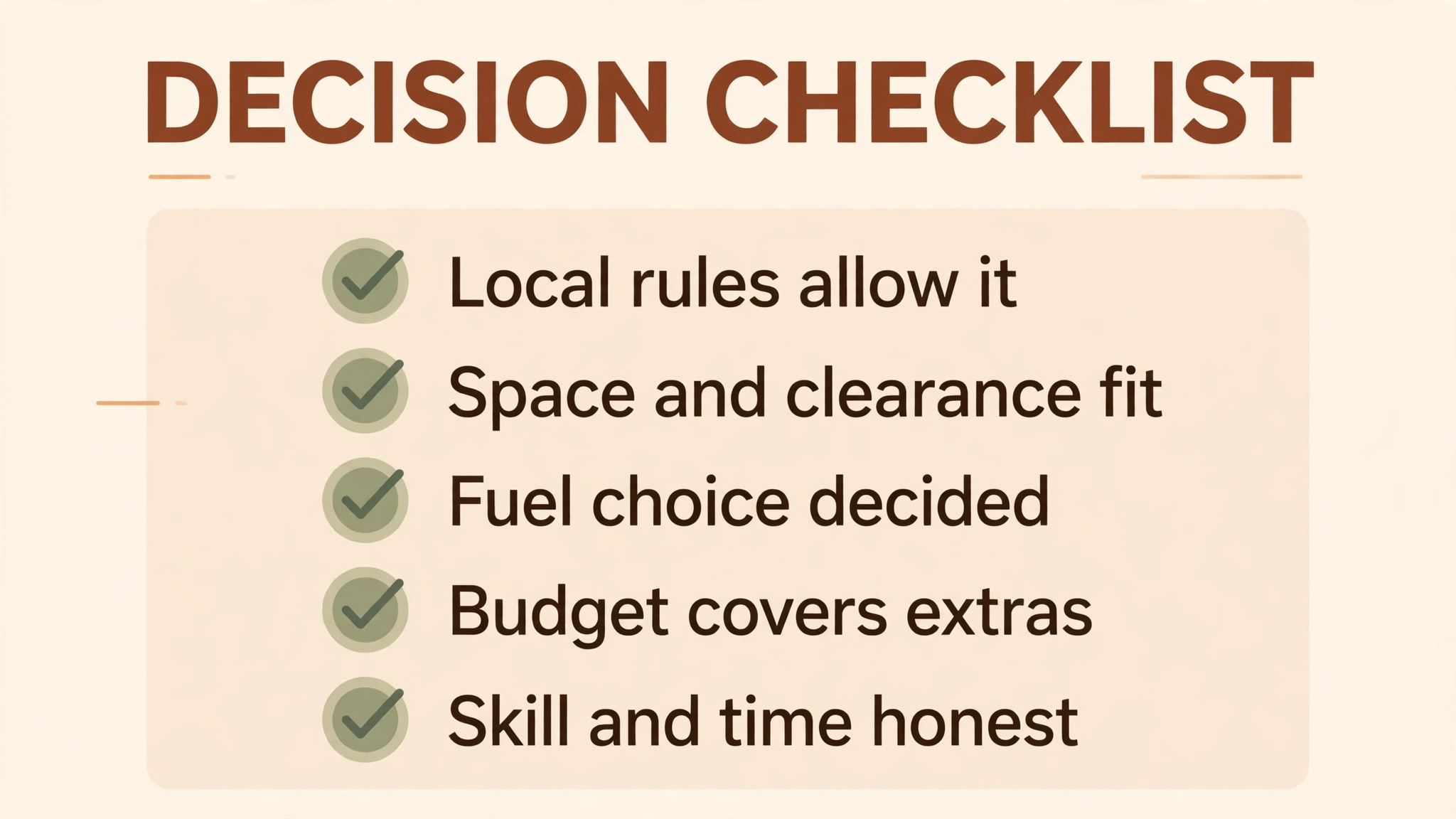
Decision Checklist: Buy the Kit or Not
Work through this list in order. If any answer is no, fix that item before ordering, because it is far cheaper to solve on paper than after delivery.
Frequently Asked Questions
Do DIY fire pit kits include the stone surround?
Some do and some do not. Complete kits include the surround blocks, while drop-in and insert kits include only the burner or steel ring and expect you to build or buy the enclosure. Always read the included-parts list before comparing prices.
Can I put a fire pit kit on a wooden deck?
Wood-burning pits should never sit on a wooden or composite deck, because radiant heat can damage or ignite the boards. Some gas fire tables are rated for deck use, but only when the maker says so and local rules allow it. Check both before placing any pit on a deck.
Do I need a permit for a fire pit kit?
It depends on your area and fuel type. Many places need no permit for a small portable wood pit, while gas-line work usually needs a permit and an inspection. Call your local fire department or building office before you build to confirm what applies to your project.
Are gas fire pit kits safe?
Gas kits are safe when they are installed and used as the maker directs, with the required ventilation, clearances, and leak checks. The main risks come from improvised gas connections, blocked vents, and use in enclosed spaces. Gas-line work must be done by a licensed professional, and any gas smell means stop, leave the area, and call your gas utility or emergency services.
How long does it take to build a fire pit from a kit?
Most kit builds take one afternoon to one full weekend. Simple drop-in kits go faster, while stone surround kits take longer because of digging, leveling, and stacking. Ground that needs leveling, missing parts, or bad weather can push the job into a second weekend.
What should I never burn in a fire pit?
Never burn treated, painted, or stained wood, plywood, trash, plastics, or yard waste. These release harmful smoke and can damage the pit. Burn only clean, dry, seasoned firewood in a wood pit, and never burn anything in a gas pit, which is designed for gas fuel only.
Quick Reference Card: DIY Fire Pit Kits
- Best for: Buyers who want a proven design, a flat yard, and a weekend project.
- Watch out for: Excluded parts, delivery weight, and gas-line costs.
- Fuel picks: Wood for atmosphere, propane for flexibility, natural gas for permanence, smokeless inserts for less smoke.
- First step: Check local rules and measure clearances before ordering.
- Golden rule: Price the full project, not the kit alone.
The Bottom Line
DIY fire pit kits are worth it when the kit matches your fuel, your yard, and your skills, and when the full-project total still beats the alternatives. They remove the hardest design guesswork, they arrive with matched parts, and they turn a vague backyard idea into a finished gathering spot in a weekend. They are a poor buy when the parts list hides major extras, when a gas line or a sloped yard pushes the real total past a contractor’s quote, or when local rules restrict the fuel you planned to use.
So start with rules and measurements, read the parts list twice, and price everything the box leaves out. If every answer on the checklist is yes, order the kit with confidence. If several answers are no, fix those items first, or hand the job to a professional and enjoy the fire without the build.