How Much Does a Cord of Wood Weigh? Complete Guide by Species and Moisture Level
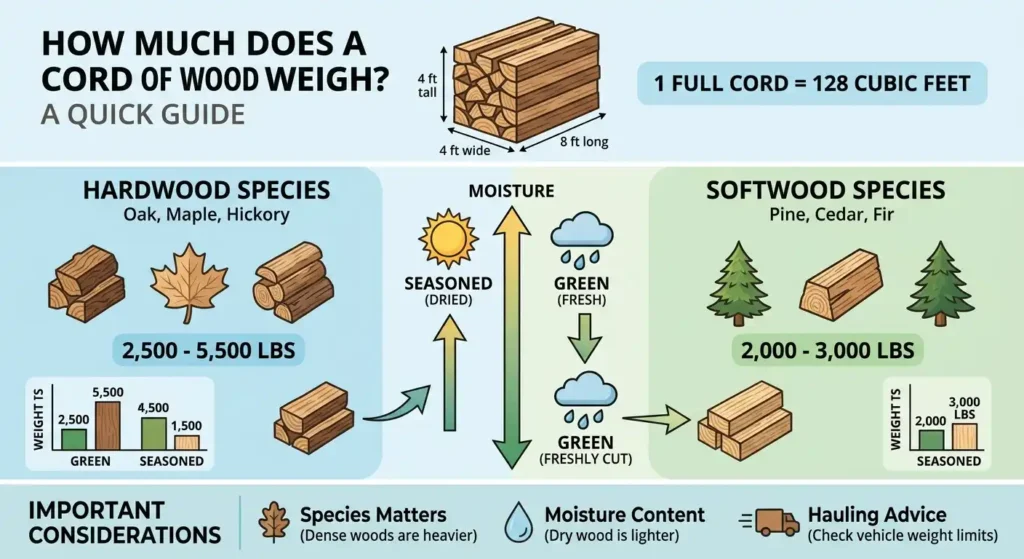
A full cord of wood typically weighs somewhere between 2,000 and 5,500 pounds. That’s a big range, and there’s a good reason for it: the two things that matter most are the type of wood and how much water is still inside it.
Quick facts:
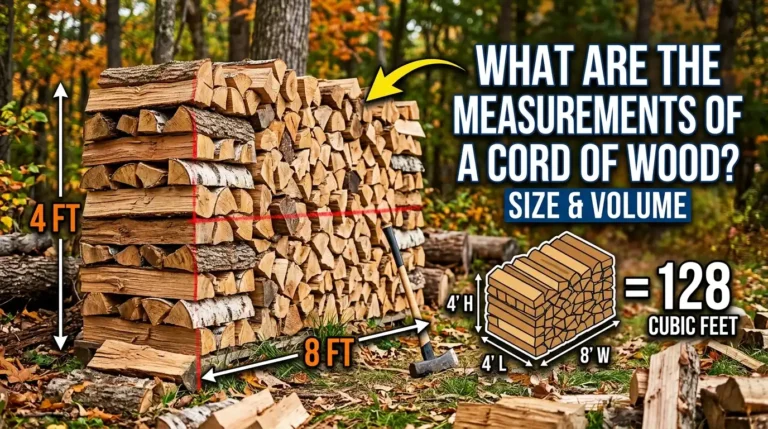
- There is a cord 4 feet tall, 4 feet wide, 8 feet long or 128 cubic feet.
- Dried (seasoned) hardwood ranges between 2,500 and 4,500 pounds per cord.
- Green (freshly cut) hardwood usually falls between 3,500 and 5,500 pounds per cord.
- Softwood, such as pine or cedar, is lighter, usually 2000-3000 pounds per cord.
Below, you’ll find exact weight ranges by species, an explanation of why green wood is so much heavier, and what that means for hauling a cord in a truck or trailer.
What Is a Cord of Wood, Exactly?
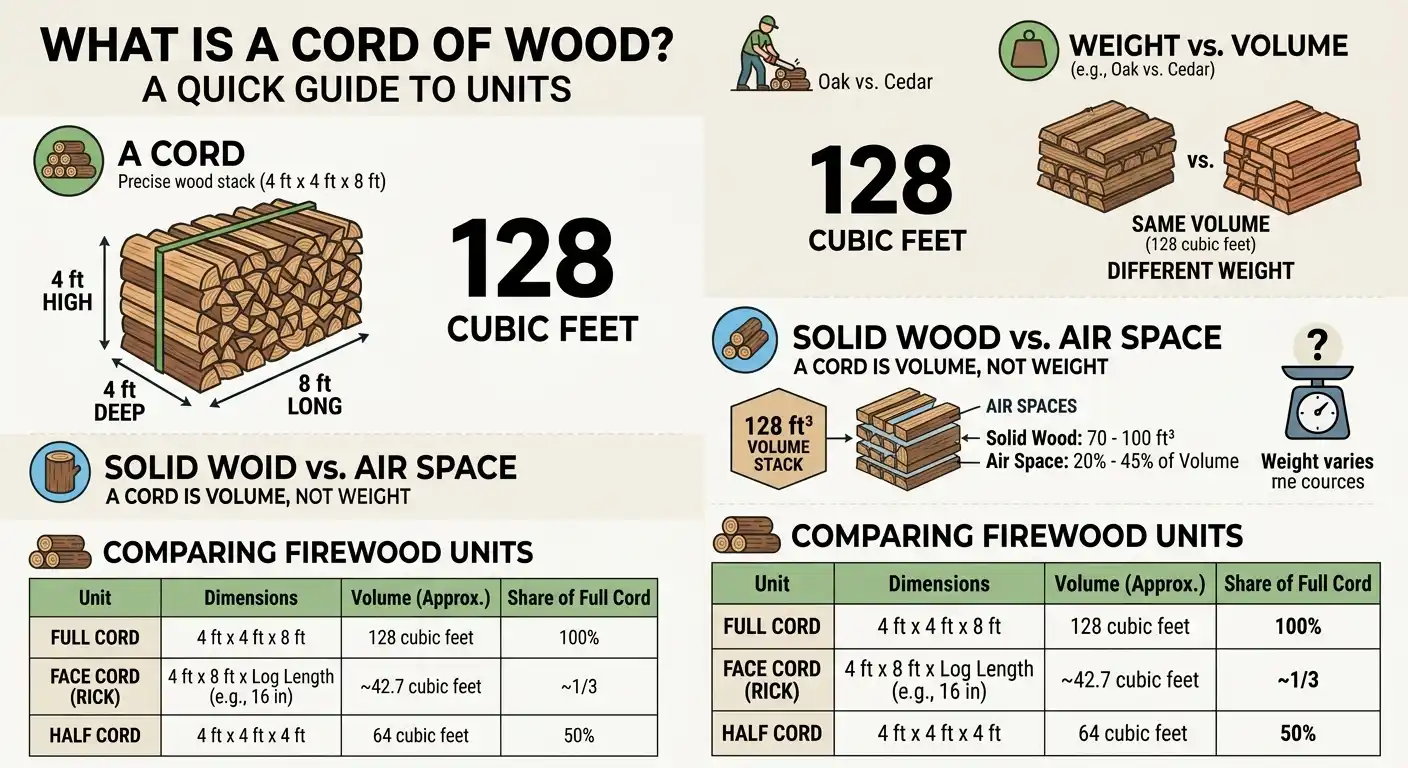
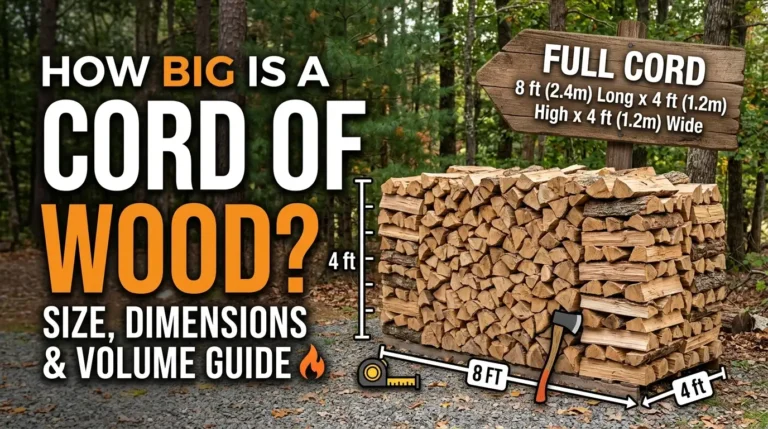
A cord is not a measure of weight, but of volume. A full cord, by definition, is a stack of wood 4 feet high, 4 feet deep and 8 feet long, which is 128 cubic feet. Most states have a fixed number of that as a standard unit of sale of firewood.
What can be changed is not the weight, since a cubic foot of heavy oak is much heavier than a cubic foot of light cedar. Volume does not change. Change of weight with the wood.
Due to the round or irregular division of logs, there is no stack of cord where 128 cubic feet of solid wood is found. Air spaces between pieces normally occupy 20 to 45 percent of the volume, making the actual volume of solid wood in a cord more like 70 to 100 cubic feet. This is among the reasons why the weight estimates differ even within the same species.
Cord vs. Face Cord vs. Rick
These words are confused all the time, and it influences the amount of wood (and weight) you are getting.
| Term | Dimensions | Volume | Share of a Full Cord |
| Full cord | 4 ft x 4 ft x 8 ft | 128 cubic feet | 100% |
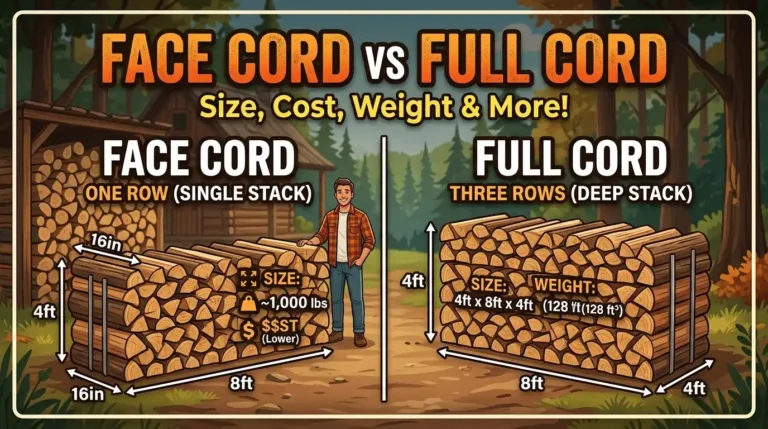
| Face cord (rick) | 4 ft x 8 ft x log length (usually 16 in) | About 42 to 43 cubic feet | About 1/3 |
| Half cord | 4 ft x 4 ft x 4 ft | 64 cubic feet | 50% |
A face cord, or rick, is not as deep as a row of logs, but is usually 16 inches, rather than the entire 4 feet, deep. When a person tells you that he is selling a cord, but that the stack is but 16 inches deep, you have about a third of a cord, in bulk as well as in weight.
What Actually Determines How Much a Cord of Wood Weighs
Wood Species and Density
The one largest factor is density. Oak, hickory and hard maple are hardwoods that grow slowly and stuff more wood fiber in a given area thus it is heavier and denser. Softwoods such as pine, spruce, and cedar are quicker growing, and have more open cell structure, making them much lighter relative to the same volume.
This is also the reason why the hardwoods burn longer and emit more heat per cord. The weight and heat output are directly related to each other, as you are simply paying the price of wood fiber, pound by pound, or cord by cord.
Moisture Content (Green vs. Seasoned)
This is the second key factor, and the most underestimated by buyers. Freshly cut, or “green,” wood can be 40 to 60 percent water by weight. When the wood dries, or seasons, the water evaporates, and the wood may lose more than a thousand pounds of weight to the air in the process.
EPA suggests that wood should be burned once it is dry to less than 20 percent moisture content as wetter wood burns less effectively, produces more smoke and creosote and does not generate heat as much energy is used in boiling off the water. Firewood is usually seasoned in 6 months to a year (up to two years in the case of dense hardwoods) and the process is always influenced by climate and the storage method of the wood.
How Tightly the Wood Is Stacked
Since a cord is a measure of volume, the way the wood is stacked will alter the amount of actual wood that will fit into that 128 cubic feet. Close-piled, even-cut logs will leave less air-space, and load more wood, and thus more weight, than a loose, uneven pile of the same area.
Split Wood vs. Round Logs
Split logs are more easily stacked than round, uncut logs, since flat sides lie flat against each other. A cord of split wood is usually more solid wood, and weighs more, than a cord of round logs of the same kind and in the same degree of moisture.
Cord of Wood Weight by Species
Precise weights will depend on the age of the tree, where it is growing and the moisture content in the tree, so these are approximate values, not exact ones. These figures are in line with the published wood density and average seasoned moisture content of about 15 to 20 percent.
| Species | Seasoned Weight (per cord) | Green Weight (per cord) |
| White oak | 4,000 to 4,300 lbs | 5,300 to 5,700 lbs |
| Red oak | 3,700 to 4,000 lbs | 4,900 to 5,300 lbs |
| Hickory | 4,300 to 4,600 lbs | 5,600 to 6,000 lbs |
| Sugar maple | 3,700 to 4,000 lbs | 4,900 to 5,200 lbs |
| White ash | 3,400 to 3,700 lbs | 4,600 to 5,000 lbs |
| Birch | 3,200 to 3,500 lbs | 4,300 to 4,700 lbs |
| Cherry | 2,800 to 3,100 lbs | 3,900 to 4,200 lbs |
| Elm | 2,900 to 3,200 lbs | 4,600 to 5,000 lbs |
| Douglas fir | 2,700 to 3,000 lbs | 3,800 to 4,100 lbs |
| Yellow pine | 2,500 to 2,800 lbs | 3,600 to 3,900 lbs |
| White pine | 2,000 to 2,300 lbs | 2,900 to 3,200 lbs |
| Spruce | 2,000 to 2,300 lbs | 2,900 to 3,200 lbs |
| Cedar | 1,800 to 2,100 lbs | 2,600 to 2,900 lbs |
Lesson learned: Dense hardwoods, such as hickory and oak, may be over twice the weight of a cord of cedar or white pine. Weight (and the heat that comes with it) is a component of the price you are paying between species.
Green Wood vs. Seasoned Wood: Side-by-Side Weight Comparison
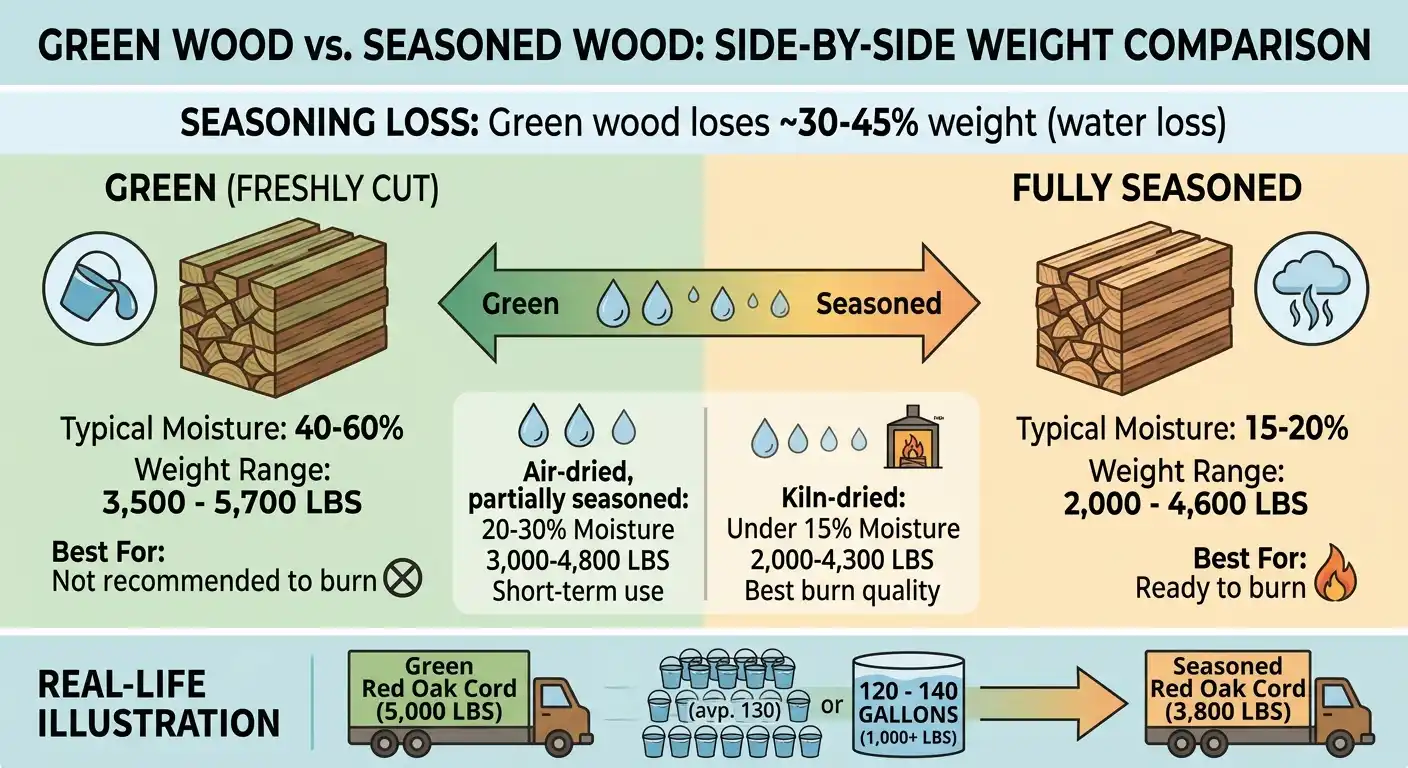
The difference between green and seasoned wood isn’t small. During the process of seasoning, green wood on average loses about 30-45 percent of its weight, which is simply due to the loss of water.
| Moisture State | Typical Moisture Content | Weight Range (per cord, mixed species) | Best For |
| Green (freshly cut) | 40 to 60% | 3,500 to 5,700 lbs | Not recommended to burn |
| Air-dried, partially seasoned | 20 to 30% | 3,000 to 4,800 lbs | Short-term use only |
| Fully seasoned | 15 to 20% | 2,000 to 4,600 lbs | Ready to burn |
| Kiln-dried | Under 15% | 2,000 to 4,300 lbs | Best burn quality |
Real-life illustration: A cord of green red oak could be as heavy as 5,000 pounds. In a year of good seasoning, the same cord might have increased to 3,800 pounds. More than 1,000 pounds of water that evaporated out of the wood, about 120 to 140 gallons.
How Much Does a Face Cord of Wood Weigh?
A face cord being about a third the size of a full cord, is also about a third the weight.
| Wood Type | Full Cord (seasoned) | Face Cord (seasoned, approx.) |
| Hardwood (oak, hickory, maple) | 3,700 to 4,600 lbs | 1,200 to 1,550 lbs |
| Mixed hardwood/softwood | 2,800 to 3,700 lbs | 950 to 1,250 lbs |
| Softwood (pine, cedar, spruce) | 2,000 to 2,800 lbs | 650 to 950 lbs |
Should a seller claim to be selling a cord, but gives you a stack of this light, be sure to check the measurements before you pay. It does not need to be a full cord, but a face cord.
Can Your Truck Haul a Cord of Wood? Payload Math
It is among the most viable questions that buyers will ask and it is omitted in other guides.
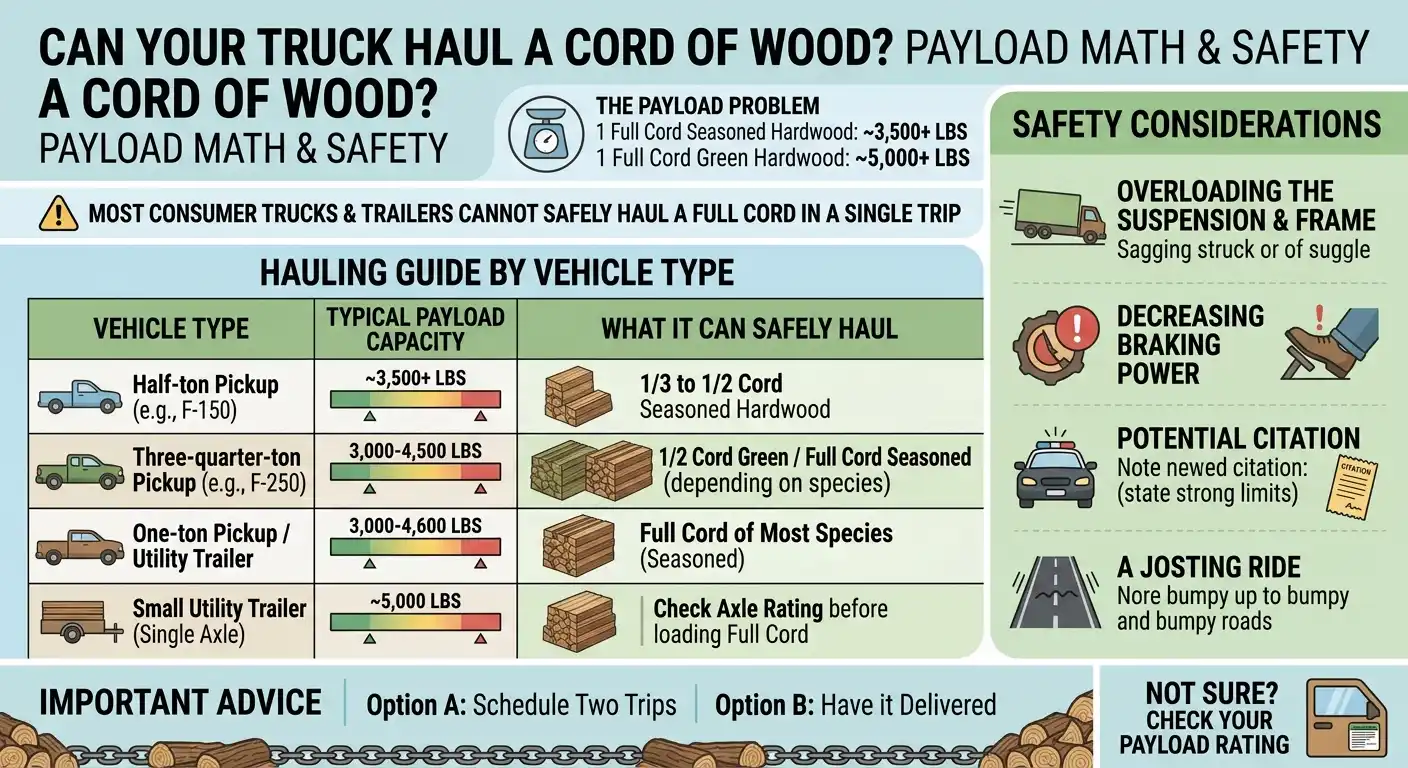
The payload of most half-ton pickup trucks is approximately 1,500 to 2,000 pounds. A cord of hardwood that is seasoned, 3,500 pounds or more, will be more than that in one trip. A full cord of green hardwood (possibly over 5,000 pounds) is far over the capacity of most consumer trucks and trailers to safely haul in a single load.
| Vehicle Type | Typical Payload Capacity | What It Can Safely Haul |
| Half-ton pickup (F-150, Silverado 1500) | 1,500 to 2,200 lbs | About 1/3 to 1/2 cord seasoned hardwood |
| Three-quarter-ton pickup (F-250, Silverado 2500) | 2,500 to 4,000 lbs | About 1/2 to a full cord, depending on species |
| One-ton pickup or utility trailer | 4,000 to 6,000+ lbs | A full cord of most species, seasoned |
| Small utility trailer (single axle) | Often 1,500 to 3,000 lbs | Check axle rating before loading a full cord |
Safety note: It is not only a question of a josting ride to overload a truck bed or a trailer. It is capable of overloading the suspension, overloading the frame, decreasing the braking power, and in certain states, it can lead to a citation in case you exceed the gross weight of the vehicle.
In case you are not sure how much your car can carry a full cord, look on the door jamb sticker to see the payload rating, or schedule two trips, not one, or have the firewood delivered.
How to Estimate the Weight of Your Own Cord
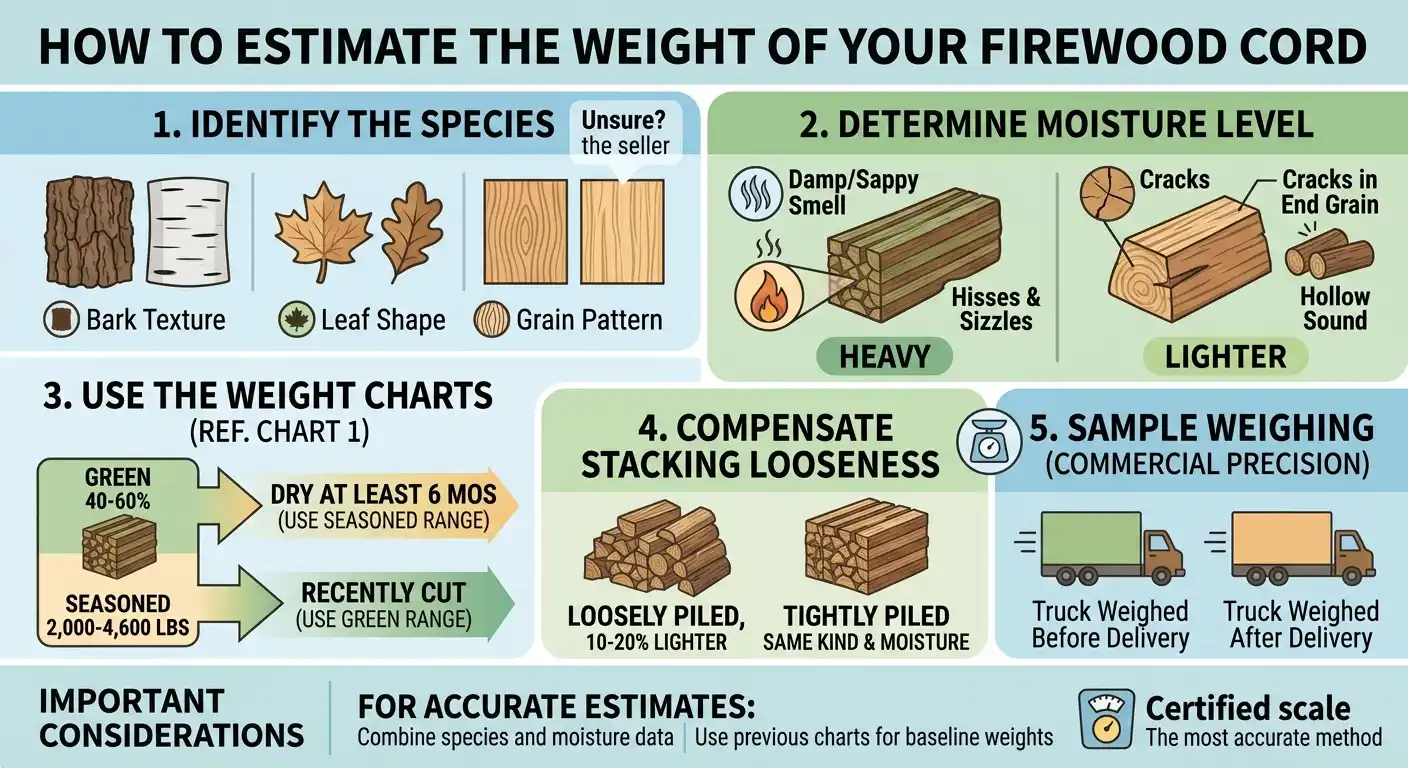
To have a fairly good estimate of a particular stack of wood, do the following.
- Identify the species. It can be reduced to the easiest to identify the texture of the bark, the shape of the leaf (where it exists), and the pattern of the grain. In case of uncertainty, consult the seller.
- Determine the humidity. Green wood is heavy, it has a damp or sappy smell and when burned, it hisses or sizzles. Older wood is lighter, contains visible cracks in the end grain and sounds hollow when two pieces are knocked together.
- Compare it with the above species chart. The seasoned range is used when the wood has been dry at least 6 months or the green range when the wood was recently cut.
- Compensate stacking looseness. A loosely piled, uneven cord may be 10-20 percent lighter than a tightly piled one of the same kind and moisture content.
- Sample weighing: When precision is important. In commercial or high volume cases, a few sellers may weigh loaded trucks on a certified scale before and after delivery, the most accurate method that can be used.
Common Mistakes People Make Buying Firewood by Weight
- All cords have the same weight. The change is by thousands of pounds in species and moisture.
- Purchasing wood that is labeled green believing that it is ready to be burnt. It takes months to dry out and then burn effectively or safely in a chimney.
- Overloading a truck per trip. This poses a risk of vehicle damage and safety problems particularly with green hardwood.
- Mixed up a face cord and a full cord. Check the stack size, not the name cord.
- Not considering the stacking of wood. A loose, uneven stack is composed of less wood, and is less weighty, than a tight stack of the same footprint.
Myth vs. Fact
| Myth | Fact |
| “A cord of wood always weighs about the same.” | Weight varies by more than 2,500 pounds depending on species and moisture. |
| “Heavier wood always burns better.” | Heavier, denser wood generally has more heat potential, but only once it’s properly seasoned. Heavy, wet wood burns poorly. |
| “A face cord and a full cord are the same thing.” | A face cord is roughly one-third the volume and weight of a full cord. |
| “Green wood is fine to burn if it’s split small enough.” | Splitting speeds up seasoning, but green wood still needs months to dry before it burns cleanly. |
You May Also Like to Read:
- What Are the Dimensions of a Cord of Wood? The Complete Size Guide
- How Much Wood Is in a Cord? A Complete Size, Weight, and Buying Guide
FAQs
What is the average weight of a cord of wood?
An average cord of wood will weigh 2,000 to 5,500 pounds, seasoned hardwood is most likely to weigh between 3,000 and 4,500 pounds.
What weight of a cord of oak?
Oak that has been seasoned is usually between 3,700 and 4,300 pounds per cord, depending on the type of oak (red or white). Green oak may weigh 4,900-5,700 pounds per cord.
What is the weight of a cord of pine?
Pine that is experienced is normally between 2,000 and 2,800 pounds per cord, which is one of the lightest common species of firewood.
Why is it that green wood weighs so much more than seasoned wood?
Green wood is 40-60 percent water. That water evaporates on drying, and this is the reason that seasoned wood weighs 1,000 pounds or more lighter than the same cord when freshly cut, after drying, which requires over 6 months to 2 years to do so.
What is the time that a cord of wood takes to become seasoned?
The majority of the species require 6 months to a year in a well-ventilated, covered stack. Harder woods such as oak may require as long as two years to fully season.
Does kiln-dried wood weigh less than seasoned air-dried wood?
Yes, kiln-dried wood tends to be drier with a lower moisture content, usually less than 15 percent, than 15 to 20 percent of typical air-dried seasoned wood and thus weighs a little less.
What’s the difference between a cord and a rick of wood?
They are mostly identical: a stack that is the entire face of a cord, 4 by 8 feet, but only one length of the logs, about a third of the volume of a full cord.
Are split logs heavier than round logs of the same cord?
Yes, typically. Split logs are more compact with less air space between them and thus a cord of split wood typically has more solid wood mass than a cord of round logs.
Final Thoughts
The amount of a cord of wood weighs, there is no definite answer to that and that is actually helpful to know before you purchase, carry or store a cord of wood. The truthful response is based on two factors: what kind of species you are receiving, and the amount of moisture that remains within it. A cord of experienced cedar and a cord of green hickory may vary by more than 3,000 pounds, although both technically are 128 cubic feet.
When purchasing firewood, inquire about the type of wood and the length of time it has been seasoned and not only the cost per cord. When you are transporting it yourself, make sure you know the payload rating of your vehicle before loading it, particularly with green or dense hardwood. And when a cord appears to be too light, weigh the stack. Volume does not lie, where there may be a listing.